

Publications
22 Oct 2026
Securing the Arabian Gulf’s Subsea Cables: The Iranian Threat, Defence Options, and Digital Resilience
Iran’s October 2026 threat to target submarine fibre-optic cables, cloud computing hubs, and artificial intelligence (AI) data centres in the Arabian Gulf and the Strait of Hormuz has introduced a critical new security dimension to regional stability calculations, given how vital this infrastructure is to the continuity of financial markets, supply chains, and the energy sector across the Gulf Cooperation Council (GCC) states. The severity of this threat stems from the shallow bathymetry of the Gulf and the narrow shipping lanes of the Strait of Hormuz, which leave subsea cables and coastal landing stations highly vulnerable to hybrid "grey-zone" warfare—such as anchor-dragging by "shadow fleet" vessels under the guise of plausible deniability or sabotage via unmanned underwater vehicles (UUVs) and midget submarines—as well as direct missile, drone, and cyber strikes against onshore facilities. Nevertheless, this threat remains constrained by a strategic "boomerang effect", as Iran and its Asian partners rely heavily on the very same subsea arteries.
To ensure continuity of connectivity and essential services during subsea cable disruptions, this paper proposes an integrated four-pillar framework of geographical and technological alternatives. These include maritime bypass routes utilising cable landing stations located outside the Strait of Hormuz along the coasts of the Gulf of Oman and the Arabian Sea (in Fujairah, Kalba, Barka, and Salalah), alongside expanding the capacity of terrestrial fibre-optic "land bridges" across the Arabian Peninsula and Iraq towards Europe to circumvent maritime chokepoints. The proposed alternatives also encompass deploying sovereign and commercial multi-orbit satellite networks to secure command-and-control links and critical sectors, in parallel with activating "digital islanding" protocols, sovereign cloud infrastructure, and national internet exchange points (IXPs) to maintain the autonomous operation of domestic economic and public services.
Alongside these contingency alternatives, the paper details proactive prevention and protection mechanisms designed to deter attacks or neutralise their impact before a crisis unfolds. This involves transforming the Gulf seabed into a monitored operational domain through machine-learning-enabled Distributed Acoustic and Temperature Sensing (DAS/DTS), physical double-armoring and deep burial of cables, and hardening coastal landing stations and data centres with integrated air defence systems, whilst integrating maritime protection and intelligence-sharing within the framework of Combined Task Force 152 (CTF-152). Finally, the paper stress-tests this dual architecture of prevention and redundancy by simulating three escalatory crisis-management scenarios and defining protocols for immediate traffic rerouting, bandwidth-sharing agreements, and armed naval escorts for cable-repair vessels to restore damaged infrastructure.
Programmes
1 Oct 2026
From Energy Security to Food Security: The Implications of India’s Agricultural and Export Policies for Gulf States
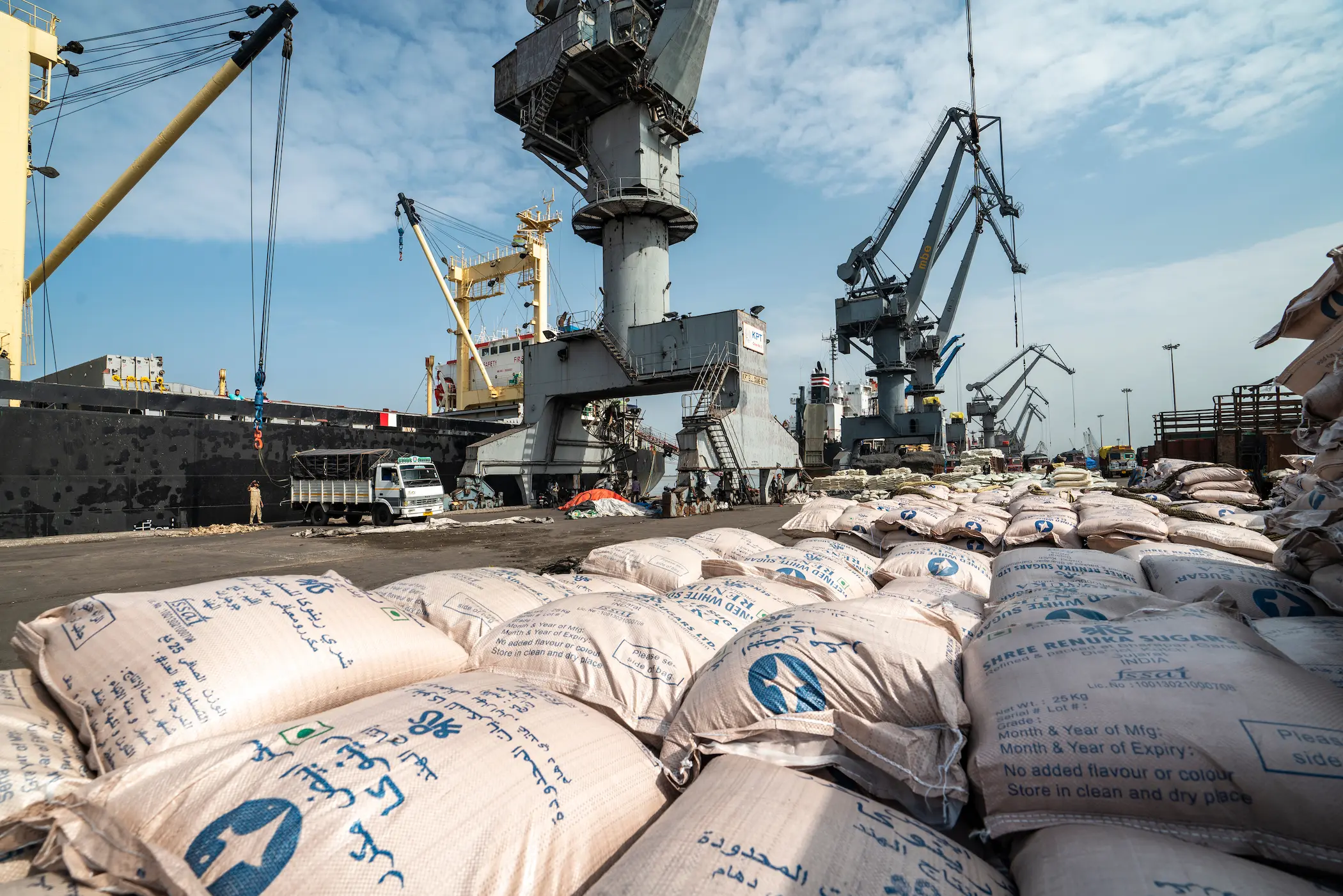
The global economic landscape is witnessing rapid transformations that impose structural challenges on food supply chains. India emerges as an influential actor due to its agricultural weight and its connection to Middle Eastern markets. Amidst this connection, India experienced a climate shock in late summer 2023 that tangibly affected rainfall. This coincided with a marked acceleration in implementing the national Ethanol Blended Petrol (EBP) programme for an E20 target, which depletes staple crops like maize, rice, and sugarcane to produce fuel instead of food. The climate variation and supply shocks resulting from the E20 programme formed a primary driver of price pressures, pushing the Reserve Bank of India (RBI) to maintain a tight monetary policy, and pushing the federal government to take protectionist measures that included a consecutive ban on the export of strategic commodities, noting that export restrictions began in 2022 and expanded in 2023. While the protectionist decisions and the central bank's decisions were not officially attributed to ethanol as a direct primary cause, its growing depletion of crops is considered a potential structural multiplier of inflationary pressures.
Against this backdrop, the Gulf Cooperation Council (GCC) states, which depend heavily on Indian agricultural imports to meet their consumption needs, find themselves vulnerable to the consequences of these disruptions. The repercussions are not limited to immediate supply disruption or rising import costs, but extend to include deep strategic challenges regarding the extent to which Gulf investments in the Indian agricultural sector can provide genuine protection against sovereign export ban decisions.
This analysis therefore aims to explore the dimensions of the Indian supply crisis and its impacts, moving through tracking the path of inflation and the export restrictions imposed by New Delhi, arriving at an assessment of the level of Gulf exposure, and analysing the limits of the effectiveness of foreign direct investments as a tool for strategic hedging against recurring food crises.