

The Middle East is undergoing rapid geopolitical and military changes that have reshaped the decades-long confrontation between Iran, on the one hand, and the United States and Israel, on the other. After years dominated by "shadow wars", cyber operations and indirect confrontations involving allies and armed groups, the conflict has expanded into direct military confrontation. As US–Iran negotiations have approached an impasse, reports have proliferated suggesting that US President Donald Trump may be preparing a new military campaign against Iran following the midterm elections.
These developments have coincided with Israel providing the United States with intelligence concerning alleged nuclear activity at a facility beneath Pickaxe Mountain near Natanz, alongside allegations of Iranian plots to assassinate Trump and assessments of Tehran's possible readiness to use chemical weapons. These claims have, however, prompted disagreement within the US administration, amid growing suspicions that Israeli Prime Minister Benjamin Netanyahu is seeking to use these threats to persuade Trump to resume the war. This is particularly significant given the circulation of proposals and claims concerning the possible use of a nuclear weapon against the Pickaxe Mountain facility.
Among the principal military dilemmas driving this debate is the extent to which Iran's deeply buried, hardened facilities can be neutralised using conventional weapons, including the US GBU-57 bunker-busting bomb. Uncertainty persists over the effects of earlier strikes and the extent of Iran's remaining nuclear capabilities. Open-source estimates suggest that the Pickaxe Mountain facility may lie between 80 and 100 metres below the surface, while some intelligence-related speculation places the tunnels at depths of approximately 300 metres. Their precise depth and internal configuration remain difficult to verify.
This raises a particularly sensitive strategic question concerning the limits of the force Washington might employ to achieve its objectives towards Tehran and the possibility of moving beyond conventional weapons if confrontation resumes or efforts to contain it falter.
Against this background, the analysis adopts an "Only If" framework to examine the determinants that keep nuclear weapons within the range of possible options and the critical conditions that might prompt US decision-makers to employ them in the ongoing conflict with Iran. It also considers the potential consequences of a transition from conventional confrontation to nuclear use for Middle Eastern security and international stability.
Why Now?
The marked increase in American and Israeli media and analytical discussion of possible nuclear use against Iran raises a fundamental question about the underlying motives for publicly advancing this scenario after decades of discretion and caution. An examination of this discourse reveals a complex interaction between a genuine operational and technical dilemma confronting military planners, on the one hand, and the political and psychological use of deterrence and coercion, on the other. The latest wave of discussion about the nuclear option has been associated with growing attention to the facility beneath the mountain widely known as Pickaxe Mountain, near the Natanz complex. Analyses of available satellite imagery indicate continuing construction at the site, although the nature of its activities and its precise contents remain publicly unresolved. In particular, the imagery examined is insufficient to confirm or refute claims that centrifuges have been transferred there, while continuing construction raises questions about its readiness to operate as an enrichment facility.
The site acquired additional political significance when President Donald Trump discussed the possibility of targeting it in an interview broadcast in October 2026. In the same interview, he ruled out using a nuclear weapon on the grounds that Washington did not need one. The debate subsequently widened in early November 2026 after media commentator Tucker Carlson claimed that the administration might be days away from a nuclear strike and linked this possibility to Israeli pressure.
These developments reveal an important distinction between the origins of the debate and its implications. Presidential remarks made an attack on the site a publicly acknowledged possibility, while the media claim introduced a particular interpretation of the weapon involved and the pressures surrounding the decision. At the military and technical level, this media narrative rests on growing acknowledgement that conventional capabilities have reached their physical limits against Iran’s mountain fortifications. The limitations of the most powerful conventional bomb in the US arsenal are central here: it was designed to penetrate a maximum of approximately 60 metres of soil and ordinary concrete, with substantially reduced penetration through hard mountain rock. These constraints are compounded by engineering features such as winding tunnels and steel doors designed to resist blast waves. Published information does not establish that proposals for a tactical nuclear weapon to generate a seismic shock capable of destroying the mountain constitute an adopted US policy. Their circulation nevertheless illustrates how public debate can move from a specific military difficulty to a broader conclusion about the necessity of nuclear weapons before basic information about the site and the purpose of attacking it has been established. This tendency is reinforced by the assumption that the survival of a hardened facility means the programme retains its full capabilities and that eliminating the threat requires the comprehensive physical destruction of all its components.
Distinguishing between these issues becomes especially important when considering the fate of highly enriched uranium. On 27 October 2026, the Director General of the International Atomic Energy Agency informed the Security Council that the Agency had been unable to verify the status of previously declared Iranian materials, including approximately 440 kilograms of highly enriched uranium. He also stated that it had not observed repairs or reconstruction at facilities damaged in the 2025 and 2026 strikes, while stressing that remote monitoring could not replace access on the ground. These findings establish grounds for concern about verification, but they neither locate the materials nor demonstrate that they have been transferred to Pickaxe Mountain. The presence of a stockpile inside the mountain therefore cannot be treated as an established fact and then used to support a definitive assessment that conventional force has failed.
The nature of the nuclear problem requires a distinction between destroying a facility, disrupting activity and verifying the fate of materials. Infrastructure may sustain damage sufficient to prevent operations for a period, while some equipment or materials remain recoverable or transferable. Observable military or technical activity may also decline without providing a complete understanding of events inside the sites. The political dilemma is that each outcome represents a different measure of success. Delaying the programme does not amount to ending it, and terminating declared activity does not guarantee the absence of other sites. Nor can the extent of damage announced by the attacking party substitute for independent monitoring capable of supporting a durable settlement.
The Constraints on US Nuclear Use
Moving from an examination of media narratives to an assessment of actual probabilities requires consideration of contemporary US nuclear doctrine and the extent to which this option remains available to decision-makers. Formally, nuclear weapons remain among the instruments available to the United States, and Washington has not adopted a general no-first-use pledge. The 2022 Nuclear Posture Review confined consideration of nuclear use to “extreme circumstances” in defence of the vital interests of the United States or its allies and partners. This formulation leaves room to assess the nature of a threat and the circumstances in which it arises, without establishing a public schedule linking each attack to a specific response. Such ambiguity gives nuclear policy flexibility in deterrence but calls for caution in its interpretation. Doctrinal scope for nuclear use does not mean that employing it would be straightforward or that it would be preferred to conventional alternatives.
The same review included the principle of “negative security assurances”: a commitment not to use or threaten to use nuclear weapons against non-nuclear-weapon states that are parties to the Non-Proliferation Treaty and comply with their non-proliferation obligations. This conditional assurance differs from a comprehensive prohibition on first use under all circumstances. Disputes over compliance do not, however, automatically authorise a nuclear attack or exempt Washington from other legal obligations. This distinction is particularly important in the Iranian case, because disagreements over nuclear activities and the extent of monitoring may widen political debate over the applicability of the assurance. The legality and operational utility of any proposed action nevertheless remain matters requiring independent assessment.
The 2024 report on nuclear employment strategy emphasised the importance of integrating non-nuclear capabilities into deterrence wherever possible, and of managing escalation when planning responses to a limited nuclear attack or a severe non-nuclear attack with strategic consequences. These guidelines indicate that US thinking does not rest on an absolute separation between conventional and nuclear deterrence, but on coordinating multiple instruments to prevent an adversary from achieving its objectives, while prioritising the adequacy of conventional capabilities in combat operations. Such integration may nevertheless create ambiguity during crises. A deterrent signal or a deployment serving multiple purposes may be interpreted as preparation for actual use, making political communication an important factor in shaping the messages received by other parties.
This framework helps explain the continuing modernisation of the US arsenal in the twenty-first century to narrow the gap that characterised the twentieth century between conventional munitions and high-yield strategic nuclear warheads. In response to the challenge of deeply buried, hardened facilities, Washington has developed guided tactical nuclear capabilities with adjustable yields, such as the B61-12 gravity bomb, designed to penetrate the ground before detonation, and submarine-deployed W76-2 low-yield warheads. These developments extend to the National Nuclear Security Administration’s announcement that the first B61-13 bomb had been produced in May 2025 as part of US capability modernisation programmes. These technical details illustrate that the nuclear option does not belong to an unchanged arsenal inherited from an earlier era. They do not, however, reveal that a particular weapon has been assigned to Iran or that a decision has been taken to employ it. Nor does the diversity of capabilities resolve the more difficult political question: would nuclear use produce a better security outcome than other means could achieve? The range of military options may expand technically while the politically acceptable scope for employing them contracts.
At the constitutional and procedural level, authority to authorise nuclear use is concentrated in the US president, without a requirement for separate prior approval from Congress or military commanders. The president may seek advice, while the execution of orders remains subject to their legality. This structure gives considerable weight to the president’s personality and the way information is received. It does not, however, remove institutions from decision-making. Intelligence agencies define the perceived threat; military leaders at the Pentagon present response options and their limitations; and advisers influence assessments of damage and alternatives. Decisions may vary according to whether information is presented as competing possibilities or as a settled conclusion that leaves no time to wait.
International legal rules impose constraints independent of domestic authority. In 1996, the International Court of Justice affirmed that the threat or use of nuclear weapons was subject to the UN Charter and international humanitarian law. It concluded that nuclear use would generally be contrary to the rules applicable in armed conflict, while leaving unresolved an exceptional case of self-defence in which the survival of the state was threatened. This reservation does not provide general authorisation. Necessity, proportionality, distinction and the protection of civilians remain integral to assessing any military action. A US description of an interest as “vital” must also not be conflated with the narrow exception discussed by the Court concerning the survival of the state itself.
These legal constraints are connected to wider political and strategic costs. A state employing nuclear weapons to curb a regional adversary’s programme would need to explain how doing so serves the non-proliferation regime it defends and how it would protect its partners from the consequences. It would also need to assess how breaking the tradition of nuclear non-use maintained since 1945 might affect the calculations of competing major nuclear powers, such as Russia and China, in their regional conflicts. Immediate military gains may conflict with preserving the alliances and intelligence and monitoring cooperation needed to manage the crisis after a strike. The practical availability of the nuclear option is therefore determined by the intersection of military capability, presidential authority, legal justification and political outcomes. The presence of some of these elements does not guarantee that they will converge in a single decision.
Potential Triggers for Washington to Activate the Nuclear Option
Open-ended military escalation may generate operational and technical developments that confront US decision-makers with critical strategic dilemmas that conventional means alone cannot readily resolve. A number of potential triggers therefore merit consideration. If one materialises, or several converge during the confrontation, they could move the US nuclear option from the realm of political exclusion into the range of operational choices under discussion
The Inability to Neutralise Mountain Fortifications with Conventional Munitions
One of the principal military dilemmas facing planners in Washington concerns the defensive geography in which Iran has established vital elements of its nuclear and missile programmes. Recognising American and Israeli air superiority, Tehran has spent the past two decades building sensitive nuclear facilities deep beneath rocky mountain ranges to provide natural protection and reduce the effectiveness of conventional air strikes. This engineering and military challenge is particularly evident at the Fordow uranium enrichment facility, built inside a rocky mountain near Qom at an estimated depth of between 80 and 90 metres beneath layers of hard rock and reinforced concrete
The issue extends beyond Fordow. In recent years, Iran has begun constructing underground complexes believed to be deeper and more heavily fortified, notably the tunnel network south of Natanz in Kuh-e Kolang Gaz La mountain. Some engineering estimates and satellite imagery suggest that these underground halls may lie at depths approaching or exceeding 100 metres below the surface. They are also thought to have been designed with multiple curved entrances and blast-resistant doors to disperse shock waves and reduce the transmission of blast pressure into the potential interior chambers.
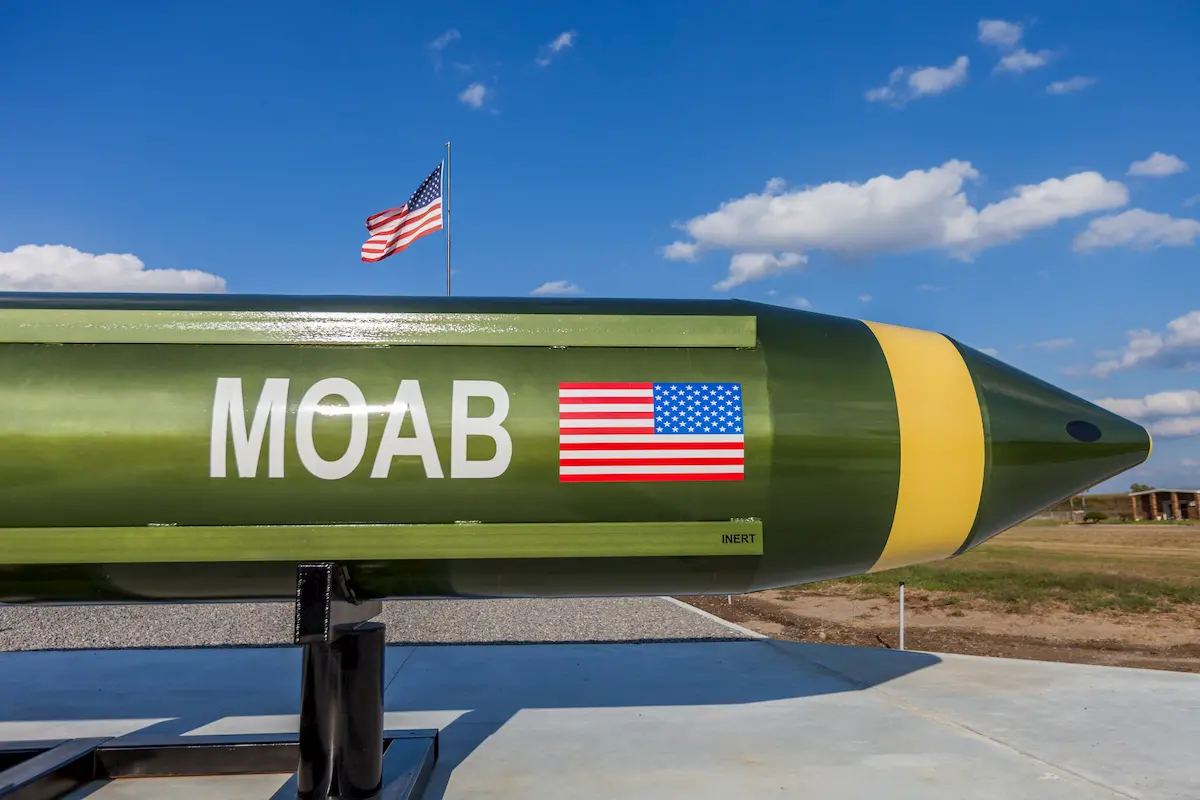
The United States, by contrast, relies on the heaviest conventional bunker-busting bomb in its arsenal to engage hardened targets: the GBU-57, known as the Massive Ordnance Penetrator. Despite its considerable destructive power, available estimates suggest that its physical penetration capability reaches approximately 60 metres in soil and ordinary concrete. This distance may be reduced when the weapon encounters the layers of hard mountain rock protecting Iranian facilities.
If military confrontation expands and US bombers target these mountain facilities with successive GBU-57 bombs, employing repeated drops on the same point to penetrate progressively through the rock, intelligence assessments may subsequently indicate that the deep underground chambers remain operational and that Iran retains its nuclear capability or a significant part of its highly enriched uranium stockpile intact beneath the mountains. Pentagon planners could then face a complex operational impasse. Pressure might consequently grow within military planning circles to consider a tactical nuclear earth-penetrating weapon as an instrument physically capable of generating an underground seismic shock that causes rock collapses and permanently disables the facilities.
Tehran’s Approach to Nuclear Breakout
The possibility that conventional bombs cannot completely destroy deep facilities remains amenable to temporary political and military containment through attacks on tunnel entrances, ventilation systems and power supplies, provided that Iran is not in the process of manufacturing a nuclear weapon ready for use. The exception would arise if the Iranian leadership, under the pressure of military strikes that it may perceive as a direct threat to the regime’s survival, took the strategic decision to move from being a “nuclear threshold state” towards acquiring an actual nuclear weapon as a last-resort deterrent. This is described in the strategic literature as the stage of “nuclear breakout”.
Iran possesses technical and scientific foundations that could make this breakout period relatively short. Over recent years, it has accumulated quantities of uranium enriched to 60 per cent, a level technically close to the approximately 90 per cent purity required for military use, because the largest share of the physical effort in enrichment is expended in reaching the initial medium and high enrichment levels. If the International Atomic Energy Agency continues to lack on-site monitoring access, technical estimates suggest that this stockpile, if it remains intact and available for processing, could be converted into fissile material suitable for military use within a few weeks inside hardened underground facilities.
If US and Israeli intelligence agencies obtained highly reliable indications that Iran had not merely produced fissile material but had begun “weaponisation”, by attempting to assemble a nuclear warhead or mount it on one of its ballistic missiles inside a fortified mountain base, and if cyber operations and conventional air strikes could not disrupt this process, White House calculations could change substantially. Within US national security doctrine, preventing an adversary engaged in open warfare from acquiring or launching a nuclear weapon is a paramount security priority. In such critical circumstances, US decision-makers might consider a pre-emptive tactical nuclear strike to destroy the assembly site or underground launch platform before the Iranian nuclear threat fully materialised.
The Use of Weapons of Mass Destruction or Strategic Attacks
As articulated in Nuclear Posture Review documents, US nuclear doctrine links consideration of nuclear use in “extreme circumstances” to defending the vital interests of the United States and its allies and partners and to countering large-scale non-nuclear strategic attacks. This applies particularly to attacks involving chemical, biological or radiological weapons that inflict severe losses.
In the normal course of military operations, Iran relies on asymmetric warfare through ballistic missiles, unmanned aerial vehicles and fast naval craft. This adherence to a conventional weapons ceiling would remain in place unless Tehran concluded that its regular forces and the Islamic Revolutionary Guard Corps were suffering severe military attrition and that widespread paralysis of its economic and oil infrastructure was placing the political system at risk of collapse. Under this hypothetical scenario, the risk could increase that some elements within Iran’s military leadership would turn to unconventional options to produce a deterrent shock capable of compelling the attacking powers to halt operations.
This scenario includes the possible use of chemical or biological agents against US military bases in the region, or recourse to so-called “dirty bombs”. These are conventional munitions and missiles loaded with radioactive materials obtained from research reactors or nuclear facilities. They are intended not to generate a nuclear explosion but to disperse radioactive contamination and disable military bases, ports or critical airports. The scenario also includes the possibility that intensive missile attacks could penetrate air defences and inflict unprecedented human and strategic losses on US forces or their allies. If Iran took such a step and caused heavy losses, Washington might judge that Tehran had already crossed the conventional weapons threshold into attacks with grave strategic consequences. This could provide the US administration with doctrinal and political grounds for considering a tactical nuclear response.
The Strategic and Geopolitical Consequences of Crossing the Nuclear Threshold
Although some military planners may view a tactical nuclear strike as a “limited surgical operation” capable of ending the war rapidly while minimising US military casualties, the consequences of crossing the nuclear threshold for the first time since 1945 would not remain confined to the mountains of Fordow or the desert around Natanz. Nuclear use would transform the crisis from a dispute over the Iranian programme into a comprehensive test of the place of nuclear weapons in the international system.
Transboundary Environmental and Security Risks in the Middle East
At the regional level, direct physical damage would interact with social, economic and security responses. Even if low-yield tactical nuclear bombs designed to detonate underground were used, the possibility of radioactive leakage could not be disregarded. The extent of radiological and environmental effects depends on the characteristics of the explosion, the site, the complex geological formations of the Iranian plateau above active seismic faults, and weather conditions and wind patterns. Assessing these effects requires incident-specific data and technical modelling. The inability to determine their extent conclusively in advance does not remove the need for preparedness. The possibility of fractures reaching the surface, or of nuclear and chemical materials stored inside the targeted facilities escaping, together with fear of contamination and disrupted information flows, could place substantial pressure on health services, population movements and commercial decisions. This could extend to neighbouring areas and countries that do not experience the same direct radiological effects.
Critical infrastructure in geographically adjacent states, particularly in the Arabian Gulf, Iraq, Türkiye, the Caucasus and Central Asia, assumes additional importance in this context. The continuity of water, energy and transport supplies, including the operation of seawater desalination plants that constitute a principal lifeline for Gulf Cooperation Council states, is affected by the safety of the marine environment and infrastructure and by the ability of personnel and supply networks to operate amid potential population displacement and expanding military retaliation. Regional states may need precautionary measures and coordinated monitoring to ensure continuity of services, without this implying that all would suffer the same level of harm.
Beyond the environmental dimension, complex political and security costs would arise if regional governments concluded that a decision taken to protect American or Israeli interests had increased their exposure to risk or imposed exceptional burdens without adequate participation in assessing them. This could prompt a reassessment of the role of the US military presence in the region. If bases or regional support arrangements became associated, in the eyes of the parties concerned, with continuing escalation, pressure could grow on host states to restrict certain forms of military cooperation. Other governments might, conversely, regard the heightened threat as making American protection more necessary. Such divergence would produce renewed negotiations over the terms of security guarantees, burden-sharing and consultation. It would not necessarily entail either the collapse of regional alliances or their continuation in their previous form. The outcome would depend on Washington’s ability to restore confidence and establish arrangements that reduce exposure to risk after the strike.
The Breakdown of the Non-Proliferation Regime
The strategic implications of any US nuclear strike against Iran would extend to the cohesion of the Treaty on the Non-Proliferation of Nuclear Weapons (NPT), which has been a cornerstone of the global security order since entering into force in 1970. At its core, the treaty rests on a legal and security bargain under which non-nuclear-weapon states relinquish the pursuit of nuclear weapons in exchange for access to peaceful nuclear technology and assurances against nuclear attack or coercion by the major nuclear powers. The use of nuclear weapons by a major nuclear power against a non-nuclear-weapon state would therefore intensify legitimate questions about the practical protection afforded by international commitments and political assurances.
Washington would then face a clear strategic contradiction between its chosen means of preventing proliferation and the contrary message they might convey. If other states concluded that possessing nuclear weapons offered the most reliable protection against attack, incentives for the very proliferation that the military operation sought to curb could grow. The physical damage inflicted on the Iranian programme would therefore be insufficient, on its own, to assess the strike’s success. Its effects on other states’ behaviour, their willingness to cooperate with international monitoring mechanisms and their confidence that legal compliance delivers tangible security benefits would also need to be considered. A specific risk at an Iranian site might consequently diminish while wider pressures on the international regulatory system increased.
A Global Economic Shock
The Middle East, and the Arabian Gulf in particular, is a major hub of the global energy market and a vital artery of international maritime trade and supply chains. Given this geographical sensitivity, a nuclear explosion in Iran, even one of limited yield deep inland, would immediately transmit the shock to energy and shipping through a process of “risk reassessment”, before the ultimate physical losses became clear.
As soon as nuclear use was announced, insurers and reinsurers, international shipping companies and investors would be likely to reassess their exposure in the Arabian Gulf, the Gulf of Oman and the Arabian Sea. They would need to account for the possibility of radioactive contamination or Iranian military retaliation against merchant shipping, narrow sea lanes or regional energy infrastructure. This high-risk environment would lead to a sharp rise in transport, financing, insurance and storage costs, depending on the continuation of military operations and the safety of ports and maritime passages.
A global economic crisis would not require a complete halt to trade or Gulf energy supplies. The rerouting of some shipping, a reduction in exports or longer delivery times would be sufficient to increase financial and logistical burdens substantially for major importing economies such as China, India, Japan and South Korea, as well as European economies. Their ability to absorb the shock would vary with the size of strategic reserves, the availability of alternative energy supplies and available financial buffers. The distribution of economic losses and inflationary pressures across global markets would consequently extend far beyond the geographical scope of direct military damage.
Fractures within Western Alliances
At the geopolitical and alliance level, a unilateral US decision to employ nuclear weapons could generate tension and division within the Western camp and NATO. European states, which maintain restrictive nuclear-use policies and fear the consequences of escalation in their neighbourhood for national security, energy supplies and migration, would face difficult political and legal questions before European public opinion. This predicament could prompt several European governments to express public reservations about the US decision or restrict their logistical and military participation in operations. Such responses would strain Western alliance cohesion and weaken Washington’s ability to mobilise international consensus for managing the aftermath of the strike.
The United States’ major competitors, particularly Russia and China, would, by contrast, be likely to use the incident to increase diplomatic and political pressure on Washington at the United Nations, among countries of the “Global South”, and in groupings such as BRICS+ and the Shanghai Cooperation Organisation. They could also question its fitness to lead the non-proliferation regime. Political and diplomatic exploitation of the American precedent would not, however, mean that Moscow or Beijing would automatically adopt comparable tactical nuclear use in their own regional crises, whether in the Ukrainian theatre or in a potential confrontation over Taiwan and the South China Sea. Each confrontation retains its own balance of forces, costs and doctrine. The deeper strategic effect would be a diminished international ability to anticipate what the major powers regard as acceptable conduct and uncertainty over whether US nuclear use would be interpreted as an isolated exception or the beginning of a shift in the boundaries of global nuclear behaviour. Such uncertainty could increase incentives for armament and military precaution, while weakening confidence in mechanisms for managing international crises.
The problem of “war termination” remains central to all these strategic consequences. Tactical nuclear use might achieve an immediate physical objective by destroying a hardened facility yet make political negotiation more difficult if the affected party could not offer concessions without appearing to submit completely to nuclear coercion. The decision might also expand, rather than reduce, the US requirement to provide protection, monitoring, and the restoration of regional stability. The strategic utility of a nuclear strike therefore cannot be measured solely by the speed with which it inflicts physical damage. It must also be judged by whether the military outcome can be converted into a sustainable political and security arrangement, a task that may become more difficult after the nuclear threshold has been crossed.
Why Might the Nuclear Option Against Iran Become a More Likely Course?
The question of US nuclear use against Iran remains governed by a delicate strategic balance between abundant conventional capabilities and considerations of extreme necessity. Under normal military conditions, the American conventional arsenal allows decision-makers in Washington to exclude the nuclear option and avoid its substantial geopolitical, economic, and ethical costs. Reliance on conventional air and missile power therefore remains the most likely strategic baseline in the Pentagon’s approach to Iran.
This baseline nevertheless depends on the conflict remaining within the bounds of conventional control. The barriers to nuclear use remain effective unless US military capabilities encounter Iranian mountain fortifications that conventional bombs cannot readily penetrate at a time when Tehran is approaching the assembly of an actual nuclear weapon. Other potential exceptions include Iranian recourse to unconventional weapons of mass destruction, threats to the security of Washington’s allies, severe strategic losses inflicted on US forces in the region, or the direct military involvement of major nuclear powers.
There is also a structural tension between “the nature of the American and Israeli political objective” and “the physical limits of the conventional military arsenal”. As long as Washington’s and Tel Aviv’s objectives are confined to weakening Iranian regional influence, degrading missile capabilities, or delaying the nuclear programme by months or years, conventional weapons remain sufficient and preferable. The widening of the current conflict may, however, shift the American and Israeli strategic objective from “containment and delay” towards an attempt at the “complete physical elimination of Iran’s nuclear programme” and the prevention of Tehran’s emergence as a nuclear-armed state. If the political and military objective becomes the complete destruction of nuclear infrastructure, the operational likelihood of resorting to the tactical nuclear option may increase through three interrelated factors that narrow Washington’s conventional alternatives.
The first factor is the “physical and geographical constraints” imposed by Iran’s deeply buried fortifications. Given estimates suggesting that Iran may have transferred part of its highly enriched uranium stockpile and sensitive infrastructure into the tunnels at Pickaxe Mountain and Fordow, the technical options available to US military planners for reaching and destroying this stockpile diminish without considering the underground seismic shock generated by tactical nuclear earth-penetrating bombs such as the B61-12. In other words, Iran’s effort to neutralise conventional air power by burying facilities deep beneath mountains is itself a factor that could increase the likelihood of Washington considering the nuclear option if it sought a decisive physical outcome.
The second factor concerns “the high cost and operational difficulty of the ground alternative”. Militarily, if conventional aerial bombs cannot destroy a facility buried beneath a mountain, the immediate conventional alternative is a major ground operation to occupy the area, enter the tunnels, and secure them on the ground. Yet invading a state of Iran’s size, with rugged mountain terrain and a population approaching 90 million, would be extremely costly militarily, politically, and economically. Such an option has largely been discounted in US doctrine following the experiences of Iraq and Afghanistan. Limited special operations also face complex operational risks and constraints when dealing with facilities at such depths during a full-scale war. With a ground invasion excluded and conventional aerial bombs constrained, tactical nuclear weapons emerge as one of the few remaining options in military calculations for achieving comprehensive destruction from the air without undertaking a major ground war.
The third factor that could increase the prominence of this course in final calculations is “technological progress in low-yield nuclear weapons” and changing perceptions within some military planning circles. US possession of precision-guided tactical nuclear bombs with yields adjustable to relatively low levels, designed to detonate beneath the surface to reduce surface radiation, could help lower the psychological and operational barrier for some military planners. Within certain strategic circles, these weapons might be viewed not as strategic arms intended to destroy cities but as “precise tactical instruments” capable of destroying hardened facilities and rapidly reducing the capabilities of Iran’s nuclear programme.
The United States’ transition from excluding the nuclear option to actively considering it or making operational preparations would therefore not occur suddenly in a vacuum. It would probably be preceded by a set of interrelated operational and political indicators. At the operational and logistical level, the most prominent would-be unusual movements by B-2 stealth strategic bomber squadrons belonging to the 509th Bomb Wing at Whiteman Air Force Base. These aircraft are technically qualified to carry B61-12 tactical nuclear bombs. Their deployment to forward bases such as Diego Garcia in the Indian Ocean could coincide with a heightened alert posture at US Strategic Command (STRATCOM), which is responsible for the nuclear arsenal, and changes in patrol patterns by Ohio-class submarines carrying Trident missiles equipped with W76-2 warheads in the Arabian Sea and Indian Ocean.
At the technical and political level, these military movements could coincide with operational indications that repeated conventional GBU-57 strikes had been insufficient to destroy buried nuclear facilities at Fordow, Natanz and Pickaxe Mountain. They could also occur alongside intelligence assessments indicating that Iran had begun increasing uranium enrichment to 90 per cent and transferring fissile materials to underground weaponisation sites, or that interception rates against Iranian ballistic missiles were declining as interceptor inventories were depleted. The most important political indicator might then be a change in the tone of official statements from the White House and the US Department of War. Statements could shift from familiar references to “degrading Iranian military capabilities” towards specific doctrinal language associated with the Nuclear Posture Review, such as “confronting an existential threat in extreme circumstances by any necessary means”, or public reminders that “all options, including unconventional options, remain on the table to protect US national security”.
The “Only if” framework thus suggests that, in the absence of a credible political settlement and monitoring arrangement resolving the Iranian nuclear issue, Washington’s and Tel Aviv’s insistence on the complete physical elimination of Iran’s nuclear programme, combined with the inability to achieve that objective through conventional means deep inside mountain facilities, could increase the likelihood that the tactical nuclear option moves from an excluded hypothesis to an operational course under consideration. The pressure to achieve a decisive military outcome and the characteristics of Iranian geography would contribute to this shift. Reading these determinants and indicators together does not imply that the nuclear scenario is inevitable. It does, however, offer decision-makers and researchers a clear analytical framework for understanding the precise red lines separating a conventional regional war, however severe, from a historic turning point that could reshape the security environment of the Middle East and the international order for years to come.
References
Albright, David, Sarah Burkhard, Spencer Faragasso, and the Good ISIS Team. “Activity Remains Dormant at Pickaxe Mountain.” Institute for Science and International Security. Institute for Science and International Security, October 16, 2026. https://isis-online.org/isis-reports/activity-remains-dormant-at-pickaxe-mountain.isis-online
Altman, Howard. “A Nuclear Strike on Iran? It Sounds Absurd Because It Is. Let’s Talk About It.” The War Zone. November 2, 2026. https://www.twz.com/nuclear/a-nuclear-strike-on-iran-it-sounds-absurd-because-it-is-lets-talk-about-it.twz
Banco, Erin. “US Could Not Verify Israeli Warnings of Iran Plots Against Trump, Sources Say.” ThePrint. Reuters, August 13, 2026. https://theprint.in/world/us-could-not-verify-israeli-warnings-of-iran-plots-against-trump-sources-say/3014351/.theprint
Barnes, Julian E., Natan Odenheimer, Eric Schmitt, Adam Rasgon, and Dustin Volz. “Israeli Claims of Iranian Chemical Weapons Divide US Officials.” GV Wire. The New York Times Company, November 3, 2026. https://gvwire.com/2026/11/03/israeli-claims-of-iranian-chemical-weapons-divide-us-officials/.gvwire
Chiacu, Doina. “Trump Says US May Need to Strike Iran’s Pickaxe Mountain.” Reuters. Reuters, October 16, 2026. https://www.reuters.com/world/trump-says-us-may-need-strike-irans-pickaxe-mountain-2026-10-16/.reuters
Congressional Research Service. “Authority to Launch Nuclear Forces.” EveryCRSReport.com. Congressional Research Service, updated December 11, 2025. https://www.everycrsreport.com/reports/IF10521.html.everycrsreport
Congressional Research Service. “Iran and Nuclear Weapons Production.” EveryCRSReport.com. Congressional Research Service, updated October 13, 2026. https://www.everycrsreport.com/files/2026-10-13_IF12106_96f83d3fea2da0a9863ce4e386e0330c60953f27.html.everycrsreport
International Committee of the Red Cross and International Federation of Red Cross and Red Crescent Societies. “Humanitarian Impacts and Risks of Use of Nuclear Weapons.” ICRC. International Committee of the Red Cross, August 29, 2020. https://www.icrc.org/en/document/humanitarian-impacts-and-risks-use-nuclear-weapons.icrc
International Court of Justice. “Legality of the Threat or Use of Nuclear Weapons.” International Court of Justice. International Court of Justice, July 8, 1996. https://api.icj-cij.org/sites/default/files/case-related/95/095-19960708-ADV-01-00-EN.pdf.
Kerr, Paul K. “2022 Nuclear Posture Review.” EveryCRSReport.com. Congressional Research Service, December 6, 2022. https://www.everycrsreport.com/reports/IF12266.html.everycrsreport
National Nuclear Security Administration. “NNSA Completes Assembly of the First B61-13 Nuclear Gravity Bomb Ahead of Schedule.” Department of Energy. U.S. Department of Energy, May 19, 2025. https://www.energy.gov/nnsa/articles/nnsa-completes-assembly-first-b61-13-nuclear-gravity-bomb-ahead-schedule.energy
National Nuclear Security Administration. “NNSA Completes B61-12 Life Extension Program.” Department of Energy. U.S. Department of Energy, January 7, 2025. https://www.energy.gov/nnsa/articles/nnsa-completes-b61-12-life-extension-program/.
NATO. “NATO’s Nuclear Deterrence Policy and Forces.” NATO. North Atlantic Treaty Organization, updated September 25, 2026. https://www.nato.int/en/what-we-do/deterrence-and-defence/natos-nuclear-deterrence-policy-and-forces.nato
Rodgers, Joseph, Douglas Comstock, and Joseph S. Bermudez Jr. “New Satellite Imagery Analysis Reveals an Uptick in 2026 Construction Activity at Pickaxe Mountain.” CSIS. Center for Strategic and International Studies, September 9, 2026. https://www.csis.org/analysis/satellite-imagery-pickaxe-mountain.csis
United Nations. “Non-proliferation—Security Council, 10253rd Meeting.” UN Transcripts. United Nations, October 27, 2026. https://transcripts.un.org/en/sc/10253.transcripts.un
United Nations. “The Treaty on the Non-Proliferation of Nuclear Weapons (NPT).” United Nations. United Nations, n.d. Accessed November 4, 2026. https://www.un.org/en/conf/npt/2010/npttext.shtml.un
U.S. Air Force. “30,000-Pound Bomb Reaches Milestone.” U.S. Air Force. U.S. Department of the Air Force, n.d. Accessed November 4, 2026. https://www.af.mil/News/Photos/igpage/59/igsearch/weapons/.
U.S. Department of Defense. “Report on the Nuclear Employment Strategy of the United States.” U.S. Department of Defense. U.S. Department of Defense, November 2024. https://media.defense.gov/2024/Nov/15/2003584623/-1/-1/1/REPORT-ON-THE-NUCLEAR-EMPLOYMENT-STRATEGY-OF-THE-UNITED-STATES.PDF.media.defense
U.S. Energy Information Administration. “World Oil Transit Chokepoints.” U.S. Energy Information Administration. U.S. Department of Energy, updated March 3, 2026. https://www.eia.gov/international/content/analysis/special_topics/World_Oil_Transit_Chokepoints/



AI-Investment Boom: When Economies Invest More but Gain Less

How Has AI Infrastructure Spending Affected the Pricing of Technology Stocks?
The Final Strike Trap: How Using the MOAB Against Iran Could Affect U.S. Military Commitments

From Energy Consumers to Energy Traders

Food or Fuel: The Implications of Biofuels for Global Food Security
Comments