

Publications
30 Oct 2026
Should Governments Slow Investing in AI?
AI investment has become a strategic priority for governments, even as leading researchers and technology executives warn that advanced systems may pose severe risks. Drawing on the public debate surrounding former Anthropic and OpenAI researcher Jacob Coxon, alongside warnings from Geoffrey Hinton, Yoshua Bengio, Sam Altman and Dario Amodei, this study asks whether governments should slow the pace of their AI investment.
It argues against a blanket retreat from AI. Instead, governments should distinguish between public-service capability, domestic research and infrastructure, and high-risk financial stakes or inflexible compute commitments. Focusing on the Arabian Gulf, the study assesses sovereign AI strategies, regulatory capture, historical technology bubbles and the security dilemma. It concludes that governments should continue competing while changing the composition and staging of investment: prioritising domestic know-how, Arabic data, research and adaptable infrastructure; applying rigorous financial and technology-transfer tests; and pausing or conditioning development and deployment when severe safety risks cannot be adequately mitigated.
Publications
22 Oct 2026
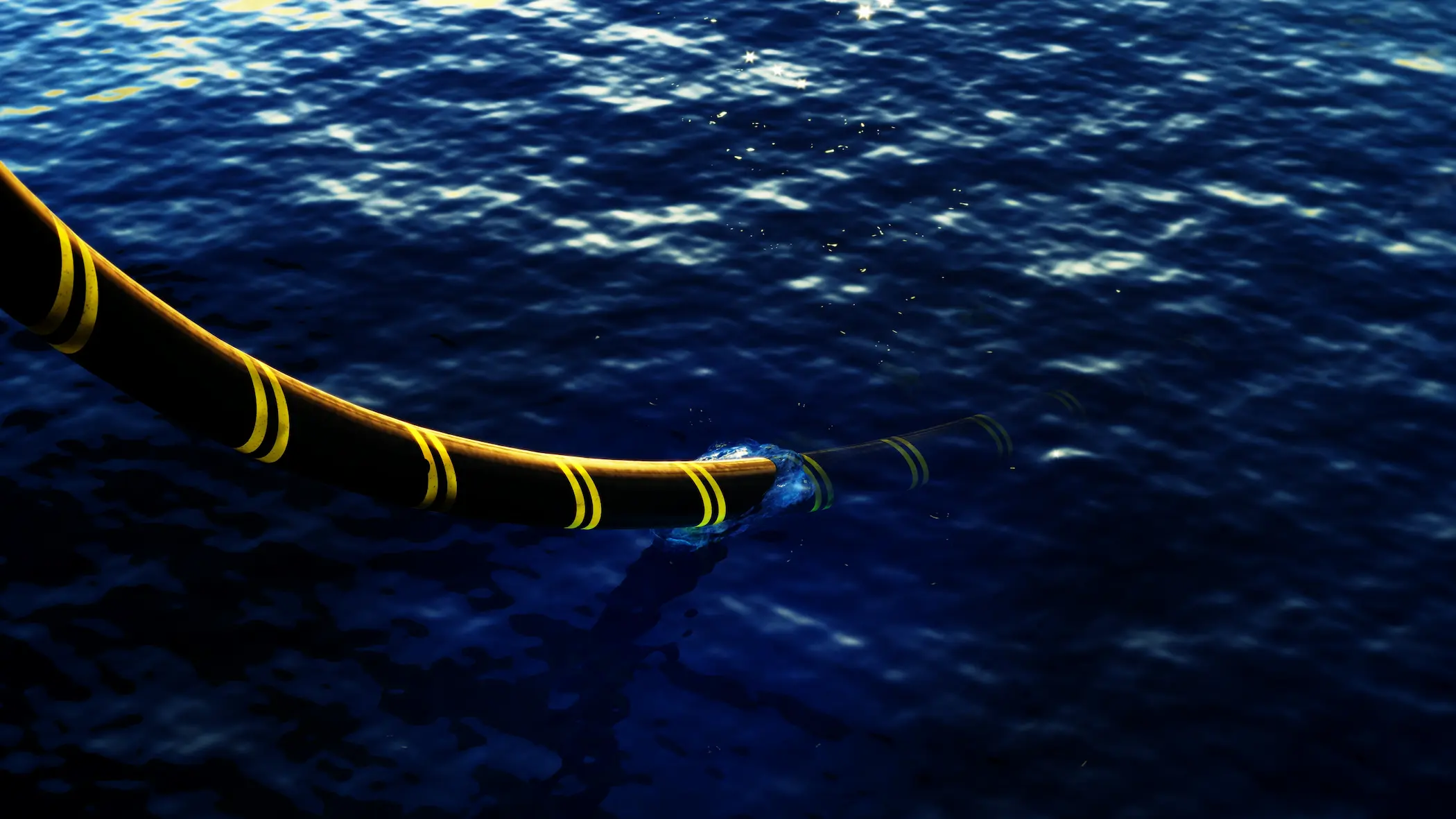
Securing the Arabian Gulf’s Subsea Cables: The Iranian Threat, Defence Options, and Digital Resilience
Iran’s October 2026 threat to target submarine fibre-optic cables, cloud computing hubs, and artificial intelligence (AI) data centres in the Arabian Gulf and the Strait of Hormuz has introduced a critical new security dimension to regional stability calculations, given how vital this infrastructure is to the continuity of financial markets, supply chains, and the energy sector across the Gulf Cooperation Council (GCC) states. The severity of this threat stems from the shallow bathymetry of the Gulf and the narrow shipping lanes of the Strait of Hormuz, which leave subsea cables and coastal landing stations highly vulnerable to hybrid "grey-zone" warfare—such as anchor-dragging by "shadow fleet" vessels under the guise of plausible deniability or sabotage via unmanned underwater vehicles (UUVs) and midget submarines—as well as direct missile, drone, and cyber strikes against onshore facilities. Nevertheless, this threat remains constrained by a strategic "boomerang effect", as Iran and its Asian partners rely heavily on the very same subsea arteries.
To ensure continuity of connectivity and essential services during subsea cable disruptions, this paper proposes an integrated four-pillar framework of geographical and technological alternatives. These include maritime bypass routes utilising cable landing stations located outside the Strait of Hormuz along the coasts of the Gulf of Oman and the Arabian Sea (in Fujairah, Kalba, Barka, and Salalah), alongside expanding the capacity of terrestrial fibre-optic "land bridges" across the Arabian Peninsula and Iraq towards Europe to circumvent maritime chokepoints. The proposed alternatives also encompass deploying sovereign and commercial multi-orbit satellite networks to secure command-and-control links and critical sectors, in parallel with activating "digital islanding" protocols, sovereign cloud infrastructure, and national internet exchange points (IXPs) to maintain the autonomous operation of domestic economic and public services.
Alongside these contingency alternatives, the paper details proactive prevention and protection mechanisms designed to deter attacks or neutralise their impact before a crisis unfolds. This involves transforming the Gulf seabed into a monitored operational domain through machine-learning-enabled Distributed Acoustic and Temperature Sensing (DAS/DTS), physical double-armoring and deep burial of cables, and hardening coastal landing stations and data centres with integrated air defence systems, whilst integrating maritime protection and intelligence-sharing within the framework of Combined Task Force 152 (CTF-152). Finally, the paper stress-tests this dual architecture of prevention and redundancy by simulating three escalatory crisis-management scenarios and defining protocols for immediate traffic rerouting, bandwidth-sharing agreements, and armed naval escorts for cable-repair vessels to restore damaged infrastructure.