
Programmes
9 Nov 2026
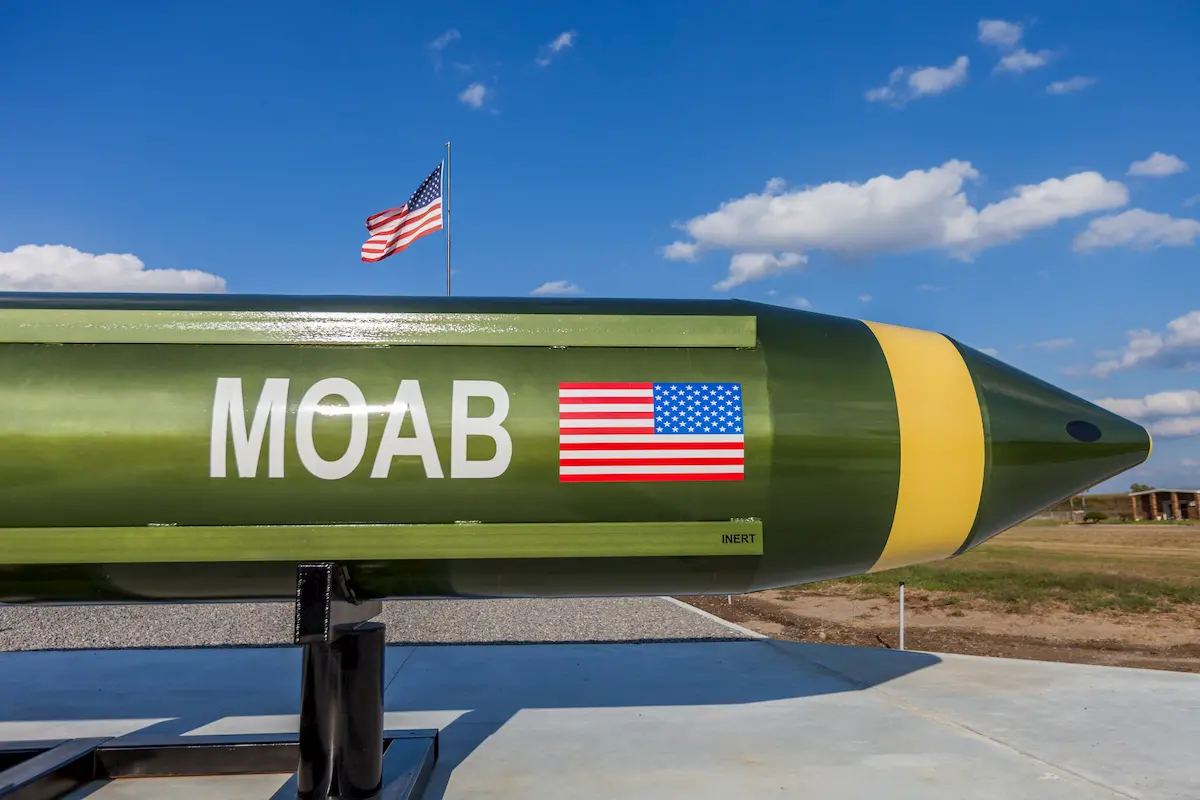
The Final Strike Trap: How Using the MOAB Against Iran Could Affect U.S. Military Commitments
Since October 2026, discussions in Washington about using the GBU-43, known as the ‘Mother of All Bombs’ (MOAB), against Iranian nuclear sites and energy infrastructure have raised a question about how the United States could scale back its military involvement. The case for a large strike rests on the assumption that Washington could point to a tangible military result and use it to begin drawing down its forces. Yet a strike intended to end the mission could extend it. If Iran can repair the damage or move its activities elsewhere, U.S forces may have to stay in the region to prevent it from restoring those capabilities.
The costs of sustaining the results of a strike arise in three areas. First, surface damage is easier to document than the fate of nuclear material and activities protected underground, which may require on-site verification. Second, continued defensive operations put pressure on both budgets and stockpiles. The Congressional Budget Office (CBO) estimated that replacing missile defence interceptors expended through 1 August 2026 would cost about $13.1 billion, compared with $7.3 billion for land-attack cruise missiles. Third, risks to commercial shipping through the Strait of Hormuz and the exposure of energy markets can persist regardless of the damage to any one nuclear facility.
Whether a strike makes disengagement easier depends on the military, verification and maritime commitments it leaves behind. A temporary halt could give Washington time to secure inspection arrangements and reduce tensions at sea, allowing a gradual drawdown. If maintaining that halt requires a continued military presence, the strike could further deplete defensive inventories and narrow the options available to the United States and governments in the region.
Programmes
5 Nov 2026
A War Without Nuclear Weapons… Only If: Determinants of the Nuclear Option Against Iran
The Middle East is undergoing rapid geopolitical and military changes that have reshaped the decades-long confrontation between Iran, on the one hand, and the United States and Israel, on the other. After years dominated by "shadow wars", cyber operations and indirect confrontations involving allies and armed groups, the conflict has expanded into direct military confrontation. As US–Iran negotiations have approached an impasse, reports have proliferated suggesting that US President Donald Trump may be preparing a new military campaign against Iran following the midterm elections.
These developments have coincided with Israel providing the United States with intelligence concerning alleged nuclear activity at a facility beneath Pickaxe Mountain near Natanz, alongside allegations of Iranian plots to assassinate Trump and assessments of Tehran's possible readiness to use chemical weapons. These claims have, however, prompted disagreement within the US administration, amid growing suspicions that Israeli Prime Minister Benjamin Netanyahu is seeking to use these threats to persuade Trump to resume the war. This is particularly significant given the circulation of proposals and claims concerning the possible use of a nuclear weapon against the Pickaxe Mountain facility.
Among the principal military dilemmas driving this debate is the extent to which Iran's deeply buried, hardened facilities can be neutralised using conventional weapons, including the US GBU-57 bunker-busting bomb. Uncertainty persists over the effects of earlier strikes and the extent of Iran's remaining nuclear capabilities. Open-source estimates suggest that the Pickaxe Mountain facility may lie between 80 and 100 metres below the surface, while some intelligence-related speculation places the tunnels at depths of approximately 300 metres. Their precise depth and internal configuration remain difficult to verify.
This raises a particularly sensitive strategic question concerning the limits of the force Washington might employ to achieve its objectives towards Tehran and the possibility of moving beyond conventional weapons if confrontation resumes or efforts to contain it falter.
Against this background, the analysis adopts an "Only If" framework to examine the determinants that keep nuclear weapons within the range of possible options and the critical conditions that might prompt US decision-makers to employ them in the ongoing conflict with Iran. It also considers the potential consequences of a transition from conventional confrontation to nuclear use for Middle Eastern security and international stability.