
Publications
4 Jun 2026
The Arabness of Hormuz Strait: The Name, the Land, and the People
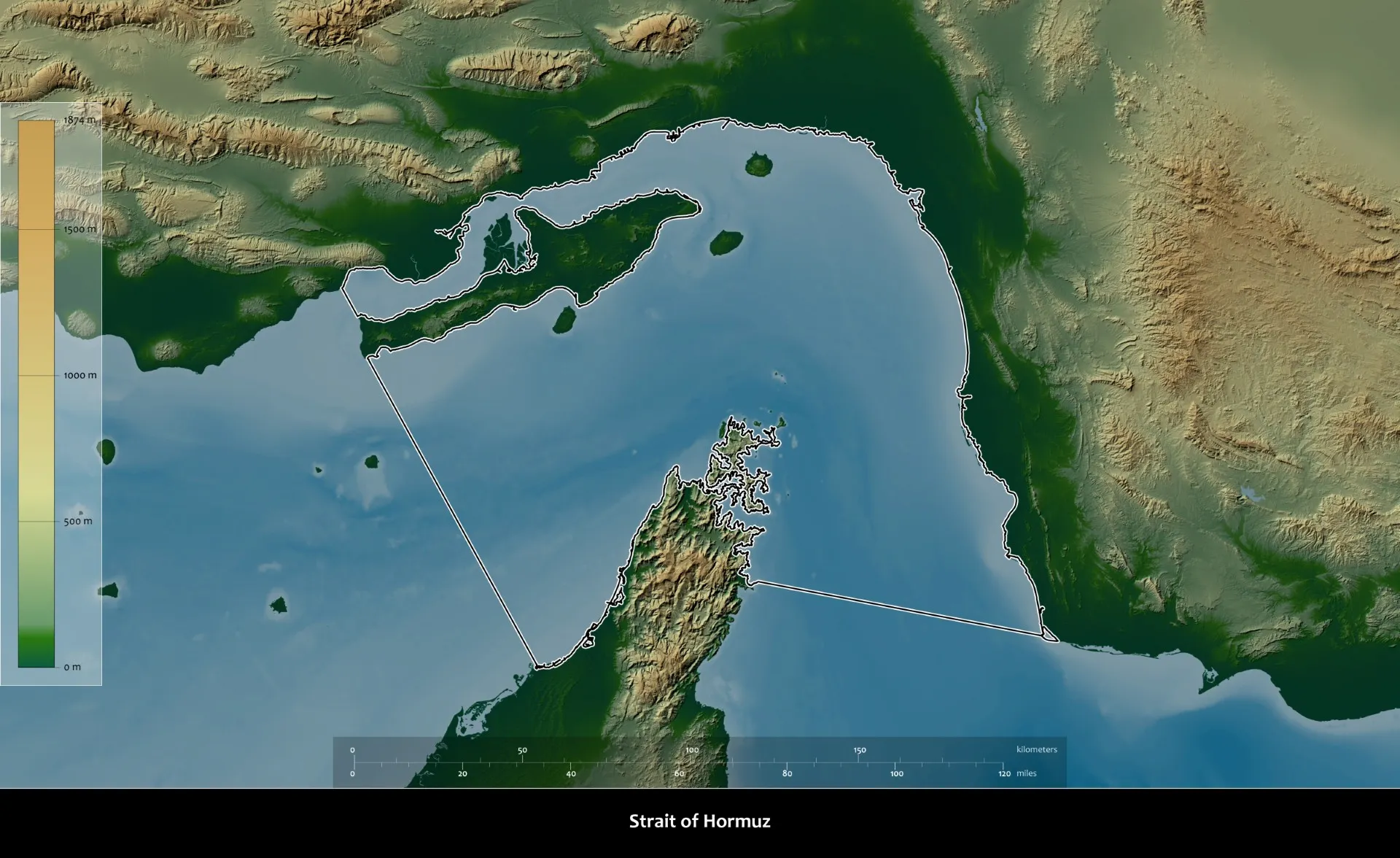
The Strait of Hormuz is, in the modern imagination, an energy chokepoint through which roughly a fifth of global petroleum and a comparable share of liquefied natural gas transit. Yet this narrow waterway carries a far older and more contested significance, one bearing directly on questions of identity, sovereignty, and historical legitimacy in the Arabian Gulf.1 This study addresses three questions and resolves each on the basis of the documentary and archaeological record.
First, it traces the origin of the name “Hormuz”, surveying the principal etymological theories, subjecting each to critical scrutiny, and arriving at a reasoned synthesis. Second, it reconstructs the history of the Arab population on both shores of the Strait, marshalling demographic and documentary evidence to show that the enduring human substrate of the region was Arab throughout recorded history, while Persian authority was characteristically a governing superstructure rather than a settled population. Third, it situates the Battle of Chains and the defeat of the Sasanian commander Hormuz in its correct chronological place within that continuum and corrects the popular but mistaken belief that the Strait was named after him.
The central finding is that the Strait of Hormuz, far from being a frontier dividing an Arab world from a Persian one, functioned for five millennia as a connective maritime highway whose permanent population was overwhelmingly Arab in character, even during the long intervals in which a Persian imperial umbrella claimed nominal sovereignty over its northern littoral.