
Programmes
5 Oct 2026
Clean Commitments, Clean Data Centres?
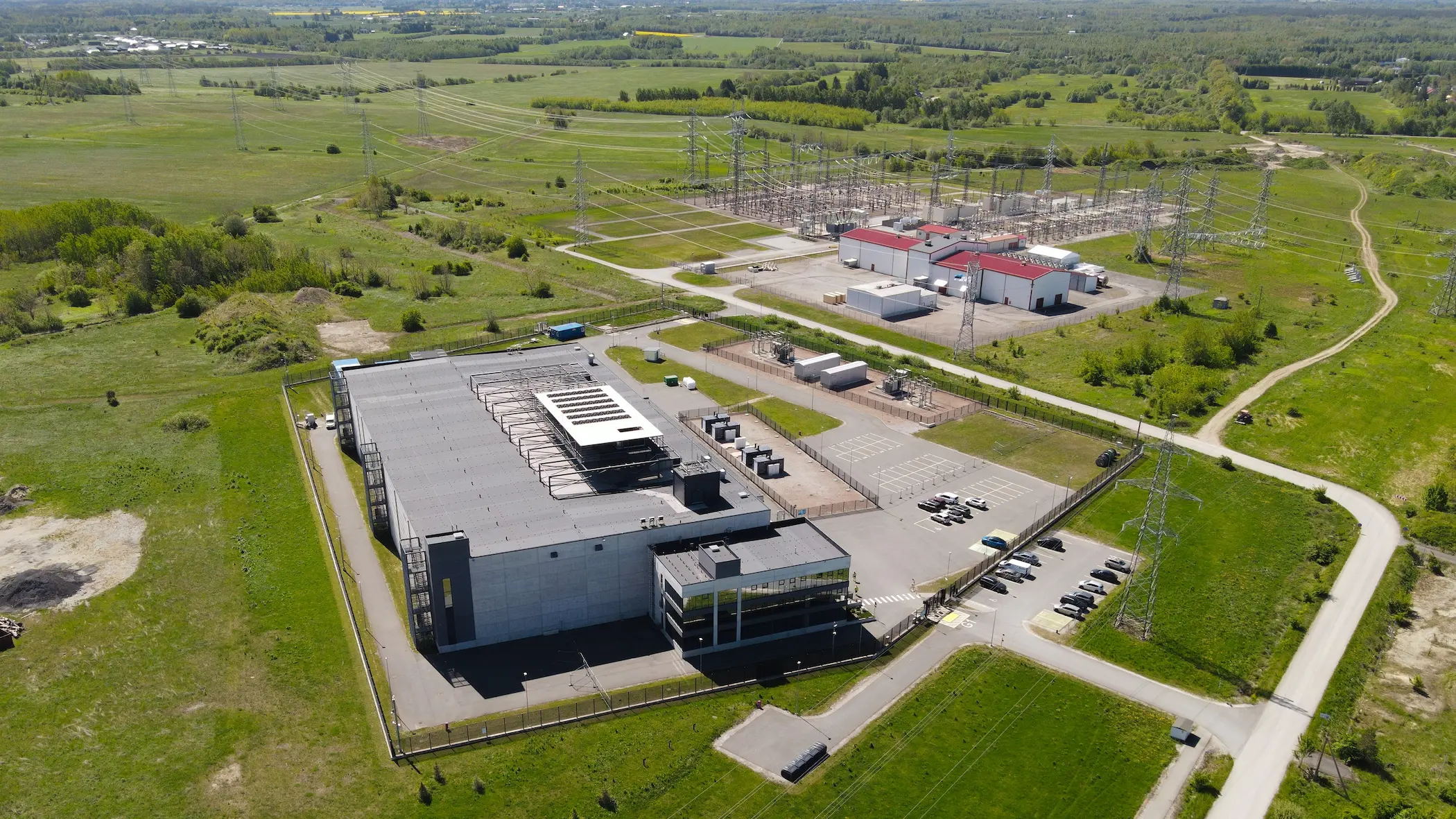
The rapid expansion of artificial intelligence is driving a parallel expansion of the infrastructure on which it depends. Data centres consumed around 415 terawatt-hours (TWh) of electricity in 2024, roughly 1.5% of global demand, and the International Energy Agency's base case projects about 945 TWh by 2030. Governments in the Gulf and Europe have responded by treating data centres as strategic assets while remaining committed to decarbonising their energy systems. Yet a commitment to clean energy does not necessarily amount to clean data centres.
This distinction is becoming increasingly important because the timelines differ so sharply. A data centre can be built in one to two years, whereas transmission takes far longer and new clean generation, nuclear in particular, longer still. When demand arrives before supply, the gap tends to be filled by gas. Ireland illustrates the dilemma: data centres accounted for 23% of its metered electricity in 2025, up from 5% in 2015, and the regulator now requires new large facilities to bring their own generation or storage. The central question, therefore, is whether AI infrastructure and the green transition can advance together.

Programmes
5 Oct 2026
Red Alert: Pneumonic Plague in Siberia
On October 2, the death of a 28-year-old laboratory technician at the Irkutsk Anti-Plague Institute set off emergency measures in Russia. Nearly 200 people have been placed under medical observation, the district hospital in Shelekhov has been quarantined, and Russia's chief sanitary official, Anna Popova, has travelled from Moscow to oversee the response. Moscow's public health watchdog, Rospotrebnadzor, describes the case only as "pneumonia of unknown etiology" and calls the situation in Irkutsk and Shelekhov "stable," while the head of neighbouring Buryatia has said the woman died of plague. This raises a critical question: is this an isolated, contained infection, or the first sign of a pneumonic plague outbreak that Moscow is struggling to manage, and to disclose? Pneumonic plague is the most dangerous form of the disease. It spreads person to person through respiratory droplets, can kill within days if untreated, and is treatable with early antibiotics. That makes the first days of any case decisive and makes official transparency as important as the clinical response.
Programmes
25 Sep 2026
The UN and the AI Power Struggle: Who Will Govern the Technology Shaping Global Security?
On 23 September 2026, the United Nations Security Council confronted an unusual development in international security. The people warning governments about the dangers of AI were not only diplomats or military officials, but the executives building the technology itself. OpenAI CEO Sam Altman, Anthropic CEO Dario Amodei, and Hugging Face co-founder Clément Delangue briefed the 15-member Council as governments grapple with increasingly capable AI systems that can write code, operate autonomously, interact with external systems, and potentially improve their own capabilities. Amodei warned that, if poorly managed, “AI could be a risk to humanity as a whole”, while Altman argued that decisions about AI could not be left to technology companies alone.
The meeting was significant because AI is rapidly moving from a technology-policy issue into the domain of international security. Yet the deeper question is not simply how dangerous AI may become. It is who will establish the rules governing a technology increasingly concentrated in the hands of a small number of states and companies. The UN is attempting to become the forum where those rules are debated, but it is entering a contest in which technological capabilities, economic power, national security interests, and competing visions of governance are already shaping the outcome.
Programmes
23 Sep 2026
Achilles Shield: Between Diversification and Dependence
Europe is seeking to strengthen its defence capabilities and reduce its long-standing reliance on the United States. This has encouraged European states to increase defence spending, expand domestic production and diversify their procurement partnerships beyond traditional suppliers. Yet diversification does not necessarily amount to strategic independence. Replacing reliance on one external supplier with reliance on several others may reduce concentration risk without giving European states full control over the technologies on which their defence capabilities depend.
This distinction is becoming increasingly important as modern military systems become more dependent on software, data and interconnected command-and-control architectures. A country may possess the physical hardware of a weapons system while remaining dependent on a foreign supplier for critical software, upgrades, maintenance or technological integration. The question of who controls these underlying technologies can therefore be as important as who manufactures or owns the weapon itself.
The recent Achilles Shield agreement between Greece and Israel provides a useful illustration of this dilemma. The €3 billion agreement will establish a multilayered Greek air and missile defence network incorporating Israeli systems alongside a Greek-controlled command-and-control architecture. However, a dispute over access to the systems' source code has raised questions over the extent of Greece's technological control. The case highlights a broader issue for European defence: can greater diversification deliver genuine independence if critical elements of military capabilities remain technologically dependent on external powers?

Programmes
22 Sep 2026
The New Space Economy: How Space Is Becoming the Next Strategic Frontier
The next great economic frontier may not be on Earth. Space is increasingly becoming more crowded, more commercial, and more strategically important, as governments and companies compete to control the infrastructure that supports communications, navigation, finance, climate monitoring, defence, and the next generation of digital services. The shift is not simply about returning to the Moon or reaching Mars. It is about the gradual transformation of orbit into an extension of the global economy, with consequences for national power, technological dependence, and international governance.
The scale of this transformation is already visible. Public investment remains the foundation of the sector, while private firms increasingly provide launch services, satellite communications, Earth observation, and data analytics. At the same time, the boundary between civilian and military space activity is becoming harder to define. Satellites that support agriculture, logistics, or emergency response may also support intelligence, targeting, secure communications, or military navigation. As space infrastructure becomes essential to life on Earth, access to orbit is becoming a question of economic resilience and strategic autonomy.
Programmes
17 Sep 2026
The Productivity Pill: The Economics of Brain Drugs Moving Beyond Medicine
On August 5, 2026, the FDA approved Orzeyful, a new drug for narcolepsy, a condition that affects roughly 120,000 Americans. It works by improving wakefulness, attention and motivation — the same things any employer, student or soldier would happily pay to have more of. That's the real story here, not a narcolepsy drug, but the first real test of how far the line between treating an illness and enhancing a healthy brain can bend. Nobody is claiming Orzeyful will end up in a healthy person's medicine cabinet, but drugs built for one purpose have a track record of finding a second, far more lucrative one, and once a pill can sharpen focus in the sick, keeping it away from the well gets harder by the year. That is the shift worth watching: what it would mean for who can afford access, for turning ordinary tiredness into a diagnosis, for misuse, and for a definition of “normal” human performance that keeps sliding the moment “enhanced” goes on sale.
Programmes
8 Sep 2026
Europe’s Next Battle: The Coming Food Crisis
The last few years in European history can be described as “one battle after another”. From the start of the Russia-Ukraine war to the return of U.S. President Donald Trump for a second term and all of the headache that followed, Europe has found itself dealing with one challenge after another. Now, after years of geopolitical tensions and uncertainty, Europe may be heading towards another battle, one that could hit much closer to home: food. The continent is facing the prospect of a food shortage, and the problem has already begun to take shape.
The reasons behind it span from extreme heatwaves that are having a negative impact on crops and agriculture at large, to war-related disruptions that are affecting key trade routes and food supplies. While all of the above is already bad news for Europe, the worse possibility is that the problem might not stop at European doors and could extend into a global food crisis. Accordingly, what comes next for Europe, and can Europeans secure enough food for their people?

Programmes
7 Sep 2026
Congress Has a New Invisible Lobbyist: The Rise of the Political Chatbot
Congress now has a lobbyist that never registers, never discloses a client, and never leaves a paper trail, and it sits open in a browser tab on nearly every staffer's desk. The House Office of Legislative Counsel, the institution responsible for turning policy ideas into legally binding text, has reportedly been inundated with AI-generated bill proposals so riddled with incorrect statutory references and sloppy drafting that its lawyers now spend more time fixing them than they would spend writing the bills from scratch. Around the same time, it became clear how far this had spread. Members of Congress and their staff are increasingly using systems such as ChatGPT, Claude, Copilot, and Gemini for policy research, legislative drafting, speeches, and constituent replies.
On the surface, this looks like any workplace chasing efficiency. But Congress is not any workplace. The information lawmakers receive, the way problems get framed, and the exact language that ends up in statute can affect millions of people. So the real question is not whether chatbots make congressional offices faster. It is what happens once the systems helping policymakers research, frame, and write legislation become an active participant in the political process itself.
Programmes
5 Sep 2026
What If: AI Erases the Books It Learns From?
The latest AI boom is creating an unusual paradox. The more AI companies need high-quality information, the more aggressively they are buying the physical books that contain it, and in some cases destroying those books once their contents have been absorbed. In recent months, independent booksellers in the United States, Britain, Europe, and elsewhere have reported sudden surges in unexplained bulk purchases, sometimes involving hundreds of unrelated and obscure titles. Some of these books are subsequently being sent to facilities where their bindings are removed, their pages rapidly scanned, and the remains discarded or recycled.
The scale could become far larger than the cases already exposed. ISBNdb, a major book database, now facilitates purchases ranging from 1,000 to one million books per order, while booksellers have described previously unsold titles suddenly becoming highly sought after. At the same time, an Amazon facility in Las Vegas has been identified as a site where employees described cutting book spines, scanning loose pages, and disposing of the resulting paper. The controversy raises a question that extends well beyond publishing. What happens if the race to build better AI systematically removes the physical sources from which that intelligence was created?

Programmes
2 Sep 2026
Pulse: Who Controls the Region’s Food?
Food security has become one of the most consequential strategic questions facing the Arab world. Heavy reliance on imported grain, seeds, and agricultural inputs, combined with limited control over pricing and distribution, has left the region exposed to decisions made far beyond its borders.

Programmes
26 Aug 2026
Beyond PEPFAR: How America’s Aid Retreat Is Reshaping Global Health Governance
For over two decades, The President's Emergency Plan for AIDS Relief (PEPFAR) stood as the clearest example of what concentrated donor power could do: one country's political will, translated into billions of dollars a year, credited with saving more lives than any single global health program in history. That era is now ending, not through a managed transition but through an abrupt, largely unplanned withdrawal that began within days of the second Trump administration taking office in January 2025. The story that follows is not simply about cuts to HIV/AIDS funding, but it is about what happens when the architecture of global health financing loses its dominant pillar, who scrambles to fill the resulting vacuum, whether the countries left exposed can build the fiscal and institutional capacity to stand on their own, and whether the system that emerges is more fragile or more resilient than the one it replaces. The transition is already producing real costs: closed clinics, disrupted treatment, and rising infections in countries that had spent years bringing their epidemics under control. Besides, it is also accelerating financing reforms, regional cooperation, and domestic manufacturing that donor dependence had, for twenty years, made largely unnecessary. Both of these things are true at once, and this analysis traces both.
Programmes
21 Aug 2026
The Civilian Face of Chinese Sea Power
Hundreds of fishing boats ring a reef no one is technically fighting over. No missiles fired, no warships trading shots, just a coast guard that cannot get close and fishermen who eventually leave. Weeks later, the water functions as someone else's. China has spent over a decade building this capability: the People's Armed Forces Maritime Militia, a fleet that flies no naval flag and answers to no declaration of war, subsidized and coordinated to advance state objectives in the South China Sea without crossing the threshold that would draw in the US Navy, trigger a treaty, or unite the region against Beijing.
The significance of the militia extends beyond China's activities in the South China Sea. It provides an example of a broader trend in which civilian assets are increasingly incorporated into national security strategies. The more useful question is not what China is doing with these assets, but why this specific tool, and what it signals about how the next round of great-power competition will be fought.