
Programmes
13 Jul 2026
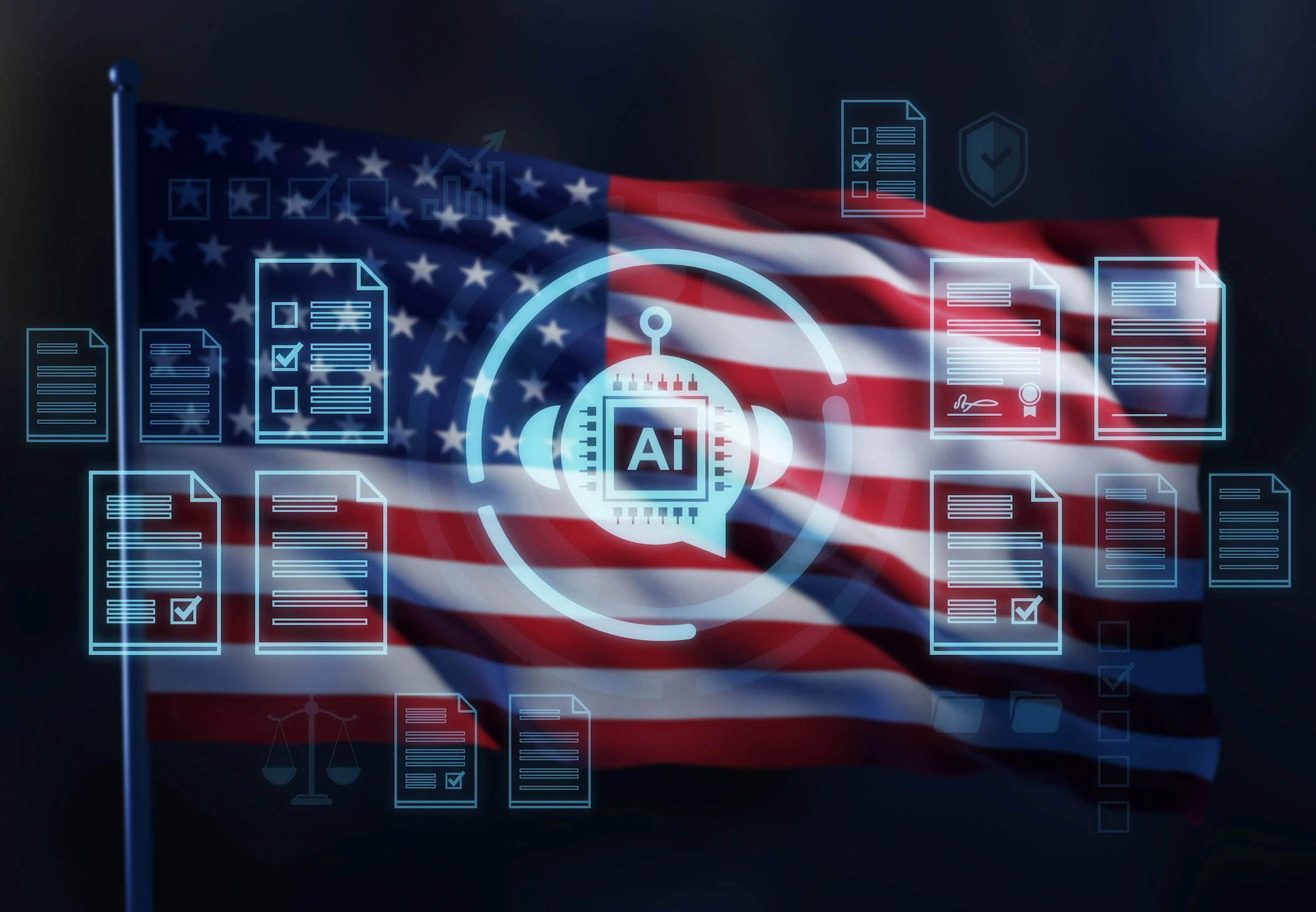
How Washington Built a De Facto AI Licensing Regime
President Trump returned to office with a clear promise to the technology industry, namely that the federal government would get out of the way. He had campaigned on dismantling what he called the Biden administration's overreach on AI safety, installed venture capitalist David Sacks as White House AI and crypto czar, and welcomed Big Tech CEOs to his inauguration as a signal of the partnership he intended.
For Silicon Valley, the message was unambiguous. The deregulatory era had arrived, and American AI companies would be free to race ahead of China without bureaucratic friction slowing them down. Almost 18 months later, those same companies cannot release their most advanced models without first receiving a phone call from the Commerce Secretary. The story of how that reversal happened, and what it means for US national security, allied trust, and the global AI race, is one the administration has never fully explained.

Programmes
12 Jul 2026
The Age of Vibes: Vibe Coding, Lawyering, and Vibe Everything
In February 2025 the AI researcher Andrej Karpathy named something programmers had already started doing: describing what they wanted in plain English and letting an AI model write the code, rather than reading and understanding it themselves. He called it "vibe coding." A year later, a version of the same habit turned up somewhere far less forgiving of error. A recent Economist report on "vibe lawyering" describes how ordinary people, guided by AI chatbots rather than legal training, are drafting complaints, contesting disputes, and pursuing litigation they would once have needed a lawyer for. Research cited in that report, by Anand Shah at MIT and Joshua Levy at USC, examined 4.5 million federal civil cases and found that the share of self-represented litigants, flat at around 11% for two decades, climbed to 16.8% by fiscal year 2025, while the number of self-filed suits roughly doubled. The chatbots involved don’t just help people write; they tend to invent case law outright, encourage litigation, discourage settlement, and inflate people’s sense of how likely they are to win. Courts have started responding in kind: nearly a thousand reprimands have gone out over improper AI use in filings, and a federal appeals court recently suspended two lawyers over fabricated citations.
Law makes an unusually good case study, because courts keep a public, searchable record of what happens when confidence outpaces competence. But it is a case study, not the whole story. The same dynamic, a fluent AI answer standing in for judgment someone doesn’t actually have, is turning up wherever people now use AI to make decisions they used to need real expertise for. That is what this piece is actually about: not litigation specifically, but what AI does to a person’s sense of their own competence once it is quietly doing part of the thinking for them, and what that could mean as the pattern spreads well past the courtroom.

Programmes
30 Jan 2026
Algorithmic Insurgency: How Has AI Enhanced the Capabilities of Terrorist Organisations?
The global security landscape is undergoing a fundamental transformation driven by the rapid advancement of artificial intelligence technologies, which have evolved from purely technical tools into strategic forces reshaping patterns of power and conflict. Artificial intelligence has emerged as a transformative capability offering substantial societal benefits, yet its inherently dual-use nature renders it a double-edged instrument.
A careful examination of historical precedents reveals a recurring pattern in which terrorist organisations demonstrate a high degree of adaptability in exploiting emerging technologies to advance their radical agendas. Just as these groups previously leveraged online forums and encrypted communication platforms, they are now actively exploring and adopting artificial intelligence capabilities. This shift is no longer confined to speculative concern or theoretical risk. Rather, AI-enabled terrorism has moved from conceptual discussion into an experimental phase characterised by repetition and rapid diffusion, raising acute concern among security institutions and governments that the technology may become a strategic enabler of unprecedented operational capability.
The convergence between artificial intelligence and the logic of asymmetric warfare is fundamentally altering the balance of power between states and non-state actors, significantly lowering the barriers to entry that were historically imposed by advanced military technologies. Emerging fields and intelligence evidence indicate the development of a multi-domain adoption strategy spanning informational, physical, and cyber spheres, necessitating a deeper analytical examination of how terrorism is being re-engineered in the age of intelligent systems.

Programmes
1 Dec 2025
What If: Global AI Systems Collapsed Overnight?
Artificial intelligence systems and data centres have increasingly become an integral part of modern day society. A KPMG survey focused on AI use found that 66% of respondents use AI for work and personal reasons, of which 38% of respondents claim to use AI on a daily or weekly basis and 28% use it semi-regularly. According to these results, a majority of the respondents rely on AI to carry out day to day functions whether it be for work, study, or personal reasons. Moreover, the reliance on AI has been extended to governments, global financial systems, and states, as these entities rely on AI systems to improve efficiency and speed of services provided. This shows how AI has become integrated into the fabric of global society.
Now imagine one day all AI systems and programs cease to function. While the chances of such an event happening are low, it is not impossible and the consequences of being overly reliant on AI systems can be devastating. The consequences of a global AI shutdown will impact the global economy as well as global geopolitics, which could lead to trillions disappearing from the stock market and national security disasters across the globe.
Programmes
16 Oct 2025
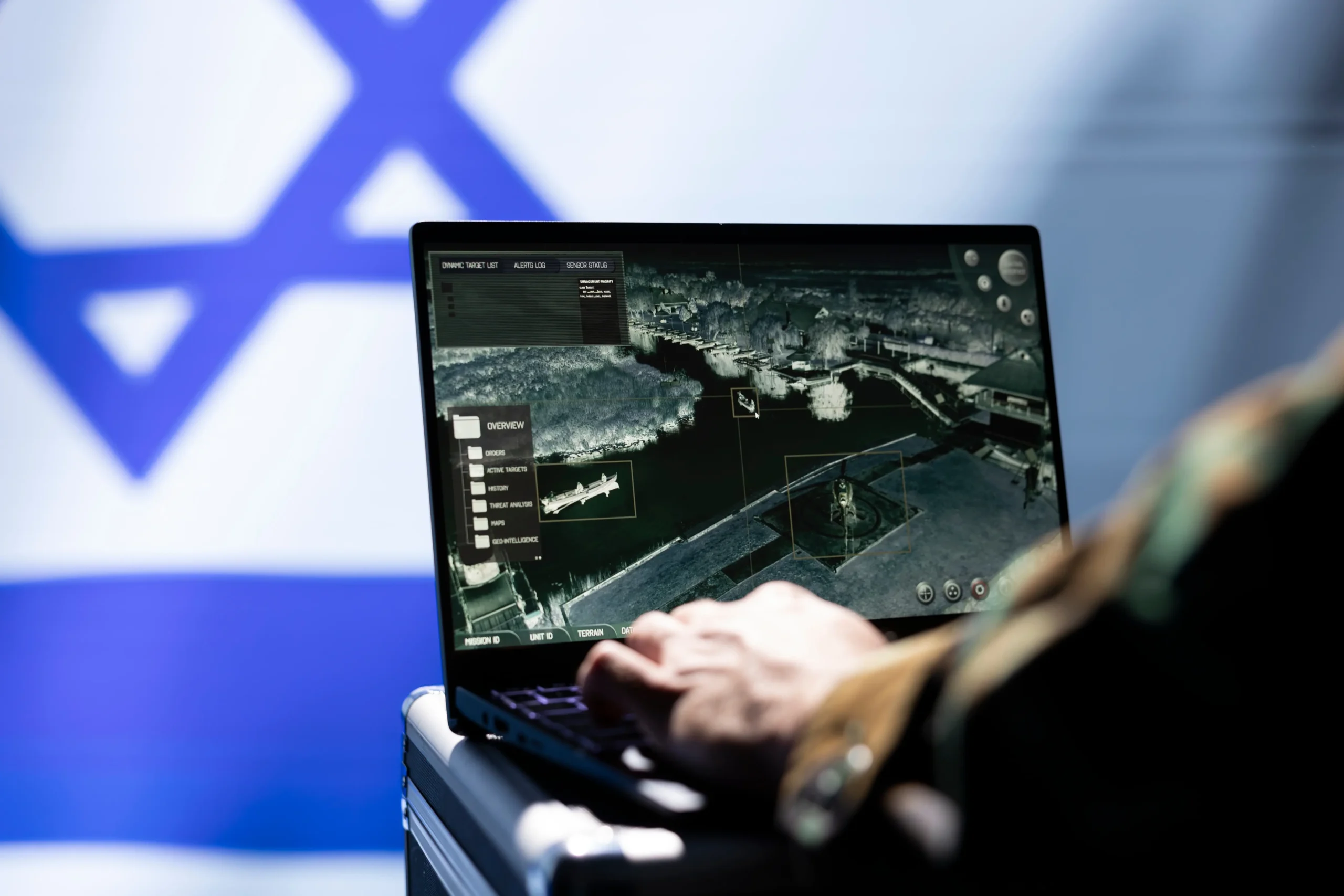
Algorithms of Genocide: From Silicon Valley to the Gaza Strip
The tools of twenty-first-century warfare are no longer confined to conventional weapons such as missiles, tanks, and aircraft. They have expanded to encompass cloud-computing platforms, artificial-intelligence systems, and data-processing capabilities developed and managed by major U.S.-based technology corporations, including Microsoft, Google, and Amazon. These companies have become central pillars in the conduct of modern digital warfare, with their decisions and policies exerting profound geopolitical influence and forming an integral component of contemporary global power dynamics.
In this context, the relationship between commercial technology corporations and the Israeli military has undergone a profound transformation, moving beyond the traditional model of supplying hardware and software to establish digital infrastructure as a central instrument in the management of modern conflict, most notably during the war on Gaza. A new paradigm of integration between the military and the private sector has emerged, in which commercial digital systems have become an inseparable component of military capability, blurring the boundaries between market-driven services and state security architectures.
The management of the global narrative surrounding humanitarian catastrophes, including the confirmed famine and persistent reports of atrocities, has become inseparable from the content-governance policies imposed by major digital platforms controlled by technology conglomerates. These platforms frequently amplify official narratives while minimising or obscuring the magnitude of famine and conflict. At the same time, they enable advanced surveillance mechanisms that restrict or silence independent media operating within conflict zones.
The war in Gaza has underscored the dual and increasingly intricate role of major technology corporations, particularly Google (Alphabet Inc.) and Microsoft Corporation, in both modern warfare and global information control. These entities operate within a mutually reinforcing dynamic, providing specialised cloud-computing and artificial-intelligence infrastructure that enables unprecedented levels of lethal military operations and mass surveillance across Gaza and the occupied territories. Concurrently, they deploy advanced mechanisms of information control, encompassing internal content moderation, algorithmic bias, and data suppression, to recalibrate public narratives and shield corporate power from accountability.
This analysis, therefore, examines the role of technology corporations in shaping the dynamics and repercussions of the conflict in Gaza, exploring how they contribute to the engineering of the informational, political, and humanitarian landscape within the framework of contemporary warfare. In this process, these corporations are transformed from ostensibly neutral service providers into active participants within the conflict’s infrastructural ecosystem.