
Programmes
29 Jun 2026
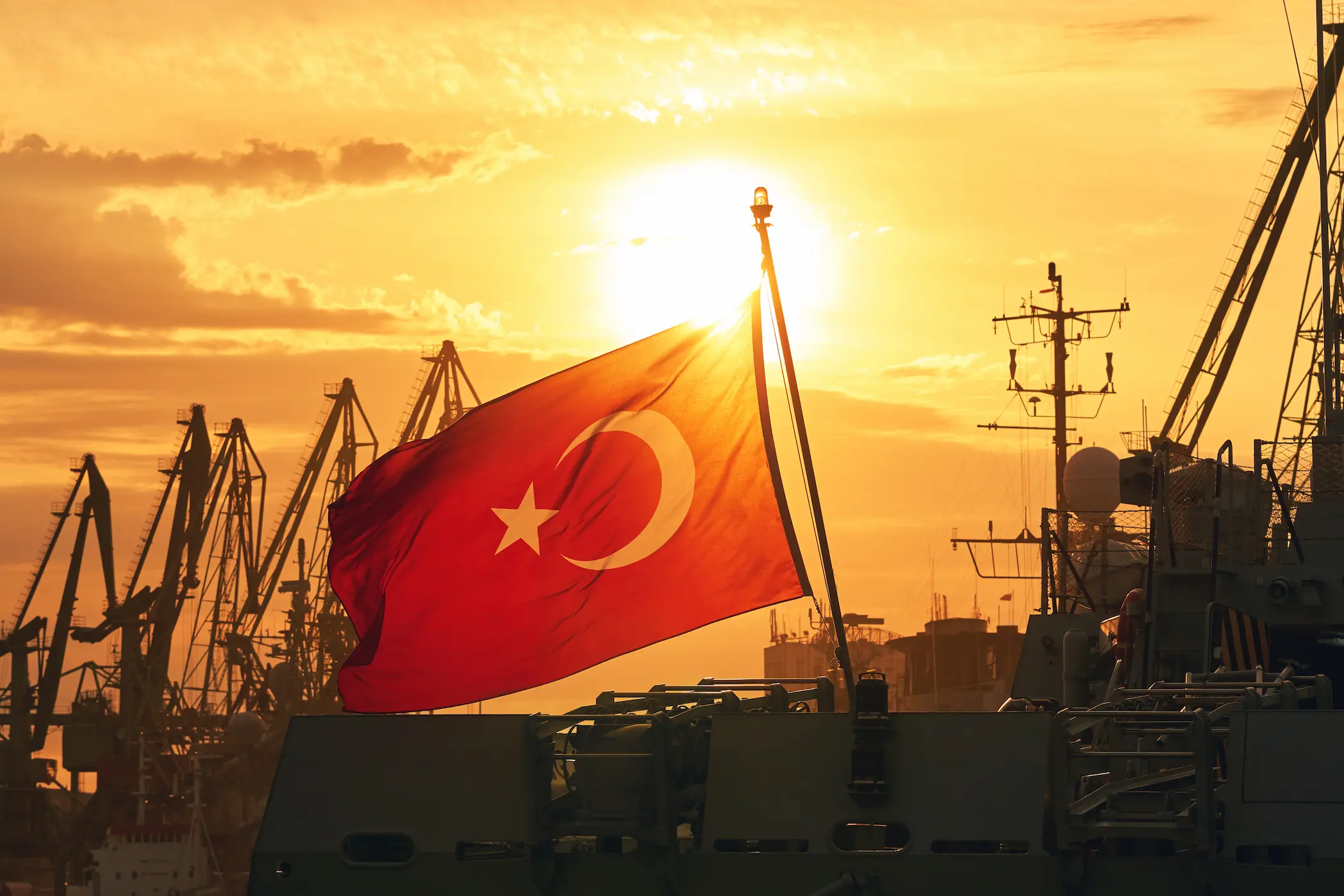
Ankara’s Defensive Rise: A New NATO Path?
Turkey’s rise as a defence-industrial power is no longer a peripheral subplot in NATO politics. It has become a structural development with implications for how the alliance equips itself, how regional powers diversify procurement, and how strategic influence is exercised between Europe, the United States, and the Middle East. While much of the public discussion around NATO still revolves around burden-sharing targets and the Russian threat, a more consequential transformation is unfolding in parallel: Turkey is building a defence-industrial corridor that links alliance demand, regional export markets, and domestic technological ambition.
The timing gives this argument unusual weight. Turkey is set to host NATO leaders in Ankara on 7–8 July 2026, a moment that places its political role and industrial trajectory under the same spotlight. That summit matters not simply because it will convene alliance leaders in the Turkish capital, but because it comes after a period in which Turkey’s defence sector has expanded in scale, deepened in sophistication, and broadened its customer base across Europe, the Gulf, Africa, and Asia.
What emerges from this trajectory is not a Turkish substitute for NATO, nor a coherent anti-Western bloc inside the alliance. It is something more complex and, in strategic terms, more significant: an alternative source of military capability inside NATO that others can increasingly use when Washington or Brussels appear too slow, too restrictive, or too politically encumbered. In that sense, Ankara is not building a rival alliance. It is building an alternative industrial lane within the existing one.

Programmes
8 Mar 2026
AI in War: What the Iran War Reveals About the Pentagon’s Algorithms
On Feb. 28, 2026, the United States and Israel launched a military campaign against Iran, striking more than 900 targets in the first 12 hours and killing Iran’s Supreme Leader Ayatollah Ali Khamenei. The conflict is still raging, with strikes continuing across the country and the region destabilising by the day. Yet behind the missiles and fighter jets lies another revolution in how this war is being fought.
AI, the same technology that millions use daily to draft emails or summarise documents, has become a central instrument of lethal military power. Anthropic’s Claude AI model is embedded inside the Pentagon’s targeting and intelligence apparatus, processing satellite imagery, intercepted communications, and operational data to help commanders decide who to strike, where, and when.
What once required days of human analysis is now compressed into hours or minutes, enabling a pace of warfare that no prior generation of military planners could have executed. AI has been present on battlefields before, from drone guidance systems to satellite image analysis, but the Iran conflict represents its most expansive and consequential deployment to date, and the full implications of that scale are still unfolding.

Programmes
30 Jan 2026
Algorithmic Insurgency: How Has AI Enhanced the Capabilities of Terrorist Organisations?
The global security landscape is undergoing a fundamental transformation driven by the rapid advancement of artificial intelligence technologies, which have evolved from purely technical tools into strategic forces reshaping patterns of power and conflict. Artificial intelligence has emerged as a transformative capability offering substantial societal benefits, yet its inherently dual-use nature renders it a double-edged instrument.
A careful examination of historical precedents reveals a recurring pattern in which terrorist organisations demonstrate a high degree of adaptability in exploiting emerging technologies to advance their radical agendas. Just as these groups previously leveraged online forums and encrypted communication platforms, they are now actively exploring and adopting artificial intelligence capabilities. This shift is no longer confined to speculative concern or theoretical risk. Rather, AI-enabled terrorism has moved from conceptual discussion into an experimental phase characterised by repetition and rapid diffusion, raising acute concern among security institutions and governments that the technology may become a strategic enabler of unprecedented operational capability.
The convergence between artificial intelligence and the logic of asymmetric warfare is fundamentally altering the balance of power between states and non-state actors, significantly lowering the barriers to entry that were historically imposed by advanced military technologies. Emerging fields and intelligence evidence indicate the development of a multi-domain adoption strategy spanning informational, physical, and cyber spheres, necessitating a deeper analytical examination of how terrorism is being re-engineered in the age of intelligent systems.
Programmes
18 Sep 2025
The Semiconductor Cold War: U.S. vs. Russia, China and India
The global competition over semiconductors and related military technologies has become the central axis of great-power rivalry. The United States maintains its leadership in the global semiconductor industry, with American companies securing roughly half of the global semiconductor market. However, this dominance faces a growing challenge from China, which accounted for 20% of global semiconductor sales in 2024. Beijing’s ambition to achieve self-sufficiency in semiconductors is steadily advancing despite ongoing trade tensions and intellectual property restrictions imposed by Washington amidst the broader ‘tech war.’ China aims to reach 50% self-sufficiency in semiconductor production by the end of the year, reinforced by significant investments in R&D and market expansion by Chinese firms.
In contrast, Russia’s position in semiconductor-dependent military industries is increasingly constrained. Although Russia retains expertise in weapons design, its reliance on imported materials and advanced chip-making equipment from Western countries exposes critical vulnerabilities. Western sanctions, introduced in response to Russia’s military actions in Ukraine, have sharply limited Moscow’s access to these essential inputs. In response, Russia has sought alternative suppliers, with China emerging as its largest source of semiconductor materials. These dynamic forms part of the broader Russia-India-China (RIC) trilateral framework, underpinning Moscow’s strategic pivot toward Eastern partnerships.
Meanwhile, India is rapidly evolving as a significant player in the semiconductor sector. The country’s announcement in September of its first indigenous chip, “Vikram 32,” marks a milestone in New Delhi’s pursuit of technological self-reliance and signals India’s potential emergence as a competitor to U.S. semiconductor dominance. India’s increasing engagement with Russia and China reflects a pragmatic alignment based on mutual interests, particularly in the context of escalating policy tensions with Washington. Notably, U.S. tariffs imposed on India’s trade in Russian oil have further incentivized this trilateral collaboration.
Collectively, the China-Russia-India “troika” represents a coalition of shared interests rather than a formal ideological alliance. Should this partnership strengthen, it could significantly bolster their semiconductor manufacturing capabilities and pose a formidable challenge to the American industry. Nevertheless, lingering frictions—such as unresolved border disputes, differing economic priorities, technological gaps, and the impact of sanctions—are likely to impede seamless technological integration. The United States still wields substantial influence over India, with opportunities to attract New Delhi through increased investments, tariff reductions, and advanced technology cooperation. Ultimately, the trajectory of the RIC semiconductor partnership holds profound implications for the global order. A successful integration of this “troika” chip industry with their respective military technologies could catalyse the rise of a multipolar system, revolutionizing surveillance, air defence, drone capabilities, and the broader defence industrial base, thereby reshaping international power dynamics.