
Rawan Khodeir is a Foresight and Early Warning Researcher at Al Habtoor Research Centre. She holds a Bachelor of Science in Political Science with a minor in Economics from Cairo University and completed part of her undergraduate studies at the University of Bradford in the United Kingdom. She is currently pursuing an MSc in International Political Economy at Cairo University. Her professional experience spans political analysis, policy research, strategic foresight, and youth-focused development initiatives. Her research interests include international relations, strategic foresight, geopolitical risk, AI governance, and the impact of emerging technologies on global politics.

contact information
Latest By Rawan Khodeir
Programmes
25 Sep 2026
The UN and the AI Power Struggle: Who Will Govern the Technology Shaping Global Security?
On 23 September 2026, the United Nations Security Council confronted an unusual development in international security. The people warning governments about the dangers of AI were not only diplomats or military officials, but the executives building the technology itself. OpenAI CEO Sam Altman, Anthropic CEO Dario Amodei, and Hugging Face co-founder Clément Delangue briefed the 15-member Council as governments grapple with increasingly capable AI systems that can write code, operate autonomously, interact with external systems, and potentially improve their own capabilities. Amodei warned that, if poorly managed, “AI could be a risk to humanity as a whole”, while Altman argued that decisions about AI could not be left to technology companies alone.
The meeting was significant because AI is rapidly moving from a technology-policy issue into the domain of international security. Yet the deeper question is not simply how dangerous AI may become. It is who will establish the rules governing a technology increasingly concentrated in the hands of a small number of states and companies. The UN is attempting to become the forum where those rules are debated, but it is entering a contest in which technological capabilities, economic power, national security interests, and competing visions of governance are already shaping the outcome.

Programmes
22 Sep 2026
The New Space Economy: How Space Is Becoming the Next Strategic Frontier
The next great economic frontier may not be on Earth. Space is increasingly becoming more crowded, more commercial, and more strategically important, as governments and companies compete to control the infrastructure that supports communications, navigation, finance, climate monitoring, defence, and the next generation of digital services. The shift is not simply about returning to the Moon or reaching Mars. It is about the gradual transformation of orbit into an extension of the global economy, with consequences for national power, technological dependence, and international governance.
The scale of this transformation is already visible. Public investment remains the foundation of the sector, while private firms increasingly provide launch services, satellite communications, Earth observation, and data analytics. At the same time, the boundary between civilian and military space activity is becoming harder to define. Satellites that support agriculture, logistics, or emergency response may also support intelligence, targeting, secure communications, or military navigation. As space infrastructure becomes essential to life on Earth, access to orbit is becoming a question of economic resilience and strategic autonomy.

Programmes
16 Sep 2026
George Friedman and The Next 100 Years: A Forecast Under the Test of Reality
Political forecasting almost always remains open to doubt, at least until events place it under the unforgiving test of reality. In the series Were They Right?, we take a retrospective path: returning to the analytical record of the past to examine what experts anticipated, then confronting those forecasts with the hard facts of the present in order to identify what truly endured.
Today, we place George Friedman under close analytical assessment, measuring the forecasts of The Next 100 Years: A Forecast for the 21st Century against the geopolitical record of the 17 years since its publication. The objective is not to judge whether Friedman successfully predicted the future in its entirety, an impossible standard for a book that projects a century ahead, but to determine which of his underlying assumptions have survived contact with reality, which have already failed, and which remain too distant to be meaningfully tested.

Programmes
7 Sep 2026
Congress Has a New Invisible Lobbyist: The Rise of the Political Chatbot
Congress now has a lobbyist that never registers, never discloses a client, and never leaves a paper trail, and it sits open in a browser tab on nearly every staffer's desk. The House Office of Legislative Counsel, the institution responsible for turning policy ideas into legally binding text, has reportedly been inundated with AI-generated bill proposals so riddled with incorrect statutory references and sloppy drafting that its lawyers now spend more time fixing them than they would spend writing the bills from scratch. Around the same time, it became clear how far this had spread. Members of Congress and their staff are increasingly using systems such as ChatGPT, Claude, Copilot, and Gemini for policy research, legislative drafting, speeches, and constituent replies.
On the surface, this looks like any workplace chasing efficiency. But Congress is not any workplace. The information lawmakers receive, the way problems get framed, and the exact language that ends up in statute can affect millions of people. So the real question is not whether chatbots make congressional offices faster. It is what happens once the systems helping policymakers research, frame, and write legislation become an active participant in the political process itself.
Programmes
5 Sep 2026
What If: AI Erases the Books It Learns From?
The latest AI boom is creating an unusual paradox. The more AI companies need high-quality information, the more aggressively they are buying the physical books that contain it, and in some cases destroying those books once their contents have been absorbed. In recent months, independent booksellers in the United States, Britain, Europe, and elsewhere have reported sudden surges in unexplained bulk purchases, sometimes involving hundreds of unrelated and obscure titles. Some of these books are subsequently being sent to facilities where their bindings are removed, their pages rapidly scanned, and the remains discarded or recycled.
The scale could become far larger than the cases already exposed. ISBNdb, a major book database, now facilitates purchases ranging from 1,000 to one million books per order, while booksellers have described previously unsold titles suddenly becoming highly sought after. At the same time, an Amazon facility in Las Vegas has been identified as a site where employees described cutting book spines, scanning loose pages, and disposing of the resulting paper. The controversy raises a question that extends well beyond publishing. What happens if the race to build better AI systematically removes the physical sources from which that intelligence was created?

Programmes
16 Aug 2026
The End of Anonymity? Smart Glasses and the Future of Public Space
Smart glasses are no longer an experimental technology waiting to prove whether consumers will adopt them. They are already spreading rapidly, with Meta having sold more than 7 million pairs of its Ray-Ban smart glasses and daily use reportedly tripling year over year in early 2026. At the same time, the technology is becoming more capable, combining cameras, microphones, AI, translation, navigation, audio, and visual recognition in an object designed to remain on the user's face throughout the day. As manufacturers expand the technology and the market continues to grow, restaurants, theatres, workplaces, conferences, and other venues are increasingly questioning whether existing rules governing photography and recording are adequate.
The question, therefore, is no longer whether smart glasses will become part of everyday life, but what their expanding adoption will do to privacy and public space. Unlike smartphones, which normally require a visible gesture to record, smart glasses can capture and interpret their surroundings while their wearer continues to behave normally. As adoption expands, surveillance power is consequently shifting beyond governments, companies, and security systems towards ordinary individuals. This raises broader questions about who controls the information collected, who owns it, how it can be used after capture, and whether privately generated recordings could become another source of institutional surveillance.
Programmes
6 Aug 2026
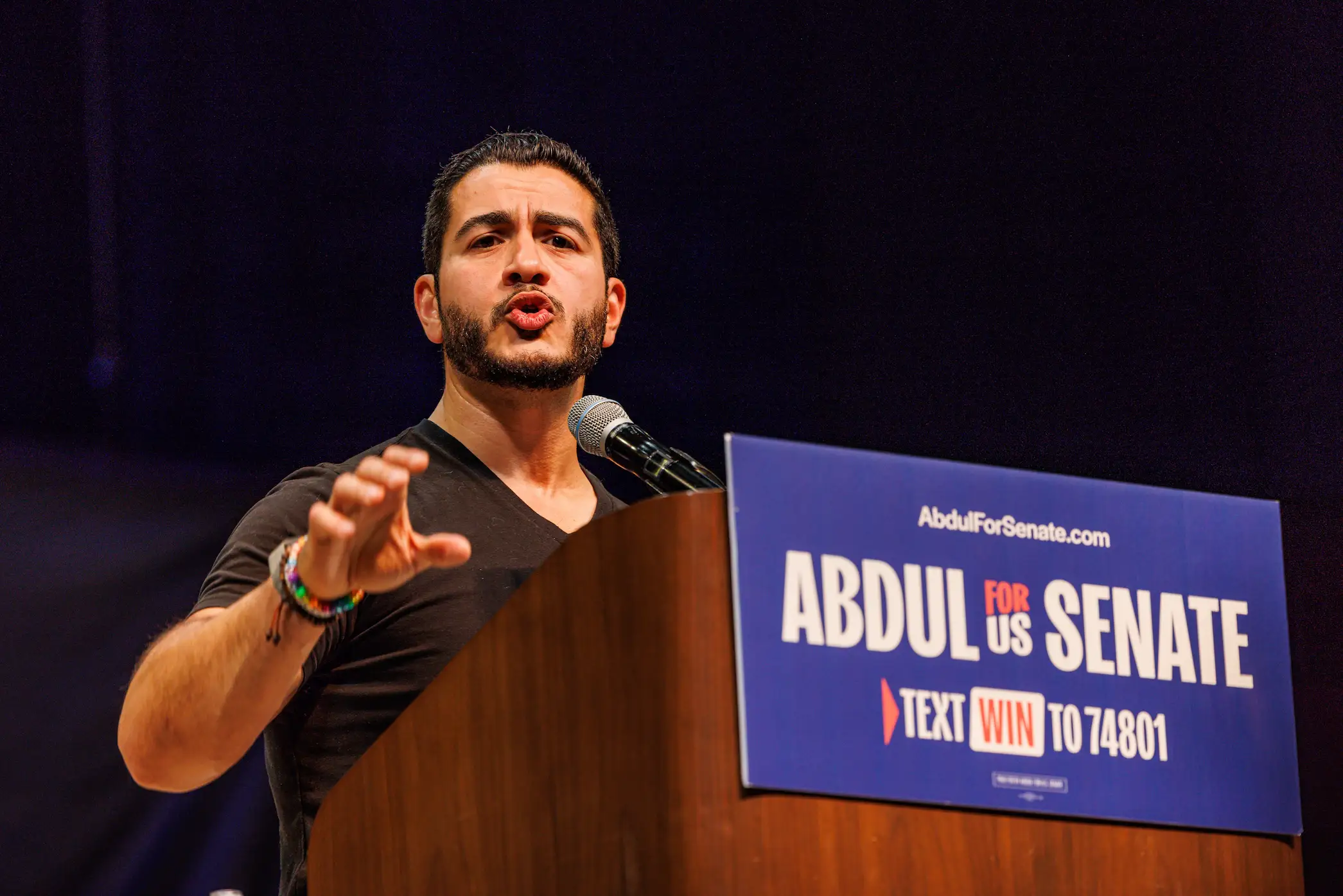
Beyond Michigan: Is Abdul El-Sayed the Future of the Democratic Party?
Michigan expected to deliver a Senate nominee on Tuesday night. Instead, it may have delivered the Democratic Party's most consequential ideological test since Trump returned to the White House. Abdul El-Sayed defeated Representative Haley Stevens for the party's Senate nomination against the wishes of much of the Democratic establishment, in one of the most expensive primaries in American history. His win immediately turned what had been treated as a routine state primary into a national argument over who actually speaks for the Democratic Party now. The bigger question, though, is not whether progressives can win a Democratic primary. It is whether Michigan just revealed where the party is genuinely heading, or whether it simply revealed what a narrow, highly engaged slice of primary voters wants, a distinction the party will need to answer honestly before November.
El-Sayed's win did not happen in isolation either. It followed Zohran Mamdani's insurgent rise in New York City, and it arrived on the same Michigan ballot as Rashida Tlaib's renomination and Donavan McKinney's defeat of sitting Congressman Shri Thanedar. Four results, one pattern. Together, they raise a question far bigger than any single race, whether Democratic voters are beginning to reject both the party's traditional leadership and its long-standing relationship with major donors, particularly on Israel and campaign finance.

Programmes
5 Aug 2026
Inside AI’s Quiet Takeover of the Midterms
The race to dominate AI is no longer being fought only in laboratories; It is now being fought at the ballot box. As the US struggles to establish comprehensive rules for one of the world's fastest-moving technologies, the companies developing it have begun competing over something even more valuable than market share, namely political influence. During the 2026 midterm election cycle, AI companies and their affiliated political action committees have poured tens of millions of dollars into congressional races, backed rival candidates, and expanded their lobbying operations across Washington. For the first time, elections themselves are becoming part of the battle over who will shape the future of AI governance.
This marks a significant shift in the relationship between technology and politics. Rather than waiting for governments to determine how AI should be regulated, leading firms are increasingly attempting to shape the political environment before those decisions are made. As Congress remains divided over comprehensive AI legislation, electoral politics has become another arena in the competition over AI. Consequently, the 2026 midterms may offer an early indication of whether democratic institutions can establish the rules governing AI before the industry's growing political influence begins shaping those rules instead.
Programmes
13 Jul 2026
How Washington Built a De Facto AI Licensing Regime
President Trump returned to office with a clear promise to the technology industry, namely that the federal government would get out of the way. He had campaigned on dismantling what he called the Biden administration's overreach on AI safety, installed venture capitalist David Sacks as White House AI and crypto czar, and welcomed Big Tech CEOs to his inauguration as a signal of the partnership he intended.
For Silicon Valley, the message was unambiguous. The deregulatory era had arrived, and American AI companies would be free to race ahead of China without bureaucratic friction slowing them down. Almost 18 months later, those same companies cannot release their most advanced models without first receiving a phone call from the Commerce Secretary. The story of how that reversal happened, and what it means for US national security, allied trust, and the global AI race, is one the administration has never fully explained.

Programmes
8 Jul 2026
The Other Face of the World Cup: How Profits Shape FIFA’s Decisions?
FIFA's commercial success and its governance decisions are not separate stories — they increasingly appear to be the same story. This analysis examines who benefits from the modern World Cup's business model, how FIFA's revenue depends on star players and marquee fixtures, and where that dependency creates entry points for questionable decision-making around eligibility and officiating.
The question matters now because of scale: the 2026 tournament is FIFA's largest and most commercially valuable edition in history, its sponsorship architecture runs through multiple tiers of global brands and downstream club deals, and this year's tournament has already produced disciplinary reversals and officiating controversies that critics have directly linked to the same commercial incentives driving FIFA's revenue.
The analysis draws on FIFA's own financial disclosures, sponsorship data, and contemporaneous tournament reporting, and it deliberately separates documented facts from contested interpretation, particularly where officiating or disciplinary decisions have been framed by media and analysts as raising questions, not as proof of manipulation.

Programmes
24 Jun 2026
The Politics of Longevity: How Life-Extension Technologies Could Reshape State Power
At a Beijing military parade in September 2025, a hot microphone captured Russian President Vladimir Putin telling Chinese President Xi Jinping that advances in biotechnology could allow humans to continuously replace their organs, grow younger, and perhaps even achieve immortality. Xi responded that people may live to 150 years by the end of this century. The exchange was widely dismissed as eccentric small talk between aging heads of state. It was neither eccentric nor small.
Behind Putin's remarks sat a $26 billion Russian state initiative, a team of scientists working toward bioprinted human organs by 2030, and a broader pattern of powerful states and private actors treating human longevity as a strategic priority. As gene therapies, regenerative medicine, and organ replacement technologies move from laboratories toward clinical settings, a question that has received little attention begins to demand serious consideration: what happens to state power when the biological clock that has always constrained political leaders and their institutions starts to slow down?

Programmes
19 May 2026
The Collapse of Trust in the Digital State
For decades, the systems that governments, banks, universities, and public institutions built to verify who someone is rested on a single foundational assumption that personal information, documents, and physical characteristics were difficult to convincingly fake. A Social Security number combined with a date of birth and a driver's license was, for most practical purposes, enough to establish identity.
That assumption has now been broken. The US recorded its highest number of data breaches in 2025 since tracking began, identity theft reports to the Federal Trade Commission rose nearly 20% year over year, and global fraud losses now exceed $534 billion annually. Generative AI, the same technology powering productivity tools and creative applications across the economy, has become a force multiplier for those seeking to deceive digital systems at scale. The speed, sophistication, and accessibility of these tools mean that the problem is no longer confined to the margins of financial crime. It has moved to the centre of a broader question about whether the digital infrastructure modern states depend on to function is as reliable as they have assumed.
Programmes
28 Apr 2026
Execution for an Antenna: Starlink, Sovereignty, and Iran’s Internet Doctrine
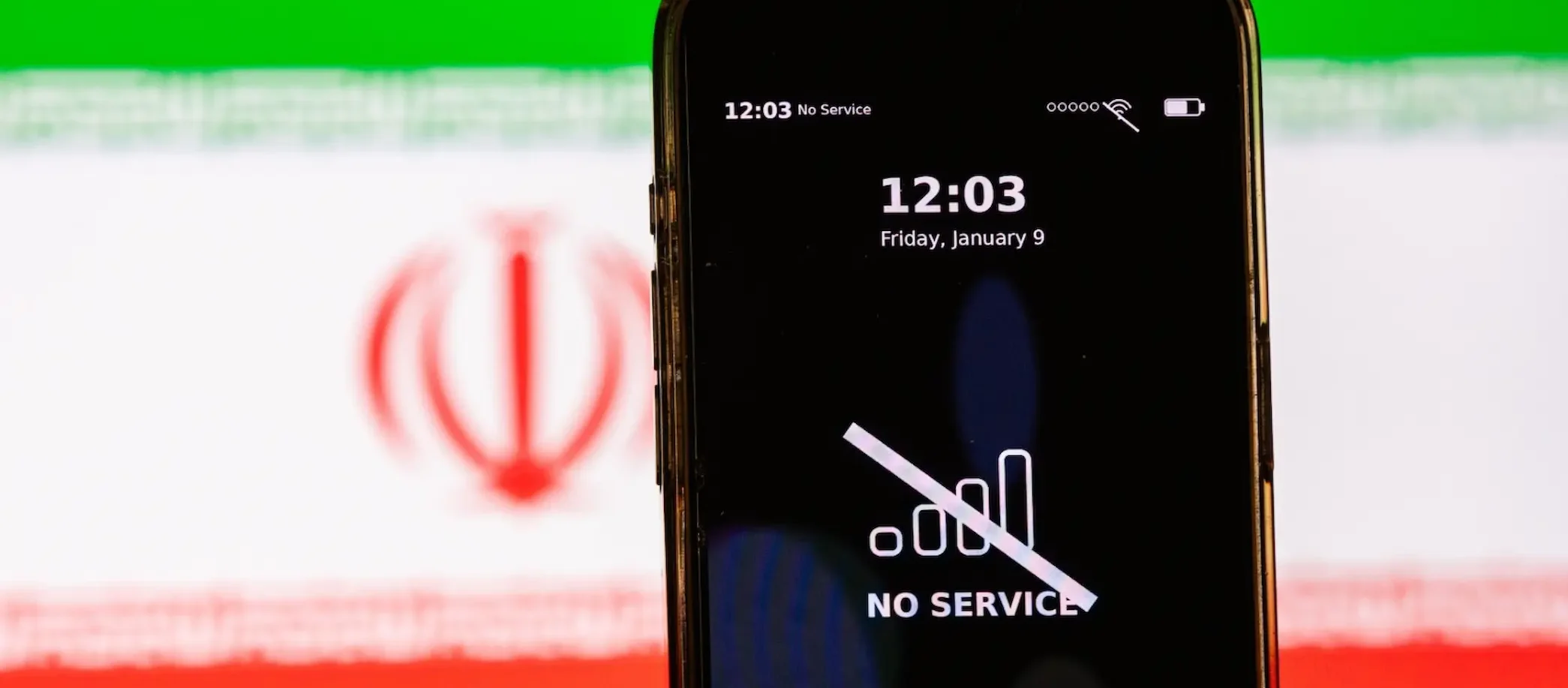
When governments shut down the internet, the standard justification is security, and the standard assumption is that the measure is temporary. Iran has tested both of those assumptions to their breaking point. Its nationwide internet blackout is now the longest ever imposed on an entire population, and Iranian authorities have simultaneously passed legislation making possession of a satellite internet terminal a criminal offence punishable by execution. These two facts are not separate policies responding to separate pressures. They are expressions of a single, long-prepared doctrine of information sovereignty, one in which connectivity is not a public utility to be temporarily suspended but a political instrument to be permanently controlled.
What Iran has built, and what it is now operating at scale for the first time, raises a question that extends well beyond its borders: when a state decides that controlling information is worth more than the economic cost of losing it, and the international system has no answer, what happens next?
Programmes
1 Apr 2026
What If: The United States Launched a Ground Invasion of Iran?
In light of the intensifying United States–Israel-Iran War, the prospect of a direct American ground operation has shifted from a remote contingency to a plausible escalation. As strikes expand beyond air and naval targets to critical infrastructure, the conflict is approaching a threshold that could fundamentally alter its trajectory, with risks extending from prolonged warfare to disruption of global energy flows and regional instability.
While Washington may aim for limited objectives through targeted ground incursions, such as seizing key assets like Kharg Island, such operations are unlikely to remain contained. President Trump has acknowledged that “we have a lot of options,” reflecting both strategic flexibility and uncertainty about the next phase.
Iranian leadership has responded in kind. Parliament Speaker Mohammad Bagher Ghalibaf warned that Iranian forces are “waiting for the arrival of American troops on the ground,” signaling that any incursion would trigger immediate and sustained retaliation. In this context, a ground invasion would not be a controlled escalation, but a turning point with far-reaching military, regional, and global consequences.

Programmes
17 Mar 2026
Defense Density in Modern Air Warfare: What European NATO Can Learn from the Gulf
The U.S.-Israel-Iran war and Recent events that followed in Gulf countries have provided one of the clearest real-world demonstrations of modern air and missile defence under sustained pressure. Modern air warfare is increasingly defined by the ability of states to withstand large-scale saturation attacks involving drones, cruise missiles, and ballistic missiles. The proliferation of relatively inexpensive unmanned systems and precision-guided weapons has altered the balance between offensive and defensive capabilities, allowing even modest actors to launch high volumes of aerial threats. In this environment, the success of air and missile defence no longer depends solely on technological sophistication but also on defence density, the concentration of defensive systems relative to territory and population. Dense, layered air-defence networks provide multiple interception opportunities and reduce the likelihood that incoming salvos can overwhelm defensive systems. As recent conflicts have demonstrated, resilience against saturation attacks increasingly depends on whether states can deploy sufficient numbers of interceptors, overlapping defensive layers, and integrated detection networks.

Programmes
11 Mar 2026
The Turkey-Israel Fault Line and the Future of the Middle East
The United States and Israel's joint military campaign against Iran is upending the strategic order of the Middle East in ways that extend far beyond Tehran. The strikes have killed Iran's Supreme Leader Ali Khamenei, targeted Iran's military and nuclear infrastructure, and triggered retaliatory Iranian attacks across the region. As the war enters its second week, a second and potentially more consequential shift is taking shape. With Iran's role as the dominant pole of regional opposition to Israel now in question, a new rivalry is hardening between Israel and Turkey, one that carries different stakes, different risks, and a far more unpredictable trajectory than the confrontation the current war was designed to resolve. Understanding this emerging fault line requires examining both the structural forces pushing the two states apart and the domestic political dynamics that risk turning competitive rhetoric into irreversible confrontation.

Programmes
8 Mar 2026
AI in War: What the Iran War Reveals About the Pentagon’s Algorithms
On Feb. 28, 2026, the United States and Israel launched a military campaign against Iran, striking more than 900 targets in the first 12 hours and killing Iran’s Supreme Leader Ayatollah Ali Khamenei. The conflict is still raging, with strikes continuing across the country and the region destabilising by the day. Yet behind the missiles and fighter jets lies another revolution in how this war is being fought.
AI, the same technology that millions use daily to draft emails or summarise documents, has become a central instrument of lethal military power. Anthropic’s Claude AI model is embedded inside the Pentagon’s targeting and intelligence apparatus, processing satellite imagery, intercepted communications, and operational data to help commanders decide who to strike, where, and when.
What once required days of human analysis is now compressed into hours or minutes, enabling a pace of warfare that no prior generation of military planners could have executed. AI has been present on battlefields before, from drone guidance systems to satellite image analysis, but the Iran conflict represents its most expansive and consequential deployment to date, and the full implications of that scale are still unfolding.

Programmes
24 Dec 2025
The Post Human Politics Problem: How Tech Elites Are Rewriting the Social Contract
For most of modern history, political systems have been built around the assumption that human beings, rather than territory, rulers, or abstract notions of progress, are the central subjects of governance. Laws, economies, and institutions have been justified, at least in theory, by their obligation to protect human life, manage conflict, and improve collective wellbeing over time. Even when unevenly applied, this principle imposed an ethical constraint on power, requiring political authority to answer, however imperfectly, to human needs and consent.
Today, that assumption is rapidly eroding. A small group of technology elites increasingly speak and act as if humanity itself is provisional, a stage to be surpassed rather than a condition to be preserved. This belief is no longer confined to speculative philosophy. It is shaping how AI is built, how labour is governed, how inequality is rationalised, and how long-term political authority is imagined. The result is not merely a clash of ideas, but an emerging institutional crisis, in which decisions affecting billions are guided by a worldview that has never been democratically endorsed.
Programmes
11 Dec 2025
AI-Fueled Shadow Conflicts: The New Era of Untraceable Espionage
AI is reshaping international competition in ways that governments are only beginning to understand. The spread of AI-enabled cyber operations has created a new landscape in which intrusions unfold rapidly, cross borders with ease, and often leave behind little that can be reliably attributed to a specific actor. States now find themselves navigating an environment where responsibility is increasingly difficult to establish, and where strategic judgement becomes far more fragile.
While espionage and covert action have always operated in murky territory, the introduction of AI into these practices has accelerated the pace of events and weakened the signals that national security officials have traditionally relied upon. This shift demands sustained attention, not only because the technology is advancing quickly, but also because the risks associated with misinterpretation and unintended escalation are becoming sharper.

Programmes
9 Dec 2025
NATO’s Strategic Dependence on Batteries
Across NATO, the next generation of forces is being built around a decisive shift toward replacing fuel-based systems with electricity and high-performance batteries. From unmanned systems and smart munitions to mobile command posts and sensor networks, the Alliance’s deterrence posture is becoming electric. The move promises faster deployment, reduced noise signatures, and fewer supply convoys. Yet, beneath this technological progress lies a growing structural risk.
Every step toward electrification deepens NATO’s exposure to fragile supply chains and volatile critical-mineral markets. Batteries are now the linchpin of power projection, but also a potential weak point in it. The Alliance’s ability to fight, deter, and coordinate operations could hinge on materials mined or processed far from NATO’s control. As warfare becomes increasingly digital and electric, NATO faces a strategic challenge of a new kind: not how to innovate faster, but how to secure the energy backbone of its deterrence, and prevent the tools of modernisation from becoming instruments of dependency.

Programmes
10 Nov 2025
What If: The Next Power Race Is for Data, Not Land?
The race for global dominance is no longer fought over land, oil, or military might, it is rapidly unfolding in the realm of data. Across the world, governments are fortifying their digital borders, investing in surveillance technologies, and rewriting laws to claim ownership over the information flowing through their networks.
What emerges is a contest not for territory but for control over the data that defines modern life, who produces it, who stores it, and who decides how it is used. This silent power race is redrawing the global order, creating new hierarchies of influence built on algorithms and infrastructure rather than armies. As states weaponise information, the battle for sovereignty is shifting from physical borders to the digital terrain of human behaviour.

Programmes
30 Oct 2025
Embryo Futures: Life Without Eggs or Sperm
In a world where reproduction no longer requires bond, lineage, or even
parents, humanity has severed its oldest bond: the family. By 2070, governments no longer wait
for couples to conceive, they manufacture life in humming factories of glass and steel, raising
entire generations in artificial wombs. Children emerge without mothers or fathers, only the state
and its machines.
Embryo Futures: Life Without Eggs or Sperm, a story from AHRC’s Futures Imagined series,
envisions a tomorrow where population decline is met not with reform but with replacement. At
once a tale of survival and of loss, it asks what becomes of identity, belonging, and love when
society decides that human roots are optional.
Futures Imagined is a publication exploring emerging trends through imaginative forecasting. Rather than relying on strict methodologies, this piece invites AHRC writers to creatively narrate a possible future reality shaped by current developments.

Programmes
17 Oct 2025
Robotics, China, and MENA: The Battle for Industrial Sovereignty
China’s robotics drive is no longer just a story of factories becoming more efficient but a story of a new industrial revolution. Each year, hundreds of thousands of new machines are deployed across its production lines, reshaping global supply chains and altering the balance of technological power. For the Middle East and North Africa, this shift raises questions that cannot be postponed. Automation is moving from the margins to the centre of economic strategy, and regions that fail to build capacity risk being locked into systems designed elsewhere.
The future of robotics in MENA is therefore not only about who installs machines the fastest, but about who sets the standards, who controls the data, and who determines the terms of industrial competition. The region’s next chapter will hinge on whether it becomes a maker of the technologies that define the century, or simply a consumer of them.

Programmes
1 Oct 2025
Who Stands to Gain from the H-1B Visa Shake-Up?
Since taking office, U.S. President Donald Trump’s unpredictable decisions have become a puzzle to follow, let alone to anticipate. Amid this growing political turbulence, a dose of rational analysis is badly needed. His recent move on the H-1B visa program, for instance, has reverberated across the globe. Though seemingly aimed at harrassing India, the policy has instead cornered the United States itself, fueling economic strain, draining valuable talent, and unsettling the tech industry. The ripple effects are already visible in Silicon Valley and among those aspiring to join it. Yet, this turbulence also opens a window of opportunity. Nations in Europe, Asia, and the Gulf, if swift and strategic, could position themselves to attract the very talent cast aside by Washington. Still, seizing this chance is no straightforward task. It demands structural reforms, long-term vision, and proactive policies. Dislodging Silicon Valley from its pedestal is not impossible, but neither is it simple or automatic. What matters now is understanding the impact on the U.S., its economy, its talent pool, and recognizing what ambitious countries must do if they wish to challenge the world’s current tech giant.

Programmes
22 Sep 2025
Seasteading: Radical Vision or Dystopian Future?
The idea of building floating cities at sea has long drifted between science fiction fantasy and Silicon Valley ambition, but in the late 2000s it developed into a real-world project known as seasteading. Presented as a bold libertarian experiment, it promised an escape from taxes, governments, and regulations, offering wealthy backers the chance to create new societies beyond the reach of any state. For its supporters, this was not about fixing broken systems but about starting from scratch in international waters, rewriting the rules in the name of freedom, innovation, and limitless possibility.
Yet as this idea edges closer to reality, the questions it raises grow more urgent: who are these new societies really for, and who will inevitably be excluded? In a world already marked by widening inequality and an accelerating climate crisis, floating cities may not look like visions of the future so much as warnings about the present.

Programmes
17 Sep 2025
The GPS Battlefield: The Invisible War in the Middle East
Wars are no longer confined to missiles, drones, or soldiers on the battlefield; increasingly decisive struggles are taking place in the invisible realm of signals that quietly guide planes through the sky, ships across narrow straits, and even the timing of financial markets. At the heart of this new contest lies the Global Positioning System (GPS), once praised as a scientific triumph and gifted to the world as a free public good, increasingly repurposed into a weapon that is inexpensive to disrupt, difficult to trace, and capable of inflicting consequences far beyond the battlefield.
The recent jamming of European Commission President Ursula von der Leyen’s aircraft served as a stark reminder that even the highest levels of leadership are not immune, but what may appear to be isolated incidents in Europe are in fact part of a broader pattern that has taken deep root in the Middle East. In a region where the world’s most critical energy chokepoints converge, navigation interference is no longer a rare abnormality but an increasingly routine feature of conflict, carrying implications that stretch from military readiness to economic stability and, ultimately, to the daily lives of millions.