
Programmes
1 Apr 2026
What If: The United States Launched a Ground Invasion of Iran?
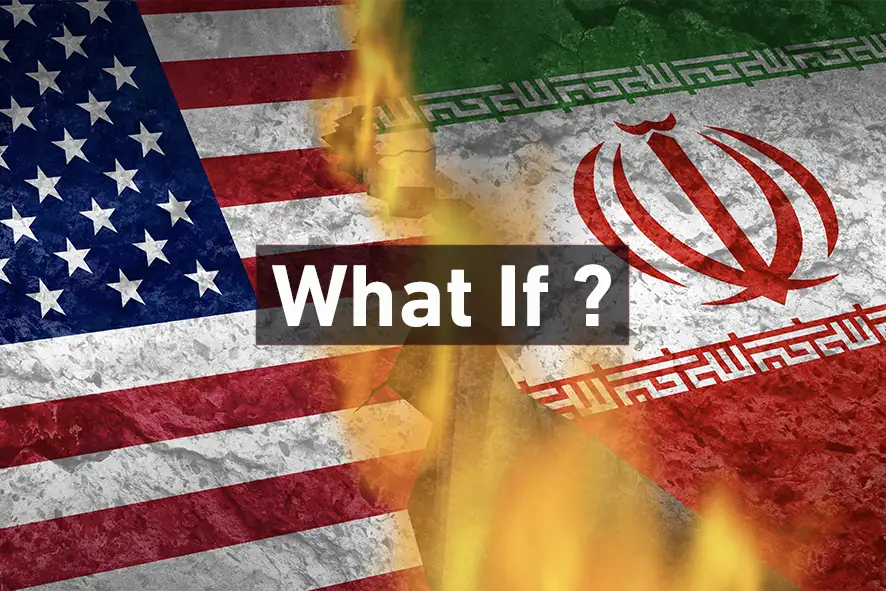
In light of the intensifying United States–Israel-Iran War, the prospect of a direct American ground operation has shifted from a remote contingency to a plausible escalation. As strikes expand beyond air and naval targets to critical infrastructure, the conflict is approaching a threshold that could fundamentally alter its trajectory, with risks extending from prolonged warfare to disruption of global energy flows and regional instability.
While Washington may aim for limited objectives through targeted ground incursions, such as seizing key assets like Kharg Island, such operations are unlikely to remain contained. President Trump has acknowledged that “we have a lot of options,” reflecting both strategic flexibility and uncertainty about the next phase.
Iranian leadership has responded in kind. Parliament Speaker Mohammad Bagher Ghalibaf warned that Iranian forces are “waiting for the arrival of American troops on the ground,” signaling that any incursion would trigger immediate and sustained retaliation. In this context, a ground invasion would not be a controlled escalation, but a turning point with far-reaching military, regional, and global consequences.

Programmes
15 Mar 2026
Strait of Hormuz Closure: How Middle Eastern Crises Are Reshaping the Global Nuclear Energy Landscape
The United States and Israel launched Operation Epic Fury in late February 2026, targeting Iran’s nuclear and missile infrastructure and seeking to remove its political leadership. Although the operation achieved its initial tactical objectives with high precision, it provoked an asymmetric retaliatory response from the remaining Iranian forces. This response took the form of a comprehensive blockade of the Strait of Hormuz, the world’s most critical maritime artery for energy transport, triggering a severe global economic shock. Such disruption could propel the international system towards reducing its reliance on fossil fuels and accelerating the adoption of alternative domestic energy solutions, most notably nuclear power.
At the same time, global electricity demand is rising sharply, driven by the rapid expansion of advanced artificial intelligence infrastructure and high-performance computing facilities. This sudden disruption of fuel supplies places policymakers in major industrial economies under immediate economic and security pressures, while simultaneously exposing the profound consequences of closing the Strait. In this context, the present analysis examines the repercussions of the Strait of Hormuz's closure on global supply chains. It then develops a historical comparison with the oil price shocks of the 1970s, illustrating how those crises redirected states towards nuclear technology. The study concludes by analysing emerging regulatory and financial measures, as well as new geopolitical alignments, that are accelerating the global drive to construct nuclear reactors in 2026.
Programmes
31 Dec 2025
The AI-Energy Crossroads: Can the World Build Enough Power to Sustain Intelligence?
In 2025, the rapid acceleration of artificial intelligence (AI) is no longer just expanding digital capabilities, it is reshaping the physical infrastructure that underpins the global economy. Data centres are becoming “AI factories,” designed for unprecedented computational intensity and continuous, large-scale workloads. Nearly 11,800 facilities were operating worldwide by 2024, with an increasing share built or retrofitted to power AI-grade computing. This shift has triggered a structural rise in energy consumption, placing extraordinary pressure on land, water, electricity systems, and financially straining grids and supply chains worldwide.
The defining constraint on the future of AI is no longer hardware or algorithms, it is energy. Without a rapid global shift to renewable and clean power, AI data centres will collide with resource shortages, grid instability, and economic risk, threatening the very growth they are meant to enable. As AI becomes foundational across industries, the challenge is no longer whether data centres will expand, but whether the world can generate enough clean power to sustain them. With demand already outpacing conventional grid capacity in major regions, energy availability not technological innovation will determine global competitiveness in the AI era.

Programmes
25 Nov 2025
Beyond Rentals: Airbnb’s Bid to Dominate Hospitality
In 2025, Airbnb is no longer simply reshaping travel preferences, it is fundamentally altering the competitive landscape for hotels. What started as a short-term rentals (STR) platform has evolved into a diversified lodging ecosystem, offering private homes, boutique hotels, and curated local experiences through a single digital interface. This transformation has intensified pressure on traditional hotel operators, whose fixed costs, regulatory exposure, and legacy systems limit their ability to adapt. As travellers increasingly value flexibility, privacy, and authentic local stays, Airbnb’s asset-light model continues to draw market share away from lower- and mid-tier hotels particularly. AI-driven pricing, scalable supply, and global host networks enable the platform to respond to demand fluctuations faster than conventional accommodation chains.
As consumer preferences fragment and digital expectations rise, many hotels struggle to maintain occupancy, protect margins, and justify rate premiums. The crucial question is no longer whether Airbnb competes with hotels, but how profoundly its growth is reshaping hotel performance, strategy, and long-term sustainability. And with hotels now beginning to integrate into Airbnb’s platform, a deeper question emerges: in this evolving hybrid model, who ultimately stands to benefit more?

Publications
15 Apr 2025
Ripple Effect: Trump Tariffs and the World’s Economic Quake
In April 2025, the Trump administration stunned global markets by announcing a sweeping tariff expansion under the International Emergency Economic Powers Act (IEEPA), introducing a flat 10% universal tariff on all imports. This move, framed as a national economic emergency response, immediately triggered global trade uncertainty and diplomatic friction. The policy marked a significant escalation of Trump’s protectionist agenda, signalling a break with multilateralism and targeting long-standing trade imbalances with strategic rivals and allies alike. We found that the United States (U.S.) trade structure is deeply imbalanced, with persistent deficits concentrated in sectors essential to industrial production, such as machinery, electronics, and vehicles. These deficits have exposed the U.S. to retaliatory measures from key trade partners—particularly China, Canada, and the EU—who have calibrated their responses to hit politically and economically sensitive export categories. Tariffs have initiated a multi-channel inflationary shock: direct consumer price increases, rising intermediate input costs, and cascading pressures on logistics and wages. The compounded effect has resulted in a net consumer price index (CPI) increase of approximately 1.2%, with higher spikes in key durable goods. Global supply chains are beginning to reconfigure.
The automotive sector, in particular, has seen disruption in bilateral flows with traditional partners, creating openings for new logistical nodes. The UAE stands out as a beneficiary, attracting redirected FDI and becoming a strategic re-export and final assembly hub. Collectively, these findings underscore a paradox: while the policy aims to reduce dependency and correct trade imbalances, it simultaneously accelerates external retaliation, domestic cost pressures, and global fragmentation in trade infrastructure.