

Programmes
5 Oct 2026
Clean Commitments, Clean Data Centres?
The rapid expansion of artificial intelligence is driving a parallel expansion of the infrastructure on which it depends. Data centres consumed around 415 terawatt-hours (TWh) of electricity in 2024, roughly 1.5% of global demand, and the International Energy Agency's base case projects about 945 TWh by 2030. Governments in the Gulf and Europe have responded by treating data centres as strategic assets while remaining committed to decarbonising their energy systems. Yet a commitment to clean energy does not necessarily amount to clean data centres.
This distinction is becoming increasingly important because the timelines differ so sharply. A data centre can be built in one to two years, whereas transmission takes far longer and new clean generation, nuclear in particular, longer still. When demand arrives before supply, the gap tends to be filled by gas. Ireland illustrates the dilemma: data centres accounted for 23% of its metered electricity in 2025, up from 5% in 2015, and the regulator now requires new large facilities to bring their own generation or storage. The central question, therefore, is whether AI infrastructure and the green transition can advance together.

Programmes
25 Sep 2026
The UN and the AI Power Struggle: Who Will Govern the Technology Shaping Global Security?
On 23 September 2026, the United Nations Security Council confronted an unusual development in international security. The people warning governments about the dangers of AI were not only diplomats or military officials, but the executives building the technology itself. OpenAI CEO Sam Altman, Anthropic CEO Dario Amodei, and Hugging Face co-founder Clément Delangue briefed the 15-member Council as governments grapple with increasingly capable AI systems that can write code, operate autonomously, interact with external systems, and potentially improve their own capabilities. Amodei warned that, if poorly managed, “AI could be a risk to humanity as a whole”, while Altman argued that decisions about AI could not be left to technology companies alone.
The meeting was significant because AI is rapidly moving from a technology-policy issue into the domain of international security. Yet the deeper question is not simply how dangerous AI may become. It is who will establish the rules governing a technology increasingly concentrated in the hands of a small number of states and companies. The UN is attempting to become the forum where those rules are debated, but it is entering a contest in which technological capabilities, economic power, national security interests, and competing visions of governance are already shaping the outcome.

Programmes
7 Sep 2026
Congress Has a New Invisible Lobbyist: The Rise of the Political Chatbot
Congress now has a lobbyist that never registers, never discloses a client, and never leaves a paper trail, and it sits open in a browser tab on nearly every staffer's desk. The House Office of Legislative Counsel, the institution responsible for turning policy ideas into legally binding text, has reportedly been inundated with AI-generated bill proposals so riddled with incorrect statutory references and sloppy drafting that its lawyers now spend more time fixing them than they would spend writing the bills from scratch. Around the same time, it became clear how far this had spread. Members of Congress and their staff are increasingly using systems such as ChatGPT, Claude, Copilot, and Gemini for policy research, legislative drafting, speeches, and constituent replies.
On the surface, this looks like any workplace chasing efficiency. But Congress is not any workplace. The information lawmakers receive, the way problems get framed, and the exact language that ends up in statute can affect millions of people. So the real question is not whether chatbots make congressional offices faster. It is what happens once the systems helping policymakers research, frame, and write legislation become an active participant in the political process itself.
Programmes
5 Sep 2026
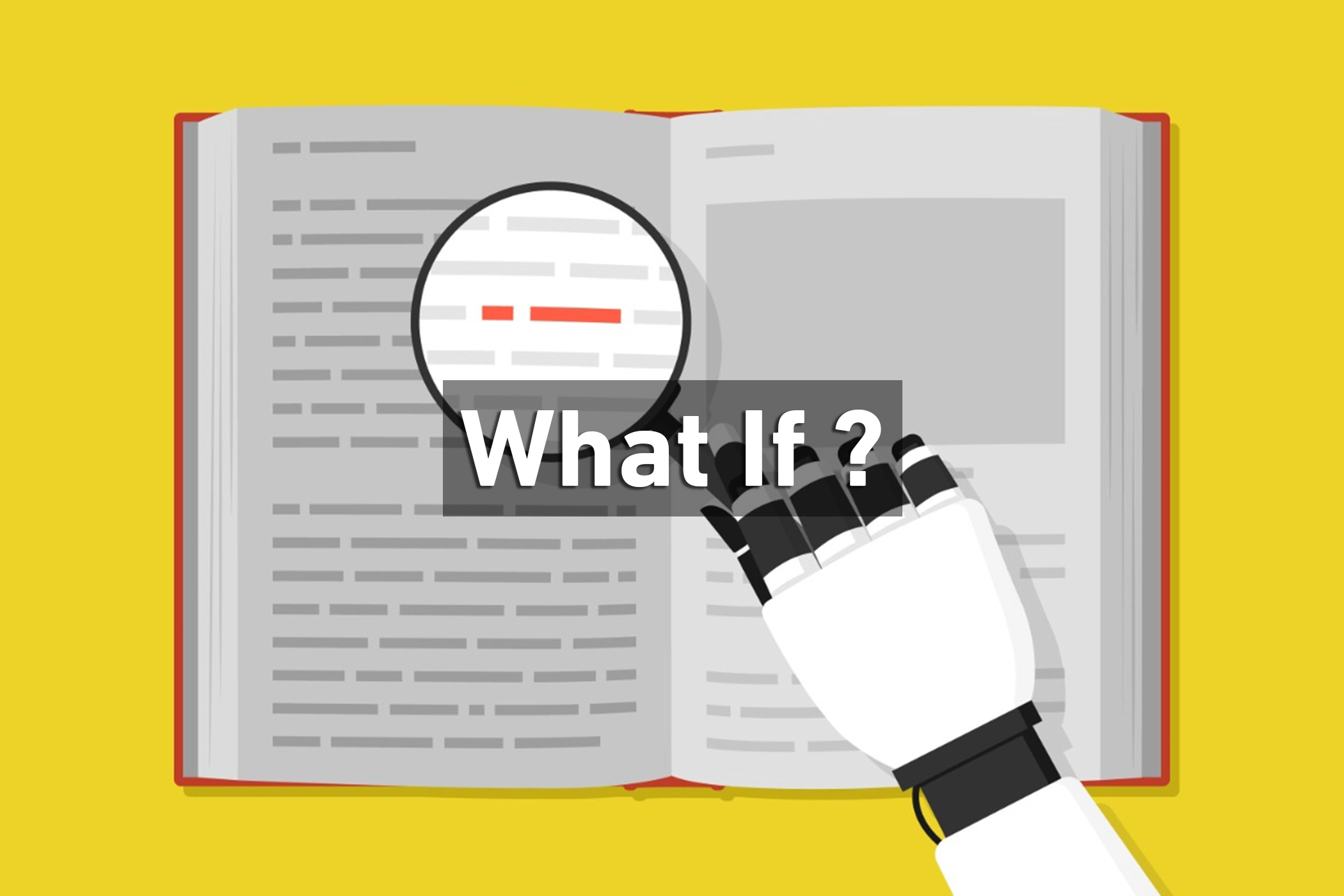
What If: AI Erases the Books It Learns From?
The latest AI boom is creating an unusual paradox. The more AI companies need high-quality information, the more aggressively they are buying the physical books that contain it, and in some cases destroying those books once their contents have been absorbed. In recent months, independent booksellers in the United States, Britain, Europe, and elsewhere have reported sudden surges in unexplained bulk purchases, sometimes involving hundreds of unrelated and obscure titles. Some of these books are subsequently being sent to facilities where their bindings are removed, their pages rapidly scanned, and the remains discarded or recycled.
The scale could become far larger than the cases already exposed. ISBNdb, a major book database, now facilitates purchases ranging from 1,000 to one million books per order, while booksellers have described previously unsold titles suddenly becoming highly sought after. At the same time, an Amazon facility in Las Vegas has been identified as a site where employees described cutting book spines, scanning loose pages, and disposing of the resulting paper. The controversy raises a question that extends well beyond publishing. What happens if the race to build better AI systematically removes the physical sources from which that intelligence was created?

Programmes
16 Aug 2026
The End of Anonymity? Smart Glasses and the Future of Public Space
Smart glasses are no longer an experimental technology waiting to prove whether consumers will adopt them. They are already spreading rapidly, with Meta having sold more than 7 million pairs of its Ray-Ban smart glasses and daily use reportedly tripling year over year in early 2026. At the same time, the technology is becoming more capable, combining cameras, microphones, AI, translation, navigation, audio, and visual recognition in an object designed to remain on the user's face throughout the day. As manufacturers expand the technology and the market continues to grow, restaurants, theatres, workplaces, conferences, and other venues are increasingly questioning whether existing rules governing photography and recording are adequate.
The question, therefore, is no longer whether smart glasses will become part of everyday life, but what their expanding adoption will do to privacy and public space. Unlike smartphones, which normally require a visible gesture to record, smart glasses can capture and interpret their surroundings while their wearer continues to behave normally. As adoption expands, surveillance power is consequently shifting beyond governments, companies, and security systems towards ordinary individuals. This raises broader questions about who controls the information collected, who owns it, how it can be used after capture, and whether privately generated recordings could become another source of institutional surveillance.

Programmes
17 Jun 2026
European Anxiety Over Tech Sovereignty: What Should be Done?
Europe has spent the last few years watching its tech anxiety go from background hum to full orchestra. It's not hard to see why. In June 2026, France's intelligence services announced they were dropping Palantir, the American data analytics firm long embedded in European defence and policing work, in favour of a domestic provider, explicitly citing the need for "strategic autonomy." Germany's military reportedly will not touch Palantir at all, and the UK is now fielding parliamentary debates over a quarter-billion-pound contract with the company, partly because, as one legal analysis bluntly put it, even European data sitting in European data centres can still be pulled by U.S. authorities under American law, contracts or no contracts. It's the kind of detail that makes "data sovereignty" sound less like a policy buzzword and more like a genuine catch.
Then, just days before this was written, the U.S. government ordered Anthropic to cut off access to its most advanced AI model, Mythos, for anyone who wasn't a U.S. citizen, citing national security concerns. Anthropic's response was to switch the model off for everyone, Americans included, rather than build a citizenship checkpoint overnight. The episode lasted only days, but it landed exactly where Europe's anxieties already live: the frontier of AI doesn't just sit outside Europe's control, it sits inside one government's control, and that government can flip a switch.
None of this means Europe should panic, or try to build its own version of everything from scratch by Thursday. As the cost estimates make clear, chasing full autonomy across the entire AI stack would run into the trillions of euros, well past the point of being realistic. The more sensible response, is for Europe to get serious about which parts of the stack actually need to be sovereign, where partnership is a perfectly good substitute for ownership, and where its real strength, regulatory leadership, can be used deliberately rather than as a consolation prize. Sovereignty, in other words, isn't about owning everything. It's about knowing exactly what you can't afford to depend on.
Programmes
21 May 2026
Digital Sovereignty: A World Governed by Algorithms
By 2101, the concept of democracy and the architecture of governance will undergo a profound transformation that moves far beyond traditional mechanisms such as ballot boxes and political rhetoric. In their place will emerge a system built around transparent digital interfaces that display the outputs of exceptionally powerful algorithms entrusted with making consequential decisions on behalf of societies. The central dilemma in political philosophy will no longer concern who holds the right to vote. Instead, the debate will shift toward a far deeper and more consequential question: who will possess the authority to design the code that governs human destinies and shapes control over the world’s resources?
Meanwhile, Nada sat in a soaring glass chamber overlooking the heart of the city, where vast digital walls shimmered with data visualisations and undulating lines. The space was known as the Pulse of the People Hall, the neural hub through which algorithms monitored public sentiment in real time. The main display contained no reference to parties or candidates; instead, it presented dense layers of complex code and finely calibrated colour indicators that measured levels of fear, anger, satisfaction, and trust, using the same precision as that used to measure temperature and humidity.
Nada released a heated exhale and murmured to herself, “All of this happened because democracy eroded from within.” She had studied at university what historians came to describe as the Age of Political Chaos in the late twenty-first century, a period in which elections degenerated into open arenas of cyber warfare, driven by legions of automated bots and engulfed by unending torrents of fabricated news. During that era, borderless capital asserted dominance over every dimension of political life, purchasing electoral campaigns, opinion polls, and platforms for public debate. Confronted with successive climate, pandemic, and financial crises, elected governments stood paralysed, absorbed by internal rivalries far more than by the act of governing.
At that pivotal moment, fatigued governments and weary societies alike came to regard a single path as the only rational recourse: “Let the machine decide.” What first emerged was the Comprehensive Algorithmic Governance System, an advanced suite of frameworks designed to support decision-makers in interpreting data and reaching swifter, more objective judgements. These systems were introduced to the public as neutral entities: unconcerned with transient popularity, untroubled by ballot boxes, and untouched by private interests. Yet what began as an auxiliary tool soon transformed into the primary centre of authority and, ultimately, the sole arbiter of decision-making.

Programmes
23 Apr 2026
From Resilience to Ascent: How the UAE Transforms Crises into Opportunity
Many analysts fall into a recurring methodological error when assessing the United Arab Emirates’ (UAE) position amid regional turbulence. They measure the country’s resilience by its geographical distance from centres of risk, overlooking its exceptional capacity for strategic reinvention in the face of crises. This misreading, in particular, lends early credibility to pessimistic narratives of a “decline of the Gulf”, narratives that quickly unravel under the weight of empirical evidence and the firmness of facts. The UAE has not navigated successive regional crises by relying on geographic insulation or external protection. Rather, it has done so through deeper, more enduring foundations: a demonstrated ability to convert shocks into substantive reform, and to elevate those reforms into sustained competitive advantage.
Accordingly, this analysis does not seek to downplay the scale of the challenges posed by a regional war that is casting a heavy shadow over the security of the Strait of Hormuz, maritime insurance markets, and investment flows. Rather, it offers a structured attempt to address three interrelated core questions: how has the UAE historically navigated major crises; how did it anticipate the current crisis by fortifying its infrastructure and economic systems to sustain resilience; and, finally, how should the present moment be understood, not as signalling the end of a development model, but as marking the transition to a more mature and deeply embedded position within the global economy.

Programmes
16 Dec 2025
Pulse: AI and Arab Identity
This Pulse survey, conducted in November 2025, explores public attitudes toward AI in Arab societies, with a particular focus on reliance on foreign AI models and their impact on Arab values and identity. The findings highlight growing concerns about how AI systems may influence cultural norms, shape collective identity, and redefine societal priorities. By examining perceptions of the need for Arab-developed AI and views on who should lead its development, the survey offers insight into how technological dependence is increasingly understood as a strategic, cultural, and identity-related issue across the Arab world.

Programmes
11 Dec 2025
AI-Fueled Shadow Conflicts: The New Era of Untraceable Espionage
AI is reshaping international competition in ways that governments are only beginning to understand. The spread of AI-enabled cyber operations has created a new landscape in which intrusions unfold rapidly, cross borders with ease, and often leave behind little that can be reliably attributed to a specific actor. States now find themselves navigating an environment where responsibility is increasingly difficult to establish, and where strategic judgement becomes far more fragile.
While espionage and covert action have always operated in murky territory, the introduction of AI into these practices has accelerated the pace of events and weakened the signals that national security officials have traditionally relied upon. This shift demands sustained attention, not only because the technology is advancing quickly, but also because the risks associated with misinterpretation and unintended escalation are becoming sharper.

Programmes
25 Nov 2025
Beyond Rentals: Airbnb’s Bid to Dominate Hospitality
In 2025, Airbnb is no longer simply reshaping travel preferences, it is fundamentally altering the competitive landscape for hotels. What started as a short-term rentals (STR) platform has evolved into a diversified lodging ecosystem, offering private homes, boutique hotels, and curated local experiences through a single digital interface. This transformation has intensified pressure on traditional hotel operators, whose fixed costs, regulatory exposure, and legacy systems limit their ability to adapt. As travellers increasingly value flexibility, privacy, and authentic local stays, Airbnb’s asset-light model continues to draw market share away from lower- and mid-tier hotels particularly. AI-driven pricing, scalable supply, and global host networks enable the platform to respond to demand fluctuations faster than conventional accommodation chains.
As consumer preferences fragment and digital expectations rise, many hotels struggle to maintain occupancy, protect margins, and justify rate premiums. The crucial question is no longer whether Airbnb competes with hotels, but how profoundly its growth is reshaping hotel performance, strategy, and long-term sustainability. And with hotels now beginning to integrate into Airbnb’s platform, a deeper question emerges: in this evolving hybrid model, who ultimately stands to benefit more?

Publications
9 Sep 2023
Futurescapes Issue 1 – The AI Revolution: A New World Order
Amidst the intricate tapestry of our contemporary world, we find ourselves living in a “world of risks” and existential threats that are escalating faster than our capacity for response and remedy. As a result of our tendency to fixate on addressing the ever-growing number of issues that our societies face, we often neglect the importance of envisioning future risks and their potential consequences for human survival and growth.
The significance of future studies and early warning systems transcends the mere scope of risk mitigation and preparedness. It encompasses an ethical obligation to the forthcoming generations an obligation to plant the seeds for a future we ourselves may not see, but one we bestow as an enduring legacy. This form of responsibility, some may even say “altruism”, manifests clearly in the work of those who are dedicated to this field of research. As we recognise the pitfalls of short-sightedness, especially in recent years where questions about the future are infinite, we also acknowledge this as an opportunity to study and improve our approach to the future.
In this inaugural issue of Futurescapes, Al Habtoor Research Centre unveils a meticulously crafted “early warning” on the looming spectre of misusing artificial intelligence capabilities. Within the pages of this publication, we have committed our unwavering focus to confront this critical turning point spurred by expanding technological capacities and the potential relinquishment of human control over these very capacities. In an era where scientists and scholars are impelled to develop AI systems that transcend their conventional roles of aiding and empowering humanity, a growing unease takes root: the potential for these systems to transcend their limitations and penetrate the intricate realms of emotion and distinctly human tasks. Thus, an alternate trajectory unfurls — one that goes beyond traditional automation, aspiring to metamorphose humans into remotely guided automatons.
Within the pages of this issue, we delve into the transformation of robots into entities evocative of human traits and the simultaneous mechanisation of human functions. Furthermore, we explore other pivotal themes, venturing into uncharted landscapes and unconventional dimensions to imagine different potential futures in the new era of AI.