

Programmes
24 Sep 2026
Running to Stand Still: Why LDCs are Falling Behind in Digital Trade?
Least Developed Countries are being left behind in the fastest-growing segment of world trade. While digitally deliverable services now account for over half of global services exports, LDCs capture a vanishing share of that growth, and their position is worsening even as their exports rise in absolute terms. Between 2015 and 2023, their digital-services exports grew 43% in dollar terms, yet their global market share fell over the same period. That divergence is the puzzle this analysis takes up: not why a digital divide exists, which is intuitive enough, but why it keeps widening even as LDCs’ own exports grow. Is this simply a matter of infrastructure catching up over time, or does the digital services economy, with its compounding returns, concentrated capital, and now-fragmenting trade rules, structurally reward early movers in ways that make the gap self-reinforcing rather than self-correcting?

Programmes
10 Sep 2026
Orbital Data Centres and the Limits of National Jurisdiction over Technology Firms
The largest technology firms are moving their data centres into low Earth orbit, having pushed terrestrial infrastructure to the physical and environmental limits of what it can supply in power, cooling and land to an artificial intelligence sector whose demands keep compounding. SpaceX has set the fourth quarter of 2027 for the launch of its first generation of computing satellites, targeting one gigawatt of orbital data centre power capacity in that same year and one hundred gigawatts by 2030. The scale of the pressure behind that schedule is visible in the wider market, where global data centre demand is estimated to require investment approaching €5.7 trillion before the decade closes.
What presents itself as an engineering migration is in substance a redistribution of sovereign authority. Moving processing beyond national territory removes technology firms from the reach of the data localisation rules, compliance regimes and tax frameworks that states have spent a decade constructing. For Arab states the challenge is immediate. Having invested heavily in domestic digital infrastructure and imposed strict data residency requirements, they now face the prospect that the server handling their citizens’ data sits five hundred kilometres overhead, beyond the enforcement reach of their courts.
This analysis therefore examines the economics of moving computation into orbit and the limits of its viability; traces the legal gap that allows technology firms to shelter behind the jurisdiction of the state of registry in order to avoid the laws of every other state; assesses the risks of monopolistic concentration and the environmental costs borne collectively; and identifies the regulatory instruments available to Arab states in defence of their digital sovereignty, chief among them the management of radio-frequency spectrum, satellite landing rights and the supervision of ground gateways.

Programmes
27 Aug 2026
The AI Security Trap: Cheap Attacks, Pricey Defences
Cybersecurity has always favoured the attacker, but AI is widening that advantage. By compressing complex operations into automated decision loops, autonomous agents let a small human team delegate the bulk of an attack's tactical work, reconnaissance, exploitation, lateral movement, to machine tempo, in at least one documented case shifting 80–90% of that labour onto the AI itself. That doesn’t make attacks free, but it does mean cost scales far more slowly with the number of targets than it used to. Enterprises, meanwhile, face the opposite trend: breach costs are climbing, and a new governance-driven Shadow AI tax is compounding them. As automation lowers the labour cost of offense while recovery expenses and regulatory demands rise on defence, the balance of cybersecurity economics is being forced to overhaul itself.

Programmes
26 Aug 2026
Economic Outcast: The Limits of U.S. Secondary Sanctions Against a China-Insulated Iranian Economy
On 24 August 2026, the US Treasury announced an economic enforcement campaign under the name Operation Economic Outcast, designating close to 60 entities, individuals and vessels and issuing five unprecedented sectoral determinations under Executive Order 13902.1 Treasury Secretary Scott Bessent described the campaign as a comprehensive economic onslaught intended to sever every artery feeding the Iranian economy, while Iran's Minister of Economy, Ali Madanizadeh, dismissed it as an act of economic terrorism, insisting that his country has its own instruments and knows the rules of the game.
The significance of the campaign extends well beyond the number of designations. Washington is shifting its weight away from penalising Iranian entities and towards pursuing intermediaries in third countries: independent Chinese refineries, Gulf trading and exchange houses, and settlement channels operating outside the dollar. Yet the record since 2012 reveals a pattern that is close to invariable: sharp friction imposed from the American side, followed by structural Iranian adaptation, in which Iranian exports survive and the American stock of coercive power erodes.
This analysis therefore sets out to dissect the legal architecture of the campaign and identify what is genuinely new within it, then to test its six enforcement tracks against the structural obstacles Tehran has accumulated across four successive waves of sanctions, and finally to estimate the likely impact on the volume of Iranian exports, on the discount imposed on its crude and on the price path, while measuring the cost of compliance that financial and logistics hubs will have to absorb.

Programmes
19 Aug 2026
Digital Abundance, Experiential Scarcity, and the New Economics of Cinema
The theatrical performance of Christopher Nolan’s The Odyssey in July 2026 is a useful lens on a broader shift in media economics, though the film's box office alone cannot prove a structural thesis. While popular discourse frames the film's financial momentum as an isolated creative triumph, a microeconomic and corporate finance reading suggests a more durable market reallocation is underway: in an entertainment ecosystem saturated by digital abundance and on-demand streaming, consumer and studio spending appear to be reallocating toward physically differentiated experiences that are difficult to replicate digitally. This is best treated as a working hypothesis supported by suggestive evidence, not an established fact, one blockbuster’s run is not, by itself, proof of structural change.
This migration is commercially relevant to IMAX Corporation (NYSE: IMAX), whose model separates a broadly scalable global digital network from an ultra-scarce fifteen-perforation seventy-millimetre analogue footprint. Distinguishing these two tiers helps isolate how digital commoditization pressures studio differentiation strategy, shifts consumer willingness to pay, and concentrates box-office economics within a small number of specialized network operators, while also, exposing IMAX to risks that a purely optimistic reading tends to omit.

Programmes
7 Aug 2026
The Heat Economy: Assessing the Economic Toll of Europe’s 2026 Heatwaves
Europe is no longer just enduring hotter summers; it is absorbing a structural economic blow. With authorities reporting over 13,000 lives lost to severe thermal extremes this season, the crisis has escalated far beyond a public health emergency. As persistent 2026 heatwaves lock the continent in a loop of compressed labour capacity, strained energy grids, and collapsing corporate investment, extreme heat has evolved from a seasonal inconvenience into a multi-hundred-billion-euro drag on potential growth. Beneath the surface of record temperatures lies a complex macroeconomic transmission channel that is quietly reshaping inflation, public debt, and the long-term trajectory of European capital.

Programmes
3 Aug 2026
The Economics of Reusable Launch Vehicles and the Competition over Low Earth Orbit
Access to low Earth orbit has undergone a structural transformation over the past fifteen years, shifting from a sovereign undertaking financed by the budgets of major states into a logistics service bought and sold by the kilogram. The global space economy reached roughly $626 billion in 2025, with commercial activity accounting for close to 78% of that total, and projections place it between $1 trillion and $1.8 trillion by 2035 — even though launch services on their own amount to no more than $14 billion. That disparity points to a basic truth: launch is not the market being contested. It is the gateway whose price determines the nature and the scale of everything that can be built beyond the atmosphere.
This structural shift rests on a single pivotal engineering innovation: recovering the first stage of the rocket and flying it again rather than discarding it after every mission. Recovery allows the capital cost of manufacturing to be distributed across multiple flights, and it demolished the price floor that had governed the market for decades. The consequence has been to narrow the technological contest over low-orbit reusability to two principal powers: the United States, which operates a mature fleet flying at an intensive and near-routine cadence, and China, which since mid-2024 has been conducting an accelerated, high-risk test campaign in pursuit of the same capability. The threshold of reaching orbit has therefore ceased to function as the technological dividing line between the two; the real remaining challenge lies in mastering precision guidance through the final metres before a safe landing.
Therefore, this analysis aims to unpack the economics of reusability and locate the true bottleneck within the cost structure; to then measure the gap between Washington and Beijing through two distinct indicators, namely the number of launches and the mass delivered to orbit; and finally to estimate the technical and temporal distance separating China from its first successful recovery, together with what its completion would mean for global launch pricing and for the budgets of the megaconstellations on which satellite internet services depend.

Programmes
27 Jul 2026
Trump’s Prize: How the July 2026 Tariff Package Installed the Middle East as a Global Manufacturing Hub
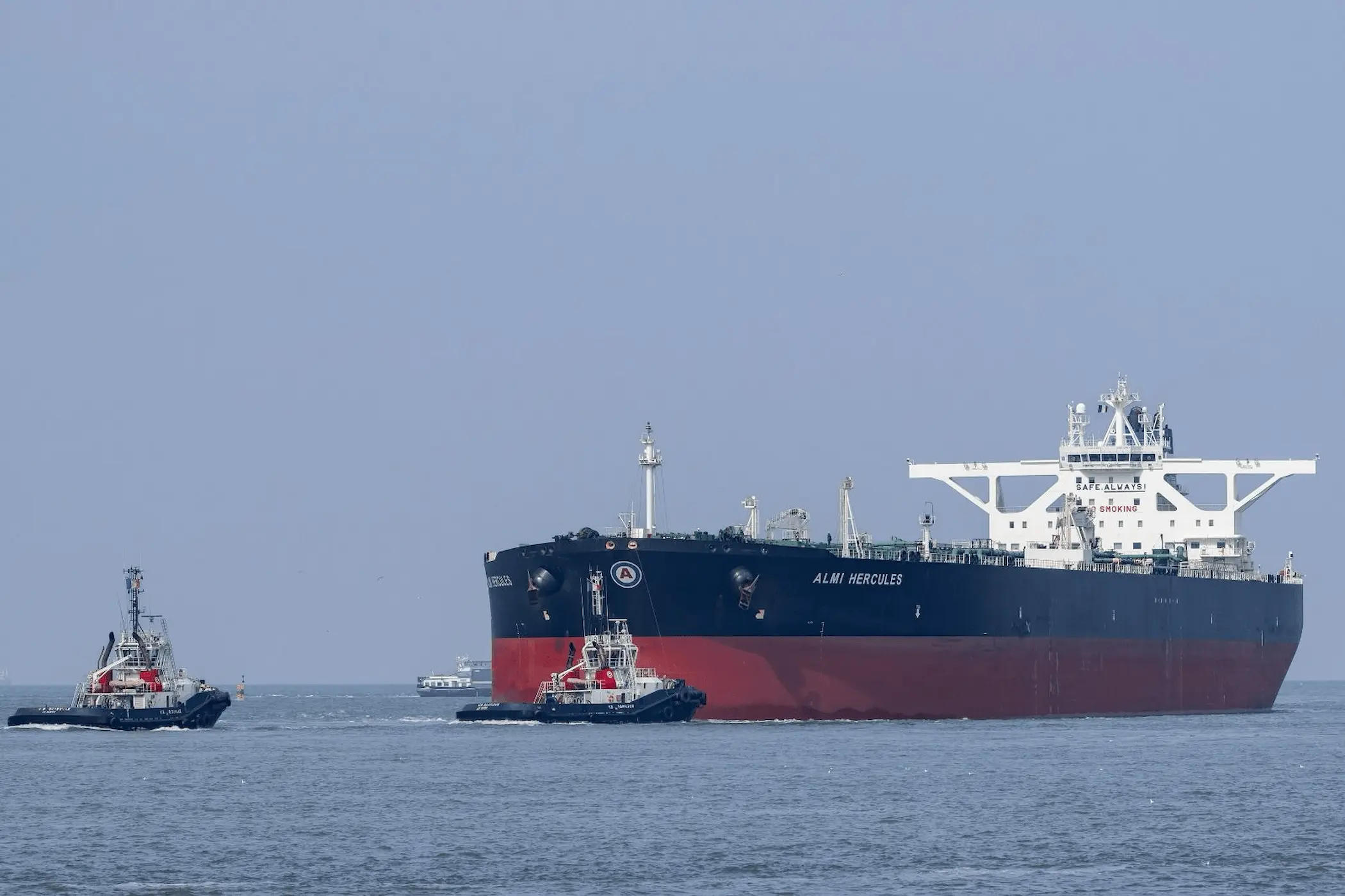
The global trading system underwent a fundamental transformation in July 2026, as the United States abandoned limited sector-specific protection in favour of a complex, multi-tiered tariff architecture that turned access to its domestic market into an instrument of economic and political pressure. Four major decisions converged within that single month. The first was the outright repeal of the de minimis exemption, which had allowed small consignments valued below eight hundred dollars to enter the country duty-free. The second was the application of the Section 301 forced-labour tariffs across two distinct bands, imposing 10% and 12.5% according to the compliance record of each partner state. The third was the activation of Section 338, a statutory provision that had lain dormant since the 1940s, to levy 50% duties on a range of Canadian goods. The fourth was the approval of a phased escalation reaching 200% on imports of generic pharmaceuticals.
The consequences of this package extended well beyond the raising of customs duties. They amounted to a comprehensive re-engineering of rules of origin and customs compliance requirements, which in turn altered the cost calculus of every manufacturer and supplier across global supply chains. This new reality pushed firms to search for alternative routes designed not merely to reduce transport costs, but to change the identity of the country of origin itself and so escape punitive duties. That search is precisely what turned the Middle East from a transit corridor into an industrial and logistical node positioned to play a pivotal role on the new map of world trade.
This analysis therefore aims to unpack the effects of the July 2026 package across three connected levels: its domestic cost to the American economy in terms of inflation, compliance friction and the feasibility of reshoring; the realignment of trading partners and the trade diversion and origin leakage that follow from it; and finally its direct implications for the economies of the Middle East and North Africa, together with quantitative estimates of price, investment and shipping trends through the end of the decade.
Programmes
23 Jul 2026
Closure Upon Closure: The Potential Impact of Houthi Threats to Saudi Shipping at Bab al-Mandeb
The events of 2026 have placed global energy markets before an unprecedented test of their resilience. When the effective closure of the Strait of Hormuz in February removed roughly 13 million barrels per day (mb/d) from available supply, Saudi Arabia redirected most of its exports westward to the Red Sea — only to find that outlet itself imperiled when, on 20 July, the Houthis threatened a naval blockade of the Bab al-Mandeb strait aimed squarely at Saudi shipping. For the first time in its modern history, the Kingdom's oil found itself exposed between the two maritime corridors it straddles, and the question “What if navigation through Bab al-Mandeb is severed?” shifted from a theoretical exercise to an operational probability. The answer, however, is not a single figure: it hinges on the scale of the shortfall, the nature of the cargo held back, and the market's capacity to reroute it.
This analysis therefore sets out to quantify the impact of a Bab al-Mandeb closure across three graduated halt scenarios; to unpack the mechanism by which the shock travels from cargo entrapment to a price spike; to trace its non-price consequences for refined products, aviation, and maritime shipping; and to arrive at the fiscal paradox that leaves the gravest harm to Saudi Arabia latent in the intermediate scenario rather than the full halt.

Programmes
8 Jul 2026
The Other Face of the World Cup: How Profits Shape FIFA’s Decisions?
FIFA's commercial success and its governance decisions are not separate stories — they increasingly appear to be the same story. This analysis examines who benefits from the modern World Cup's business model, how FIFA's revenue depends on star players and marquee fixtures, and where that dependency creates entry points for questionable decision-making around eligibility and officiating.
The question matters now because of scale: the 2026 tournament is FIFA's largest and most commercially valuable edition in history, its sponsorship architecture runs through multiple tiers of global brands and downstream club deals, and this year's tournament has already produced disciplinary reversals and officiating controversies that critics have directly linked to the same commercial incentives driving FIFA's revenue.
The analysis draws on FIFA's own financial disclosures, sponsorship data, and contemporaneous tournament reporting, and it deliberately separates documented facts from contested interpretation, particularly where officiating or disciplinary decisions have been framed by media and analysts as raising questions, not as proof of manipulation.

Programmes
25 Jun 2026
Tel Aviv Stock Exchange: Why did it rise during the war and fall with the truce?
The Tel Aviv Stock Exchange (TASE) offers one of the most instructive case studies in contemporary political economy. In under three years, it transformed from a compressed, domestically isolated venue into a high-beta financial instrument that prices Middle Eastern geopolitical risk in real time. The period from October 2023 to June 2026 encompassed the gravest security shock in Israel's modern history; yet its benchmark indices delivered record returns, making it the world's fastest-rising equity market in 2024 and 2025, before pivoting abruptly into a sharp correction by mid-2026. This paradoxical trajectory poses a fundamental question: how does capital — foreign and domestic alike — respond when gun barrels intersect with trading screens, and why did the signals emanating from the sovereign bond market diverge so starkly from those of the equity market at the very same moment? This analysis traces the precise correlation between military and diplomatic events on the one hand, and capital flows and the sovereign risk premium on the other, exposing a new financial logic that now governs the pricing of existential risk.
Accordingly, this analysis sets out to disentangle three interlocking layers: first, the mechanics of the initial shock and the manner in which the state intervened to contain capital flight; second, the paradox of the war economy, in which sovereign downgrades coincided with an unprecedented equity rally; and third, the 2026 reversal that repriced geopolitical risk in the wake of diplomatic realignment — culminating in a forward-looking assessment of the market's probable trajectories through 2028.

Programmes
24 Jun 2026
From Mercedes to BYD: The Full Story of Power Shifts in the Global Automotive Industry
For decades, the automotive sector has been the industrial backbone of the European Union, employing roughly 13.8 million people—8.1% of the bloc’s manufacturing jobs—generating close to 7% of its GDP and a trade surplus exceeding €79.5 billion. Yet this entrenched primacy is now exposed. The legislated phase-out of the internal combustion engine (ICE) by 2035, structurally elevated energy costs, and China’s state-backed scaling of new energy vehicles (NEVs) have converged to erode advantages built over a century. Within a single decade, China has vaulted from an assembler of imported technology to the global pacesetter in battery chemistry, critical-mineral refining, and software-defined vehicle production.
Accordingly, this analysis aims to provide a rigorous quantitative assessment of Europe’s eroding automotive competitiveness against China’s ascent, across three interlocking axes: the empirical evidence of the market shift, the financial and economic root causes, and the strategic outlook for a continent now forced onto the defensive.