
Publications
18 Aug 2026
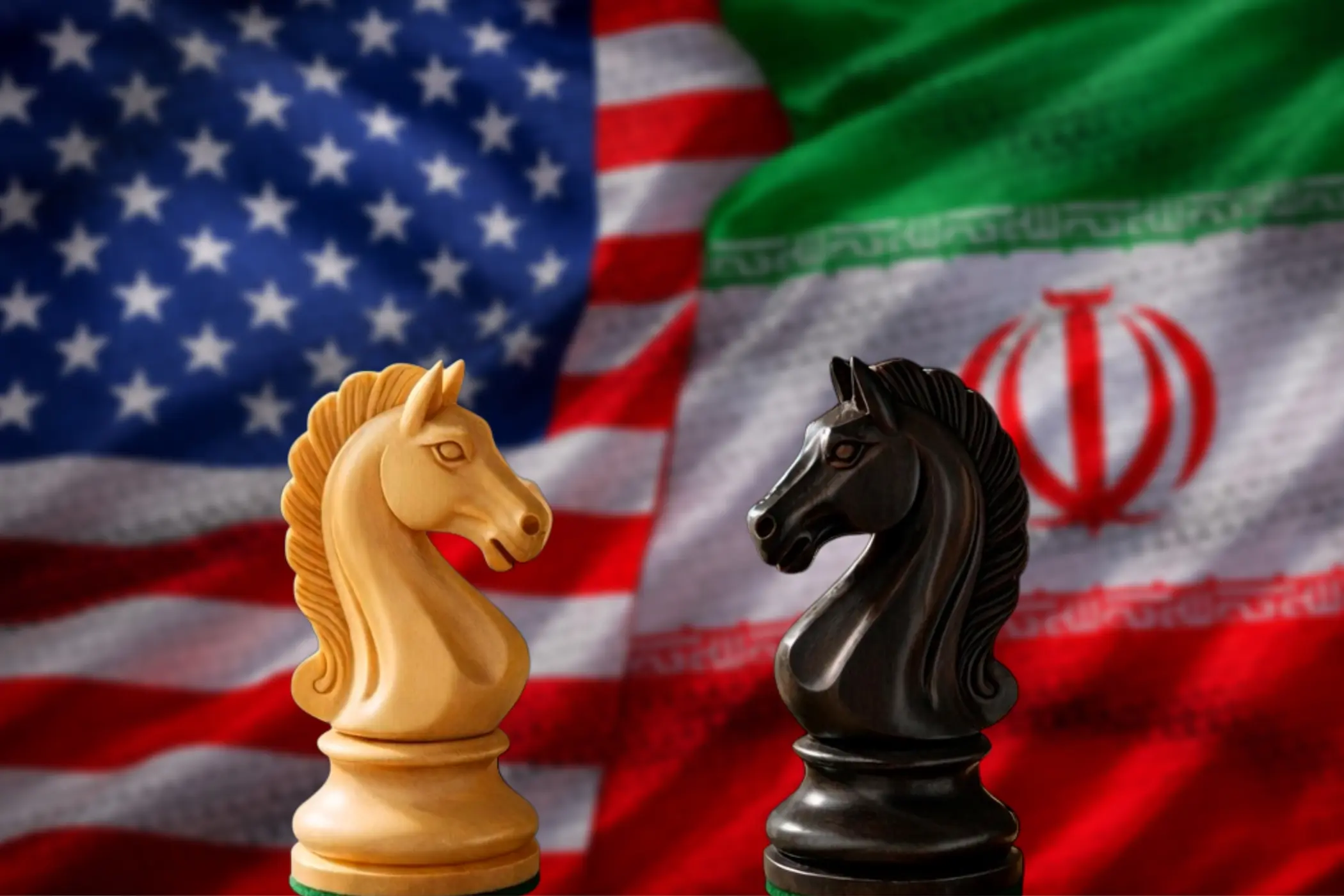
Shadow Leverage Issue 3: The Regional Proxy Dilemma
Negotiations between Washington and Tehran are entering an increasingly complex strategic juncture, with most of the 60-day timeframe established under the "Islamabad Truce" having elapsed without a decisive agreement. This has been accompanied by renewed hostilities and the Strait of Hormuz once again closing to international shipping.
These developments on the ground coincide with intensive international diplomatic efforts to contain the repercussions of an open military conflict that has clearly weighed on regional and global economic growth.
At the heart of this negotiating landscape is the conspicuous absence of the regional proxy issue from both the draft preliminary agreement and the current talks. Rather than signalling that the issue has been sidelined, this absence raises fundamental questions about the future of the complex network that has for decades formed a central pillar of Iran's deterrence doctrine.
Current political dynamics suggest the proxy issue is no longer a secondary matter that can be deferred or ignored. Instead, it has become a structural fault line that cuts across each side's conception of security and stability, as well as the limits of any viable settlement.
Its exclusion from the initial formulations reflects a clear recognition of how difficult it would be to incorporate the issue without directly confronting red lines at the intersection of Iran's deterrence doctrine, the US vision of regional security, and Israel's efforts to translate military pressure into irreversible negotiating gains.
The dilemma takes on even greater significance in light of recent macroeconomic analyses indicating that the costs of proxy involvement have extended well beyond direct military losses, striking at the heart of the global economy. Proxy-related operations along critical maritime corridors, particularly in the Red Sea, have severely disrupted supply chains and inflicted tens of billions of dollars in losses on international trade through unprecedented surges in shipping and insurance costs. They have also created unconventional threats to the security of digital infrastructure, most notably subsea fibre-optic cable networks.
Security experts emphasise that the structural attrition the Axis of Resistance suffered during the intense confrontations of 2024 and 2025 prompted Tehran's leadership to reassess its tactics and instruments, but not to abandon them.
The crisis stems from a fundamental divergence in the actors' perspectives. Iran regards its network of proxies as a forward line of defence and an integral component of its national security, integrating these groups with its missile and drone capabilities. Washington and Tel Aviv, backed by regional powers, by contrast, view dismantling and disarming these groups as a mandatory precondition for any new regional security architecture.
This reality places the proxy issue at a critical intersection between three complex levels: Iran's pursuit of strategic depth for its defence; US efforts to neutralise sources of asymmetric threat; and regional and international concerns that link market stability and freedom of navigation to ending the activities of these groups around maritime chokepoints and in the Eastern Mediterranean. Any settlement that fails to define the place and functions of these proxies would therefore amount to little more than a fragile truce vulnerable to rapid erosion.
This section examines the divergent perspectives of the key actors on the regional proxy crisis. It assesses how these competing positions may clash or converge behind closed doors at the negotiating table. The paper asks a central question: will these discussions translate into strategic trade-offs that underpin a comprehensive and sustainable settlement, or will divergence between the parties' red lines reduce the anticipated agreement to little more than a temporary tactical freeze before an even more violent round of conflict?
This issue was written on August 2, 2026
Programmes
23 Jul 2026
Closure Upon Closure: The Potential Impact of Houthi Threats to Saudi Shipping at Bab al-Mandeb
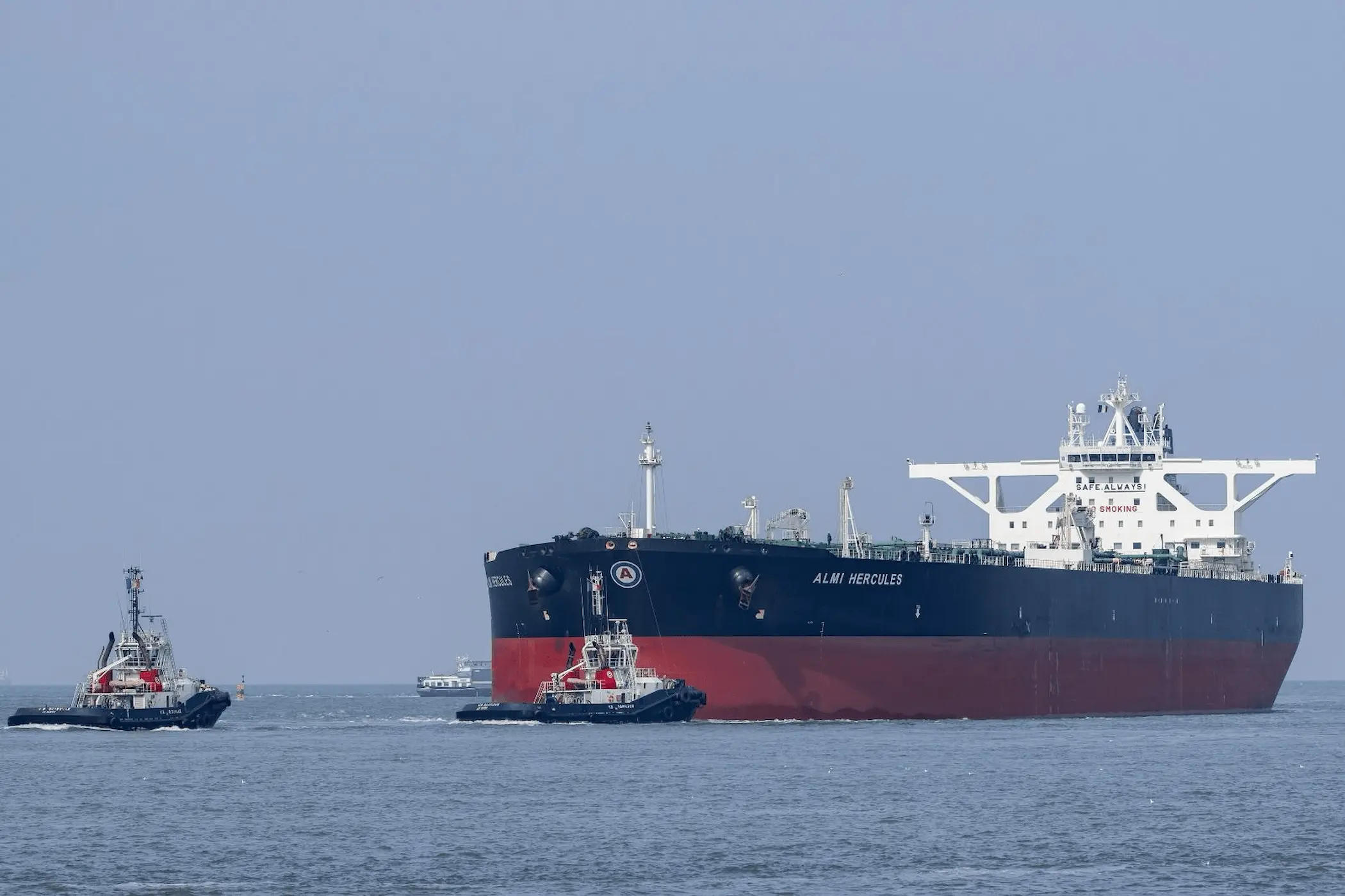
The events of 2026 have placed global energy markets before an unprecedented test of their resilience. When the effective closure of the Strait of Hormuz in February removed roughly 13 million barrels per day (mb/d) from available supply, Saudi Arabia redirected most of its exports westward to the Red Sea — only to find that outlet itself imperiled when, on 20 July, the Houthis threatened a naval blockade of the Bab al-Mandeb strait aimed squarely at Saudi shipping. For the first time in its modern history, the Kingdom's oil found itself exposed between the two maritime corridors it straddles, and the question “What if navigation through Bab al-Mandeb is severed?” shifted from a theoretical exercise to an operational probability. The answer, however, is not a single figure: it hinges on the scale of the shortfall, the nature of the cargo held back, and the market's capacity to reroute it.
This analysis therefore sets out to quantify the impact of a Bab al-Mandeb closure across three graduated halt scenarios; to unpack the mechanism by which the shock travels from cargo entrapment to a price spike; to trace its non-price consequences for refined products, aviation, and maritime shipping; and to arrive at the fiscal paradox that leaves the gravest harm to Saudi Arabia latent in the intermediate scenario rather than the full halt.

Programmes
3 Jun 2025
Why the Houthis Insist on Attacking Israel?
The Houthi armed group has been launching missile and drone attacks on Israel since the start of the Hamas-Israel war in October 2023. While these actions have been undertaken to show solidarity with Gaza and the Palestinian cause, the Houthi utilised these attacks to increase its popularity in Yemen. Moreover, the Houthi group, which is mainly supported by Iran, used these attacks to prove that it is capable militarily of engaging with foreign powers, hence delivering a message to the Aden-based legitimate government and its Gulf allies that it is militarily ready to engage with them.

Programmes
6 Aug 2024
Strategic Ramifications of Unrest in Bab El Mandab: The Arab Cost
The term “unification of arenas” emerged in the discourse of the Arab-Israeli conflict following the 2021 Sword of Jerusalem Battle. This military and ideological strategy is primarily linked to Iran’s regional proxies within the “axis of resistance.” This coalition includes Hezbollah, Hamas, the Houthis, and various Iranian-backed militias in Syria and Iraq. Its objective is to enhance operational coordination among these groups to counter Israel and diminish American influence in the region, aligning with Iranian strategic interests. The approach involves launching simultaneous actions across different fronts, including Lebanon, Gaza, and Yemen, to orchestrate a unified battle against common adversaries, particularly Israel and the United States (U.S.).
While this strategy had been employed on a limited scale prior to October 7, it achieved unprecedented levels of coordination following these operations. The execution involved dividing targets within Israel, with coordinated attacks from Gaza, Lebanon, Iraq, Syria, and Yemen. This meticulous synchronisation and sequence of missile and drone strikes overwhelmed Israeli air defences, with some attacks originating from Yemen and reaching targets in Tel Aviv.
These agents, particularly the Houthis, did not limit their actions to threatening Israeli facilities. Their strikes extended to disrupting navigation in the Bab El Mandab Strait off the Yemeni coast. The Houthis conducted numerous attacks on ships they claimed had ties to Israel, whether through state ownership, ownership by individuals with Israeli citizenship, or simply passing through Israeli ports. This broad targeting strategy encompassed a significant portion of the traffic in this crucial strait for global trade, particularly affecting Arab oil-exporting countries and Egypt, which relies heavily on the Suez Canal for its maritime traffic. As a result, shipping routes have shifted from the Suez Canal to the Cape of Good Hope, prompting long-term strategic transformations and immediate economic repercussions for the Arab countries involved. This analysis aims to assess the Bab El Mandab Strait's importance for Arab countries and explore the strategic implications of its disruption on their economies.