

Publications
30 Sep 2026
The Longevity Paradox
Longevity is moving beyond the domain of medical research to become a potential source of economic and strategic power. Advances in genomics, regenerative medicine, cellular reprogramming, and AI-enabled drug discovery are attracting growing private investment and government attention, even as evidence for dramatic extensions of healthy human lifespan remains limited. Against a backdrop of population ageing and declining fertility, even incremental improvements in healthspan could reshape labour markets, pension systems, healthcare demand, and national productivity.
However, longer healthy lives present a fundamental paradox. While they could expand individual freedom, preserve human capital, and create opportunities for education, creativity, and multiple careers, they could also extend working lives at the expense of personal choice, delay inheritance, compound wealth, and allow political, corporate, and scientific elites to retain influence for longer. If access to longevity interventions remains concentrated among wealthier individuals, existing inequalities could deepen across both generations and societies.
The geopolitical implications are equally significant. The United States, China, Saudi Arabia, the United Arab Emirates, and Singapore represent different approaches to building longevity research, investment, regulatory, and biotechnology capabilities. Countries that develop and deploy effective interventions could strengthen their human capital and technological competitiveness, while those lacking research infrastructure or access to advanced therapies risk greater dependence on external suppliers. The convergence of AI and biotechnology adds further concerns surrounding biological data, dual-use capabilities, cybersecurity, and the concentration of technological power.
This Special Edition identifies the signals that could indicate a transition from scientific promise to systemic change, outlines plausible future scenarios, and examines how governments can prepare. Its central argument is that the strategic consequences of longevity will depend not only on scientific progress, but also on how societies distribute additional healthy years, regulate emerging technologies, and adapt the institutions governing work, wealth, retirement, and political authority.
Publications
18 Sep 2026
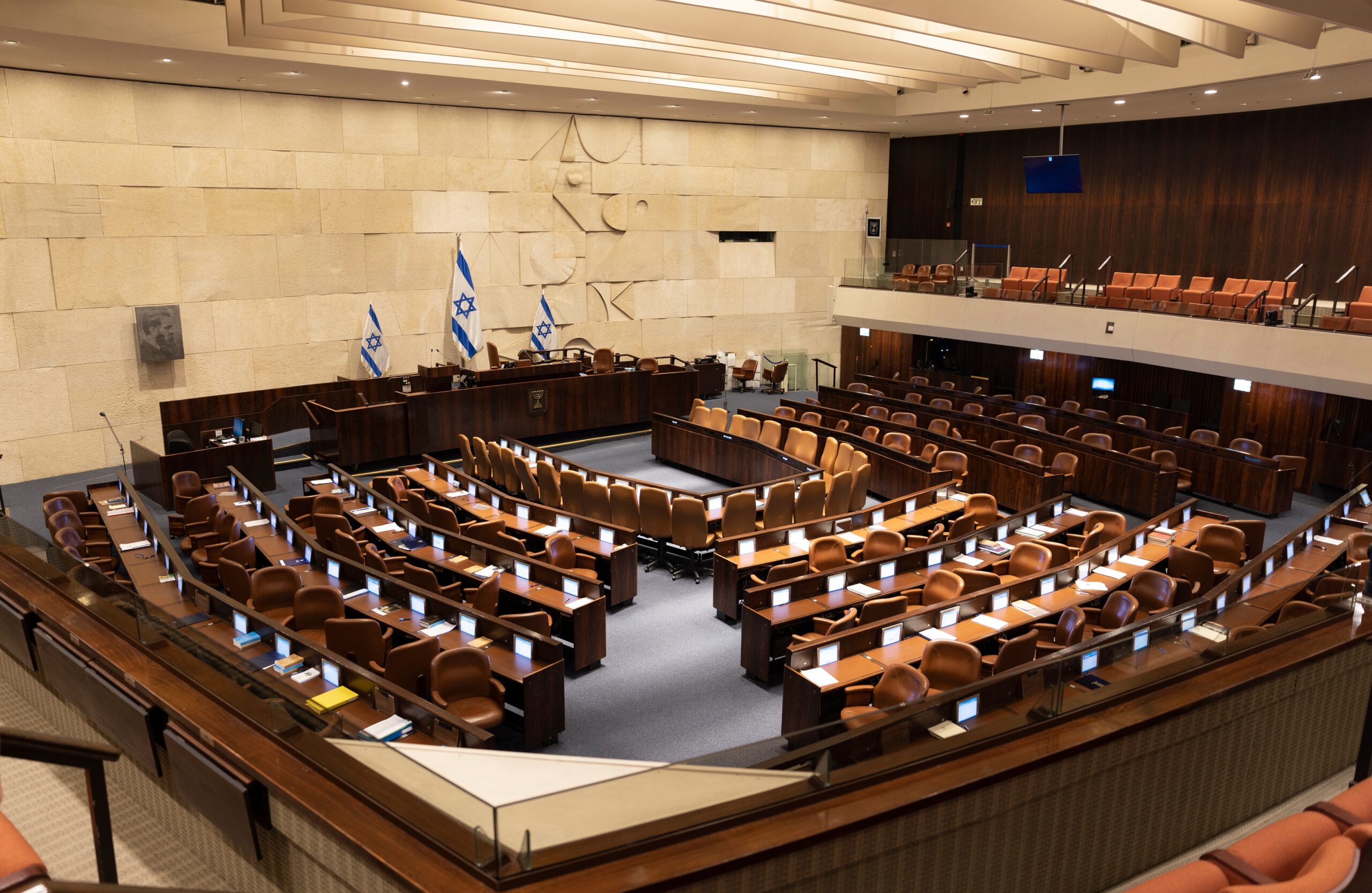
Fragmented by Design Israel’s October 2026 Election and the Politics of Coalition
Israel’s 27 October 2026 election is shaping into a contest defined less by a clear ideological choice than by fragmentation, coalition arithmetic, and unresolved national crises. Held in the aftermath of the 7 October 2023 attack, prolonged multi-front conflict, and an unfinished confrontation over the judiciary, the vote will determine not only who governs but also how Israel addresses accountability, military service, state institutions, Gaza’s future, the Palestinian issue, and relations with Washington.
Neither Benjamin Netanyahu’s right-wing bloc nor the opposition led by Gadi Eisenkot appears consistently capable of securing the 61 Knesset seats needed to form a government. The outcome is especially sensitive to smaller parties hovering around the 3.25% electoral threshold: whether these lists enter the Knesset or waste their votes could shift several seats between the rival camps. Arab parties, projected to hold roughly 11–14 seats in several polls, may become decisive coalition actors even as both major blocs remain politically reluctant to openly rely on their support.
Netanyahu’s campaign rests on five interlocking principles: shifting responsibility for 7 October toward the military and intelligence institutions while claiming credit for subsequent security achievements; consolidating right-wing lists to prevent wasted votes; portraying an Arab-supported alternative government as illegitimate; postponing divisive issues such as Haredi conscription and post-war Gaza governance; and turning institutional reforms, media influence, and ties with Washington into electoral assets. The central objective is not necessarily to resolve these contradictions before election day but to keep them from breaking apart his coalition.
Eisenkot’s opposition camp has a credible shared objective—removing Netanyahu and restoring institutional accountability—but remains less unified on the policies that would follow. Its internal divisions are most visible over universal service, religion and state, relations with Haredi parties, the role of Arab parties, and the West Bank. The likely post-election challenge for either side will be translating deliberately vague campaign positions into binding coalition commitments.
The most plausible result is therefore a fragmented Knesset without a stable governing majority. The decisive political struggle may begin after ballots are counted, when both blocs must confront the compromises, they have deferred throughout the campaign.

Publications
15 Sep 2026
The Cost of Transformation: State, Economy, and Society in Trump’s Second Term
The US economy experienced a rapid macroeconomic shift marked by rising prices and slowing growth following the implementation of a 27% weighted average applied tariff rate. This policy shift triggered stagflationary indicators by mid-2026, with real GDP growth decelerating to 1.5% in the second quarter and inflation rising to an annualized 5.1%. Concurrently, monthly job creation plummeted from an average of 125,100 in 2025 to a forecasted 34,600 to 55,200 in 2026. The trade environment also underwent structural changes, most notably in agriculture, where the United States permanently lost 7.94 percentage points of the Chinese agricultural import market, largely replaced by Brazil.
At the sectoral level, agriculture and manufacturing saw divergent outcomes that masked deeper financial vulnerabilities. The agricultural sector transitioned heavily from market-earned income to federal transfers, with government direct payments surging to $44.3 billion in 2026, comprising roughly 25% to 30% of total net farm income. Despite these government bailouts, total farm sector debt reached a record $624.7 billion, accompanied by rising family farm bankruptcies. Meanwhile, the manufacturing sector saw a modest 1.93% increase in its industrial production index between March 2025 and July 2026, yet manufacturing employment actually contracted by 0.43% during the exact same period.
The long-term fiscal trajectory of the United States points toward unprecedented debt levels, driven by simultaneous revenue constraints and expanded deficit spending. Recent tax legislation is projected to add $4.7 trillion to the national deficit over a decade. Consequently, federal debt held by the public is projected to eclipse the historic 1946 World War II peak of 106%, reaching 108% of GDP by 2030 and climbing to 175% by 2056. Over this extended horizon, net interest payments are forecast to become the largest single line item in the federal budget, while the United States' projected share of global output on a purchasing-power basis declines from 20.42% to 13.88%.
This publication was written in August 2026

Publications
14 Sep 2026
Shadow Leverage Issue 4: Iran’s Nuclear Programme
The Memorandum of Understanding did not constitute a comprehensive or definitive settlement of the nuclear issue. Rather, it served as a temporary truce to freeze military strikes and maritime and nuclear threats, buying time to negotiate a comprehensive agreement that would address the enrichment crisis at its roots. These developments come in the wake of the collapse of the 2015 nuclear agreement following the United States' withdrawal in 2018, which gave Tehran considerable room to expand uranium enrichment, restrict international inspections and accumulate large quantities of uranium enriched to levels approaching those required for the production of a nuclear weapon.
Against this backdrop, the nuclear programme stands out as the Iranian leadership's principal bargaining chip. Although Tehran does not currently possess a nuclear weapon, it has accumulated the technical expertise, established the necessary infrastructure and secured the enriched uranium needed to produce one within a relatively short period should the political decision be taken to do so. This reality underscores that Iran's leverage at the negotiating table is no longer merely theoretical. It is tangible leverage, rooted in Tehran's ability to move rapidly towards weaponisation.
On the operational front, despite US and Israeli strikes targeting nuclear facilities inside Iran, assessments have confirmed only limited damage. Tehran is still strongly believed to retain substantial capacity to continue uranium enrichment. However, experts remain divided over the true extent to which the attacks have set back its nuclear programme. These assessments indicate that military action alone has failed to resolve the nuclear issue, naturally increasing the likelihood of an eventual resumption of negotiations and a return to the diplomatic track.
Against this complex backdrop, a fundamental question remains: will the terms governing the nuclear issue be revised in any future memorandum, or will they remain unchanged from those set out in the "Islamabad Memorandum"? If the parties move towards introducing new amendments, how far can each side go in making concessions to negotiate an end to this chapter?

Publications
11 Sep 2026
Are Ports More Important Than Capitals?
While political capitals retain legal and sovereign authority, seaports have emerged as the "functional capitals" of the modern state. These maritime nodes are where sovereign decisions are translated into material reality, controlling the flow of energy, food, industrial inputs, and data. With 80% of global trade volume and 70% of its value moving by sea, the disruption of a major port can rapidly paralysise a nation's economy and military logistics, demonstrating that port power is highly consequential and systemic.
Port power is relational, depending on factors like geographic position, network centrality, industrial depth, and digital architecture. The global port network is highly concentrated, with less than 5% of ports handling half of the global maritime trade, creating a paradox where extreme efficiency leads to profound systemic vulnerabilities. This concentration makes ports susceptible not only to physical blockades or congestion but also to cyberattacks and climate change, necessitating robust resilience strategies.
Furthermore, foreign investment in port infrastructure carries significant geopolitical implications, moving beyond simplistic narratives of "debt-trap diplomacy". Long-term concessions and operational control can create strategic dependencies, even without outright asset confiscation. Additionally, modern ports possess a dual-use nature, where commercial facilities can provide latent military option value, blurring the lines between economic integration and naval expansion. Ultimately, true national power lies in the effective integration of the political capital's authority with the strategic port's physical capabilities.
This publication was written in August 2026
Publications
18 Aug 2026
Shadow Leverage Issue 3: The Regional Proxy Dilemma
Negotiations between Washington and Tehran are entering an increasingly complex strategic juncture, with most of the 60-day timeframe established under the "Islamabad Truce" having elapsed without a decisive agreement. This has been accompanied by renewed hostilities and the Strait of Hormuz once again closing to international shipping.
These developments on the ground coincide with intensive international diplomatic efforts to contain the repercussions of an open military conflict that has clearly weighed on regional and global economic growth.
At the heart of this negotiating landscape is the conspicuous absence of the regional proxy issue from both the draft preliminary agreement and the current talks. Rather than signalling that the issue has been sidelined, this absence raises fundamental questions about the future of the complex network that has for decades formed a central pillar of Iran's deterrence doctrine.
Current political dynamics suggest the proxy issue is no longer a secondary matter that can be deferred or ignored. Instead, it has become a structural fault line that cuts across each side's conception of security and stability, as well as the limits of any viable settlement.
Its exclusion from the initial formulations reflects a clear recognition of how difficult it would be to incorporate the issue without directly confronting red lines at the intersection of Iran's deterrence doctrine, the US vision of regional security, and Israel's efforts to translate military pressure into irreversible negotiating gains.
The dilemma takes on even greater significance in light of recent macroeconomic analyses indicating that the costs of proxy involvement have extended well beyond direct military losses, striking at the heart of the global economy. Proxy-related operations along critical maritime corridors, particularly in the Red Sea, have severely disrupted supply chains and inflicted tens of billions of dollars in losses on international trade through unprecedented surges in shipping and insurance costs. They have also created unconventional threats to the security of digital infrastructure, most notably subsea fibre-optic cable networks.
Security experts emphasise that the structural attrition the Axis of Resistance suffered during the intense confrontations of 2024 and 2025 prompted Tehran's leadership to reassess its tactics and instruments, but not to abandon them.
The crisis stems from a fundamental divergence in the actors' perspectives. Iran regards its network of proxies as a forward line of defence and an integral component of its national security, integrating these groups with its missile and drone capabilities. Washington and Tel Aviv, backed by regional powers, by contrast, view dismantling and disarming these groups as a mandatory precondition for any new regional security architecture.
This reality places the proxy issue at a critical intersection between three complex levels: Iran's pursuit of strategic depth for its defence; US efforts to neutralise sources of asymmetric threat; and regional and international concerns that link market stability and freedom of navigation to ending the activities of these groups around maritime chokepoints and in the Eastern Mediterranean. Any settlement that fails to define the place and functions of these proxies would therefore amount to little more than a fragile truce vulnerable to rapid erosion.
This section examines the divergent perspectives of the key actors on the regional proxy crisis. It assesses how these competing positions may clash or converge behind closed doors at the negotiating table. The paper asks a central question: will these discussions translate into strategic trade-offs that underpin a comprehensive and sustainable settlement, or will divergence between the parties' red lines reduce the anticipated agreement to little more than a temporary tactical freeze before an even more violent round of conflict?
This issue was written on August 2, 2026
Publications
21 Jul 2026
Shadow Leverage Issue 2: The Ballistic Missile and Drone Dilemma
Iran's missile programme and drone arsenal constitute one of the Middle East's principal security determinants. Before the outbreak of military hostilities in February 2026, Iran possessed the region's largest stockpile of ballistic missiles. Estimates varied, placing its inventory at between 2,500 and 6,000 long-range missiles capable of striking deep inside Israel at speeds approaching 17,000 kilometres per hour. This coincided with Tehran consolidating its position as a leading developer of drones, particularly the various Shahed models, the Karrar series, and the latest Kaman variant unveiled in January 2026.
The strategic significance of these capabilities became evident during the war, when they became a top priority for U.S. and Israeli strikes. Production facilities, storage sites, and launch platforms were targeted in an effort to degrade Iran's deterrent capabilities and neutralise the threat they posed to Israel. This military escalation was consistent with the pre-war U.S. position, which had signalled its intention to prevent Tehran from acquiring ballistic missiles and stressed the need to incorporate this issue into the nuclear negotiations. In practice, this was reflected in the simultaneous targeting of the infrastructure underpinning both the missile and nuclear programmes.
However, the launch of the negotiation process introduced a new strategic dimension to the issue through the Islamabad Memorandum. Contrary to expectations that Iran's military capabilities would be incorporated into the initial agreement, both the missile and drone programmes were excluded from the preliminary understanding.
The Trump administration subsequently announced a departure from its previous position, stating that it was not seeking to prevent Tehran from rebuilding its missile capabilities, citing Iran's sovereign right to self-defence. This shift reflects a strategic trade-off based on temporarily overlooking the missile programme in exchange for containing the nuclear programme and restricting the funding of armed groups across the region.
This exclusion is not merely a procedural feature of the negotiations. Rather, it raises fundamental questions about the trajectory of the sixty-day transitional period and the strategy each party is likely to pursue thereafter. This situation requires an assessment that goes beyond measuring battlefield losses to understand how these capabilities have evolved from mere weapons systems into a fundamental pillar of the regional balance of power, imposing themselves on regional strategic calculations.
This issue was written on July 2, 2026

Publications
15 Jul 2026
Fired by AI, Rehired by Reality: What Does That Mean for the Rest of Us?
Since mid-2025, a growing number of organizations that aggressively automated human work with artificial intelligence have begun reassessing those decisions. High-profile cases, including Ford Motor Company, Commonwealth Bank of Australia (CBA), IBM, and Klarna, demonstrate a common pattern: AI systems proved highly effective at handling routine, high-volume work but struggled with tasks requiring contextual judgment, tacit expertise, ethical reasoning, and complex customer interaction. Rather than abandoning AI, these organizations have reintroduced or redesigned human roles to complement automated systems.
This paper argues that these developments should not be interpreted as evidence that AI has failed, nor that widespread automation is reversing. Aggregate labor market data points in the opposite direction: AI continues to drive significant workforce reductions across many industries. Instead, the evidence suggests that many early adopters overestimated the extent to which entire jobs, not individual tasks, could be safely automated. The result has been a period of organizational recalibration in which firms are redefining the boundary between machine efficiency and human judgment.
Drawing on these company case studies together with a broader empirical base spanning Orgvue, Forrester, Robert Half, Careerminds, Gartner, and McKinsey, this paper develops a framework of task-conditional complementarity. Under this framework, AI increasingly performs standardized, repetitive, and predictable components of work, while humans concentrate on specialized oversight, exception handling, and continuous system optimization.
The paper also examines important boundary conditions. Not every organization has experienced this recalibration. Firms such as Amazon, Salesforce, and Shopify have not publicly demonstrated comparable reversals, suggesting that industry characteristics, workflow design, organizational maturity, and the pace of AI adoption may all influence automation outcomes. Similarly, Duolingo and JPMorgan illustrate alternative organizational responses, including policy correction and internal redeployment, that differ from direct rehiring.
The central conclusion is that the future of work is unlikely to be defined by either wholesale human replacement or resistance to AI adoption. Instead, competitive advantage will increasingly depend on accurately distinguishing which tasks can be automated, which require sustained human expertise, and how organizations redesign work to combine both effectively. The firms most likely to succeed will be those that treat AI implementation as an exercise in organizational redesign rather than simply a strategy for reducing headcount.
Publications
1 Jul 2026
Shadow Leverage Issue 1: Why the Strait of Hormuz Has Become the Decisive Negotiating Card
The Strait of Hormuz is no longer merely a disputed maritime passage, nor simply a recurring flashpoint between Iran and the United States. It has instead evolved into a central arena for testing the meaning of sovereignty in the region. While Washington continues to regard the strait as an international waterway governed by the principle of freedom of navigation, Iran’s Islamic Revolutionary Guard Corps treats it as a sovereign zone under its direct administration, subject to military rules imposed through effective ground control. Accordingly, the core of the crisis no longer centres on the question, "Is the strait open or closed?" Rather, the more consequential question has become: what is the future of the strait in light of the ongoing negotiations?
Recent developments, particularly following the Islamic Revolutionary Guard Corps’s threat to close the Strait of Hormuz in response to what it described as violations of the terms of the memorandum of understanding, especially about the Lebanese file just days after the memorandum was signed, reveal that the issue has not been resolved but has instead grown more complex. The memorandum treated the strait as a technical issue that could be managed through arrangements governing passage and transit to prevent friction. The Islamic Revolutionary Guard Corps, by contrast, approached it as a symbol of sovereignty, power, and the right to set the rules. This divergence rendered the understanding itself incapable of resolving the underlying dispute, because the disagreement between the two sides lies not in procedural details, but in who holds the authority to determine those procedures in the first place.
Although the United States and Iran agreed to reopen the Strait of Hormuz immediately after signing the preliminary agreement, this does not necessarily mean that maritime traffic will return to pre-war levels. Implementing this provision presents complex challenges related to the mechanism for reactivating the shipping corridor, the arrangements required to resume vessel traffic, and the restrictions that may persist during the sixty days allocated to negotiate the final agreement. These challenges are further compounded by the dispute over which party will assume responsibility for regulating and managing maritime traffic through the strait. Taken together, these obstacles suggest that reopening the strait may prove one of the most complex aspects of the agreement, particularly given the ongoing divergence between the American and Iranian visions for the future control of this strategic waterway.
The crisis surrounding the Strait of Hormuz, therefore, cannot be understood merely as a dispute over borders or the passage of ships; it is fundamentally a crisis of authority: the authority to set the rules, to impose exceptions, and to exercise the final say in determining whether this waterway remains open, closed, or conditionally accessible. For this reason, the question of the strait should no longer be viewed as a secondary file within the broader Iran–United States conflict. Rather, it should be recognised as one of the most consequential issues shaping and redefining the very concept of sovereignty, both within Iran itself and in the evolving structure of relations between regional and international powers.
Publications
30 Jun 2026
The Direct and Indirect Cost of the 2026 US-Israel War on Iran
The Al Habtoor Research Centre (AHRC) presents a groundbreaking, equation-based assessment analysing the direct and indirect social and economic resource costs of the 110-day conflict that began on February 28, 2026. Utilising an advanced conflict economics framework—including the Stiglitz-Bilmes convention and counterfactual synthetic controls—this research delivers an unprecedented, exclusive analysis of the financial burdens borne by the belligerents and the wider global economy. The headline finding is one of profound asymmetry, proving that recovery capacity, rather than the size of the initial kinetic blow, dictates the medium-term cost of modern warfare. The largest financial burden fell on the global economy, specifically non-belligerent, bystander oil-importing nations, totalling an estimated $1.41 trillion by 2030. Triggered by the 110-day closure of the Strait of Hormuz, this true burden lies in unproduced global output rather than the temporary oil-price spike, which ultimately nets to zero globally. Among the combatants, Iran absorbed an existential, structural blow equivalent to roughly 81% of its pre-war output, costing $305 billion by 2030, or $720 billion on a purchasing-power parity (PPP) basis. Locked out of international capital markets, its output gap fails to close by the end of the decade, triggering a step down to a permanently lower economic path. In contrast, the United States faces a heavily back-loaded bill ranging from $200 billion to $1.1 trillion by 2030. While structurally insulated from the immediate oil shock due to its net energy exporter status, this massive range in projections depends on whether standard cash-budgeting or full multi-decade liabilities—such as veteran care, war-debt interest, and budget ratchets—are present-valued. Meanwhile, Israel sustained a sharp but recoverable macroeconomic shock of $135 billion by 2030, equal to roughly a quarter of a single year's GDP. Advanced air defense mitigated physical destruction, concentrating the cost instead on reserve mobilisation, interception economics, and a transient output gap. Ultimately, this exclusive analysis details how the poorest bystander nations subsidised the conflict's macro cost, marking the 2026 war as one of the most economically disruptive events of the century.

Publications
29 Jun 2026
Europe 2040: Today, Tomorrow, and the Day After
Europe in 2026 stands at an inflection point. The convergence of six structural crises — economic divergence, technological dependence, strategic vulnerability, institutional paralysis, demographic decline, and energy insecurity — means that the trajectory of the continent over the next fifteen years is genuinely uncertain. There is no default path. The future will be made by a series of choices, shocks, and compounding interactions that no single actor fully controls.
Yet uncertainty should not be understood as decline. Rather, it reflects the fact that Europe is entering a period in which multiple futures remain possible. The decisions taken today by governments, institutions, businesses, and societies will determine whether Europe emerges stronger, more fragmented, more autonomous, or increasingly dependent on external powers. In many ways, Europe is being asked to redefine itself at a time when the rules that shaped the post-Cold War era are rapidly being rewritten. This study adopts a scenario-led approach to explore how Europe may evolve by 2040. Instead of attempting to decide on a single future, it examines several plausible pathways that could emerge from the interaction of political, economic, technological, demographic, and geopolitical forces. The scenarios presented in the first chapter are not forecasts; they are tools designed to challenge assumptions, identify risks, and illuminate opportunities.
Building upon these scenarios, the subsequent chapters examine the key drivers that are expected to shape Europe's future, including economic competitiveness, technological sovereignty, energy security, demographic transformations, geopolitical shifts, defence and strategic autonomy, and the evolution of Europe's role in an increasingly multipolar international system. Together, these chapters seek to answer a broader question: not simply what Europe's future will look like, but what kind of Europe will emerge from the choices being made today.
Ultimately, this study is built around a simple premise: Europe's future is not predetermined. It will be negotiated, contested, and continuously reshaped by events both within and beyond its borders. The continent's greatest challenge over the coming years may therefore be learning how to navigate uncertainty itself.

Publications
4 Jun 2026
The Illusion Economy: Who Really Wins from Online Gambling?
The online gambling industry has evolved from a niche entertainment sector into a global digital ecosystem valued at more than $120 billion, emerging as a critical structural vulnerability within the global financial system. Organised crime syndicates and state-backed hostile actors exploit this ecosystem for money laundering, terrorist financing, and sanctions evasion. The enormous volume of transactions processed through digital casinos, online sports betting platforms, and prediction markets provides an ideal layer of financial opacity.
State-sponsored cyber groups, particularly those linked to North Korea and China, also leverage the sector to generate strategic revenue used to finance sanctioned weapons programmes and collect intelligence through the compromise of sensitive databases containing millions of personal, financial, and biometric records.
Globally, regulatory frameworks governing online gambling remain highly fragmented. Europe has adopted stringent licensing and compliance regimes, while many countries across the Middle East maintain outright prohibitions. This divergence has created regulatory grey zones exploited by offshore operators registered in tax havens such as Malta, Curaçao, and Gibraltar to target restricted markets.
Meanwhile, the Asia-Pacific region faces acute security challenges as transnational organised crime groups control extensive networks of virtual casinos and shadow-banking channels that move billions of dollars through cryptocurrency-based transactions. These parallel financial infrastructures operate across multiple jurisdictions, complicating enforcement efforts and creating new pathways for illicit capital movement.
The implications of this sector extend well beyond financial crime. Online gambling has generated serious social risks, including rising rates of personal bankruptcy and gambling addiction, particularly among minors exposed to gambling-like mechanisms embedded in loot boxes and esports ecosystems. Furthermore, the outflow of foreign currency through offshore gambling platforms contributes to macroeconomic instability in emerging economies while expanding the informal economy, which is estimated to account for between 11% and 20% of global GDP.