

Publications
29 Jun 2026
Europe 2040: Today, Tomorrow, and the Day After
Europe in 2026 stands at an inflection point. The convergence of six structural crises — economic divergence, technological dependence, strategic vulnerability, institutional paralysis, demographic decline, and energy insecurity — means that the trajectory of the continent over the next fifteen years is genuinely uncertain. There is no default path. The future will be made by a series of choices, shocks, and compounding interactions that no single actor fully controls.
Yet uncertainty should not be understood as decline. Rather, it reflects the fact that Europe is entering a period in which multiple futures remain possible. The decisions taken today by governments, institutions, businesses, and societies will determine whether Europe emerges stronger, more fragmented, more autonomous, or increasingly dependent on external powers. In many ways, Europe is being asked to redefine itself at a time when the rules that shaped the post-Cold War era are rapidly being rewritten. This study adopts a scenario-led approach to explore how Europe may evolve by 2040. Instead of attempting to decide on a single future, it examines several plausible pathways that could emerge from the interaction of political, economic, technological, demographic, and geopolitical forces. The scenarios presented in the first chapter are not forecasts; they are tools designed to challenge assumptions, identify risks, and illuminate opportunities.
Building upon these scenarios, the subsequent chapters examine the key drivers that are expected to shape Europe's future, including economic competitiveness, technological sovereignty, energy security, demographic transformations, geopolitical shifts, defence and strategic autonomy, and the evolution of Europe's role in an increasingly multipolar international system. Together, these chapters seek to answer a broader question: not simply what Europe's future will look like, but what kind of Europe will emerge from the choices being made today.
Ultimately, this study is built around a simple premise: Europe's future is not predetermined. It will be negotiated, contested, and continuously reshaped by events both within and beyond its borders. The continent's greatest challenge over the coming years may therefore be learning how to navigate uncertainty itself.
Publications
29 Dec 2025
The Cost of Closing Borders: Why Restricting Migration Could Backfire
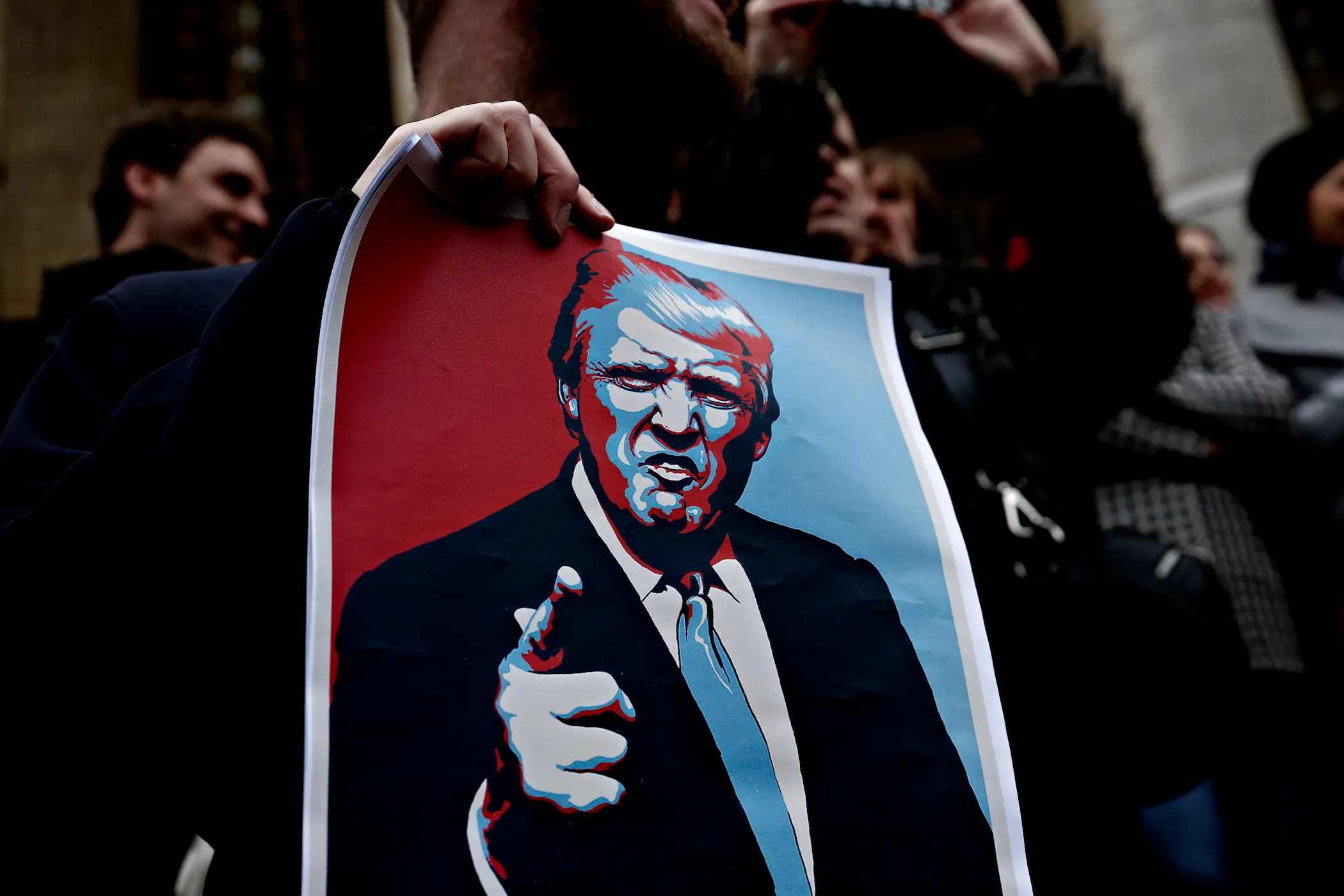
Recently, U.S. President Donald Trump issued sharp criticism of Europe, and while migration policies were not his only focus, his remarks on the topic were particularly striking. His criticism came shortly after he announced a policy to “permanently pause migration from what he called ‘third world countries’” following a National Guard shooting in Washington, highlighting his framing of migration as both a domestic security and international issue. The latest U.S. National Security Strategy under the Trump administration closely links European security to its migration policies, warning of what it describes as "civilisational erasure" from uncontrolled immigration and EU policies, and calling on Europe to enforce stricter border controls, support "patriotic" parties, and become more self-reliant. This approach is widely seen as critical of mainstream European leadership and supportive of far-right movements.
At the same time, far-right sentiment is gaining traction across Europe, visible in the electoral successes of parties such as France's National Rally, Italy's Lega, and Germany's Alternative for Germany. While public discourse often frames migration as a threat to security and civilisation, Western countries overlook a crucial point, which is that migration can be a dividend, contributing to economic growth. With populations ageing faster than the global average and shortages of labour in highly skilled professions, the West is increasingly dependent on migrants. The question is what might happen if far-right agendas succeed in curbing migration, and whether Western economies and security could sustain themselves without it.

Publications
15 May 2024
The Far-Right Surge in Europe and its Ripple Effects on Migration in the Mediterranean
Several indicators point out to the rise of far-right wing within the European bloc including polls for the upcoming European elections and the migration deal which was passed by the French parliament last December. Far right sentiments are reflected on many issues especially Migration which holds second place in the list of most pressing issues for European voters. The New European Migration Pact, which exempts Ukrainians from the new measures, reflects European leanings towards the right adding more restrictions on Migrants, refugees and Asylum seekers especially those arriving from the Middle East and Africa. The far-right leanings do not only hold significance for the European Union (EU) but they will definitely impact neighboring countries especially countries of North Africa who act as a transit for refugees and asylum seekers aiming at reaching European shores. Migrants, refugees and asylum seekers will face catastrophic humanitarian situation due the Pact’s measures such as the screening procedure which will lead to diminished safeguards and a risk of mass detention at the borders, including for children, in countries of first arrival, the Crisis and Force Majeure Regulation which regulates what happens if there is a “crisis” at the EU’s external border. European countries themselves will be put in an unenviable position due to transit countries’ levering their geopolitical positions. Using a multi-faceted criterion, the paper argues that the new pact is just a “rebranding” of ongoing European migration policies which are found to be unsuccessful. The paper uses the EU-Turkey migration deal showcasing shortcomings of European migration policies. Findings suggest that, among other losses, far-right measures taken by EU states tend to embolden transit countries vis-a-vis European states who will lose on the political as well as the economic side. Politically, they will have to make concessions in face of transit states while economically they will have to pay huge amounts of aid for the sake of borders’ externalization and keeping migrants away.