
Publications
9 Nov 2025
What If: Climate Migration Destabilises North Africa and Southern Europe?
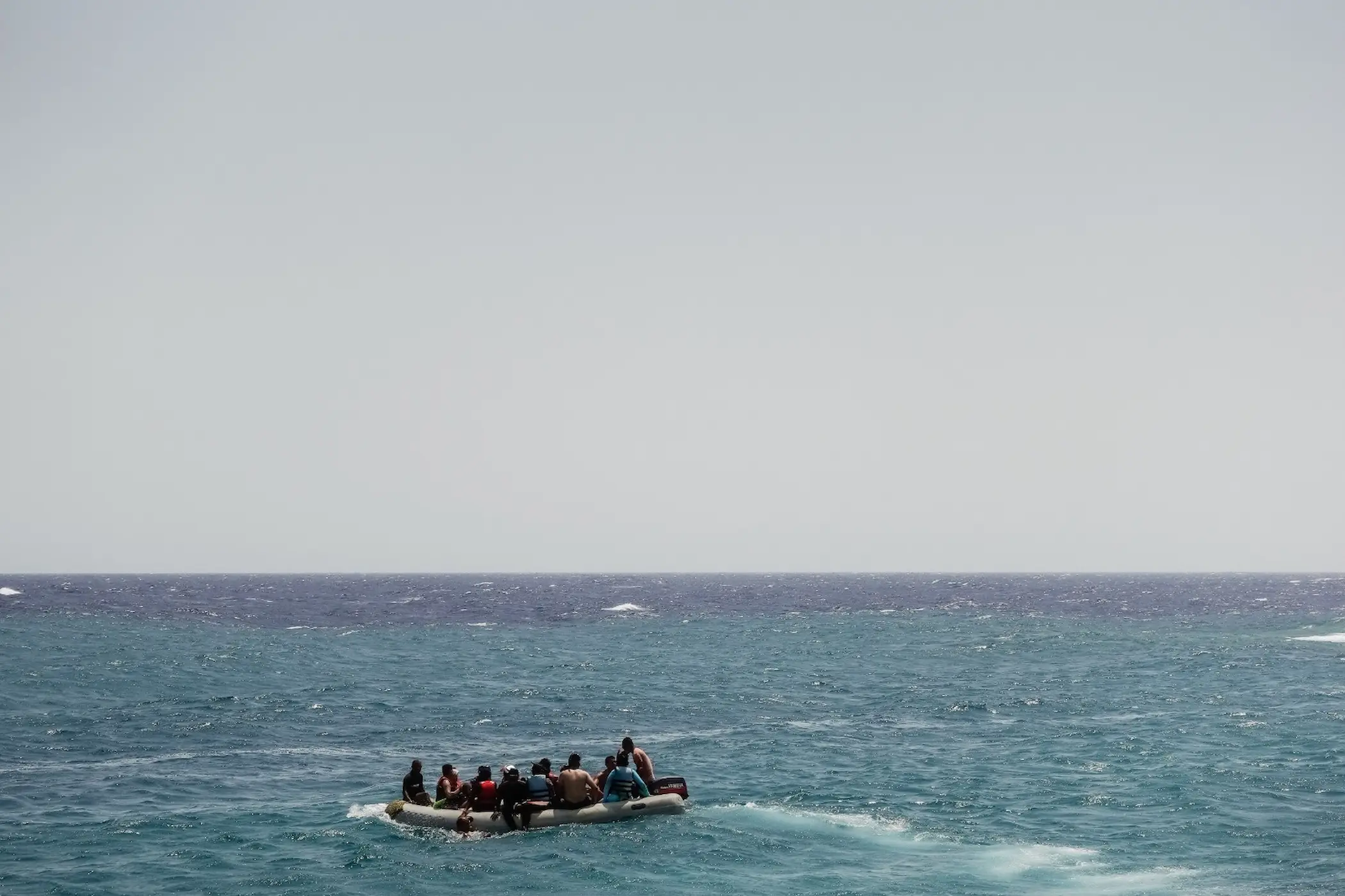
Climate migration is becoming an increasingly pressing issue, imposing geopolitical and humanitarian challenges on countries that receive migrants at all stages. According to a report by the World Bank, climate migration is expected to force approximately 143 million people in the Global South to migrate by 2050. Natural disasters, including extreme heatwaves, droughts, insufficient crops, and flooding, have been imposing severe risks for many countries, particularly third-world countries. These countries are vulnerable to these risks due to their lack of services and financial distress, leaving most of the population living below the poverty line. Under these hardships, climate migration is spiking to northern countries where people seek better living conditions.
North Africa, geographically connecting the Global South to Europe, is a strategic transit location for migrants. While Southern Europe, linking migrants to the Global North, is an important entry point for those seeking better opportunity. Hence, the climate migration pressure on these regions creates conditions for destabilisation across both sides of the Mediterranean.
With the high wave of irregular migration, ‘Destination’ states, where migrants seek to settle in, often engage with the ‘Transit’ states, which are “any country through which a migrant passes after fleeing their country of origin, irrespective of their initial plans or actual actions within that country”, in what is called ‘migration diplomacy’. This strategy involves destination states offering visa incentives and investment opportunities in exchange for the transit state adopting containment measures for irregular migrants coming from their countries and strengthening control over the border. Likewise, destination countries foster economic and investment aid to ‘origin’ countries to tackle the root causes of the migration problem.
Although such diplomatic techniques could be successful sometimes, in many cases, they have been proven to be inadequate in many situations. As climate irregularities increase, climate-induced migration is expected to rise, and such methods have a high probability of their effectiveness diminishing completely, impelling destination countries to come up with other competent measures.
The evidence shows a high probability of devastating effects in both transit and entry states. For transit states, they might face more strain on their financial resources than what they currently incorporate, and at the same time, security threats could escalate. Regarding entry states, economic pressure, political tension, and intensified cultural polarisation might empower far-right parties, changing the structure of the European Union. So, climate migration could become a huge threat to the regional stability in both transit and entry states without effective and coordinated measures.
This paper explores the destabilising potential of climate-induced migration on transit North African states and Southern European entry states. It is divided into four sections: climate regression, effects on transit states, effects on entry states, and proposed solutions. The paper addresses the economic, political, and security implications, and suggest the necessity for tailored measures suitable for affected countries. The paper concludes that the continuous pace of climate migration will have destabilizing consequences on both transit and entry hubs. Besides resilience and early warning solutions, the EU has to provide attractive incentives for North Africa in order to limit the spill-overs on its borders. Such proposals shouldn’t be detached from the realities of African states and better align with the economic and security needs of these countries.

Publications
15 May 2024
The Far-Right Surge in Europe and its Ripple Effects on Migration in the Mediterranean
Several indicators point out to the rise of far-right wing within the European bloc including polls for the upcoming European elections and the migration deal which was passed by the French parliament last December. Far right sentiments are reflected on many issues especially Migration which holds second place in the list of most pressing issues for European voters. The New European Migration Pact, which exempts Ukrainians from the new measures, reflects European leanings towards the right adding more restrictions on Migrants, refugees and Asylum seekers especially those arriving from the Middle East and Africa. The far-right leanings do not only hold significance for the European Union (EU) but they will definitely impact neighboring countries especially countries of North Africa who act as a transit for refugees and asylum seekers aiming at reaching European shores. Migrants, refugees and asylum seekers will face catastrophic humanitarian situation due the Pact’s measures such as the screening procedure which will lead to diminished safeguards and a risk of mass detention at the borders, including for children, in countries of first arrival, the Crisis and Force Majeure Regulation which regulates what happens if there is a “crisis” at the EU’s external border. European countries themselves will be put in an unenviable position due to transit countries’ levering their geopolitical positions. Using a multi-faceted criterion, the paper argues that the new pact is just a “rebranding” of ongoing European migration policies which are found to be unsuccessful. The paper uses the EU-Turkey migration deal showcasing shortcomings of European migration policies. Findings suggest that, among other losses, far-right measures taken by EU states tend to embolden transit countries vis-a-vis European states who will lose on the political as well as the economic side. Politically, they will have to make concessions in face of transit states while economically they will have to pay huge amounts of aid for the sake of borders’ externalization and keeping migrants away.