

Programmes
27 Jul 2026
Trump’s Prize: How the July 2026 Tariff Package Installed the Middle East as a Global Manufacturing Hub
The global trading system underwent a fundamental transformation in July 2026, as the United States abandoned limited sector-specific protection in favour of a complex, multi-tiered tariff architecture that turned access to its domestic market into an instrument of economic and political pressure. Four major decisions converged within that single month. The first was the outright repeal of the de minimis exemption, which had allowed small consignments valued below eight hundred dollars to enter the country duty-free. The second was the application of the Section 301 forced-labour tariffs across two distinct bands, imposing 10% and 12.5% according to the compliance record of each partner state. The third was the activation of Section 338, a statutory provision that had lain dormant since the 1940s, to levy 50% duties on a range of Canadian goods. The fourth was the approval of a phased escalation reaching 200% on imports of generic pharmaceuticals.
The consequences of this package extended well beyond the raising of customs duties. They amounted to a comprehensive re-engineering of rules of origin and customs compliance requirements, which in turn altered the cost calculus of every manufacturer and supplier across global supply chains. This new reality pushed firms to search for alternative routes designed not merely to reduce transport costs, but to change the identity of the country of origin itself and so escape punitive duties. That search is precisely what turned the Middle East from a transit corridor into an industrial and logistical node positioned to play a pivotal role on the new map of world trade.
This analysis therefore aims to unpack the effects of the July 2026 package across three connected levels: its domestic cost to the American economy in terms of inflation, compliance friction and the feasibility of reshoring; the realignment of trading partners and the trade diversion and origin leakage that follow from it; and finally its direct implications for the economies of the Middle East and North Africa, together with quantitative estimates of price, investment and shipping trends through the end of the decade.
Programmes
15 Apr 2026
From Doha to Washington: How Hormuz Redrew Global Gas Supply Chains
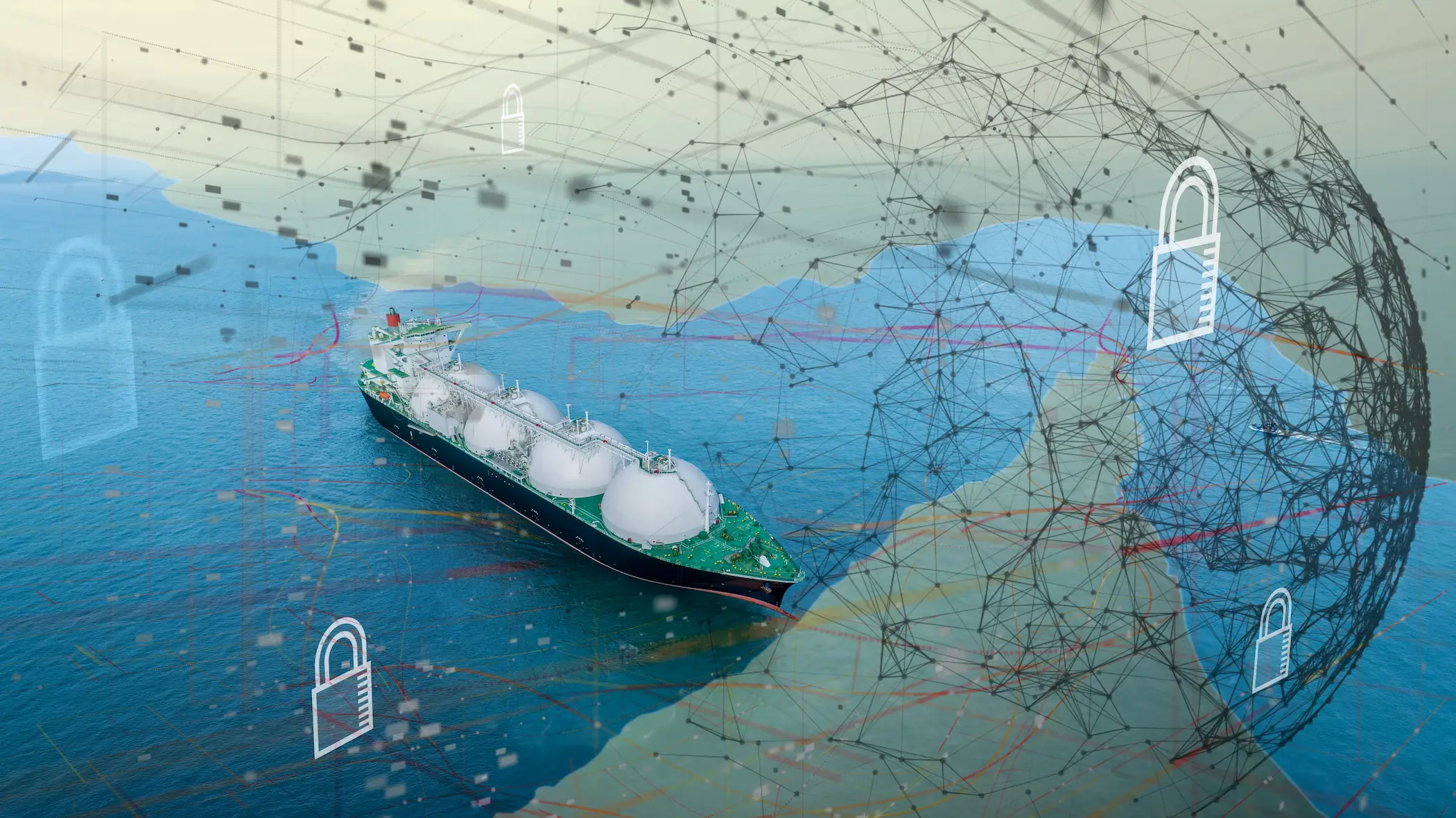
At the outset of 2026, the global natural gas market underwent a profound structural shift that eroded much of the stability built over years of rebalancing in the aftermath of the 2022 European energy crisis. Markets had been advancing towards a phase of relative supply abundance, underpinned by expanding liquefaction capacity in the United States (US) and large-scale Qatari projects. This trajectory was abruptly reversed on Feb. 28, 2026, when Operation Epic Fury triggered the most severe energy shock to confront the international system in decades. The US-Israel-Iran War and the closure of the Strait of Hormuz, removed nearly one-fifth of global liquefied natural gas supply from circulation within days.
This paper analyses the structural transformations in the global natural gas market induced by the crisis, tracing supply and demand dynamics before and after the outbreak of the conflict. It further evaluates the implications for key actors within the international energy system, including countries most exposed to global gas market volatility, such as Egypt and Jordan.

Programmes
13 Apr 2026
The Implications of the April 2026 U.S.–Iran Ceasefire on Oil Prices
On April 7, 2026, the United States (US) and Iran announced a temporary two-week ceasefire, following intensive diplomatic mediation led by Pakistan during a critical window of escalation. The conflict had erupted on Feb. 28, 2026, when the US and Israel launched coordinated military strikes targeting Iranian infrastructure. In response, Tehran moved to close the Strait of Hormuz to international commercial shipping, precipitating the most severe energy supply shock in modern market history.
The closure effectively paralysed approximately 20 million barrels per day that would ordinarily transit the Strait of Hormuz in peacetime, accounting for nearly a quarter of global seaborne oil trade. Under the terms of the ceasefire, Iran announced a conditional reopening of the strait, while the parties agreed to commence diplomatic talks in Islamabad on April 10. This analysis examines the full scope of the crisis and evaluates the prevailing oil price scenarios, drawing on lessons from comparable historical shocks to assess the fragility of the current environment and its potential trajectories.

Programmes
31 Mar 2026
What If: The Houthis Close Bab el-Mandeb?
The United States–Israel–Iran war, which began with a set of vaguely defined objectives including regime change in Iran and the dismantling of its missile and nuclear capabilities, now appears to be shifting toward a different set of priorities. Iran has managed to internationalise the conflict in a way that has redirected attention toward containing the scale of global economic disruption. Put simply, the focus is increasingly on securing the flow of oil amid what is being described as one of the most severe energy crises in modern history. Much of the world’s attention has centred on the Strait of Hormuz, and rightly so. This vital shipping lane accounts for roughly 20% of global liquid petroleum consumption, as well as a significant share of global liquefied natural gas trade (LNG). However, with the Iran-backed Yemeni Houthis now entering the conflict, the risks facing regional oil exports and maritime routes have intensified further. As the de facto controllers of the Bab al-Mandeb Strait, the Houthis are in a position to disrupt shipping through the Red Sea and the Gulf of Aden.
This raises several critical questions. Why have the Houthis chosen this moment to enter the war? Under what conditions might they escalate their involvement? And what would be the consequences of a closure of the strait?

Publications
15 Apr 2025
Ripple Effect: Trump Tariffs and the World’s Economic Quake
In April 2025, the Trump administration stunned global markets by announcing a sweeping tariff expansion under the International Emergency Economic Powers Act (IEEPA), introducing a flat 10% universal tariff on all imports. This move, framed as a national economic emergency response, immediately triggered global trade uncertainty and diplomatic friction. The policy marked a significant escalation of Trump’s protectionist agenda, signalling a break with multilateralism and targeting long-standing trade imbalances with strategic rivals and allies alike. We found that the United States (U.S.) trade structure is deeply imbalanced, with persistent deficits concentrated in sectors essential to industrial production, such as machinery, electronics, and vehicles. These deficits have exposed the U.S. to retaliatory measures from key trade partners—particularly China, Canada, and the EU—who have calibrated their responses to hit politically and economically sensitive export categories. Tariffs have initiated a multi-channel inflationary shock: direct consumer price increases, rising intermediate input costs, and cascading pressures on logistics and wages. The compounded effect has resulted in a net consumer price index (CPI) increase of approximately 1.2%, with higher spikes in key durable goods. Global supply chains are beginning to reconfigure.
The automotive sector, in particular, has seen disruption in bilateral flows with traditional partners, creating openings for new logistical nodes. The UAE stands out as a beneficiary, attracting redirected FDI and becoming a strategic re-export and final assembly hub. Collectively, these findings underscore a paradox: while the policy aims to reduce dependency and correct trade imbalances, it simultaneously accelerates external retaliation, domestic cost pressures, and global fragmentation in trade infrastructure.