

Publications
15 Jul 2026
Fired by AI, Rehired by Reality: What Does That Mean for the Rest of Us?
Since mid-2025, a growing number of organizations that aggressively automated human work with artificial intelligence have begun reassessing those decisions. High-profile cases, including Ford Motor Company, Commonwealth Bank of Australia (CBA), IBM, and Klarna, demonstrate a common pattern: AI systems proved highly effective at handling routine, high-volume work but struggled with tasks requiring contextual judgment, tacit expertise, ethical reasoning, and complex customer interaction. Rather than abandoning AI, these organizations have reintroduced or redesigned human roles to complement automated systems.
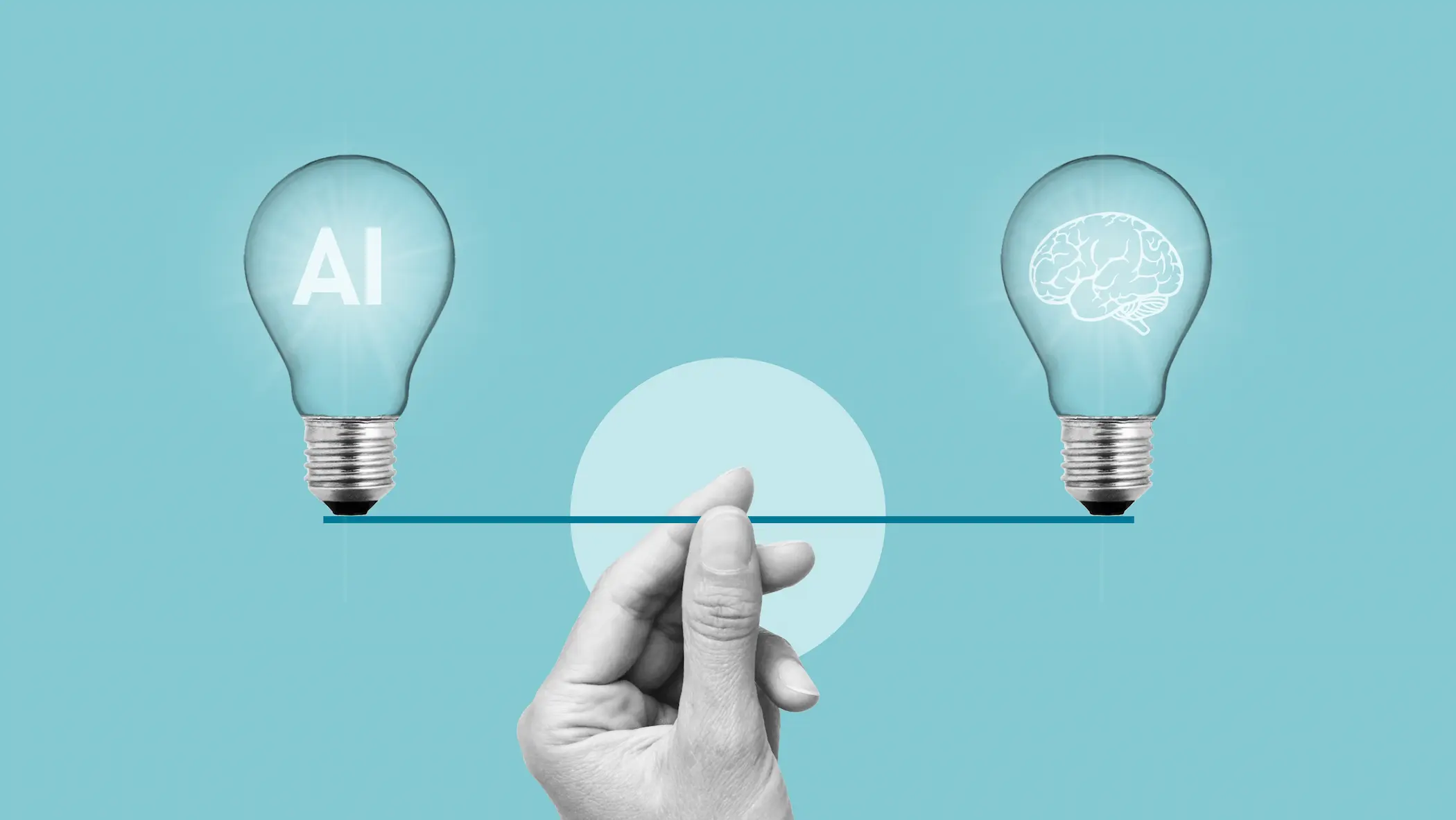
This paper argues that these developments should not be interpreted as evidence that AI has failed, nor that widespread automation is reversing. Aggregate labor market data points in the opposite direction: AI continues to drive significant workforce reductions across many industries. Instead, the evidence suggests that many early adopters overestimated the extent to which entire jobs, not individual tasks, could be safely automated. The result has been a period of organizational recalibration in which firms are redefining the boundary between machine efficiency and human judgment.
Drawing on these company case studies together with a broader empirical base spanning Orgvue, Forrester, Robert Half, Careerminds, Gartner, and McKinsey, this paper develops a framework of task-conditional complementarity. Under this framework, AI increasingly performs standardized, repetitive, and predictable components of work, while humans concentrate on specialized oversight, exception handling, and continuous system optimization.
The paper also examines important boundary conditions. Not every organization has experienced this recalibration. Firms such as Amazon, Salesforce, and Shopify have not publicly demonstrated comparable reversals, suggesting that industry characteristics, workflow design, organizational maturity, and the pace of AI adoption may all influence automation outcomes. Similarly, Duolingo and JPMorgan illustrate alternative organizational responses, including policy correction and internal redeployment, that differ from direct rehiring.
The central conclusion is that the future of work is unlikely to be defined by either wholesale human replacement or resistance to AI adoption. Instead, competitive advantage will increasingly depend on accurately distinguishing which tasks can be automated, which require sustained human expertise, and how organizations redesign work to combine both effectively. The firms most likely to succeed will be those that treat AI implementation as an exercise in organizational redesign rather than simply a strategy for reducing headcount.
Programmes
24 Aug 2025
How AI Will Reshape, Not Ruin, Stability
As enthusiasm for Artificial Intelligence (AI) grows each day, so too does anxiety about its potential impact on jobs and overall societal stability. Several studies highlight the possibility that full automation could disrupt economic and political systems. While these concerns are valid and should not be dismissed, it is important to remember that, like any other transformative technology, AI can be both celebrated for its potential and feared for its risks.
A stable society cannot function without a labour force; removing it entirely would violate basic economic principles such as supply and demand, while also undermining political stability, which depends on the resilience of the middle class. These structural realities suggest that, rather than erasing human work altogether, AI will likely be both automatically and deliberately integrated in ways that preserve social and economic balance. From this perspective, the future shaped by AI is not as dire as some anticipate.

Publications
2 Apr 2023
Restoring Balance: Impacts of Automation on UAE Labour Force
According to the McKinsey Global Institute report between 400 million and 800 million people worldwide could be displaced by automation and need to find new occupations by 2030, with 75 million to 375 million of those affected need to move to another new jobs and learn new skills.
Over the last two decades, there has been a surge in interest in automation and digital technologies, as well as their implications for our societies. Several writers have calculated experimentally the impact of automation technologies on employment and people by examining technology adoption at the business or industry level in previous years and related this to labour market outcomes, but their conclusions have been mixed. Some studies find that automation technologies positively impact employment, while others show that they have a negative impact.
Our study examined the impact of automation on UAE in terms of demographics, employment and economic sectors by implementing several scenarios of automation. These scenarios revealed that, in most cases, automation will positively impact UAE in terms of some macroeconomic indicators, and will lead to its economic growth and stability. Finally, we provided some recommendations that will enhance and facilitate the transition to automation in the UAE.