
Programmes
4 Jun 2026
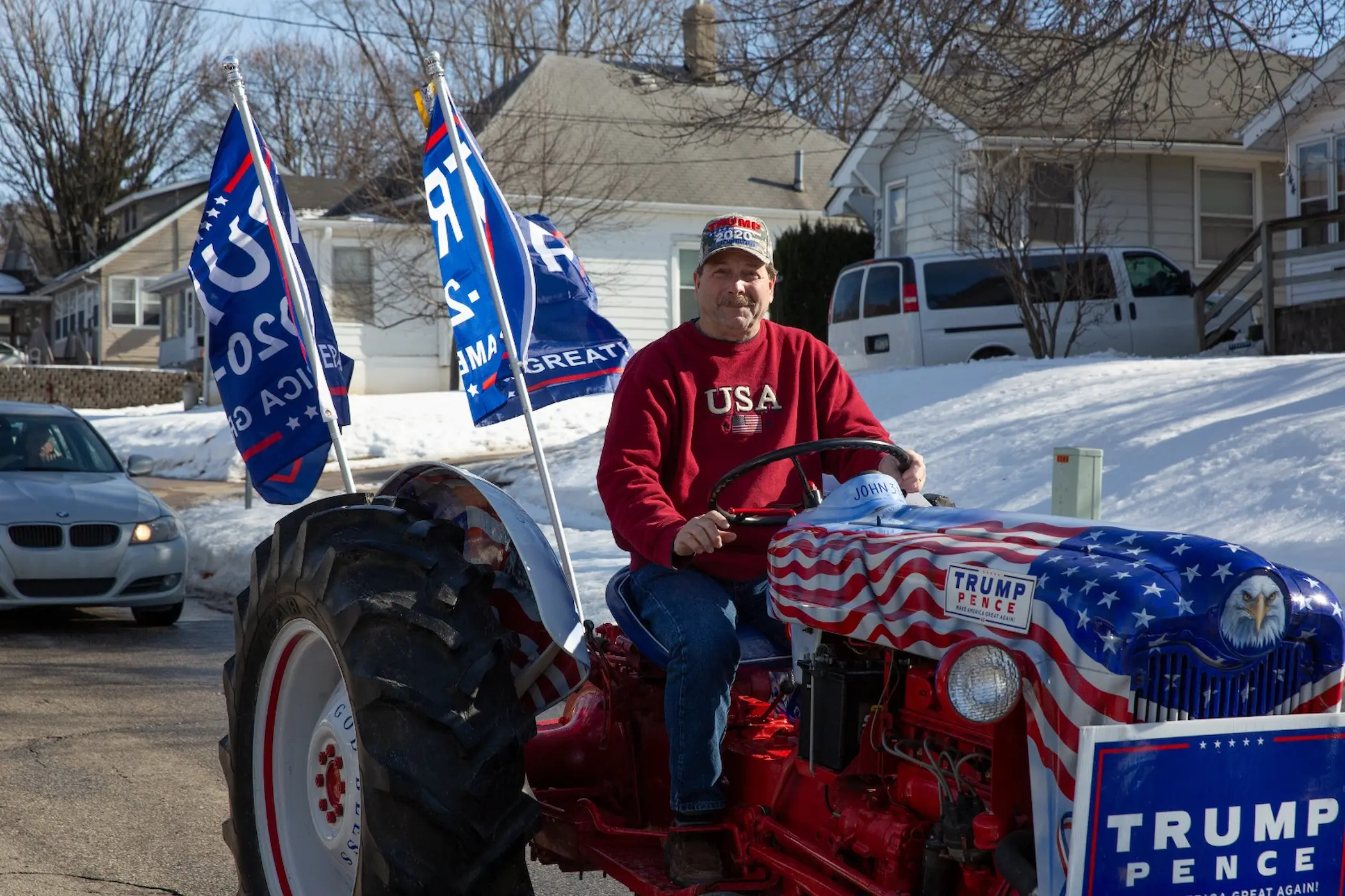
Trump, Tariffs, and the Revolt of the American Farmer
By mid-2026, the US agricultural sector stands at a critical juncture where macroeconomic shocks intersect with geopolitical repercussions and sharp shifts in domestic trade policy. This has been reflected acutely in the traditional political alliances of rural America—which have historically constituted a formidable electoral stronghold for the Republican Party and, in particular, for President Donald Trump—as they undergo deep structural fractures that continue to widen, driven by the direct economic effects of stringent protectionist trade policies, disruptions to the regulatory framework governing biofuels, and regional conflicts that have combined to erode profit margins and undermine farmers’ confidence in the current system.
To understand the roots of this crisis, it is necessary to examine the nature of the implicit economic contract between the current Republican administration and its rural base. Historically, the government’s strategy rested on a two-dimensional approach: engineering stringent industrial tariffs to protect the domestic manufacturing base, while simultaneously attempting to insulate the agricultural sector from the adverse repercussions of these policies through the injection of exceptional federal support packages. However, the dynamics of 2025 and 2026 have undermined the wager on the sustainability of this equation. The economic strain generated by this dual approach translated into tangible political mobilisation, the effects of which were clearly reflected in opinion polls and primary-election indicators that came as a shock to the Republican camp.
Building on the foregoing, and with the crisis shifting from the economic sphere to the arena of electoral contestation, this analysis seeks to dissect the deep economic drivers that have produced the current state of agricultural frustration, evaluate the effectiveness of government measures in the areas of trade and energy, and assess the extent of the shift in the political calculations of rural voters. Drawing on a systematic reading of quantitative indicators and an examination of the results of the Iowa primary elections, this analysis attempts to anticipate the trajectory of this discontent: does it merely represent a temporary wave of backlash-driven anger, or is it laying the foundations for a broader political realignment capable of reshaping the balance of power in Washington ahead of the midterm elections?
Programmes
16 May 2026
From Two-Party Politics to Multiparty Competition: Where Is Westminster’s Party Landscape Headed?
Since the post-Second World War period, politics in the United Kingdom have been shaped by a stable two-party system. This balance was structurally reinforced by the First-Past-the-Post (FPTP) electoral system, which enabled the Labour and Conservative parties to dominate government for nearly a century. The results of the local elections held in May 2026, however, signalled a clear shift in this established model. The elections revealed electoral fragmentation and a redistribution of support among five major parties, driven by the rise of Reform UK, growing support for the Green Party, and the continued influence of regional nationalist parties.
As a result, the combined vote share of the two traditional parties fell to a historic low of 37.7%, an unprecedented level driven by the rapid fragmentation of the electorate, ongoing economic change, the declining effectiveness of the social contract, and the weakening ability of institutions to provide services. This has brought to light a structural crisis within the political system that requires a reassessment of the trajectory of the British political system, to determine whether the country is moving towards a permanent multi-party system similar to the European model, or whether the structural mechanisms of the Westminster parliamentary system remain capable of imposing a new equilibrium on the two-party system.

Programmes
3 Nov 2024
Harris’s Hollywood vs Trump’s Evangelicals
As the U.S. election looms, former President Donald Trump and Vice President Kamala Harris are both working to mobilise their supporters, ensuring strong voter engagement by Election Day on November 5. While both campaigns employ similar tactics, the Harris campaign has followed recent Democratic strategy by leveraging celebrity endorsements to inspire younger voters, who historically have lower turnout rates but tend to lean Democratic. This challenge with young voters, contrasts with the Trump campaign’s stronger base among White Evangelicals, who, despite not making up a majority of the population, reliably vote in large numbers across the United States (U.S.). The Harris campaign’s reliance on Hollywood celebrities highlights the industry’s alignment with liberal causes and the need to mobilise young voters, compared to the consistent support Trump receives from conservative religious groups, who form a reliable voter base. The divide between Harris’s Hollywood and Trump’s Evangelicals is another representation of another dividing line in the U.S. and raises questions.

Programmes
11 Apr 2023
Between Grain and AK-47s: Russian Influence in Africa
The Russian presence in Africa has recently increased after a decline of nearly three decades since the dissolution of the Soviet Union in the nineties of the last century. Russian-African relations are part of Russia's new strategy to enhance its international influence. This strategy conforms to Russia's situation in international affairs, including its support for countries that contradict Western policies. Moscow has focused its influence on the West African region, taking advantage of Western policy mistakes, the mounting anti-European sentiment, and the long-standing failure of international and domestic actors to address the root causes of the regional instability. The first Russian-African summit in Sochi in October 2019 concluded contracts with more than 30 African countries for the supply of weapons and military equipment. It thus opened the door for state-backed companies to invest heavily in the security and technology sectors and industries that extract natural resources such as oil, gas, gold and other minerals.
On the other hand, the Russian-Ukrainian conflict did not impede this rapprochement but rather contributed to developing the partnership between the two parties to take the form of a strategic alliance. This was apparent in the speeches and statements of President Vladimir Putin, the most prominent of which was the speech he delivered at the International Parliament Conference "Russia - Africa in a Multipolar World", which was held in Moscow in March of this year on the sidelines of Saint Petersburg preparations for the second coming Russian – African summit to be held in July 2023. Putin reiterated that cooperation between Moscow and African countries was and will always be one of the top fixed priorities of Russia's foreign policy, declaring Russia's fulfilment of all its obligations, including supply of food, fertilisers, fuel and other essential products to the countries of the continent, which helps ensure food and energy security.
In light of the ongoing Russian-Ukrainian conflict, this analysis aims to shed more light on the motivations and characteristics of the Russian strategy in Africa. It also seeks to highlight the challenges to Russian influence expansion as well as the prospects for Russian-African relations in the future.