
Programmes
20 May 2026
A Fractured Kingdom: Political Fragmentation and the Crisis of Trust in Post-Election Britain
The results of the 2026 UK local elections while shocking to some, are overall not surprising. After all, it was projected the Labour Party was going to incur significant losses, while Reform UK was projected to win big, of which both projections were somewhat accurate. Moreover, despite a poor showing for the Conservative Party, they did manage to regain a few councils back from the Labour Party such as Westminster, while the Liberal Democrats and the Green Party managed to have positive results. The extent of the Labour Party losses extends beyond the England elections, as they managed to lose their majority in the Welsh parliamentary elections as well as lose seats in the Scottish parliamentary elections as well. These results are a sign that the UK political system is no longer just Labour vs. Conservative but now the political structure of the UK has been entirely realigned to reflect a fragmented system.
The election results already have several implications for the country. These implications include the confirmed fragmentation of the British political system and lack of trust and confidence in the current government. Naturally, these implications spell trouble for Prime Minister Sir Keir Starmer and the Labour Party.
Programmes
16 May 2026
From Two-Party Politics to Multiparty Competition: Where Is Westminster’s Party Landscape Headed?
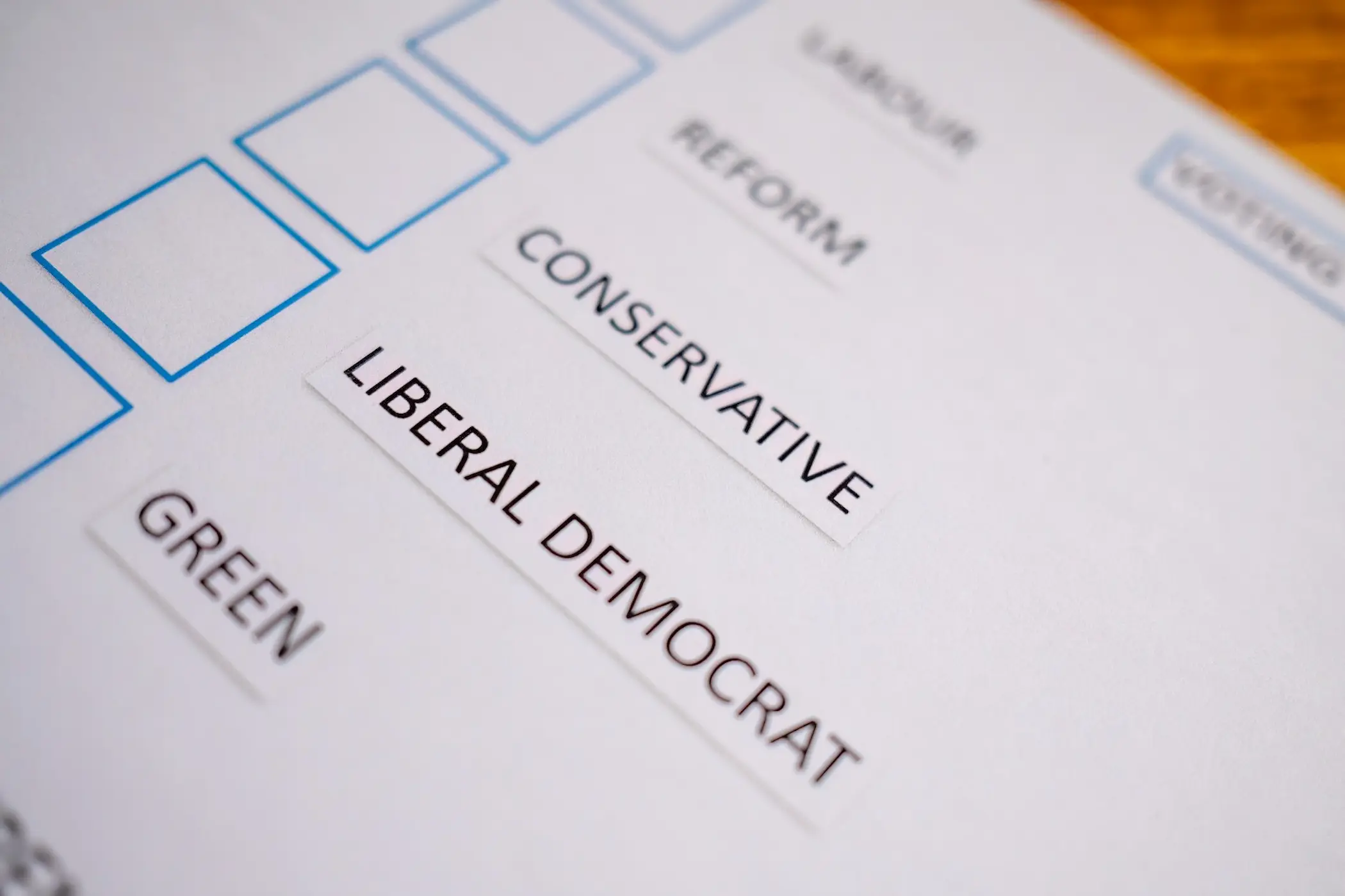
Since the post-Second World War period, politics in the United Kingdom have been shaped by a stable two-party system. This balance was structurally reinforced by the First-Past-the-Post (FPTP) electoral system, which enabled the Labour and Conservative parties to dominate government for nearly a century. The results of the local elections held in May 2026, however, signalled a clear shift in this established model. The elections revealed electoral fragmentation and a redistribution of support among five major parties, driven by the rise of Reform UK, growing support for the Green Party, and the continued influence of regional nationalist parties.
As a result, the combined vote share of the two traditional parties fell to a historic low of 37.7%, an unprecedented level driven by the rapid fragmentation of the electorate, ongoing economic change, the declining effectiveness of the social contract, and the weakening ability of institutions to provide services. This has brought to light a structural crisis within the political system that requires a reassessment of the trajectory of the British political system, to determine whether the country is moving towards a permanent multi-party system similar to the European model, or whether the structural mechanisms of the Westminster parliamentary system remain capable of imposing a new equilibrium on the two-party system.
Programmes
6 May 2026
The UK Local Elections: Final Nail in the Coffin for the Labour Party?
The 2024 General Election in the United Kingdom saw history being made, as the Labour Party under the direction of Sir Keir Starmer scored a landslide victory over the Conservative Party. Despite this landslide victory and the promise of significant change following years of Conservative Party turmoil, the Premiership of Starmer has not been smooth. Prime Minister Starmer’s term has been littered with major policy U-turns, political scandal, and an increase in support for populist movements. Naturally, this has contributed to a loss in confidence in Starmer’s government and leadership abilities, with many in the House of Commons and the British public questioning the government’s judgment, confidence, and competence.
To add insult to injury, the Labour Party lost the Gorton and Denton byelection (a seat held by the Labour Party for 100 years) and is still suffering from the Mandelson scandal, which further contributed to further loss of trust in the system. As the local elections are fast approaching and Starmer’s approval continues to plummet, the question remains: will a loss in these local elections be the final nail in the coffin for the Labour Party and Starmer?

Programmes
3 Jul 2024
Foreign Policy Challenges for 10 Downing Street’s Next Resident
While most electoral debates focus on domestic politics, foreign policy remains a crucial aspect. It seems, however, that Prime Minister Rishi Sunak was aware of this when he appointed David Cameron as Secretary of State for Foreign Affairs. Regardless of who wins, most likely the Labour Party, there will definitely be changes to the current situation. Issues ranging from relations with European neighbours to migration and defence are ready for the upcoming prime minister.