

Programmes
16 May 2026
From Two-Party Politics to Multiparty Competition: Where Is Westminster’s Party Landscape Headed?
Since the post-Second World War period, politics in the United Kingdom have been shaped by a stable two-party system. This balance was structurally reinforced by the First-Past-the-Post (FPTP) electoral system, which enabled the Labour and Conservative parties to dominate government for nearly a century. The results of the local elections held in May 2026, however, signalled a clear shift in this established model. The elections revealed electoral fragmentation and a redistribution of support among five major parties, driven by the rise of Reform UK, growing support for the Green Party, and the continued influence of regional nationalist parties.
As a result, the combined vote share of the two traditional parties fell to a historic low of 37.7%, an unprecedented level driven by the rapid fragmentation of the electorate, ongoing economic change, the declining effectiveness of the social contract, and the weakening ability of institutions to provide services. This has brought to light a structural crisis within the political system that requires a reassessment of the trajectory of the British political system, to determine whether the country is moving towards a permanent multi-party system similar to the European model, or whether the structural mechanisms of the Westminster parliamentary system remain capable of imposing a new equilibrium on the two-party system.

Programmes
24 Dec 2025
The Post Human Politics Problem: How Tech Elites Are Rewriting the Social Contract
For most of modern history, political systems have been built around the assumption that human beings, rather than territory, rulers, or abstract notions of progress, are the central subjects of governance. Laws, economies, and institutions have been justified, at least in theory, by their obligation to protect human life, manage conflict, and improve collective wellbeing over time. Even when unevenly applied, this principle imposed an ethical constraint on power, requiring political authority to answer, however imperfectly, to human needs and consent.
Today, that assumption is rapidly eroding. A small group of technology elites increasingly speak and act as if humanity itself is provisional, a stage to be surpassed rather than a condition to be preserved. This belief is no longer confined to speculative philosophy. It is shaping how AI is built, how labour is governed, how inequality is rationalised, and how long-term political authority is imagined. The result is not merely a clash of ideas, but an emerging institutional crisis, in which decisions affecting billions are guided by a worldview that has never been democratically endorsed.
Publications
12 Jan 2023
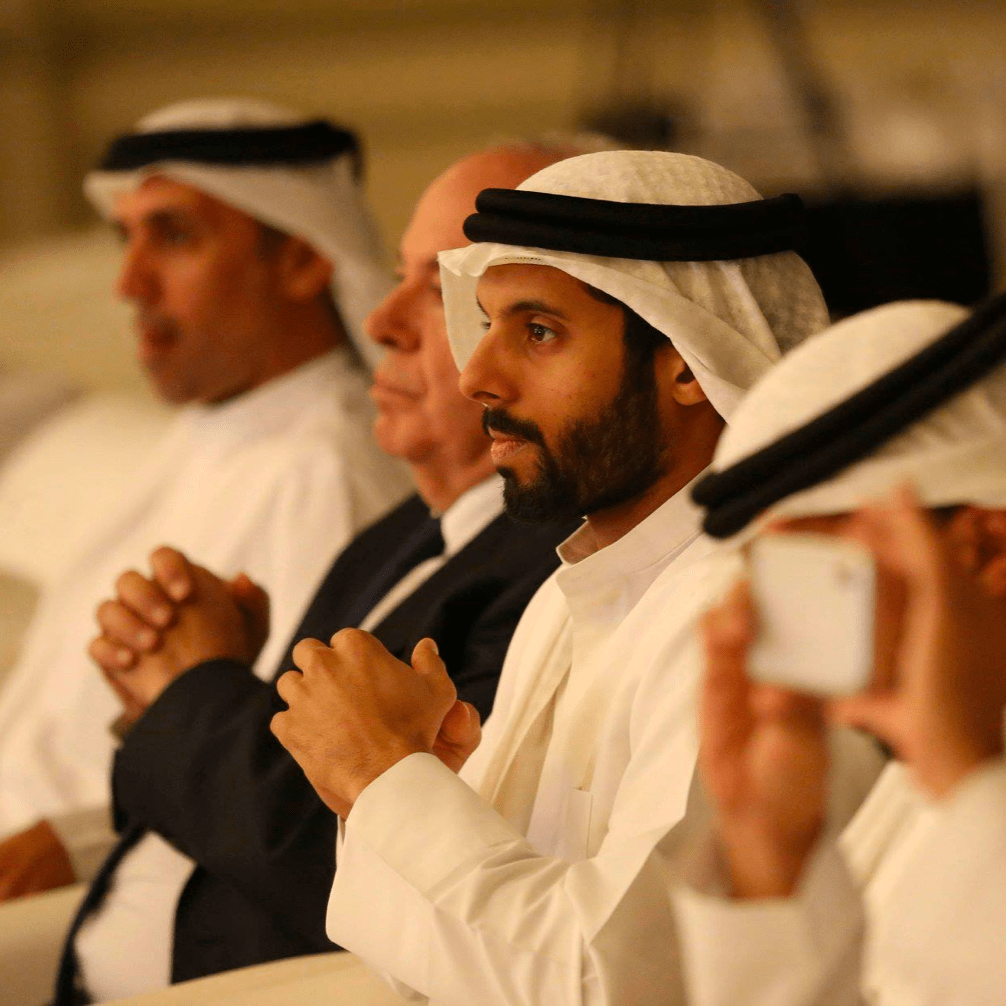
The Future of Youth in the Post-Oil Era: The Case of the United Arab Emirates and Kingdom of Saudi Arabia
One of the most critical issues currently facing the Middle East is the changing composition of its demographic structure. A massive cohort of young people — known as a youth bulge — is challenging policymakers, with youth policies affecting security, education, the labour market, and welfare programs, among other areas. Given the relative stability and wealth of the Gulf states, this is an issue that is not often associated with the region. However, handling a growing young population is just as challenging in the Gulf.
The Gulf is one of the wealthiest regions worldwide; in terms of GDP per capita, it is distinctive due to its unique hydrocarbon reserves compared to a relatively small national population. Gulf states rely on oil revenue — to varying degrees — to attract private investors and provide extensive public services and subsidies to nationals. With not enough diversification in their economies, government spending in the Gulf states will continue to be a barrier to economic diversification. To sustain the high standard of living attained by Emirati and Saudi societies to the youth and the coming generations, the two countries must set strategies and plans to integrate youth while continuing to diversify their economies away from oil. This study explores the impact of the post-oil reforms and strategy on the youth, including education, employment, social contract, and identity.
The study applies Late Rentier State Theory to analyse the relationship between youth, the Emirati and Saudi states, the post-oil reforms, and their future trajectories. The analysis is guided by some of the characteristics identified by Late RST which focus on the impact of globalization, modernization policies, diversification, the state’s encouragement of entrepreneurship, and the sustainability of their strategies with regards to the extent to which they accommodate youth’s needs and account for changing societal structures and expectations.
While the study does not refute the youth bulge hypothesis, which contends that states where young adults constitute a large proportion of the population are expected to face an elevated risk of political violence and interstate conflict, widely used in the literature; it adds to it by proposing that while those risks exist, they can be alleviated under certain circumstances. Those circumstances include policies and strategies to be taken by governments that are relevant to youth needs and the surrounding environment. Namely, taking into consideration both agency and structure.
The study finds that, for the United Arab Emirates, the results of education and Emiratisation policies are likely to shape the shifting social contract between young Emiratis and the government, and could lead to a range of outcomes, from the promising- a population of empowered, educated, and skilled Emirati youth- to the stagnant- disappointed and apathetic youth persistent in their preference of the public sector- to the more worrisome- yet unlikely- active opposition by dissatisfied youth.
With regards to the Kingdom Saudi Arabia, the study finds that while the government is investing massively in educational and employment reforms, young Saudis need to adopt entrepreneurial values and work ethic to ensure the success of “Neo-Saudism". This in turn requires a certain level of responsiveness from the government and possibly more opportunities for youth to participate in decision making in the near future. The speed of change and the extent to which youth’s values and perspectives may clash with those of older generations is yet to be determined. The real challenge for Saudi decision makers and strategists will be in maintaining balance and stable relations between different societal groups.