

The results of the 2026 UK local elections while shocking to some, are overall not surprising. After all, it was projected the Labour Party was going to incur significant losses, while Reform UK was projected to win big, of which both projections were somewhat accurate. Moreover, despite a poor showing for the Conservative Party, they did manage to regain a few councils back from the Labour Party such as Westminster, while the Liberal Democrats and the Green Party managed to have positive results. The extent of the Labour Party losses extends beyond the England elections, as they managed to lose their majority in the Welsh parliamentary elections as well as lose seats in the Scottish parliamentary elections as well. These results are a sign that the UK political system is no longer just Labour vs. Conservative but now the political structure of the UK has been entirely realigned to reflect a fragmented system.
The election results already have several implications for the country. These implications include the confirmed fragmentation of the British political system and lack of trust and confidence in the current government. Naturally, these implications spell trouble for Prime Minister Sir Keir Starmer and the Labour Party.
Confirmation of a Fragmented Political System
Perhaps the clearest indicator for the future of British politics stemming from these elections is the fragmentation of the British political system. Prior to these elections, control of the councils has been primarily divided between the Labour and Conservative Parties, with Reform UK and the Green Party not holding or having much representation on the councils, and the Liberal Democrats maintaining modest gains. However, the election results have proven that the UK is moving on from a political system that focused on the two traditional parties to one that is more reflective of a multi-party system. This is clearly shown by the internal divisions within the existing progressive and conservative blocs, which following this election cycle can result in difficulties in governance due to the increased representation of ideologies within the different councils. This fragmentation shows how at least in England, the local voters believe that the traditional parties are no longer effective in introducing meaningful change, which resulted in an increase in support for parties such as Reform UK and the Green Party.


Beyond a general assessment of political fragmentation, one should also look at the individual results to see how fragmented the political system has become. This is clearly shown as the Labour Party lost control of its majority in multiple councils as opposed to losing their councils to an opposing party. According to the Institute for Government, the number of councils with “no overall control” (NOC) have increased by 22, which now brings the total to 61. This means that now there are 61 councils which do not have a majority party controlling them, which implies that governance will be based on coalition building between the parties in each of the 61 individual councils. Naturally, the idea of having to form a coalition government between five starkly different parties that represent different aspects of the electorate will be a difficult task, as local populations are expecting the new local governments to deliver results rapidly. A failure to effectively form a government could be damaging to the rapidly declining political system that is currently in place.
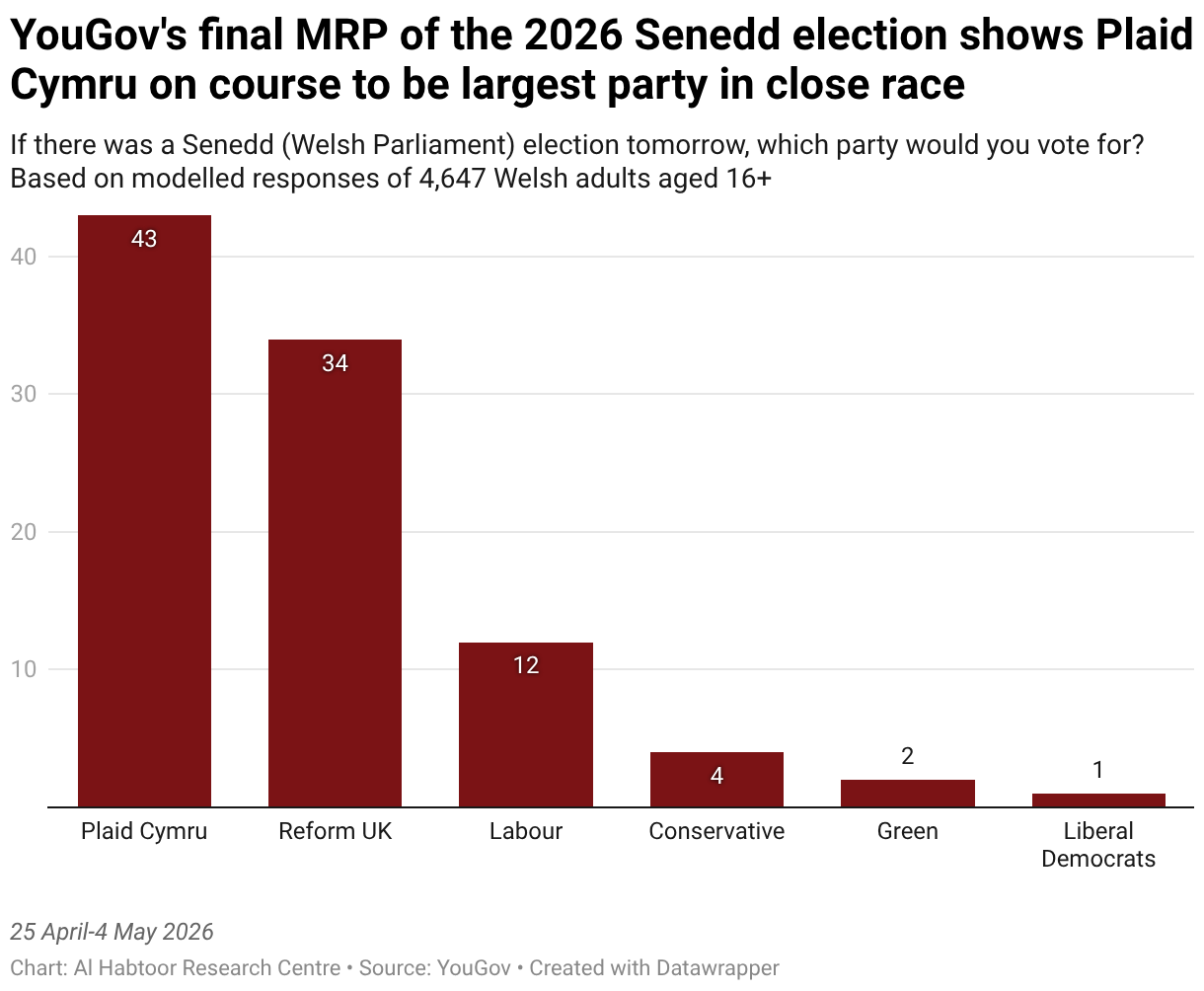
While it is important to understand the fragmentation of the traditional political system in the English context, it is vital to show how this fragmentation has impacted Wales and Scotland, areas where the Labour Party had its biggest flops this election cycle. In the Welsh context, the Labour Party suffered a catastrophic defeat which resulted not only in the First Minister, Eluned Morgan, losing her seat but also saw the Welsh Labour Party lose control over the Senedd, which it had controlled for decades. The nationalist party Plaid Cymru won the most seats followed by Reform UK, however, Plaid Cymru failed to meet to threshold to form a majority government, which now leaves governance of Wales in the hands of coalition.

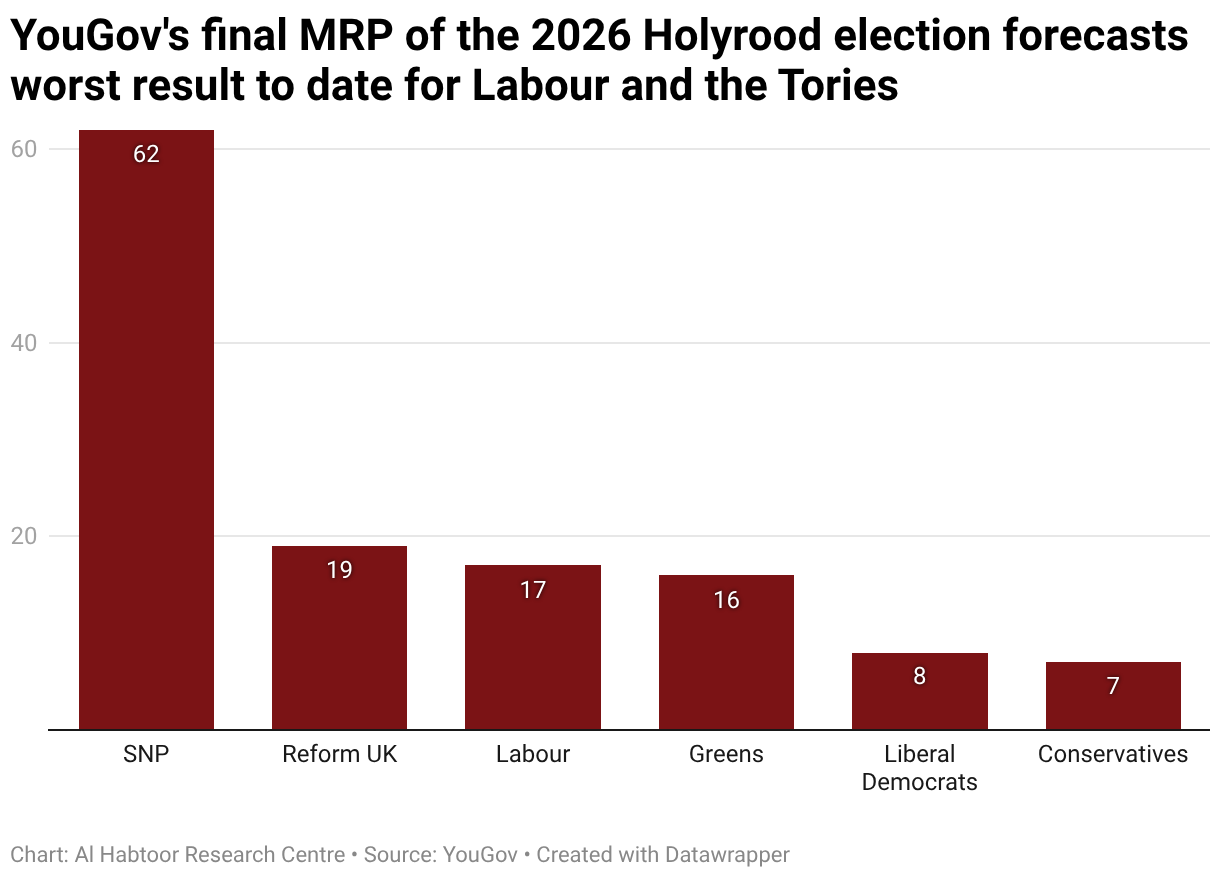
Moreover, the Scottish parliament saw the Scottish National Party maintain the most seats, however like Plaid Cymru in Wales, failed to gain a majority, which is significant, as the SNP claimed that a majority in the Scottish parliament would serve as a mandate for a renewed independence referendum. However, due to the dispersed pro-union vote across constituencies and the possibility of another independence referendum being low on the voter’s priorities, the vote became fragmented, which inevitably led to the failure of the SNP becoming the majority party. Overall, the fragmentation of British politics is shown through this local election, as numerous councils fell under the NOC category, while the Welsh and Scottish elections failed to produce a majority government, which confirms the assumption the political system has become fractured.

Trust and Confidence Lost
While these election results indicate a fracture in the British political system, they also show widespread distrust and loss of confidence in the current government. This lack of trust in the Labour Party and Prime Minister Starmer can be attributed to the negative perceptions of how the current government has been running the country. Commonly used examples to describe the Labour Party’s supposed poor governance are the multitude of policy U-turns as well as the backlash from the Mandelson scandal. It is these aspects of the Starmer government’s approach to running the country which inspires a lack of trust in government, as they show that the Prime Minister lacks judgement.
When it comes to the election results, it is clear the voters have lost trust and confidence in the Starmer as Labour lost a significant number of blue-collar constituencies. This is clearly shown in areas in the East Midlands such as Mansfield (known for being an ex-coal mining constituency) who are highly disengaged from politics and have a lack of trust in the political process. Moreover, according to a YouGov poll 63% of Labour supporters, 65% of Conservative supporters, and 83% of Reform UK supporters believe that the government is self-interested as well as ineffective, which is also reflected in this year’s elections. Furthermore, pro-Labour Party unions have voiced that the believe that Prime Minister Starmer will not be leading the Labour Party into the next election, which signals that Prime Minister Starmer has lost the confidence of the working-class and further feeds into the idea that he has lost the confidence of blue-collar workers. This shows that the public have lost trust as well as confidence in the Labour government, while also showing that people are more disengaged than ever before in the political system.

Beyond the losing the trust and confidence of the British public, the Starmer government also lost the support of the Labour MPs as well as his own government ministers. This is clear as several Labour MPs have stated their desire to see Prime Minister Starmer resign, as they believe “…that voters do not trust, or believe, Sir Keir. Nor do they see the change the Labour government promised to deliver”. It should be noted that the Labour Party historically known for challenging an incumbent to resign (exception in the case of Jeremy Corbyn, where the Labour Party MPs were consistently challenging his leadership). This opposition to Prime Minister Starmer is reflected in the more than 80 Labour MPs that have called for his resignation, of which 81 is needed to mount a leadership challenge according to the Labour Party rules.

On top of those calling for Prime Minister Starmer to resign, there are also government ministers who have resigned in protest of Prime Minister Starmer’s leadership. The most notable being former Health Secretary Wes Streeting, who was considered an ally of Prime Minister Starmer, claiming the Labour Party “…arrived in government underprepared in too many areas and lacking clarity of vision and direction”. This viewpoint of the Starmer government has also been shared by other government ministers such as Jess Phillips, who claims to have given up on “believing the prime minister was doing enough to clamp down on violence against women and girls” and lost confidence in his ability to lead. Naturally, losing the confidence of some of his important ministers and allies because of these local elections shows that the Labour Party’s support for Prime Minister Starmer has also fractured, which does not bode well for his political survival.
Implications for the Labour Party and Starmer’s Future
These local elections are considered a strong rebuke of the Labour Party and more specifically Prime Minister Starmer and his government. However, the most important implication from these elections is idea that Prime Minister Starmer’s political survival is limited at best. Already, the Prime Minister’s own government and MPs are planning for a leadership contest to be held in the coming months, with heightened demands for him to step down and set a timetable for his departure.
To make a bad situation worse, Makerfield MP Josh Simons chose to resign from his seat, which will result in a by-election sometime in the middle of June. Simons reasoning for this move was to allow Greater Manchester Mayor and former Labour MP Andy Burnham to run for this seat and eventually mount a leadership contest against Prime Minister Starmer. This decision adds fuel to the internal turmoil the Labour Party is facing as the Labour leadership blocked Burnham (allegedly out of fear Burnham, who is left-wing, would mount a leadership challenge against Starmer) from running in the Gorton and Denton by-election earlier this year. Naturally, due to the failure to hold Gorton and Denton, the Labour Party has allowed and cleared Burnham to run in this upcoming election, which could spell more trouble for Prime Minister Starmer.

If Burnham were to win this by-election in Makerfield, it can possibly signal soft progressivism is what is needed to battle Reform UK in contrast to centrism. This is clear as the BBC claims if Burnham were to win this by-election “he would be able to argue he has proof that he could revive Labour’s deflated standing in the opinion polls and beat Reform UK in a general election.” If that is the case, Prime Minister Starmer will be in deep trouble, as he did end up losing a lot of support in the northern Labour strongholds of England in this last local election, which can be Burnham’s path to success in the region if a general election were to be called (after all he is referred to as the King of the North). However, in this scenario, the Labour Party leadership contest will be fractured, as numerous party members such as Wes Streeting and Angela Raynor have also had their eyes on No. 10 for some time. A leadership contest against Prime Minister Starmer will no doubt further divide the Labour Party, which can result in the party suffering a similar fate to the Conservative Party. The overall implication is that a leadership election will result in opportunities for opposition parties to take advantage of Labour’s distracted state to undermine the government and can result in a general election being called earlier than 2029.
Final Takeaway
Overall, these local elections represent a shock not only for the reputation of the Labour Party, but also a shock to the British political system. First, these results confirm the fragmentation of the British political spectrum, as now both the traditional parties have conceded council seats to populist and nationalist parties throughout the country, which shows that the two-party dominance has been completely fractured. Second, these results show the British public have lost trust and confidence in the incumbent government’s ability to lead the country adequately.
Most importantly, not only did the public lose trust in the government, but the Labour Party itself lost confidence in its own government, which can spell the end of Prime Minister Starmer’s tenure as the country’s leader. The main implication is that a leadership election will be held, in which the party will be ideologically divided, which means there will be blood in the water for any succeeding Labour government moving forward.
References
Boyd, Raphael. 2026. “Wes Streeting Confirms He Will Stand If Labour Leadership Race Is Triggered.” The Guardian. The Guardian. May 16, 2026. https://www.theguardian.com/politics/2026/may/16/wes-streeting-launches-scathing-attack-keir-starmer-vision-leadership.
Burnell, Paul. 2026. “Josh Simons Explains Why He Stood down to Make Way for Andy Burnham’.” BBC News, May 15, 2026. https://www.bbc.com/news/articles/cvgz04drwxko.
Burnell, Paul, and Jay Vydelingum. 2026. “Why Andy Burnham Could Be an MP Three Months after He Was Blocked.” BBC News, May 15, 2026. https://www.bbc.com/news/articles/cy024d475nyo.
Crerar, Pippa. 2026. “Labour-Supporting Unions Predict Starmer Will Not Lead Party into next Election.” The Guardian. The Guardian. May 13, 2026. https://www.theguardian.com/politics/2026/may/13/labour-unions-keir-starmer-leader-election.
Duster, Chandelis. 2026. “Keir Starmer’s Party Lost Big in U.K. Local Elections. Here’s What Comes Next.” NPR. May 10, 2026. https://www.npr.org/2026/05/10/nx-s1-5817491/uk-elections-keir-starmer-resign-reform-green.
Ford, Rob. 2026. “Reform’s March Heralds Increasing Political Fragmentation as Two-Party System Is Pushed to the Brink.” The Observer. May 10, 2026. https://observer.co.uk/news/politics/article/reforms-march-heralds-increasing-political-fragmentation-as-two-party-system-is-pushed-to-the-brink.
Hilhorst, Sacha. 2025. “How the Labour Heartlands Lost Their Faith in Politics | LSE British Politics.” LSE British Politics | Informed Debate for Better Governance. April 29, 2025. https://blogs.lse.ac.uk/politicsandpolicy/how-the-labour-heartlands-lost-their-faith-in-politics/.
Kakabadse, Nada Korac. 2026. “Voter Trust: Is Britain Broken?” Henley Business School. May 7, 2026. https://www.henley.ac.uk/news/2026/voter-trust-is-britain-broken.
Knight, David. 2026. “David Knight: The SNP May Have Triumphed Again but Their Win Still Fails to Convince on Case for Independence Referendum.” Press and Journal. Press and Journal. May 17, 2026. https://www.pressandjournal.co.uk/fp/opinion/7019044/david-knight-snp-independence-referendum/.
Kupemba, Danai Nesta. 2026. “UK Voters Head to the Polls in Local Elections.” Al Jazeera. May 7, 2026. https://www.aljazeera.com/news/2026/5/7/uk-voters-head-to-the-polls-in-local-elections.
Nevett, Joshua. 2026. “What next for Starmer? Five Scenarios in Labour Leadership Crisis.” BBC News, May 15, 2026. https://www.bbc.com/news/articles/cyv26q0g9r1o.
Reuters. 2026. “UK Elections – Early Results and Takeaways; Will Starmer Have to Resign?” Al Jazeera. May 8, 2026. https://www.aljazeera.com/news/2026/5/8/uk-elections-early-results-and-takeaways-will-starmer-have-to-resign.
Scotson, Tom. 2026. “Jess Phillips Resigns as Home Office Minister.” Politics Home. May 12, 2026. https://www.politicshome.com/news/article/jess-phillips-resigns-home-office-minister.
Seddon, Paul, Becky Morton, and Jennifer McKiernan. 2026. “Election Results at a Glance.” BBC News, May 9, 2026. https://www.bbc.com/news/articles/cvgz155y9exo.
Smith, Cachella. 2026. “Which Labour MPs Have Come out against Starmer?” BBC News, May 12, 2026. https://www.bbc.com/news/articles/cgepqxj30pqo.
Surridge, Paula. 2026. “Early England Election Results Make It Clear: We Are in an Era of Five-Party Politics.” The Guardian. The Guardian. May 8, 2026. https://www.theguardian.com/politics/2026/may/08/early-england-election-results-make-it-clear-we-are-in-an-era-of-five-party-politics.
The Guardian. 2026. “The Guardian View on Labour’s Rebellion: Starmer Faces a Crisis of Legitimacy.” The Guardian. The Guardian. May 11, 2026. https://www.theguardian.com/commentisfree/2026/may/11/the-guardian-view-on-labours-rebellion-starmer-faces-a-crisis-of-legitimacy.
Wellings, Ben. 2026. “Local Elections Reveal the Deep Fracturing of UK Politics and Put the Writing on the Wall for Keir Starmer.” Edited by Amanda Dunn. The Conversation, May. https://doi.org/10.64628/aa.cpnmf4c7a.
White, Hannah. 2026. “The Significance of the 2026 Elections for UK Government .” Institute for Government. May 9, 2026. https://www.instituteforgovernment.org.uk/comment/significance-2026-elections-uk-government.


From Two-Party Politics to Multiparty Competition: Where Is Westminster’s Party Landscape Headed?
The UK Local Elections: Final Nail in the Coffin for the Labour Party?

Manufacturing the Narrative: How Western Media Distorted What Really Happened in Dubai
Class, Declinism, and Emotional Turmoil: The Great British Migration to Dubai

What If: The Next Power Race Is for Data, Not Land?

Comments