

In 2025, Airbnb is no longer simply reshaping travel preferences, it is fundamentally altering the competitive landscape for hotels. What started as a short-term rentals (STR) platform has evolved into a diversified lodging ecosystem, offering private homes, boutique hotels, and curated local experiences through a single digital interface. This transformation has intensified pressure on traditional hotel operators, whose fixed costs, regulatory exposure, and legacy systems limit their ability to adapt. As travellers increasingly value flexibility, privacy, and authentic local stays, Airbnb’s asset-light model continues to draw market share away from lower- and mid-tier hotels particularly. AI-driven pricing, scalable supply, and global host networks enable the platform to respond to demand fluctuations faster than conventional accommodation chains.
As consumer preferences fragment and digital expectations rise, many hotels struggle to maintain occupancy, protect margins, and justify rate premiums. The crucial question is no longer whether Airbnb competes with hotels, but how profoundly its growth is reshaping hotel performance, strategy, and long-term sustainability. And with hotels now beginning to integrate into Airbnb’s platform, a deeper question emerges: in this evolving hybrid model, who ultimately stands to benefit more?
Hospitality Industry Under Pressure
The hospitality industry has long been recognized as one of the world’s most influential economic pillars, consistently driving growth, employment, and international mobility. In 2024, the sector contributed around 10% of global GDP, reinforcing its critical role in supporting national economies and global value chains. Many countries rely heavily on hospitality as a primary source of revenue, with tourism, accommodation, and related services stimulating infrastructure development, investment, and job creation. Nations across regions such as the Middle East, Southern Europe, Southeast Asia, and the Caribbean generate substantial portions of their economic growth from this sector, reflecting its importance not only as a commercial industry but also as a key component of cultural exchange and economic resilience. As global travel continues to expand, the hospitality industry remains a central driver of prosperity and a vital contributor to sustainable economic development.
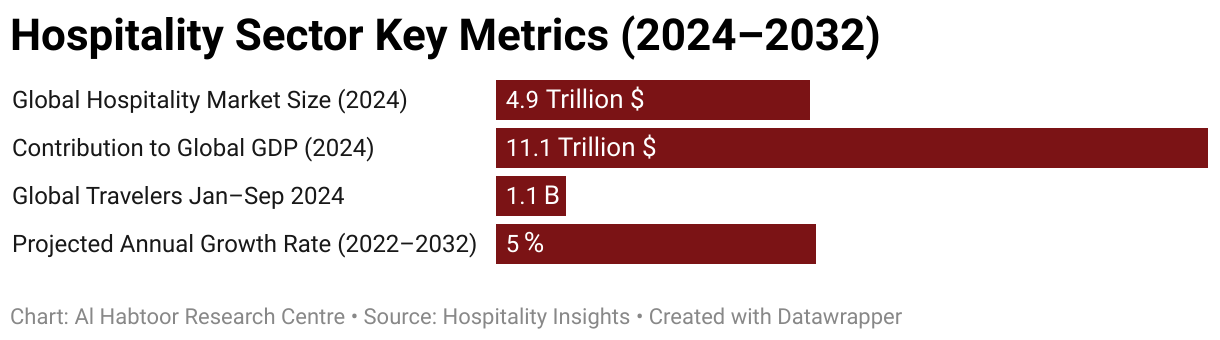
Despite its strength, the traditional hospitality industry faced significant constraints that limited flexibility and profitability. For decades, hotels and hostels largely depended on costly online travel agencies (OTAs) for distribution, which imposed high commission fees and reduced margins. Additionally, the legacy costs of building, operating, and maintaining extensive physical assets imposed substantial fixed costs and limited the industry’s ability to rapidly adapt to changing consumer preferences. These structural limitations created inefficiencies and barriers to entry for smaller players.
However, this long-standing structure began to shift dramatically with the emergence of STR, which introduced a more flexible, diverse, and cost-effective lodging alternative for travellers. Platforms enabling individuals to rent rooms or entire properties disrupted the industry’s standard model by lowering entry barriers and bypassing traditional distribution channels. STR offerings provided unique, localized experiences that traditional hotels often struggle to replicate. As STR gained popularity, they reshaped consumer expectations and redefined competition within the global accommodation market.
Airbnb’s Strategic Evolution
Although STRs existed before, their real impact intensified after the COVID-19 pandemic. During this period, hotels, restaurants, and tourism businesses suffered massive losses in bookings, revenue, and employment due to lockdowns and global travel restrictions, with many establishments closing temporarily or permanently. The crisis accelerated transformation across the sector, pushing hotels to prioritize enhanced cleanliness standards, contactless technologies, and new operating models. As travel resumed, recovery was driven by different demand, increased domestic tourism, and rising interest in eco-friendly and wellness-focused experiences. At the same time, more individuals turned to STR to generate additional income, renting out properties or spare rooms with ease through digital platforms.
One of the leading STR platforms that have experienced significant growth after the pandemic is Airbnb. Its asset-light business model empowers homeowners to rent out spare rooms or entire properties, offering travellers unique accommodations often at lower prices than hotels. The platform charges hosts a modest 3–5% commission and applies variable guest service fees, which is significantly lower than traditional online travel agencies that typically charge 10–25%. As a result, Airbnb has become a powerful disruptive force, offering a competitive alternative to traditional hospitality pricing, availability, and service structures.
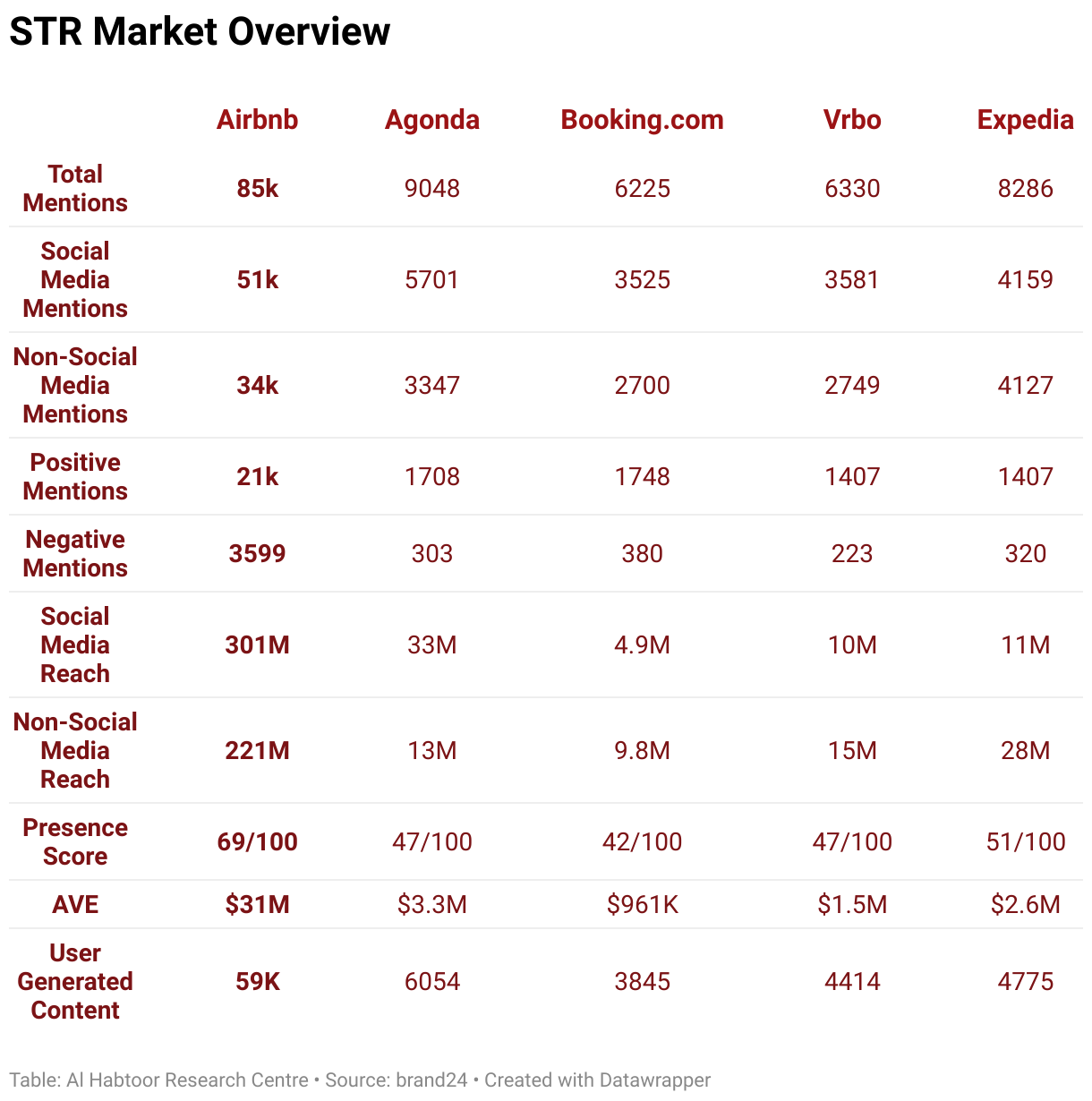
In 2024, Airbnb continued expanding its market share by attracting more traditional hotel users and outperforming competitors such as Vacation Rentals by Owner (Vrbo) in non-urban markets, one of its fastest-growing segments. Although Expedia’s lodging bookings rose 12% and Vrbo expanded urban listings, Airbnb remains competitively positioned as it has scaled rapidly and reshaped accommodation supply worldwide.
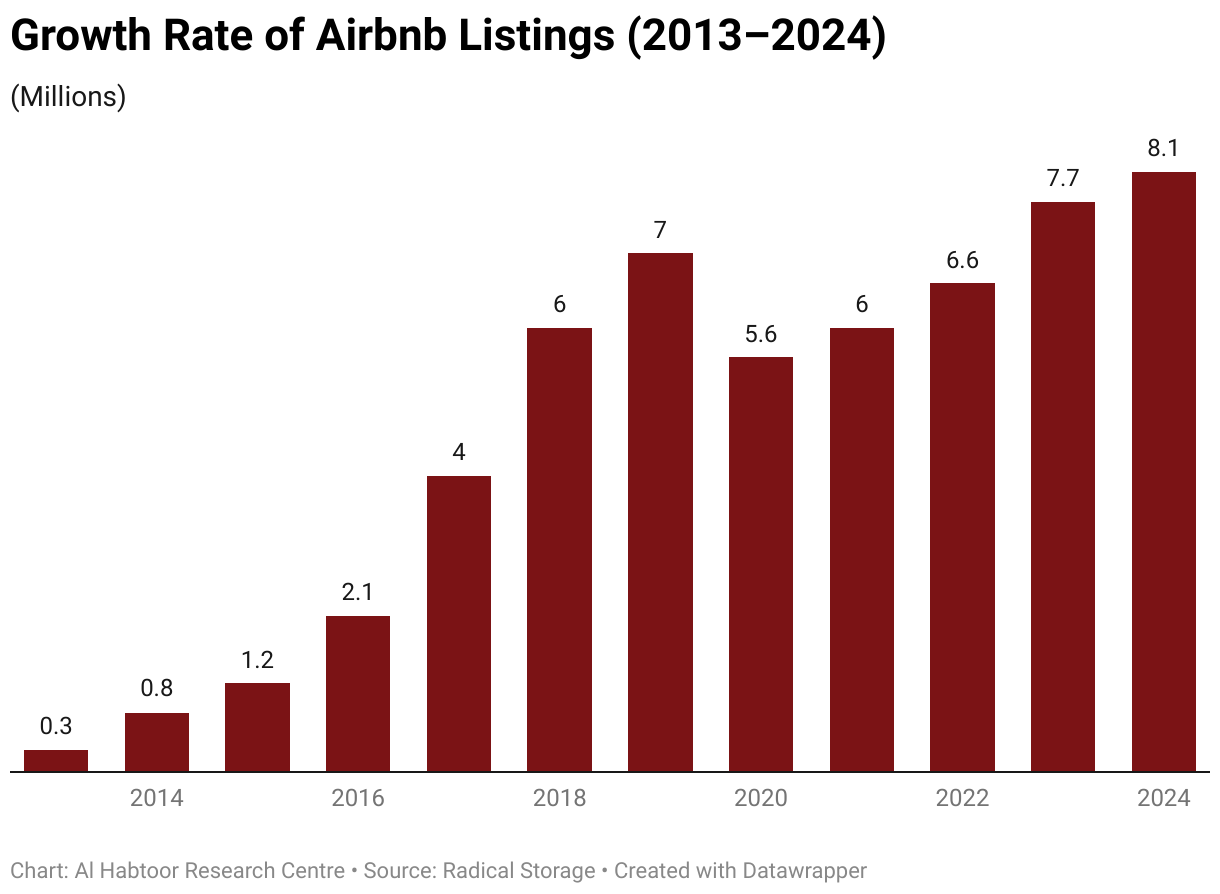
Indeed, Airbnb’s global reach continues to expand, with over eight million listings across 240 countries, 100,000 cities, and thousands of communities, rising steadily from previous years. The platform enables people to earn income by renting unused space, particularly benefiting areas with limited hotel infrastructure. By spreading tourist spending, Airbnb challenges the dominance of major hotel chains and supports local growth. More than 60% of listings are entire homes, while about 34% are private rooms, a share increasing due to stricter regulations on full-home rentals. Most accommodations are small urban units, such as studios and one- or two-bedroom apartments, concentrated in major global regions.
Competition, Collaboration and Technology
Airbnb has fundamentally altered competitive dynamics in global hospitality by expanding the supply of available accommodation beyond traditional hotel capacity. By enabling homeowners to rent spare rooms, entire units, or secondary properties, Airbnb increases room inventory in urban centres and tourist destinations without incurring the fixed costs associated with hotel development. Hotels, in response, increasingly emphasize consistency, service quality, and loyalty benefits to differentiate against Airbnb’s value proposition of affordability, space, and localized authenticity.
Empirical evidence underscores the financial implications: in New York City alone, a Hospitality Value Services Consulting report, attributes approximately $450 million in annual lost hotel revenue to Airbnb’s presence, accompanied by declines in ancillary spending such as food and beverage sales. As occupancy and revenue-per-available-room soften, workforce reductions and reduced capital investment have emerged as tangible industry consequences.
Besides, Airbnb’s strategic evolution now extends well beyond accommodations. The platform integrates on-demand services—private chefs, wellness treatments, and locally guided activities—through a centralized “Trip Tab,” consolidating planning and spending within a single digital ecosystem. These bundling challenges traditional hotel loyalty programs by offering personalized, experiential value rather than points-based incentives. Studies indicate that every 10% increase in Airbnb market share corresponds with a 2–3% decline in hotel revenue, highlighting the competitive weight of platform-driven loyalty.
Recent product updates further strengthen ecosystem cohesion, adding social features that connect travellers beyond their stay and expanding into services such as personal training and specialized workshops. Analysts anticipate future offerings including car rental partnerships and a proprietary loyalty program.
In addition, technology has made a huge impact and has become a key competitive edge separating Airbnb from traditional hotels. Built as a digital-first platform, Airbnb delivers transparent pricing, real-time reviews, secure identity verification, and frictionless booking, appealing strongly to digital-native travellers while reducing operating costs. By 2025, its advanced AI-driven recommendation system analyses user behaviour and preferences to suggest tailored listings, increasing satisfaction by 30% and boosting booking completion by 25%. AI also strengthens platform safety by monitoring transaction patterns and detecting suspicious activity, cutting fraud by 40% in 2024 and increasing user trust for both hosts and guests. Additionally, AI-powered customer support offers instant assistance, improving satisfaction and loyalty, while AI-based pricing continuously adapts to demand, giving it a competitive advantage over hotels that often rely on fixed rates.
Moreover, Airbnb has had its strongest disruptive impact on lower- and mid-tier hotels, especially in leisure-driven and seasonal markets. Research shows that Airbnb “cannibalizes hotel sales, especially for lower end hotels,” reducing their ability to raise room rates even during peak seasons. As Airbnb’s supply scales through hosts, traditional occupancy patterns become destabilized, and since up to 90% of its customer base are leisure travellers, this shift diverts demand that previously filled budget hotels. Airbnb’s expansion into higher-end offerings, such as spa-like services and curated on-site amenities, has begun to edge into luxury territory. While the displacement remains greatest in budget segments, premium hotels are now starting to feel early competitive effects.
As competitive pressure intensifies across budget and mid-scale segments, many hotels are now seeking alternative distribution channels and digital exposure, paving the way for deeper collaboration with Airbnb.
Collaboration Amid Competition
Airbnb’s growing influence is evident in its market value, which now stands at around $78 billion—surpassing Marriott, the world’s largest hotelier. Although the $86 billion worth of bookings made through the platform in the 12 months to June marked a 10% year-on-year increase, growth has begun to slow, and its shares are down 11% over the past year, suggesting that integration complexity and maturing demand are already weighing on performance.
The merge presents short-term operational challenges. Adding hotel inventory raises platform complexity, requiring new systems for rate management, categorization, and guest expectations. Regulatory exposure intensifies as Airbnb must comply with stringent hospitality laws applying to hotels, unlike the more lenient home-sharing rules. Regulations vary globally, cities like New York and Barcelona impose strict caps on short-term rentals, licenses, and safety standards, which complicates Airbnb’s operations and enforcement consistency. Licensed hotels often benefit from relaxed restrictions, helping Airbnb maintain supply in regulated markets. Internally, balancing hotel partners’ interests with those of individual hosts can create policy tensions and competition, adding complexity to platform priorities. Overall, these dynamics require Airbnb to adapt locally while hotels leverage compliance and enhanced guest experiences to compete effectively in this evolving landscape.
Hotels face short-term costs listing on Airbnb, including compliance with hospitality standards, business licenses, and accurate property categorization. They also invest in high-quality photography and integrate property management systems, adding operational complexity and expenses. Airbnb’s price-sensitive clientele can pressure hotel margins and blur brand positioning for mid-scale properties, requiring service style adjustments, more flexible check-ins, and upgraded guest experiences. Beyond digital transformation, hotels respond strategically through partnerships with platforms like Airbnb, loyalty program innovations, and enhancing experiential offerings. By emphasizing professionalism, consistency, and curated experiences, hotels differentiate themselves. Strategic collaboration with Airbnb can expand reach while maintaining unique identities, helping hotels compete effectively in the evolving hospitality landscape.
Despite these early challenges, hotels are positioned to benefit more significantly in the long term. Through Airbnb, they gain access to new markets without relying solely on costly OTAs, as about 95,000 hotels now appear on the platform, which diversifies Airbnb’s inventory and improves digital distribution. Also, it leads to more efficiently use flexible inventory to fill rooms during off-peak periods. Reduced distribution costs and exposure to global demand help stabilize occupancy and broaden customer reach. As the model matures, this collaboration begins to reshape tourism more broadly by increasing accommodation diversity, boosting international visitor flows, and stimulating spending across transportation, dining, and entertainment sectors. The resulting digital transformation improves efficiency, reduces seasonality-driven unemployment, and encourages innovation. Over time, the hospitality ecosystem becomes more resilient and economically beneficial, demonstrating how competition and collaboration can coexist to strengthen the overall travel industry.
Thus, the growth of Airbnb signifies a significant shift in the global hospitality sector. The key question is not whether or not hotels and Airbnb compete, but rather how their convergence and rivalry will influence the sector over the next years. As the hybrid model develops, hotels can diversify their revenue streams and access new markets reducing their reliance on costly OTAs. In the meantime, Airbnb solidifies its position as a key digital middleman by establishing customer standards, monetizing data, and influencing laws on both sides of the debate. Traveler’s choice and sector resilience both increase but those who are adept at digital scale data-driven operations and strategic adaptation—rather than just those with the greatest number of rooms—become more powerful. Agility, teamwork, and creativity will determine tomorrow’s winners in the great hospitality shift, which is an ongoing competition rather than a conclusion.
References
Airbnb. “Standards for Hotels and Other Hospitality Businesses – Airbnb Help Center.” Airbnb, 2024, www.airbnb.com/help/article/1526
“Airbnb in 2025: Impact on Hotel Market Trends and Industry Dynamics.” The Hotel Blueprint, 18 Sept. 2025, https://thehotelblueprint.com/how-airbnb-is-redefining-the-hotel-landscape.
Engine Marketing. “The 2025 Hospitality Showdown: A Data-Driven Analysis of Airbnb’s Momentum vs. the Hotel Sector’s Resilience.” Engine.com, Hotel Engine, 15 Oct. 2025, https://engine.com/travel-trends-tech/the-2025-hospitality-showdown-a-data-driven-analysis-of-airbnbs-momentum-vs-the-hotel-sectors-resilience
Everite. “How Airbnb Is Using Artificial Intelligence (AI) to Transform the Travel Experience in 2025.” Everite Solutions, 17 Apr. 2025, www.airbnb.com/help/article/1526
Galvan, Andrea. “How Airbnb Disrupts the Hotel Industry.” Globaledge.msu.edu, 5 Mar. 2024, https://globaledge.msu.edu/blog/post/57383/how-airbnb-disrupts-the-hotel-industry
“Has Airbnb Reached Its Peak?” Hospitality.today, 2025, www.hospitality.today/article/has-airbnb-reached-its-peak
Hertzfeld, Esther. “CBRE Lowers 2025 RevPAR Growth to 0.1%.” Hotel Management, 8 Oct. 2025, www.hotelmanagement.net/data-trends/cbre-lowers-2025-revpar-growth-01
Lüthy, Bianca. “Hospitality Industry Data and Key Statistics: 2024 Update.” Hospitalityinsights.ehl.edu, 23 Jan. 2024, https://hospitalityinsights.ehl.edu/hospitality-industry-statistics
Piva, Giacomo. “Airbnb Statistics: Revenue and Users | Radical Storage.” Radical Storage Travel Guide – Luggage Storage Network Blog, 30 Apr. 2025, https://radicalstorage.com/travel/airbnb-statistics/


Related Articles

UAE’s New Trade Bloc: Ambition, Global Positioning, and Challenges

The AI Security Trap: Cheap Attacks, Pricey Defences

An Open Letter to COP28

Interview with ChatGPT: Will These Applications Bring the End of Human Knowledge?

Hey Siri, Build a House: 3D Printing in Construction

Comments