
Publications
11 Sep 2026
Are Ports More Important Than Capitals?
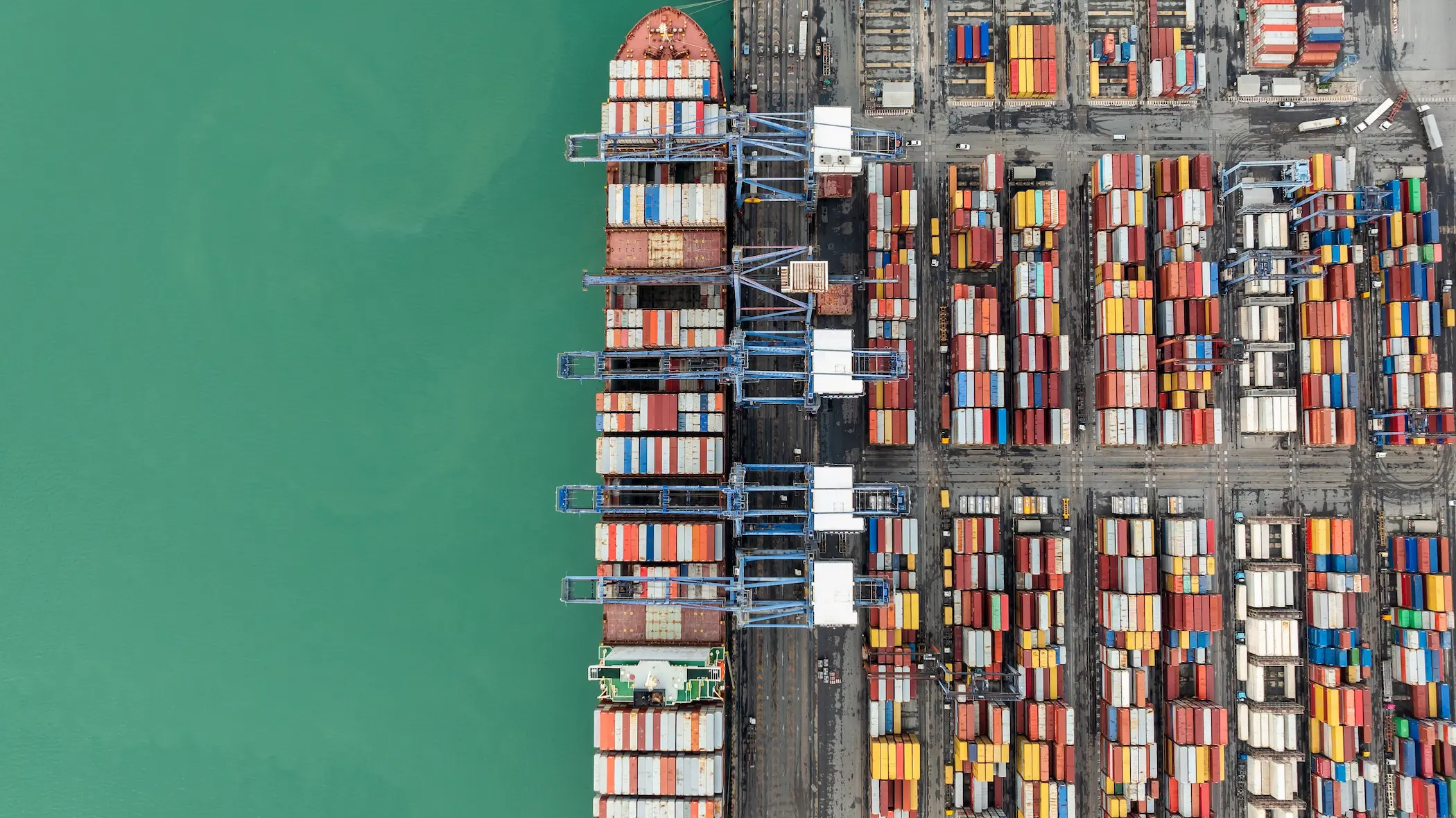
While political capitals retain legal and sovereign authority, seaports have emerged as the "functional capitals" of the modern state. These maritime nodes are where sovereign decisions are translated into material reality, controlling the flow of energy, food, industrial inputs, and data. With 80% of global trade volume and 70% of its value moving by sea, the disruption of a major port can rapidly paralysise a nation's economy and military logistics, demonstrating that port power is highly consequential and systemic.
Port power is relational, depending on factors like geographic position, network centrality, industrial depth, and digital architecture. The global port network is highly concentrated, with less than 5% of ports handling half of the global maritime trade, creating a paradox where extreme efficiency leads to profound systemic vulnerabilities. This concentration makes ports susceptible not only to physical blockades or congestion but also to cyberattacks and climate change, necessitating robust resilience strategies.
Furthermore, foreign investment in port infrastructure carries significant geopolitical implications, moving beyond simplistic narratives of "debt-trap diplomacy". Long-term concessions and operational control can create strategic dependencies, even without outright asset confiscation. Additionally, modern ports possess a dual-use nature, where commercial facilities can provide latent military option value, blurring the lines between economic integration and naval expansion. Ultimately, true national power lies in the effective integration of the political capital's authority with the strategic port's physical capabilities.
This publication was written in August 2026

Programmes
27 Aug 2026
The AI Security Trap: Cheap Attacks, Pricey Defences
Cybersecurity has always favoured the attacker, but AI is widening that advantage. By compressing complex operations into automated decision loops, autonomous agents let a small human team delegate the bulk of an attack's tactical work, reconnaissance, exploitation, lateral movement, to machine tempo, in at least one documented case shifting 80–90% of that labour onto the AI itself. That doesn’t make attacks free, but it does mean cost scales far more slowly with the number of targets than it used to. Enterprises, meanwhile, face the opposite trend: breach costs are climbing, and a new governance-driven Shadow AI tax is compounding them. As automation lowers the labour cost of offense while recovery expenses and regulatory demands rise on defence, the balance of cybersecurity economics is being forced to overhaul itself.
Programmes
25 Nov 2025
Beyond Rentals: Airbnb’s Bid to Dominate Hospitality
In 2025, Airbnb is no longer simply reshaping travel preferences, it is fundamentally altering the competitive landscape for hotels. What started as a short-term rentals (STR) platform has evolved into a diversified lodging ecosystem, offering private homes, boutique hotels, and curated local experiences through a single digital interface. This transformation has intensified pressure on traditional hotel operators, whose fixed costs, regulatory exposure, and legacy systems limit their ability to adapt. As travellers increasingly value flexibility, privacy, and authentic local stays, Airbnb’s asset-light model continues to draw market share away from lower- and mid-tier hotels particularly. AI-driven pricing, scalable supply, and global host networks enable the platform to respond to demand fluctuations faster than conventional accommodation chains.
As consumer preferences fragment and digital expectations rise, many hotels struggle to maintain occupancy, protect margins, and justify rate premiums. The crucial question is no longer whether Airbnb competes with hotels, but how profoundly its growth is reshaping hotel performance, strategy, and long-term sustainability. And with hotels now beginning to integrate into Airbnb’s platform, a deeper question emerges: in this evolving hybrid model, who ultimately stands to benefit more?

Publications
15 Apr 2025
Ripple Effect: Trump Tariffs and the World’s Economic Quake
In April 2025, the Trump administration stunned global markets by announcing a sweeping tariff expansion under the International Emergency Economic Powers Act (IEEPA), introducing a flat 10% universal tariff on all imports. This move, framed as a national economic emergency response, immediately triggered global trade uncertainty and diplomatic friction. The policy marked a significant escalation of Trump’s protectionist agenda, signalling a break with multilateralism and targeting long-standing trade imbalances with strategic rivals and allies alike. We found that the United States (U.S.) trade structure is deeply imbalanced, with persistent deficits concentrated in sectors essential to industrial production, such as machinery, electronics, and vehicles. These deficits have exposed the U.S. to retaliatory measures from key trade partners—particularly China, Canada, and the EU—who have calibrated their responses to hit politically and economically sensitive export categories. Tariffs have initiated a multi-channel inflationary shock: direct consumer price increases, rising intermediate input costs, and cascading pressures on logistics and wages. The compounded effect has resulted in a net consumer price index (CPI) increase of approximately 1.2%, with higher spikes in key durable goods. Global supply chains are beginning to reconfigure.
The automotive sector, in particular, has seen disruption in bilateral flows with traditional partners, creating openings for new logistical nodes. The UAE stands out as a beneficiary, attracting redirected FDI and becoming a strategic re-export and final assembly hub. Collectively, these findings underscore a paradox: while the policy aims to reduce dependency and correct trade imbalances, it simultaneously accelerates external retaliation, domestic cost pressures, and global fragmentation in trade infrastructure.

Programmes
30 Nov 2023
An Open Letter to COP28
Dear leaders, negotiators, and decision makers,
This year, "Unite-Act-Deliver" is the slogan of COP28, a pivotal event in the international endeavour to combat climate change. The increasing number of climate disasters in 2023, wherein severe weather phenomena have wreaked devastation on a global scale, shows the urgency of the need to act. The United States, Hong Kong, Greece, Libya, Turkey, Bulgaria, Spain, Taiwan, Pakistan and China were all affected by hurricanes, storms, droughts, and flooding. The floods that struck Libya and Pakistan were particularly devastating, resulting in substantial destruction of infrastructure and loss of life, and increasing sea levels and heat surges that have been felt globally have also occurred.
Furthermore, the adverse effects of climate change on food and water security on a global scale have impeded progress towards attaining the Sustainable Development Goals. In particular, food systems are accountable for one-third of worldwide green gas emissions and have slowed agricultural productivity for the past five years which entails the transformation of food systems to achieve net-zero emissions.

Programmes
22 May 2023
Interview with ChatGPT: Will These Applications Bring the End of Human Knowledge?
OpenAI released its AI chatbot in November 2022. ChatGPT is able to generate text, answer questions, summarise information, and write code, the eerily human chatbot has taken the world by storm, setting the record for fastest growing application in history. It took Instagram 2.5 years to reach 100 million monthly active users and TikTok nine months. ChatGPT attracted 100 million monthly active users in less than three months.
ChatGPT becoming an internet sensation has created fascinating use cases from writing high school essays to passing business and medical schools’ exams. Its usage has also brought about a slew of ethical concerns related to data privacy, content ownership, and its potential to disrupt nearly every job market. I sat down with ChatGPT to see what it had to say for itself.
Programmes
26 Apr 2023
Hey Siri, Build a House: 3D Printing in Construction
Humanity’s ability to create permanent structures has been an essential part of civilization for thousands of years and was crucial for our transition from hunter-gatherers to settled peoples. As groups of people settled down in a single place, we have had to advance construction techniques and technologies to further the development of our societies, our ability to advance construction techniques has led to the creation of structures that inspire humanity and continue to push the boundaries of what we think is possible.
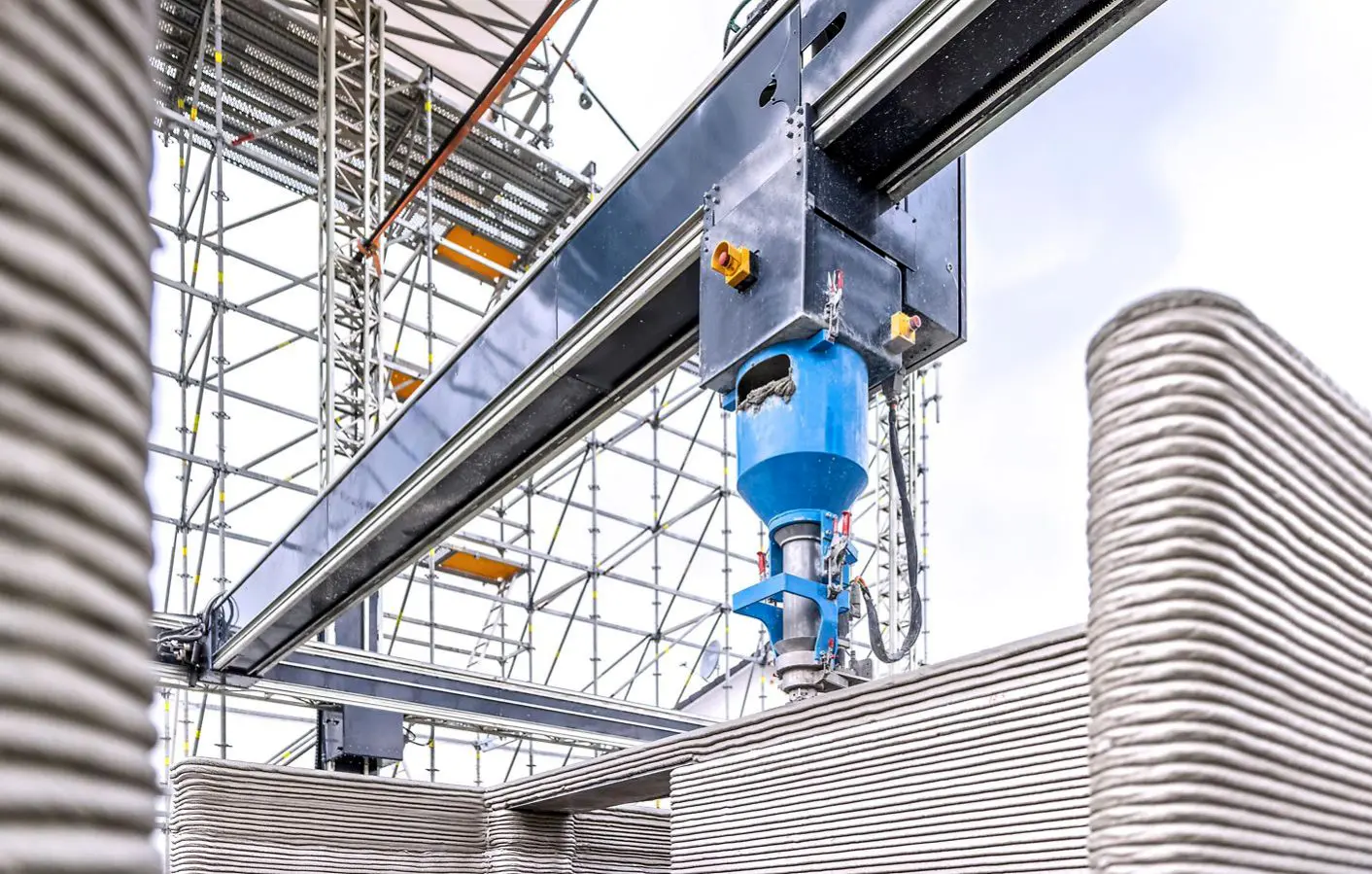
Recently however, the construction industry has been slow in adopting new innovations that have helped revolutionize other industries, at a time where it is expected that 300 million new homes are needed by 2030 and construction related activities contributed to 37% of global CO2 emissions in 2021, the need to adopt new technologies that will increase efficiency and reduce emissions is of paramount importance and 3D printing has been touted as the solution to the construction industry’s woes.