
Programmes
6 Aug 2026
Beyond Michigan: Is Abdul El-Sayed the Future of the Democratic Party?
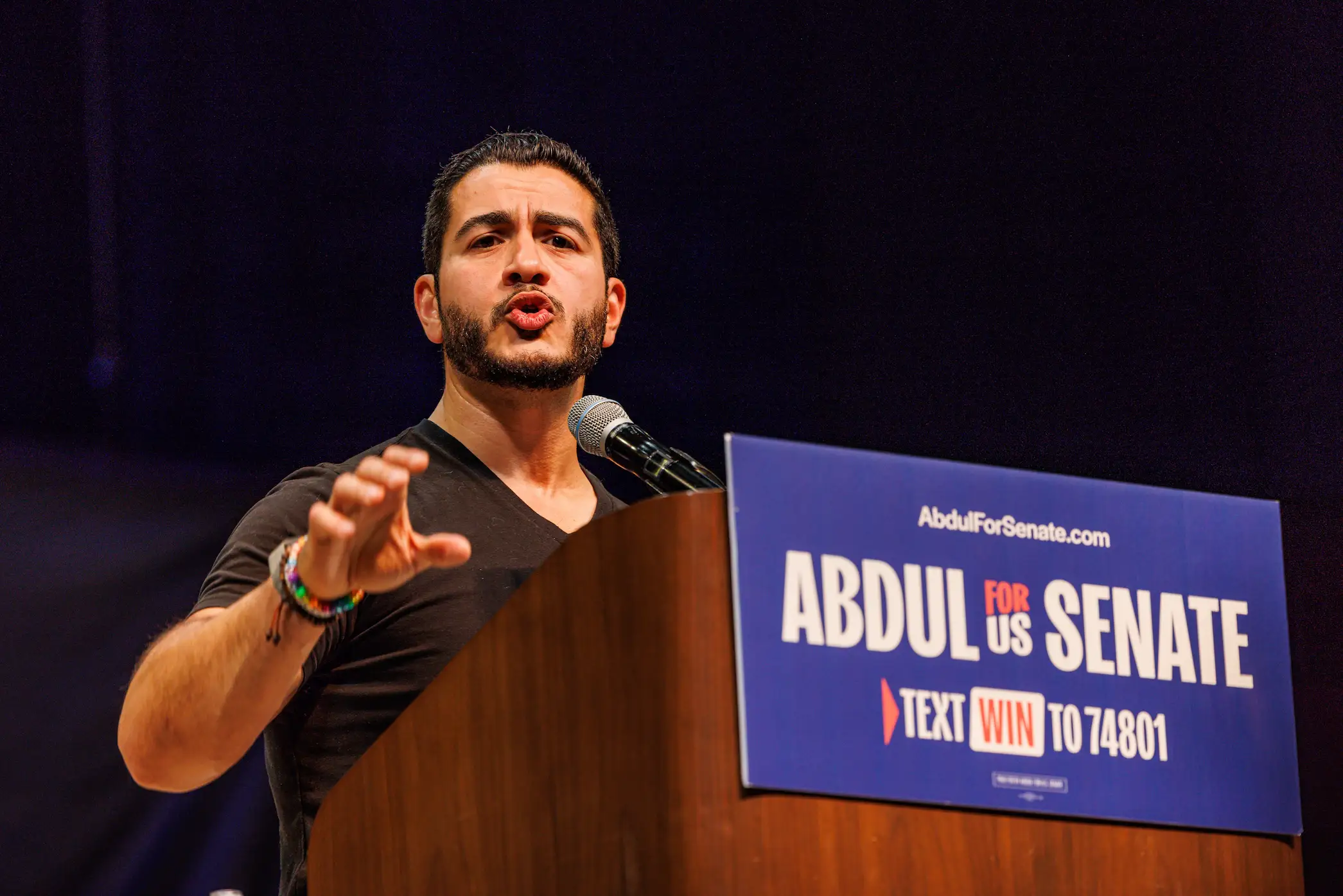
Michigan expected to deliver a Senate nominee on Tuesday night. Instead, it may have delivered the Democratic Party's most consequential ideological test since Trump returned to the White House. Abdul El-Sayed defeated Representative Haley Stevens for the party's Senate nomination against the wishes of much of the Democratic establishment, in one of the most expensive primaries in American history. His win immediately turned what had been treated as a routine state primary into a national argument over who actually speaks for the Democratic Party now. The bigger question, though, is not whether progressives can win a Democratic primary. It is whether Michigan just revealed where the party is genuinely heading, or whether it simply revealed what a narrow, highly engaged slice of primary voters wants, a distinction the party will need to answer honestly before November.
El-Sayed's win did not happen in isolation either. It followed Zohran Mamdani's insurgent rise in New York City, and it arrived on the same Michigan ballot as Rashida Tlaib's renomination and Donavan McKinney's defeat of sitting Congressman Shri Thanedar. Four results, one pattern. Together, they raise a question far bigger than any single race, whether Democratic voters are beginning to reject both the party's traditional leadership and its long-standing relationship with major donors, particularly on Israel and campaign finance.
Programmes
5 Aug 2026
Inside AI’s Quiet Takeover of the Midterms
The race to dominate AI is no longer being fought only in laboratories; It is now being fought at the ballot box. As the US struggles to establish comprehensive rules for one of the world's fastest-moving technologies, the companies developing it have begun competing over something even more valuable than market share, namely political influence. During the 2026 midterm election cycle, AI companies and their affiliated political action committees have poured tens of millions of dollars into congressional races, backed rival candidates, and expanded their lobbying operations across Washington. For the first time, elections themselves are becoming part of the battle over who will shape the future of AI governance.
This marks a significant shift in the relationship between technology and politics. Rather than waiting for governments to determine how AI should be regulated, leading firms are increasingly attempting to shape the political environment before those decisions are made. As Congress remains divided over comprehensive AI legislation, electoral politics has become another arena in the competition over AI. Consequently, the 2026 midterms may offer an early indication of whether democratic institutions can establish the rules governing AI before the industry's growing political influence begins shaping those rules instead.
Programmes
22 Apr 2024
The War on TikTok: Security Concerns and Anti-Semitism
Social media has played a pivotal role in reshaping the narratives of the Palestinian-Israeli conflict since the outbreak of Oct. 7. The dissemination of news and information now extends far beyond traditional media outlets. Instead, social media platforms have emerged as potent influencers, surpassing the resonance of weapons and delineating a global divide between Israel and Palestine. These platforms have become arenas of contention, with users segregating into supporters and opponents, rendering them susceptible to content-related pressures amid the war. The war on Gaza has once again thrust TikTok into a heated discourse regarding the application's dangers and impact as a global forum for ordinary individuals to voice their opinions while also serving as a battleground for political factions to vie for narrative control. This debate assumes added significance as the audience of traditional news outlets continues to dwindle.
Recently, numerous TikTok videos concerning the war on Gaza garnered widespread attention, accompanied by pro-Palestinian hashtags, prompting Israeli President Isaac Herzog to engage in discussions with TikTok executives in February 2024. Expressing apprehension over the surge in antisemitic content on the platform since the onset of the Israeli war on Gaza, they assured President Herzog of their commitment to address the issue in the future. In a related context, social media companies based in the United States have already demonstrated a readiness to censor pro-Palestinian content. Human Rights Watch, in its December 2023 report, documented over 1,050 instances of content removal and suppression on Instagram and Facebook by Palestinians and their supporters between October and November 2023.
In this context, U.S. legislators, conservative activists, and technology investors have voiced calls to ban TikTok in the U.S., citing escalating concerns. These calls gained significant traction on March 13, 2024, when the U.S. House of Representatives overwhelmingly voted in favour of a bill. The bill places ByteDance, the parent company of TikTok, with two options, both fraught with implications: either sell the application to a U.S.-based company or confront a ban on distribution through significant platforms and application stores. President Joseph Biden voiced his backing for the bill and signalled his readiness to sign it into law pending Senate approval. However, the U.S. initiative this time brings forth broader concerns beyond national security, encompassing the application's ramifications on Israel's reputation. The country's standing has been damaged due to the swift dissemination of content depicting Israel's crimes against civilians in the Gaza Strip.
This analysis aims to elucidate the reasons behind the shift in the U.S. perspective on TikTok, moving from security concerns to the perception of promoting antisemitism. What repercussions would the embargo have on both the United States and Israel?