
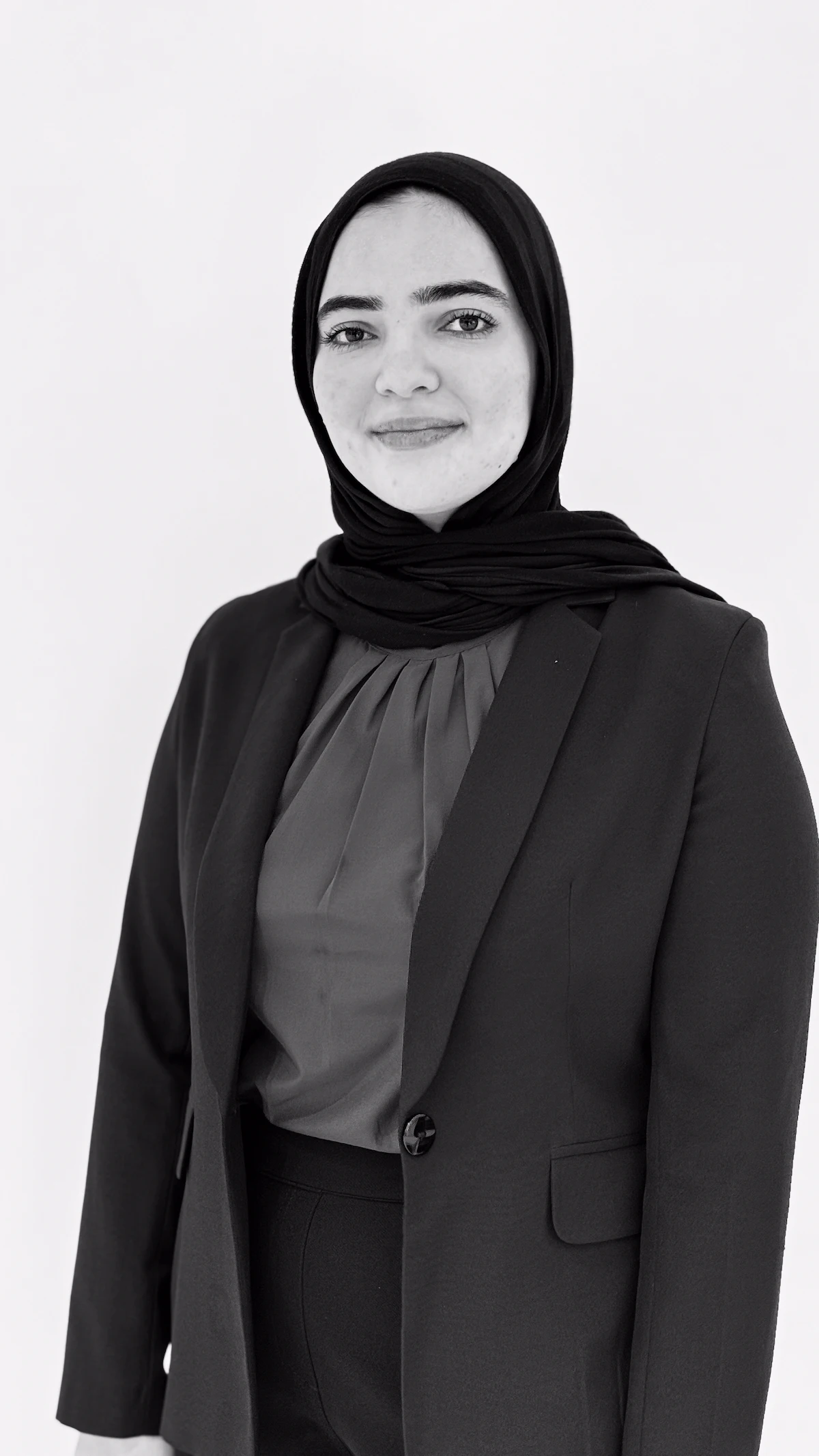

Michigan expected to deliver a Senate nominee on Tuesday night. Instead, it may have delivered the Democratic Party's most consequential ideological test since Trump returned to the White House. Abdul El-Sayed defeated Representative Haley Stevens for the party's Senate nomination against the wishes of much of the Democratic establishment, in one of the most expensive primaries in American history. His win immediately turned what had been treated as a routine state primary into a national argument over who actually speaks for the Democratic Party now. The bigger question, though, is not whether progressives can win a Democratic primary. It is whether Michigan just revealed where the party is genuinely heading, or whether it simply revealed what a narrow, highly engaged slice of primary voters wants, a distinction the party will need to answer honestly before November.
El-Sayed's win did not happen in isolation either. It followed Zohran Mamdani's insurgent rise in New York City, and it arrived on the same Michigan ballot as Rashida Tlaib's renomination and Donavan McKinney's defeat of sitting Congressman Shri Thanedar. Four results, one pattern. Together, they raise a question far bigger than any single race, whether Democratic voters are beginning to reject both the party's traditional leadership and its long-standing relationship with major donors, particularly on Israel and campaign finance.
Michigan Became a Referendum on Leadership
El-Sayed and Stevens were technically competing for an open seat left by retiring Senator Gary Peters. In practice, the campaign quickly evolved into a contest over the party’s entire future. Stevens carried the backing of Governor Gretchen Whitmer, Senate Minority Leader Chuck Schumer, former Senator Debbie Stabenow, and most of the national Democratic establishment. El-Sayed carried the backing of Senator Bernie Sanders, Representative Alexandria Ocasio-Cortez, the United Auto Workers, and a coalition of grassroots activists and younger voters. The contrast went beyond ideology. It reflected two competing explanations for why Democrats lost the White House and both chambers of Congress in 2024.
For establishment Democrats, the lesson was that the party needed candidates capable of winning moderate and suburban voters in competitive states. Progressives reached the opposite conclusion, arguing that Democrats lost precisely because they stopped inspiring younger, working-class, and minority voters who increasingly saw the party as closer to wealthy donors and institutional politics than to the people it claimed to represent.
El-Sayed built his campaign around that second argument deliberately. Rather than running primarily as a foreign policy candidate, he centered his message on healthcare, housing affordability, labor rights, and reducing corporate influence in politics. Even when he raised Gaza, he consistently tied it back to that same broader argument about accountability and organized lobbying rather than treating it as a stand-alone issue. He described the coalition he wanted to build as open to “anybody who wants to get money out of politics, anybody who wants to fight for union rights, anybody who wants to guarantee healthcare,” and suggested even former Trump voters could belong in it if they shared those priorities.
That approach closely mirrored Zohran Mamdani’s campaign in New York. Both men are young, Muslim, closely associated with democratic socialism, openly critical of Israeli policy, and were largely passed over by their party’s establishment in favor of a safer, more moderate choice. Yet both proved their appeal reached beyond identity or foreign policy alone. Economic insecurity, affordability, and frustration with institutions seen as favoring powerful interests over ordinary voters carried both campaigns. Gaza mattered, especially to younger voters, but it functioned more as a symbol of broader dissatisfaction than as the sole driver of support.
For that reason, El-Sayed’s win should not be read as just another progressive upset. It is the latest sign that a growing share of Democratic primary voters is redefining what they expect from party leadership. What separates Michigan from New York, however, is the setting. Trump carried Michigan twice, and Democrats consider the state essential to rebuilding a Senate majority. That single fact turns El-Sayed’s nomination into a much bigger test than Mamdani’s ever was, whether progressive populism that wins Democratic primaries can also win against Republicans in one of the country’s most competitive battlegrounds.
Money, Michigan, and its Limits
If El-Sayed’s win exposed an ideological divide inside the party, it also exposed a struggle over political influence. No Democratic Senate primary had ever attracted this much outside money, and the candidate backed by that advantage still lost. Campaign finance filings show outside groups spent nearly 65 million dollars during the race, more than 30 million of it from the United Democracy Project, the super PAC affiliated with the American Israel Public Affairs Committee, known as AIPAC. Other groups, including A Stronger Michigan and the Center Forward Committee, spent heavily backing Stevens as well.

Notably, El-Sayed actually outraised Stevens through his own campaign, collecting roughly fourteen and a half million dollars in direct contributions compared with her 11.9 million. Her financial edge, in other words, came almost entirely from outside spending rather than grassroots support. El-Sayed made that imbalance a central theme of his campaign rather than avoiding it, arguing that Democratic primaries were increasingly shaped by wealthy donors instead of ordinary voters. He put it bluntly at one point, describing Trump as merely a symptom of a deeper political disease that lets billionaires and special interests such as AIPAC “buy and sell politicians.”
Whether every voter accepted that argument in full matters less than the fact that it worked. El-Sayed connected campaign finance directly to housing costs, healthcare, and wages, turning the race from a contest between two Democrats into a contest between grassroots politics and institutional money. Reducing that story to a referendum on AIPAC alone, though, would miss the wider pattern that showed up across Michigan that same night.
Representative Rashida Tlaib, the first Palestinian American woman elected to Congress and one of the party’s sharpest critics of Israeli policy, won renomination comfortably in Michigan’s 12th District. She has never accepted a dollar from pro-Israel PACs. In the neighboring 13th District, State Representative Donavan McKinney unseated incumbent Shri Thanedar by campaigning against corporate influence, for expanded healthcare, and for ending military aid to Israel, backed by endorsements from Sanders, Tlaib, and Ilhan Omar. Thanedar, by contrast, ran largely on personal wealth and establishment support.
Each of these results could be explained individually by local circumstances. Together, they point to something broader. Michigan appears to be one of the first states where Democratic primary voters are consistently rewarding candidates who combine three traits at once, a more confrontational stance toward Israeli policy, open rejection of large outside donor influence, and economic populism placed ahead of identity politics as the core message.
None of this proves the Democratic Party as a whole has shifted left. It proves that Democratic primary voters, who tend to be more engaged and more ideologically driven than the general electorate, are increasingly willing to reward candidates who challenge their own party’s establishment. That distinction, between what primary voters want and what a general election requires, may end up deciding everything that follows.
What the General Election Will Really Decide
El-Sayed’s primary win reshaped the conversation inside the Democratic Party, but it did not settle the party’s larger argument. It moved that argument into a far more consequential arena. His race against Republican Mike Rogers this November will test not just whether Democrats chose the right nominee, but whether progressive populism can actually beat Republicans in one of the country’s most competitive states, a test the primary alone cannot answer.
Before the primary, establishment Democrats argued that Stevens was the safer bet against Rogers given her moderate profile and institutional backing. Republicans seemed to agree, going so far as to run ads highlighting El-Sayed’s endorsement from Sanders in what looked like an attempt to help him win the nomination, on the theory that a candidate who energizes the base might also alienate swing voters. That theory remains untested. Michigan has upended electability assumptions before, going for Trump twice despite Democrats’ presumed structural edge in the state, and El-Sayed has already beaten a candidate who checked nearly every traditional box for electability within the party.
How Democratic leaders respond now may matter almost as much as November itself. Tensions between the party’s establishment and its progressive wing rarely disappear once a contested primary ends, as Sanders’ presidential runs, Ocasio-Cortez’s rise in Congress, and Mamdani’s win in New York all showed. Calls from some Democrats to bar members of the Democratic Socialists of America from running under the party’s banner show that this argument is far from resolved even after El-Sayed’s victory. Leaders can choose to unite fully behind their nominee, or lingering divisions can quietly limit fundraising, volunteer energy, and institutional support heading into a race Republicans will be eager to exploit.
Should El-Sayed beat Rogers in November, it would hand progressives their strongest evidence yet that economic populism paired with skepticism of unconditional aid to Israel can win not just primaries but swing-state general elections, likely shaping candidate recruitment and strategy well into 2028. A Republican win would hand the opposite argument to the establishment, that ideological energy in the primary electorate does not necessarily translate into the coalition needed to hold power. Either outcome will carry weight well beyond Michigan’s borders.
The more important development may not be El-Sayed’s win itself, but what it reveals about where the party’s center of gravity is actually moving. Progressive candidates are no longer isolated challengers competing at the margins. They are beating establishment-backed incumbents and anointed successors despite steep financial disadvantages and coordinated opposition from powerful interest groups. At the same time, Israel policy, campaign finance, and corporate influence are increasingly fusing into a single narrative about accountability rather than functioning as separate issues, which suggests future Democratic candidates will keep framing these fights as questions of domestic reform rather than foreign policy alone.
Still, the caution is worth stating plainly. It would be premature to call this a completed ideological transformation. Michigan shows where Democratic primary voters currently stand, not necessarily where the broader American electorate stands, and that gap will ultimately decide the party’s fate more than any single nomination can. In that light, Michigan may end up remembered less as the moment the Democratic Party changed direction, and more as the moment it openly admitted it no longer agrees on what that direction should be. Whether Abdul El-Sayed becomes the face of that new direction, or simply another chapter in the party’s unresolved argument with itself, will depend far less on his win over Haley Stevens than on what happens when he meets Mike Rogers this November.
References
CATALINI, MIKE, and NICHOLAS RICCARDI. 2026. ‘Takeaways From Tuesday’s Elections: Democrats” Division on Display in Michigan Senate Race’. WRAL.Com, WRAL, August 4. https://www.wral.com/news/ap/c957d-what-to-watch-in-the-aug-4-primaries-michigan-senate-race-tests-democrats-path-forward/.
McCaskill, Nolan. 2026. ‘Michigan Primary Cliffhanger Tests Direction of U.S. Democrats’. AL-MONITOR: The Middle Eastʼs Leading Independent News Source Since 2012, August 5. https://www.al-monitor.com/originals/2026/08/michigan-primary-cliffhanger-tests-direction-us-democrats.
Medina, Jennifer, Matt Zdun, and Martín González Gómez. 2026. ‘Inside the Spending of AIPAC, One of the U.S.”S Largest Super PACs’. The New York Times, August 4. https://www.nytimes.com/interactive/2026/08/04/us/politics/aipac-israel-funds-spending.html.
FRANCE 24. 2026. ‘Michigan Democratic Primary Seen as Latest Test for Party’s Progressive Wing’. France 24, FRANCE 24, August 5. https://www.france24.com/en/americas/20260805-michigan-democratic-primary-test-progressive-movement-us.
Gomez, Henry J. 2026. ‘Abdul El-Sayed Wins Michigan’s Democratic Senate Primary, Notching a Midwest Victory for the Left’. NBC News, August 5. https://www.nbcnews.com/politics/2026-election/abdul-el-sayed-wins-michigans-democratic-senate-primary-notching-midwe-rcna589750.
Lahut, Jake. 2026. ‘El-Sayed Is Already Eyeing Race Against “Weak” Mike Rogers’. Intelligencer, August 3. https://nymag.com/intelligencer/article/el-sayed-is-already-eyeing-race-against-weak-mike-rogers.html.
Pellish, Aaron, Erin Doherty, Irie Sentner, et al. 2026. ‘Dems” Big Primary Test – Live Updates – POLITICO’. Politico, Politico, August 4. https://www.politico.com/live-updates/2026/08/04/michigan-missouri-primary-democrats-test.
Zhang, Christina. 2026. ‘Shri Thanedar, Donavan McKinney Face off in Michigan’s 13Th Congressional District Primary’. CBS News, CBS Detroit, August 4. https://www.cbsnews.com/detroit/news/shri-thanedar-donavan-mckinney-michigan-13th-congressional-august-primary-election/.


Related Articles
Inside AI’s Quiet Takeover of the Midterms

Trump, Tariffs, and the Revolt of the American Farmer
How the US-Israel-Iran War Could Reshape the 2026 Midterms
Crossroads: The Battle for the Soul of the Democratic Party

Food or Fuel: The Implications of Biofuels for Global Food Security

Comments