
Programmes
24 Jun 2026
Coercion Over Combat: The Future of Trump’s Strategy Toward Cuba
The administration of U.S. President Donald Trump has demonstrated a clear intent to reassert American influence throughout the Caribbean, viewing the region as a vital component of its broader national security strategy. As a result of this renewed focus, Cuba has re-emerged as a primary flashpoint. With Beijing and Moscow increasingly expanding their economic and strategic footprints in Havana, the island has transformed into a central theatre for great power competition involving the United States, China, and Russia. Viewing this foreign encroachment as a direct threat, Washington has intensified its rhetoric. Crucially, the administration has explicitly characterised Cuba as a “failing state”—a designation that highlights the island's severe internal crises and signals Washington's belief that proactive, decisive intervention is necessary to prevent further destabilisation on America's doorstep.
This expanding U.S. posture in the Western Hemisphere is driven by a deep-seated desire to consolidate regional control and push back against geopolitical rivals. It aligns seamlessly with the historical framework of the Monroe Doctrine, which has long asserted American dominance and rejected outside interference in the Americas. Against the backdrop of these escalating tensions, a critical strategic question arises: Is the United States becoming increasingly likely to pursue direct military intervention to resolve the Cuban issue, or will it maintain a strategy of maximum pressure—relying on coercive measures such as severe economic sanctions, diplomatic isolation, and political coercion—to advance its long-term objectives?
Programmes
15 May 2026
US-China Summit: Not Peace, Rivalry Management
In the early hours of May 13, US President Donald Trump travelled to China to engage in high stakes talks with his Chinese counterpart Chinese President Xi Jinping. These talks are taking place in the context of heightened global instability stemming from conflicts such as the US-Israel-Iran War and the economics shocks stemming from this conflict. Within this context, both governments are set to engage in conversations aimed at stabilizing the US-China relationship and partaking in strategic dialogue regarding geopolitical and economic uncertainty. This summit can potentially shape the future of the US-China relationship as the outcome of these talks can shape the economic and security relationship between the two nations and their partners in the long run. Therefore, an exploration into this summit is needed and will focus on explaining the reason the summit is happening now, the mindset of the parties entering the summit, the topics on the agenda, and the potential outcomes of the summit.
Programmes
11 May 2026
Europe: NATO, U.S. Retrenchment, and the Cost of Strategic Autonomy
Discussion surrounding a potential United States (U.S.) withdrawal from NATO has remained one of the defining debates since the beginning of Donald Trump’s second presidency. In recent months, particularly following the war involving the U.S. and Israel against Iran, tensions within the alliance have intensified, with President Trump openly criticising several European NATO allies and questioning their value to the alliance. As a result, the central question is no longer limited to whether Washington could formally leave NATO. Increasingly, attention should shift toward a more pressing issue: could Europe manage its security independently without substantial American support? What would be the strategic, military, and economic cost of such a shift, and would European states be capable of rebuilding or reorganising their defence capabilities quickly enough to confront emerging threats?
Importantly, despite the significant legal, political, and institutional constraints facing any U.S. president seeking to withdraw from NATO entirely, Washington could still adopt alternative approaches that stop short of formal withdrawal while substantially reducing its role within the alliance. Such measures could include lowering financial contributions, scaling back troop deployments across Europe, or withdrawing critical weapons systems and strategic capabilities currently provided by the U.S. In such a scenario, how vulnerable would Europe become, and how prepared would it be to fill the resulting gaps?
Programmes
7 May 2026
How Wartime Purges Are Reshaping U.S. Military Doctrine?
No nation, no people, and no institution has been shielded from the turmoil unleashed by the US-Israel-Iran War. Yet perhaps the most surprising upheaval has unfolded not on the battlefield, but within the ranks of the world's most powerful military. Secretary of War Pete Hegseth has launched a sweeping purge of its highest ranks, ousting top officials in a manner more reminiscent of an authoritarian regime consolidating power than a democracy safeguarding its national security.
This restructuring raises unsettling questions about the road ahead. Is Hegseth reshaping the military to serve a political agenda rather than a strategic one? Is Hegseth attempting to protect his position? Is there significant internal resistance to the War? And perhaps most critically — who, ultimately, does this new military answer to?
Programmes
10 Mar 2026
How the US-Israel-Iran War Could Reshape the 2026 Midterms
The United States entered the second week of its joint military campaign against Iran on March 7, 2026, having launched Operation Epic Fury alongside Israel on February 28. Within days, the conflict had killed Supreme Leader Ali Khamenei, triggered Iranian retaliatory strikes across the Gulf, and drawn in regional powers from Bahrain to Lebanon. For the Republican Party, the war arrived at what was already an exceptionally precarious moment — one in which the historical forces of midterm politics, falling presidential approval, and a restless voter coalition had already conspired against them. The onset of a major, unpopular war has only deepened those vulnerabilities, and the question facing the GOP heading into November is no longer simply whether they will lose seats, but how many.
Programmes
10 Mar 2026
Why Did Trump Shift From His America First Policy?
The concept of “America First” is not a new one in the realm of US foreign policy. The term was first made popular during World War 2 when the America First Committee was formed by Yale student Robert Douglas Stuart Jr. and US Veteran General Robert E. Wood which advocated for American neutrality and building up strength through the American people, military, and economy. The idea of reducing the US active engagement in conflict to focus on its own interests caught the attention of Donald Trump, who pursued his own version of “America First” with varying results over the course of his two nonconsecutive terms as US President.
President Trump’s application of “America First” has been inconsistent since resuming office in 2025. This past year saw a series of deviations from the concept of “America First” including assisting Israel in the 12-day war with Iran, the capture of Venezuelan President Nicolas Maduro, and threats towards Iran regarding regime change amid protests. These threats became realized when the US and Israel carried out an unprovoked aerial offensive against Iran, which resulted in the deaths of the Ayatollah Ali Khamenei and several Iranian military officials. With the conflict still ongoing and regime change seeming to be the desired outcome, the conclusion can be made that this conflict signals a shift in President Trump’s “America First” policy. This shift will be explored through redefining “America First”, the Israel factor, and domestic support to get involved in a confrontation with Iran during a consequential election year.
Programmes
12 Dec 2025
The 2025 NSS: Disengagement or Entrenchment?
The National Security Strategy (NSS) defines the guiding vision of American power and provides a window into how the United States understands the international environment, identifies its priorities, and determines the political, military, and economic tools it will rely on to protect national interests. Accordingly, the NSS shapes defence planning, informs foreign policy doctrine, guides inter-agency action, and signals to allies and adversaries the direction of U.S. engagement in an evolving global landscape.
The 2025 NSS, issued by the Trump administration in November 2025, is a clear articulation of how this administration intends to position itself in a world marked by rising geopolitical fragmentation, sharpening competition, and growing domestic constraints. Its core purpose is to translate the administration’s worldview into a coherent framework that defines what the United States will prioritise, what it will deprioritise, and under what conditions it will expend political capital, economic leverage, or military force.
For the Middle East, understanding the 2025 NSS is essential because it captures the principles shaping America’s evolving posture toward the region. The strategy’s emphasis on burden-sharing, reduced military exposure, and transactional partnerships signals a shift in expectations for regional actors, while its focus on energy security, counterterrorism, and strategic competition with external powers continues to define the contours of U.S. interests. As a formal expression of how the administration interprets threats and opportunities, the NSS provides the clearest available roadmap of Washington’s intentions—and the framework within which its decisions toward the Middle East will be made in the years ahead.

Programmes
11 Dec 2025
What If: the War Ends on Russia’s Terms
The prolonged Russia-Ukraine War has been met with futile efforts to end it by several peace plans throughout nearly four years of war. Currently, U.S. President Donald Trump appears determined to end the war by pushing a peace plan in the last few months of 2025 and negotiating with both Russian President Vladimir Putin and Ukrainian President Volodymyr Zelenskyy.
Many scenarios unfold for the aftermath of the Russia-Ukraine War. Amid the ongoing peace negotiations, driven mainly by the U.S. and Russia’s push for Trump’s 28‑point plan and Ukraine’s counterproposal through the amended 19‑point plan, a settlement favouring Russia is increasingly possible, raising the question: if such a plan is adopted, how will the Eurasian scene change?

Programmes
8 Jul 2025
Crossroads: The Battle for the Soul of the Democratic Party
Having lost the presidential election and both chambers of Congress, it should have been expected that the Democratic Party would reflect on why voters rejected the party’s policies, platform, and candidates, and rally to face a second and far more empowered Trump administration that is aggressively dismantling the core of the Democratic Party’s achievements.
Instead, Democrats seem to have lost themselves, mired in an internal struggle over the party’s identity and future direction and unable to agree on what it truly means to be a Democrat in the Trump era.
These rifts reflect the fundamentally contrasting visions of what the party should stand for: incrementalism versus systemic change, compromise versus confrontation, electability versus principle. Without a unifying narrative or leadership capable of bridging these divides, the Democrats risk remaining paralyzed at pivotal moment in American history.
Programmes
19 Jun 2025
Red Alert: Potential US Attack on Iran
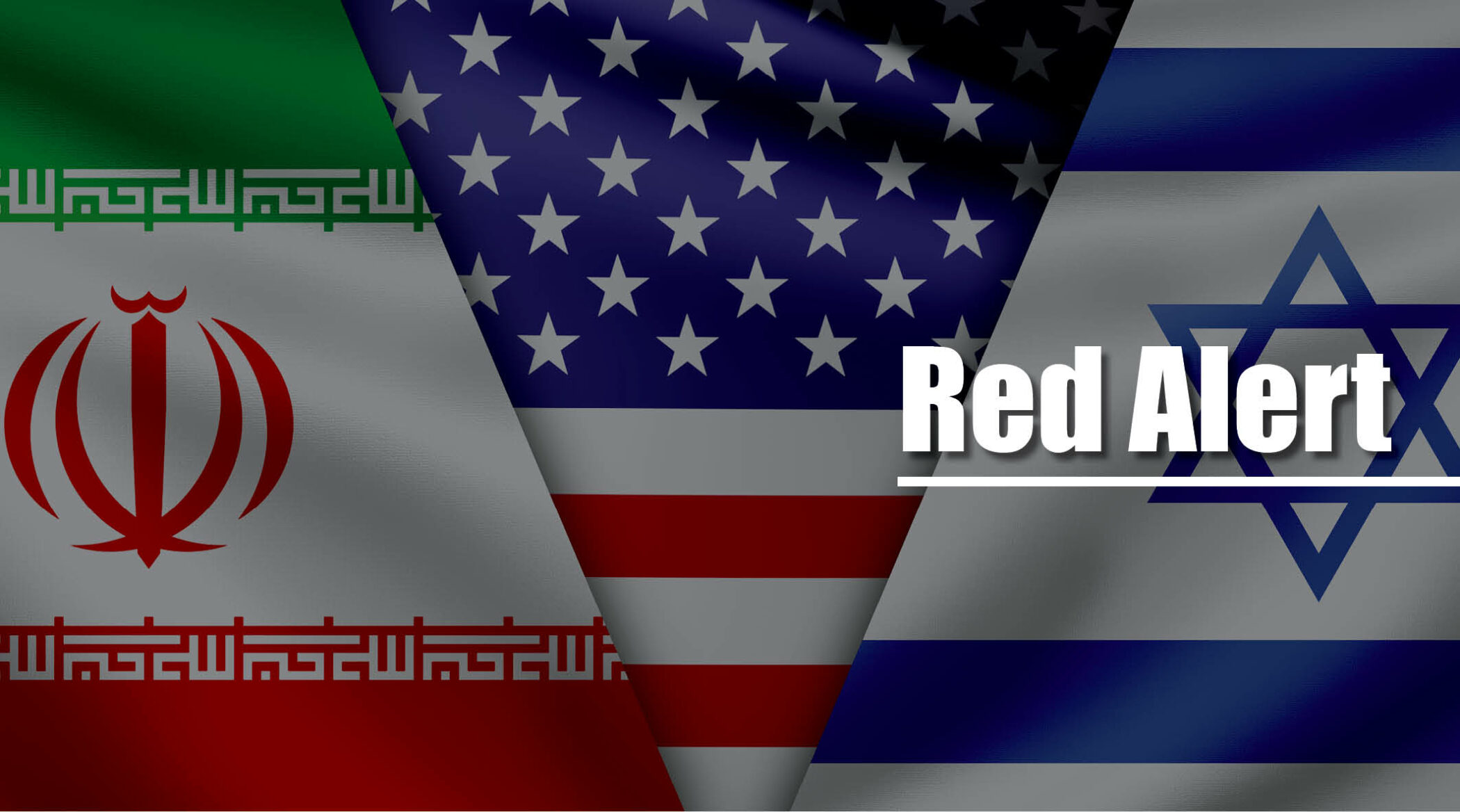
On June 13, 2025, Israel launched a surprise offensive against Iran, striking nuclear facilities, missile bases, air defenses, and targeting military leaders and nuclear scientists. In response, Iran retaliated the same evening with firing over 150 ballistic missiles and 100 drones at Tel Aviv and Haifa.
Israel and Iran have continued to trade blows and there are no significant signs of a potential slowdown in the conflict between the long-time adversaries. The spectre that looms over both is that of U.S. President Donald Trump, who has gone from negotiating with Iran for a nuclear deal to pushing for its “unconditional surrender” in the span of a week. as the U.S. simultaneously repositions its military assets to potentially strike Iran.

Programmes
11 Feb 2025
What Is Beyond the USAID Controversy?
Recent decisions by U.S. President Donald Trump cutting aid to foreign countries and dismantling the U.S. Agency for International Development (USAID) have sparked global backlash. While the impact of cutting aid is substantial, the broader significance of this move cannot be overlooked. It reflects a deeper shift in the Trump administration’s foreign policy strategy. But what are the implications for the U.S. and its adversaries?

Publications
6 Feb 2025
Will Israel Suceed in Dissolving UNRWA During Trump’s Second Term?
In a significant escalatory move, Israel’s Ambassador to the United Nations, Danny Danon, has notified the UN Secretary-General in writing that UNRWA must cease its operations and vacate its premises by January 30, 2025. This ultimatum follows Israel’s enactment of a law last October banning the agency’s activities within its territory, including occupied East Jerusalem. The decision is rooted in Israel’s allegations that UNRWA has been infiltrated by Hamas, with claims that some of its employees were involved in the Oct. 7, 2023, attacks.
This paper examines the evolving and contentious relationship between Israel and UNRWA. It also explores potential U.S. intentions to dismantle the agency, particularly in light of Donald Trump’s return to power and his recent remarks regarding the displacement of Gaza’s population and the repercussions of this ban.