
Publications
29 Dec 2025
The Cost of Closing Borders: Why Restricting Migration Could Backfire
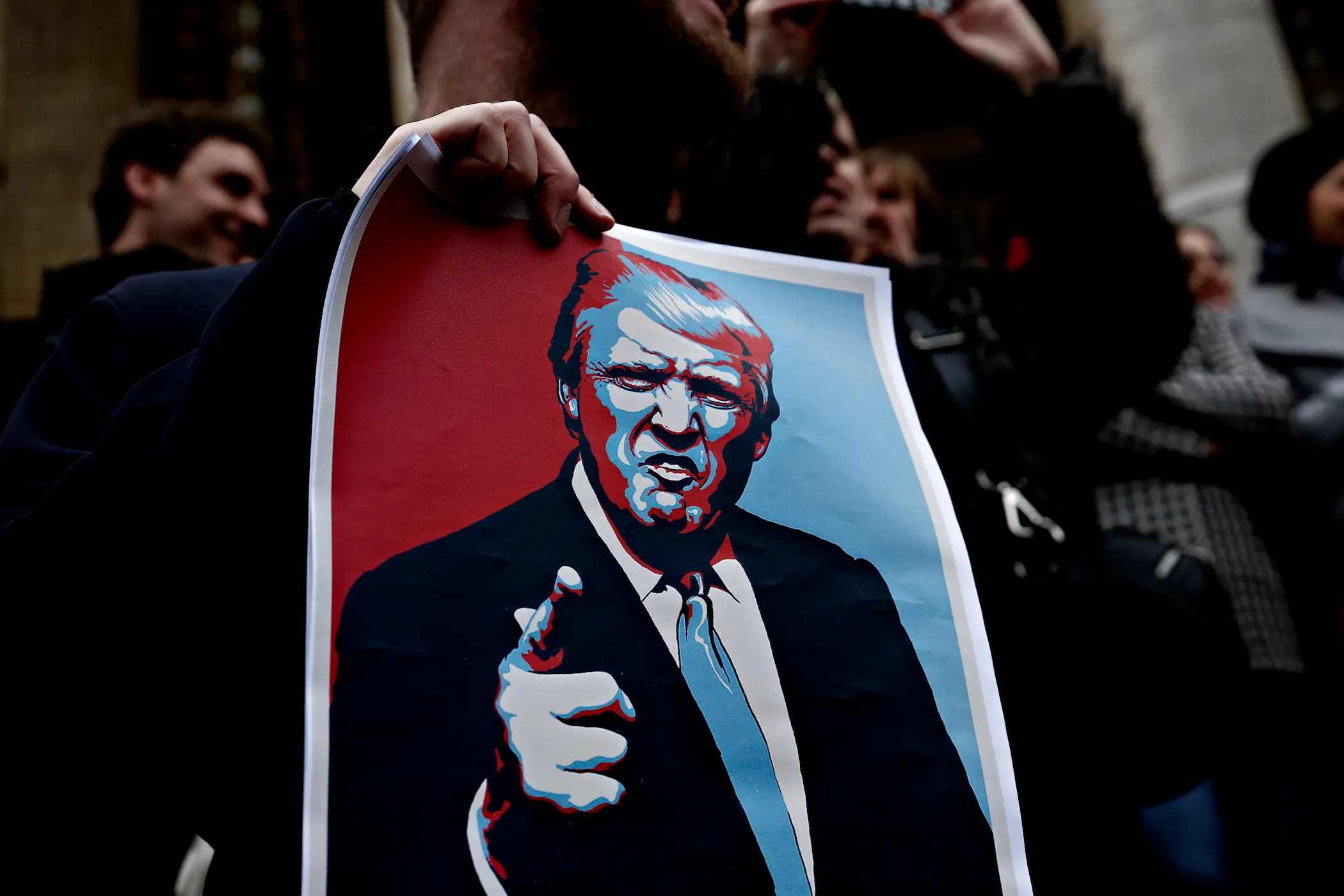
Recently, U.S. President Donald Trump issued sharp criticism of Europe, and while migration policies were not his only focus, his remarks on the topic were particularly striking. His criticism came shortly after he announced a policy to “permanently pause migration from what he called ‘third world countries’” following a National Guard shooting in Washington, highlighting his framing of migration as both a domestic security and international issue. The latest U.S. National Security Strategy under the Trump administration closely links European security to its migration policies, warning of what it describes as "civilisational erasure" from uncontrolled immigration and EU policies, and calling on Europe to enforce stricter border controls, support "patriotic" parties, and become more self-reliant. This approach is widely seen as critical of mainstream European leadership and supportive of far-right movements.
At the same time, far-right sentiment is gaining traction across Europe, visible in the electoral successes of parties such as France's National Rally, Italy's Lega, and Germany's Alternative for Germany. While public discourse often frames migration as a threat to security and civilisation, Western countries overlook a crucial point, which is that migration can be a dividend, contributing to economic growth. With populations ageing faster than the global average and shortages of labour in highly skilled professions, the West is increasingly dependent on migrants. The question is what might happen if far-right agendas succeed in curbing migration, and whether Western economies and security could sustain themselves without it.

Programmes
12 Dec 2025
The 2025 NSS: Disengagement or Entrenchment?
The National Security Strategy (NSS) defines the guiding vision of American power and provides a window into how the United States understands the international environment, identifies its priorities, and determines the political, military, and economic tools it will rely on to protect national interests. Accordingly, the NSS shapes defence planning, informs foreign policy doctrine, guides inter-agency action, and signals to allies and adversaries the direction of U.S. engagement in an evolving global landscape.
The 2025 NSS, issued by the Trump administration in November 2025, is a clear articulation of how this administration intends to position itself in a world marked by rising geopolitical fragmentation, sharpening competition, and growing domestic constraints. Its core purpose is to translate the administration’s worldview into a coherent framework that defines what the United States will prioritise, what it will deprioritise, and under what conditions it will expend political capital, economic leverage, or military force.
For the Middle East, understanding the 2025 NSS is essential because it captures the principles shaping America’s evolving posture toward the region. The strategy’s emphasis on burden-sharing, reduced military exposure, and transactional partnerships signals a shift in expectations for regional actors, while its focus on energy security, counterterrorism, and strategic competition with external powers continues to define the contours of U.S. interests. As a formal expression of how the administration interprets threats and opportunities, the NSS provides the clearest available roadmap of Washington’s intentions—and the framework within which its decisions toward the Middle East will be made in the years ahead.

Programmes
3 Dec 2024
Making Sense of Trump’s Foreign Policy
The U.S. National Security Strategy (NSS) is a comprehensive document produced by the National Security Council in conjunction with the executive branch of the United States Government for Congress and then signed by the President. The NSS mainly outlines the U.S.’s major national security concerns and how the administration intends to address them using all instruments of national power. In this context, the 2024 NSS will be one of the most crucial concerns for the President-elect Donald Trump.