
Publications
1 Jul 2026
Shadow Leverage Issue 1: Why the Strait of Hormuz Has Become the Decisive Negotiating Card
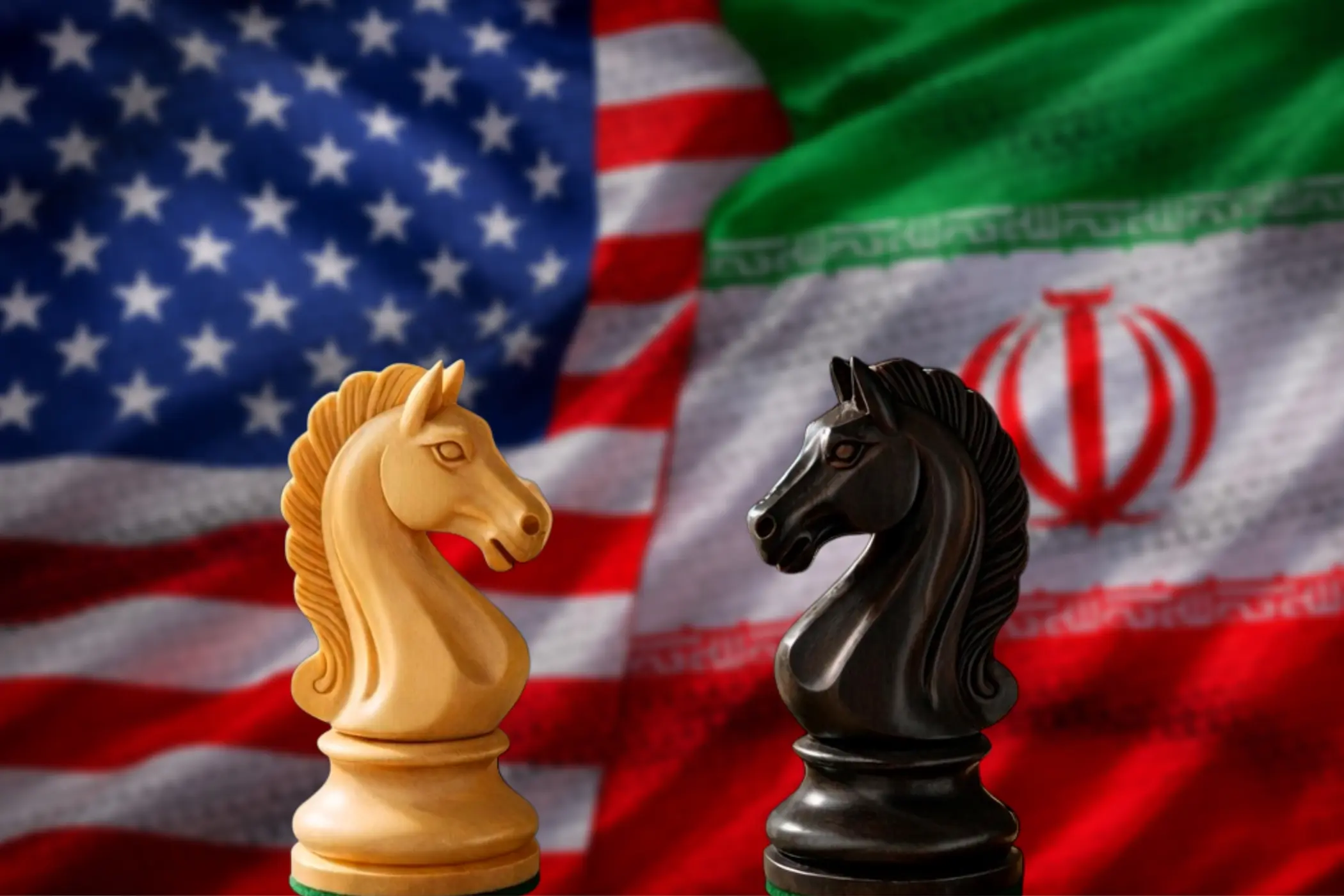
The Strait of Hormuz is no longer merely a disputed maritime passage, nor simply a recurring flashpoint between Iran and the United States. It has instead evolved into a central arena for testing the meaning of sovereignty in the region. While Washington continues to regard the strait as an international waterway governed by the principle of freedom of navigation, Iran’s Islamic Revolutionary Guard Corps treats it as a sovereign zone under its direct administration, subject to military rules imposed through effective ground control. Accordingly, the core of the crisis no longer centres on the question, "Is the strait open or closed?" Rather, the more consequential question has become: what is the future of the strait in light of the ongoing negotiations?
Recent developments, particularly following the Islamic Revolutionary Guard Corps’s threat to close the Strait of Hormuz in response to what it described as violations of the terms of the memorandum of understanding, especially about the Lebanese file just days after the memorandum was signed, reveal that the issue has not been resolved but has instead grown more complex. The memorandum treated the strait as a technical issue that could be managed through arrangements governing passage and transit to prevent friction. The Islamic Revolutionary Guard Corps, by contrast, approached it as a symbol of sovereignty, power, and the right to set the rules. This divergence rendered the understanding itself incapable of resolving the underlying dispute, because the disagreement between the two sides lies not in procedural details, but in who holds the authority to determine those procedures in the first place.
Although the United States and Iran agreed to reopen the Strait of Hormuz immediately after signing the preliminary agreement, this does not necessarily mean that maritime traffic will return to pre-war levels. Implementing this provision presents complex challenges related to the mechanism for reactivating the shipping corridor, the arrangements required to resume vessel traffic, and the restrictions that may persist during the sixty days allocated to negotiate the final agreement. These challenges are further compounded by the dispute over which party will assume responsibility for regulating and managing maritime traffic through the strait. Taken together, these obstacles suggest that reopening the strait may prove one of the most complex aspects of the agreement, particularly given the ongoing divergence between the American and Iranian visions for the future control of this strategic waterway.
The crisis surrounding the Strait of Hormuz, therefore, cannot be understood merely as a dispute over borders or the passage of ships; it is fundamentally a crisis of authority: the authority to set the rules, to impose exceptions, and to exercise the final say in determining whether this waterway remains open, closed, or conditionally accessible. For this reason, the question of the strait should no longer be viewed as a secondary file within the broader Iran–United States conflict. Rather, it should be recognised as one of the most consequential issues shaping and redefining the very concept of sovereignty, both within Iran itself and in the evolving structure of relations between regional and international powers.
Programmes
10 Feb 2026
How the West Bank is the International Order’s Ultimate Test
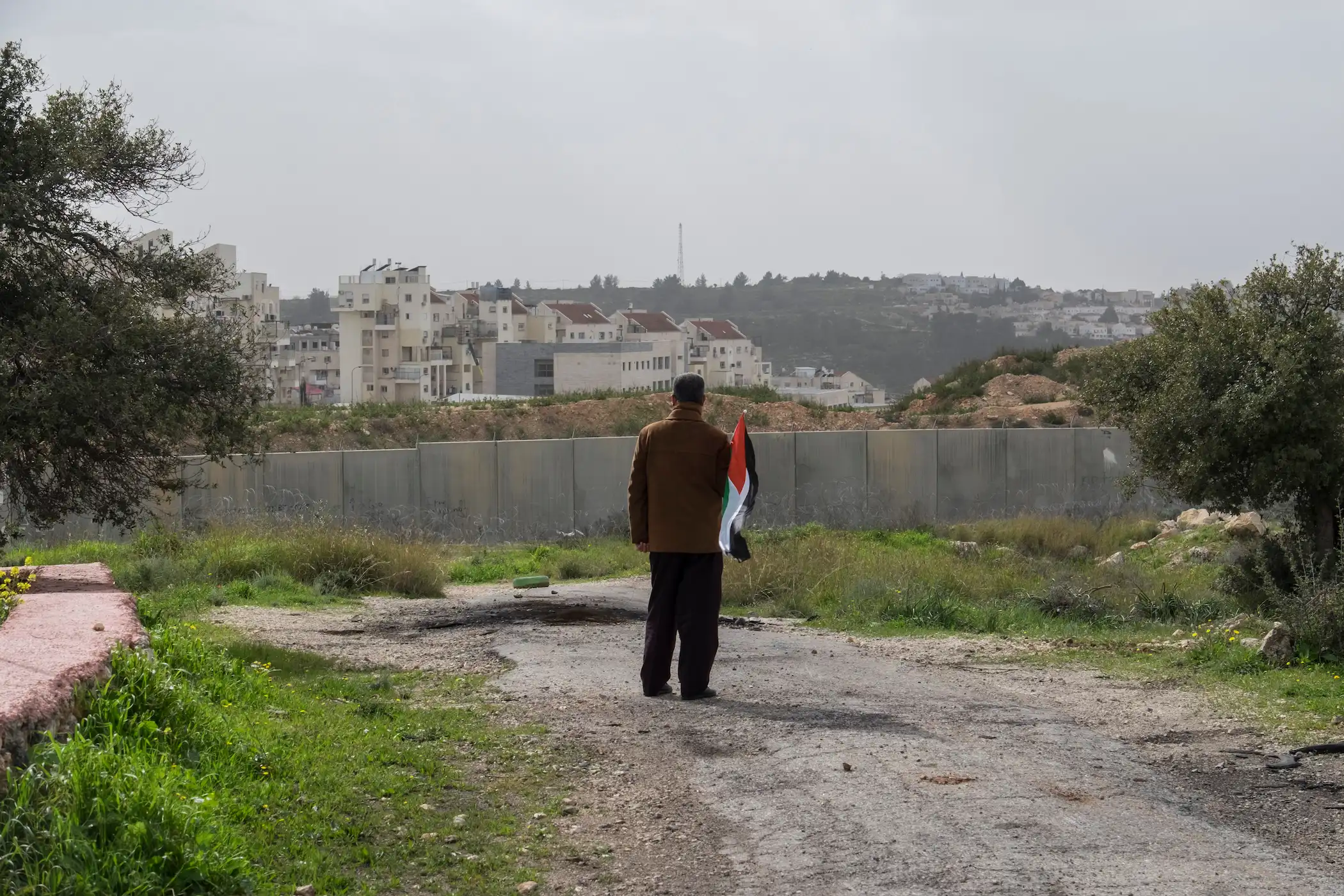
The question of the West Bank has transcended its status as a mere component of the Palestinian–Israeli conflict to become a substantive test of the coherence of international law and the deterrence foundations upon which the post–Second World War international order was built.
On 9 February 2026, the Israeli Security Cabinet endorsed a package of extraordinary measures designed to consolidate Israeli control over the West Bank. The measures included rescinding the longstanding prohibition on the sale of land to Jews through the repeal of the Jordanian statute that barred the transfer of Palestinian property to Jewish purchasers; lifting the confidentiality of land registry records; transferring planning and construction powers in parts of Hebron from the Palestinian municipality to the Israeli Civil Administration; and broadening oversight and demolition authorities to extend into Areas A and B, which fall under Palestinian Authority jurisdiction in accordance with the Oslo Accords.
These decisions are likely to generate profound structural transformations in property registration and transfer regimes by permitting the public disclosure of landowners’ identities. Such disclosure opens the way for direct negotiations between Israeli purchasers and Palestinian proprietors, thereby facilitating a faster pace of acquisition and further entrenching settlement expansion throughout the West Bank.
In this context, the Israeli Settlement Council (Yesha) characterised the measures as “the most consequential in fifty-eight years,” portraying them as an effective governmental declaration of the restoration of the Land of Israel to its people. These moves do not represent an isolated incident; rather, they constitute one stage in an intensifying trajectory that, over the past two years, has fundamentally reshaped the conflict's underlying parameters, generating a transformed reality that necessitates analytical frameworks beyond traditional paradigms.

Publications
6 Feb 2025
Will Israel Suceed in Dissolving UNRWA During Trump’s Second Term?
In a significant escalatory move, Israel’s Ambassador to the United Nations, Danny Danon, has notified the UN Secretary-General in writing that UNRWA must cease its operations and vacate its premises by January 30, 2025. This ultimatum follows Israel’s enactment of a law last October banning the agency’s activities within its territory, including occupied East Jerusalem. The decision is rooted in Israel’s allegations that UNRWA has been infiltrated by Hamas, with claims that some of its employees were involved in the Oct. 7, 2023, attacks.
This paper examines the evolving and contentious relationship between Israel and UNRWA. It also explores potential U.S. intentions to dismantle the agency, particularly in light of Donald Trump’s return to power and his recent remarks regarding the displacement of Gaza’s population and the repercussions of this ban.