

Publications
15 May 2026
Hantavirus: Contained Threat or Emerging Pandemic?
On May 2, 2026, a cruise ship in the Atlantic Ocean reported the outbreak of Andes virus, a type of Hantavirus that already existed in the Americas and Europe. Casualties, symptoms, and the spread of the virus renewed global attention surrounding it while bringing back the memories of the initial outbreak of COVID-19.
Since then, it has been linked to how COVID-19 is transmitted between humans, leading to the spread of the pandemic. However, evidence suggests human-to-human transmission is different in both cases; the SARS-CoV-2 virus was transmitted to an average of two or more people within populations that had not previously been exposed. As for the Andes virus, the transmission on the ship happened under very specific conditions of human-to human interaction: the presence of symptomatic individuals in crowded, poorly ventilated spaces with direct and continuous contact. Some experts from the World Health Organisation (WHO) note that the current Hantavirus outbreak on the cruise ship doesn’t qualify as the next “COVID-19” pandemic. Although it signals risks for affected people, it replicates slowly, spreads mainly through close contact, and appears to be most effective when symptoms appear. Nevertheless, other experts warn about the implications of the outbreak of the virus, citing its fatal symptoms and its shift in its traditional method of transmission. This raises a crucial question about whether Hantavirus can realistically become a pandemic.
This paper examines the potential for Hantavirus to evolve into a global pandemic threat by assessing its biological characteristics, transmission patterns, mortality rates, as well as its current global situation, including geographic distribution. It also assesses whether Hantavirus meets the established criteria for a pandemic, including sustained human-to human transmission, international spread potential, asymptomatic transmission, urban transmission, and containment challenges. In addition, the paper explores potential future trajectories for Hantavirus outbreaks by analysing scenarios ranging from continued local outbreaks to expanded regional transmission, as well as the low-probability but potentially high-impact pandemic driven by mutations. The report also addresses policy implications, early warning indicators, and lessons learned from the COVID-19 pandemic to assess gaps in preparedness and response capacity.
Methodologically, this paper adopts both qualitative and quantitative approaches that rely primarily on primary data/numbers and secondary sources. It draws on reports and data from international health organizations, such as the WHO, statistical facts, along with peer-reviewed academic literature, epidemiological studies, and expert analyses. The study also employs a comparative analysis of Hantavirus and COVID-19 to identify similarities and differences in defined indicators, such as transmissibility, mortality rates, and pandemic capability. Furthermore, the paper utilises scenario-building and risk assessment methods to evaluate potential future outbreak trajectories and preparedness indicators as well as challenges.

Programmes
23 Apr 2026
From Resilience to Ascent: How the UAE Transforms Crises into Opportunity
Many analysts fall into a recurring methodological error when assessing the United Arab Emirates’ (UAE) position amid regional turbulence. They measure the country’s resilience by its geographical distance from centres of risk, overlooking its exceptional capacity for strategic reinvention in the face of crises. This misreading, in particular, lends early credibility to pessimistic narratives of a “decline of the Gulf”, narratives that quickly unravel under the weight of empirical evidence and the firmness of facts. The UAE has not navigated successive regional crises by relying on geographic insulation or external protection. Rather, it has done so through deeper, more enduring foundations: a demonstrated ability to convert shocks into substantive reform, and to elevate those reforms into sustained competitive advantage.
Accordingly, this analysis does not seek to downplay the scale of the challenges posed by a regional war that is casting a heavy shadow over the security of the Strait of Hormuz, maritime insurance markets, and investment flows. Rather, it offers a structured attempt to address three interrelated core questions: how has the UAE historically navigated major crises; how did it anticipate the current crisis by fortifying its infrastructure and economic systems to sustain resilience; and, finally, how should the present moment be understood, not as signalling the end of a development model, but as marking the transition to a more mature and deeply embedded position within the global economy.

Programmes
28 Aug 2024
Is MPOX the Next COVID-19?
On August 14, the World Health Organisation (WHO) officially classified the rising cases of MPOX in the Democratic Republic of Congo (DRC) and neighbouring countries as a Public Health Emergency of International Concern (PHEIC). This decision highlights the serious threat posed by the current MPOX outbreak, with fears that the virus could potentially escalate into a global health crisis.
This marks the second time that MPOX has been designated as a PHEIC by the WHO, following the 2022 outbreak, which was the first time the virus had spread widely outside of its endemic regions in Central and West Africa. The occurrence of two significant outbreaks within just four years has raised concerns globally, especially in the aftermath of the COVID-19 pandemic. As a result, many are now wary of the potential for an MPOX outbreak to become a new pandemic.
Programmes
28 Feb 2023
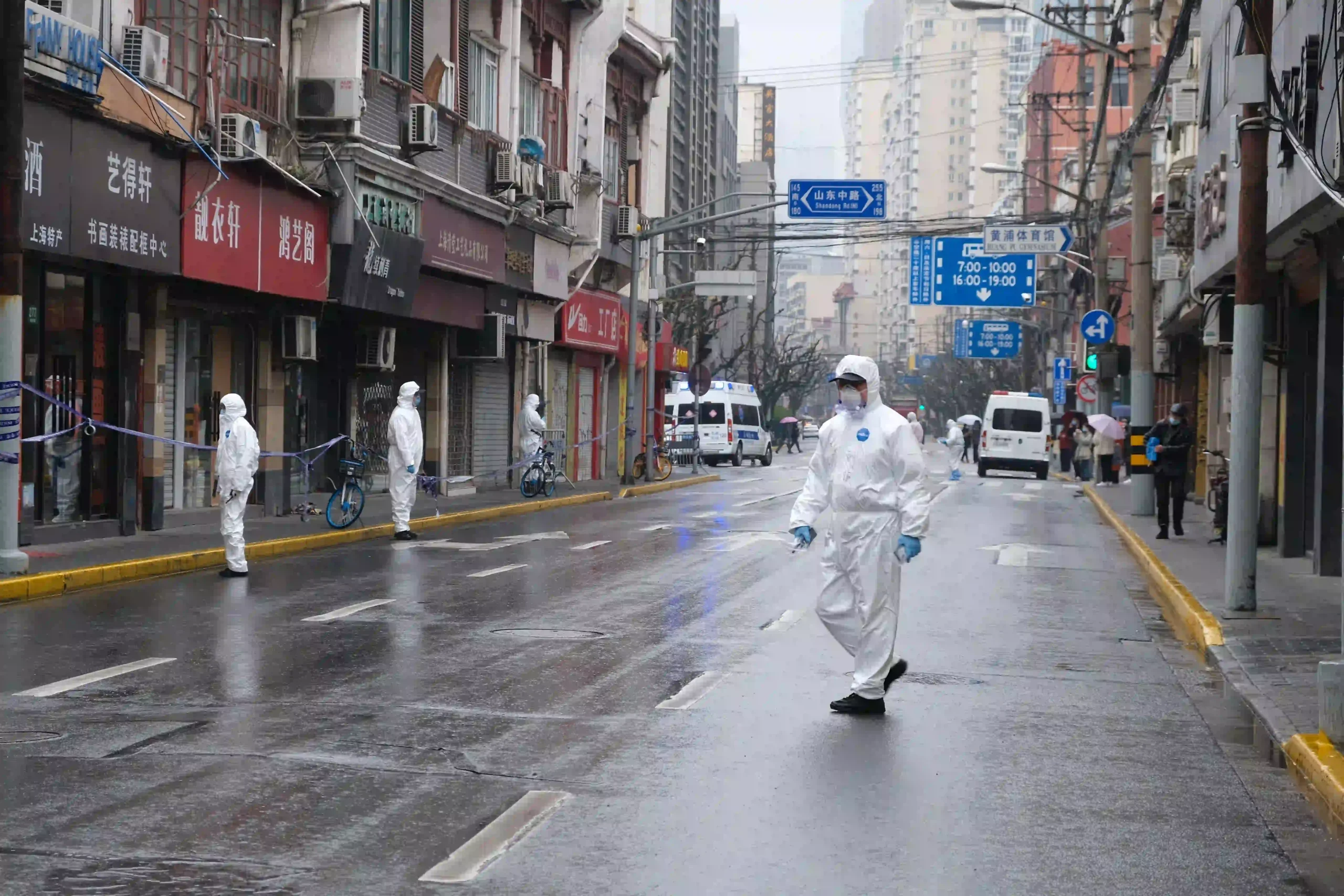
China’s Zero-Covid Policy: Impact on the Chinese Economy
During the initial outbreak of Covid-19 in 2019, China stunned the international community by confining more than 11 million inhabitants of Wuhan to their homes. Since then, China has maintained the same practises, including them into its Zero-Covid policy. Border controls and lockdowns on the coronavirus have disrupted supply chains and slowed the flow of trade and investment, causing China’s economy to slow down. China has adhered to its zero-tolerance approach to the virus for nearly three years, despite the fact that this policy has caused immense economic harm and public dissatisfaction. Therefore, it is important to shed light on the effects of the Zero-Covid policy on the Chinese economy and the measures that need to be undertook by the government after its abandonment of the policy to revive its economy.