
Programmes
19 Mar 2026
Strait of Hormuz Closure: Strategic Implications for the Global Semiconductor Industry
Iran has blocked maritime navigation through the Strait of Hormuz since the first week of March, following the attacks it sustained during Operation Epic Fury. This disruption has hindered the movement of nearly 20 million barrels of crude oil per day. It has trapped shipments of liquefied natural gas, accounting for around 20% of global consumption, within the waters of the Arabian Gulf. As a result, international energy markets are experiencing sharp price volatility affecting Brent crude futures and European gas contracts.
At the same time, maritime shipping lines have been compelled to reroute their commercial fleets, forcing them to navigate around the historic Cape of Good Hope route at the southern tip of Africa. This enforced geographic diversion adds approximately 19 days to maritime transit times to and from Asia, generating weekly losses for global supply chains estimated at between $2 billion and $3 billion in additional operating and fuel costs.
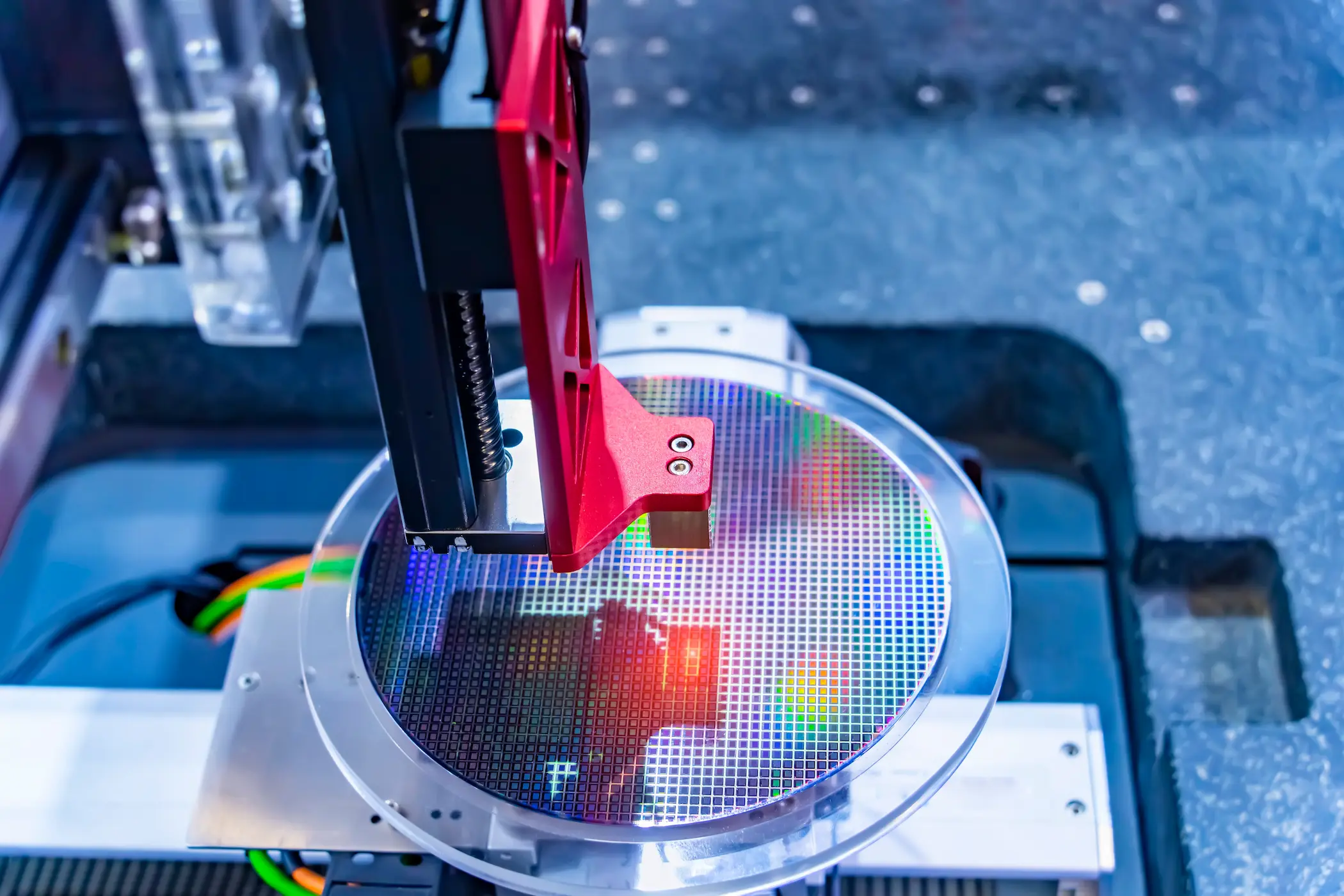
This operational disruption directly affects the technological infrastructure of East Asia, where advanced semiconductor fabrication facilities in Taiwan and South Korea require vast, continuous electricity supplies to operate lithography systems around the clock. These critical facilities, which account for approximately 68% of global semiconductor production, rely on imported liquefied natural gas to ensure the stability of their power networks and prevent disruptions.
In parallel, the precision manufacturing processes involved depend on highly specialised raw materials whose primary sources are concentrated in regions currently affected by the crisis. In particular, production lines require ultra-high-purity helium gas, extracted as a by-product from Gulf LNG liquefaction facilities, which represent roughly 35% of global supply, as well as bromine, which Korean factories import at a rate of 97.5% from the Dead Sea coast for chemical etching processes. Accordingly, technology firms are accelerating efforts to assess their exposure to the dual energy and critical chemical input shortages. At the same time, economic stakeholders monitor the crisis's trajectory with heightened caution to safeguard supply chain continuity.
Accordingly, this analysis examines the strategic and operational implications arising from the closure, focusing on three principal dimensions. First, it addresses the disruption of liquefied natural gas supplies and their direct impact on the security of power grids that sustain major Asian semiconductor manufacturing hubs. Second, it examines the sharp interruption in the supply of critical raw materials, particularly specialised gases and petrochemical inputs required for precision manufacturing processes. Finally, it explores the logistical repercussions of the forced rerouting of maritime shipping routes, as well as the strategic measures states are considering to mitigate future geopolitical risks.

Programmes
22 Jan 2026
The Implications of China’s Acquisition of a Lithography System
December 2025 marked a structural shift in the global technological balance of power, as a state-backed Chinese industrial consortium, coordinated by Huawei, approved the operation of a functional prototype of an extreme ultraviolet (EUV) lithography system at a facility in Shenzhen. This announcement dismantles a core assumption that has dominated geopolitical thinking in Washington, Brussels, and Tokyo over the past decade, namely that the extreme engineering complexity of EUV technology would permanently confine China behind a technological barrier, preventing it from advancing beyond the 7-nanometre threshold in leading-edge semiconductor manufacturing.
Western containment strategies were grounded in a firm conviction that the Dutch firm ASML’s monopoly over highly complex supply chains would guarantee the exclusion of the world’s second-largest economy from producing the advanced semiconductors required for artificial intelligence applications. The new Chinese prototype, however, has invalidated this assumption, not by replicating Western engineering paradigms, but by pursuing an alternative physical and engineering pathway, shaped by imperatives of national sovereignty and enabled by effectively unconstrained state capital.
This prototype, based on laser-driven plasma (LDP) technology, demonstrates that Chinese engineering teams have mastered the core physical principles of optical control at 13.5 nanometres. In doing so, they have moved beyond a phase long framed as one of "scientific impossibility", shifting the contest decisively into a new stage defined by engineering scale-up and operational viability. This development signals the end of an era of unipolar technological dominance. It inaugurates a new phase of dual ecosystems within the semiconductor industry. This transformation will require a comprehensive reassessment of the economic and security assumptions that have governed the sector for decades.

Programmes
18 Sep 2025
The Semiconductor Cold War: U.S. vs. Russia, China and India
The global competition over semiconductors and related military technologies has become the central axis of great-power rivalry. The United States maintains its leadership in the global semiconductor industry, with American companies securing roughly half of the global semiconductor market. However, this dominance faces a growing challenge from China, which accounted for 20% of global semiconductor sales in 2024. Beijing’s ambition to achieve self-sufficiency in semiconductors is steadily advancing despite ongoing trade tensions and intellectual property restrictions imposed by Washington amidst the broader ‘tech war.’ China aims to reach 50% self-sufficiency in semiconductor production by the end of the year, reinforced by significant investments in R&D and market expansion by Chinese firms.
In contrast, Russia’s position in semiconductor-dependent military industries is increasingly constrained. Although Russia retains expertise in weapons design, its reliance on imported materials and advanced chip-making equipment from Western countries exposes critical vulnerabilities. Western sanctions, introduced in response to Russia’s military actions in Ukraine, have sharply limited Moscow’s access to these essential inputs. In response, Russia has sought alternative suppliers, with China emerging as its largest source of semiconductor materials. These dynamic forms part of the broader Russia-India-China (RIC) trilateral framework, underpinning Moscow’s strategic pivot toward Eastern partnerships.
Meanwhile, India is rapidly evolving as a significant player in the semiconductor sector. The country’s announcement in September of its first indigenous chip, “Vikram 32,” marks a milestone in New Delhi’s pursuit of technological self-reliance and signals India’s potential emergence as a competitor to U.S. semiconductor dominance. India’s increasing engagement with Russia and China reflects a pragmatic alignment based on mutual interests, particularly in the context of escalating policy tensions with Washington. Notably, U.S. tariffs imposed on India’s trade in Russian oil have further incentivized this trilateral collaboration.
Collectively, the China-Russia-India “troika” represents a coalition of shared interests rather than a formal ideological alliance. Should this partnership strengthen, it could significantly bolster their semiconductor manufacturing capabilities and pose a formidable challenge to the American industry. Nevertheless, lingering frictions—such as unresolved border disputes, differing economic priorities, technological gaps, and the impact of sanctions—are likely to impede seamless technological integration. The United States still wields substantial influence over India, with opportunities to attract New Delhi through increased investments, tariff reductions, and advanced technology cooperation. Ultimately, the trajectory of the RIC semiconductor partnership holds profound implications for the global order. A successful integration of this “troika” chip industry with their respective military technologies could catalyse the rise of a multipolar system, revolutionizing surveillance, air defence, drone capabilities, and the broader defence industrial base, thereby reshaping international power dynamics.
Programmes
7 Mar 2023
Ramifications for the Global Economy in the Case of a China-Taiwan Conflict?
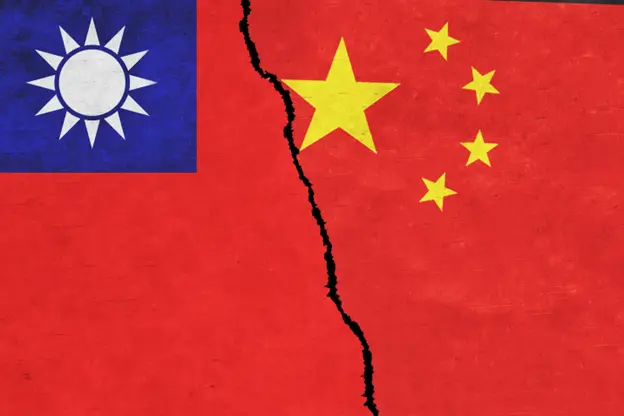
China believes that Taiwan is an inalienable part of China and that Taiwan is part of its territory and routinely threatens to invade it to prevent Taiwan's formal independence. On Saturday 18th of February 2023, China's top diplomat Wang Yi said, at the Munich International Security Conference: "Taiwan has never been an independent country, nor will it be an independent country in the future. This is the status quo of the Taiwan issue”. As greater and more aggressive Chinese military exercises outside Taiwan become the norm, there are rising concerns of a full-blown cross-strait crisis with severe military and far-reaching economic repercussions for the global and Chinese economy. A China-Taiwan conflict will have a worse effect than the Russia-Ukraine war given the economic and industrial power that the two countries possess.