
Farah Aburaya is a Researcher in the Political Unit at Al Habtoor Research Centre. She earned her master’s degree in Political Science from the Faculty of Economic Studies and Political Science at Alexandria University. Prior to joining the Centre, she worked as a Political Researcher at InterRegional for Strategic Analysis and previously served as a Teaching Assistant in Political Science at the Arab Academy for Science, Technology and Maritime Transport (AASTMT). Her research interests focus on Eurasian affairs and Middle Eastern politics.

Latest By Farah Aburaya

Programmes
7 May 2026
How Wartime Purges Are Reshaping U.S. Military Doctrine?
No nation, no people, and no institution has been shielded from the turmoil unleashed by the US-Israel-Iran War. Yet perhaps the most surprising upheaval has unfolded not on the battlefield, but within the ranks of the world's most powerful military. Secretary of War Pete Hegseth has launched a sweeping purge of its highest ranks, ousting top officials in a manner more reminiscent of an authoritarian regime consolidating power than a democracy safeguarding its national security.
This restructuring raises unsettling questions about the road ahead. Is Hegseth reshaping the military to serve a political agenda rather than a strategic one? Is Hegseth attempting to protect his position? Is there significant internal resistance to the War? And perhaps most critically — who, ultimately, does this new military answer to?
Programmes
27 Apr 2026
Hungary as a Bridge: How Could Budapest become a Food Security Partner for the UAE?
Hungary has a strong and well-developed agricultural sector. Arable land and permanent crops account for 4.3 million hectares, of which approximately 130,000 hectares are irrigated. The main crops include wheat (0.9 million hectares), corn (0.8 million hectares), and sunflowers (0.7 million hectares). While pastures cover 0.8 million hectares and forests cover 2 million hectares, livestock production includes 2.8 million pigs and 33.8 million poultry.
The country’s economy is export-dependent, so many technological advancements and the easing of financial restrictions, such as VAT, were integrated across various sectors, helping improve products and increase profits. The agricultural sectors benefited greatly from such policies, where crops and livestock exports have increased throughout the years. Agricultural exports constituted 9.1% of Hungary's total exports in 2024, including commodities like grains and grain products (13%), animal feed (12%), meat and meat products (9%), dairy products (5%), and fruits and vegetables (5%). Hungary's pioneering role in the agricultural sector increases its prospects for adopting measures to address food insecurity while increasing the benefits for any country that cooperates with it.
Programmes
20 Apr 2026
War and Politics Dynamics: How the Israel–Iran War Is Reshaping the 2026 Knesset Elections
The Israeli political system has undergone profound structural shifts following the launch of Operation Roaring Lion between Israel and Iran in late February 2026. This conflict marks a transition from traditional deterrence policies and proxy warfare to a doctrine of comprehensive confrontation and pre-emptive strikes targeting nuclear and military infrastructure deep inside Iran. These military developments have coincided with the approaching constitutional deadline for the twenty-sixth Knesset elections, due no later than October 2026, amid a politically fragile environment for Prime Minister Benjamin Netanyahu and his governing coalition. The confrontation has unfolded at a time when the executive leadership is experiencing a decline in political support, shaped by the continuing repercussions of intelligence and security failures linked to the events of 7 October 2023.
These challenges are compounded by declining domestic economic indicators, sharp societal divisions over legislation mandating military conscription for ultra-Orthodox Jews, and the ongoing trajectory of judicial proceedings. In this context, analytical evidence suggests that the executive leadership is seeking to leverage the state of national emergency to consolidate cohesion within its right-wing electoral base and to affirm the centrality of the current leadership in managing security threats within a complex parliamentary system. The intersection of protracted military conflicts with democratic electoral cycles imposes complex structural pressures on voting behaviour and the prospects of incumbent leadership. The demands of national mobilisation increasingly intersect with deeply rooted crises of institutional trust in the public consciousness. This analysis examines electoral calculations before and after the outbreak of the confrontation, reviews historical precedents in which extended wars have shaped successive Israeli governments, and analyses the strategic and personal drivers of decision-making, culminating in an assessment of potential trajectories for the reconfiguration of the electoral landscape ahead of the 2026 vote.
Programmes
24 Mar 2026
The Ripple Effect of the US-Israel-Iran War on the Russia–Ukraine War
The long-standing efforts to end the Russia-Ukraine War were disturbed by the sudden outbreak of the U.S.-Israel-Iran War. The strikes carried out by the United States and Israel against Iran, and their broader spill-overs across the Middle East, have hindered the already difficult peace negotiations between Moscow and Kyiv. This escalation raises concerns about the extent to which the U.S.-Israel-Iran War could have on the broader geopolitical dynamics. This war risks diverting global attention away from efforts to resolve the Russia-Ukraine War and, at the same time, raises concerns about the extent to which it could reshape power dynamics and influence the trajectory of this war.
Programmes
20 Mar 2026
Beyond Traditional Treaties: The Future of Nuclear Governance
On Feb. 4, 2026, the New START Treaty ended without any incentive for renewal. On February 28, 2026, the U.S. and Israel initiated strikes on Iran, citing a lack of progress in the nuclear talks. This year has witnessed prominent incidents related to nuclear security, where states become more incentivised to develop their own nuclear capabilities and other nuclear states resist such direction. Additionally, global developments prove that traditional nuclear frameworks appear to be losing significance, with some states going further by resorting to violence to ensure their nuclear hegemony.
This development raises questions about the possibility of global shifts from traditional arms control treaties to a new nuclear arms control regime. A new phase of informal signalling and strategic forecasting could emerge, raising concerns about whether this form is sufficient to verify compliance. Such a potential new nuclear arms control regime could be unpredictable in terms of its application, effectiveness, the number of states willing to follow through, and more broadly, the path forward to ensure the world is not dragged into a nuclear war.
Programmes
10 Mar 2026
Where Does China Stand in the US-Israel-Iran War?
The U.S.-Israel and Iran War has affected the interests of many countries. In the last few days, China emerged as a significant player in these events. Beijing called for an immediate halt to the attacks by both sides and the protection of vessels passing through the Strait of Hormuz, culminating with the Chinese Foreign Minister Wang Yi pledging to send a special envoy to the Middle East for mediation.
Beijing has interconnected interests in the Middle East that are significantly affected by the war and will most likely reshape its strategic opportunities in the region, particularly in terms of energy security, trade routes, and diplomatic relations with key regional players. Beijing’s pragmatic foreign policy approach toward the region relies on protecting its economic interests and maintaining a strategic balance. So, the war could provide an opportunity for China to navigate new opportunities in the region and, consequently, expand its influence, particularly by strengthening ties with other oil-producing nations and increasing its investments in reconstruction efforts.
Likewise, China’s strategic partnership with Iran mainly revolves around oil supply and large-scale investments. The consequences of the war raise questions about the future of this relationship and the possibility that China may reshape its foreign policy toward Tehran if it faces a potential decline in Iran’s ability to sustain such interests as a result of the strain on its power after the war.
Programmes
12 Feb 2026
Food Weaponisation: Building Food Resilience in the Global South
Food commodities are becoming strategic resources, increasingly viewed as important as oil and gas. Food is used as a tool of political control, where food export control or bans influence countries' behaviour and policy outcomes. For instance, Russia's actions in the Black Sea’s exports caused price spikes and forced strategic changes to the Black Sea Grain Initiative in favour of Moscow. The Russia-Ukraine ًar has showcased how food can be used as a weapon and how major food importers, like Egypt, have faced direct vulnerabilities impacting their food supply.
As governments continue to weaponise food supply to leverage their position in warfare and as climate change worsens, countries will increasingly treat food as a national security issue and reshape alliance-building. Countries could be more likely to depend on food weaponisation tools, as they appear to be effective in ongoing conflicts. Hence, the Global South and food importers are in danger of being exposed to increased starvation and political control from food exporters and wealthier nations that control food systems. The forecasts incite these countries to re-evaluate their strategies to curb the risk of food insecurity.

Programmes
28 Dec 2025
The Politicisation of Mossad: The Future of Israel’s Intelligence
On Dec. 4 2025, Netanyahu decided to appoint his Military Secretary, Major General Roman Gofman, as the Director of the Mossad. Gofman will replace the current Mossad head, David Barnea, whose five-year term ends in June 2026. This decision signals a key leadership change in the country’s most important intelligence agency, particularly given Gofman’s lack of intelligence experience and aggressive decision-making approach. Moreover, this movement indicates Netanyahu’s broader pattern of politicising the appointments of high-ranking officials in security agencies, where loyalty to him appears to be a decisive factor. Accordingly, the politicisation of Mossad raises serious questions about the future of Israel's intelligence.
Programmes
11 Dec 2025
What If: the War Ends on Russia’s Terms
The prolonged Russia-Ukraine War has been met with futile efforts to end it by several peace plans throughout nearly four years of war. Currently, U.S. President Donald Trump appears determined to end the war by pushing a peace plan in the last few months of 2025 and negotiating with both Russian President Vladimir Putin and Ukrainian President Volodymyr Zelenskyy.
Many scenarios unfold for the aftermath of the Russia-Ukraine War. Amid the ongoing peace negotiations, driven mainly by the U.S. and Russia’s push for Trump’s 28‑point plan and Ukraine’s counterproposal through the amended 19‑point plan, a settlement favouring Russia is increasingly possible, raising the question: if such a plan is adopted, how will the Eurasian scene change?
Programmes
3 Dec 2025
The Proliferation of Online Misinformation: Who Can Profit from It?
Governments are increasingly concerned about the realistic but AI-generated images, audio, and videos. Such deepfakes cause widespread misinformation and, in some cases, harm national security by endangering public trust in institutions and elections, as well as inciting political violence. On the other hand, the general public and digital platform users can’t differentiate between AI-generated fake and real content, causing misinformation, polarisation, and the commodification of private data by large tech companies. Accordingly, the rapid movements of deepfakes drive the need to act to set the environment for the new reality.
Relying on tech companies to mitigate misinformation is highly challenging, as these companies face the problem of regulating deepfake content due to its wide accessibility through numerous companies. Therefore, regulating such content by one company will certainly decrease its profit, as users will shift to another supplier. Additionally, these companies financially benefit from publishing advertisements on misinformation websites unintentionally. Hence, there is a pressing need for an outside source to force regulations and strategies to mitigate the proliferation of online misinformation.
Programmes
9 Nov 2025
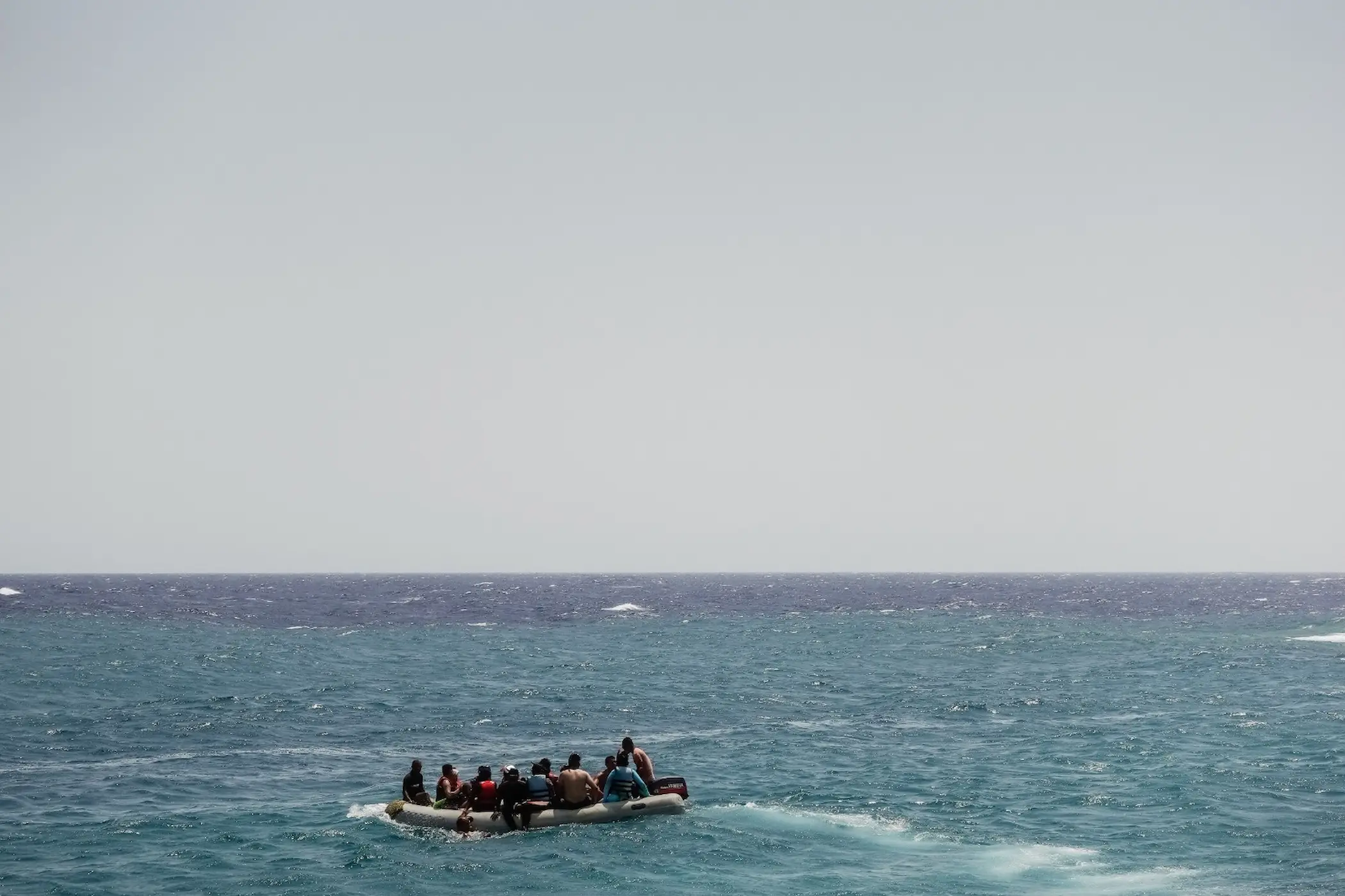
What If: Climate Migration Destabilises North Africa and Southern Europe?
Climate migration is becoming an increasingly pressing issue, imposing geopolitical and humanitarian challenges on countries that receive migrants at all stages. According to a report by the World Bank, climate migration is expected to force approximately 143 million people in the Global South to migrate by 2050. Natural disasters, including extreme heatwaves, droughts, insufficient crops, and flooding, have been imposing severe risks for many countries, particularly third-world countries. These countries are vulnerable to these risks due to their lack of services and financial distress, leaving most of the population living below the poverty line. Under these hardships, climate migration is spiking to northern countries where people seek better living conditions.
North Africa, geographically connecting the Global South to Europe, is a strategic transit location for migrants. While Southern Europe, linking migrants to the Global North, is an important entry point for those seeking better opportunity. Hence, the climate migration pressure on these regions creates conditions for destabilisation across both sides of the Mediterranean.
With the high wave of irregular migration, ‘Destination’ states, where migrants seek to settle in, often engage with the ‘Transit’ states, which are “any country through which a migrant passes after fleeing their country of origin, irrespective of their initial plans or actual actions within that country”, in what is called ‘migration diplomacy’. This strategy involves destination states offering visa incentives and investment opportunities in exchange for the transit state adopting containment measures for irregular migrants coming from their countries and strengthening control over the border. Likewise, destination countries foster economic and investment aid to ‘origin’ countries to tackle the root causes of the migration problem.
Although such diplomatic techniques could be successful sometimes, in many cases, they have been proven to be inadequate in many situations. As climate irregularities increase, climate-induced migration is expected to rise, and such methods have a high probability of their effectiveness diminishing completely, impelling destination countries to come up with other competent measures.
The evidence shows a high probability of devastating effects in both transit and entry states. For transit states, they might face more strain on their financial resources than what they currently incorporate, and at the same time, security threats could escalate. Regarding entry states, economic pressure, political tension, and intensified cultural polarisation might empower far-right parties, changing the structure of the European Union. So, climate migration could become a huge threat to the regional stability in both transit and entry states without effective and coordinated measures.
This paper explores the destabilising potential of climate-induced migration on transit North African states and Southern European entry states. It is divided into four sections: climate regression, effects on transit states, effects on entry states, and proposed solutions. The paper addresses the economic, political, and security implications, and suggest the necessity for tailored measures suitable for affected countries. The paper concludes that the continuous pace of climate migration will have destabilizing consequences on both transit and entry hubs. Besides resilience and early warning solutions, the EU has to provide attractive incentives for North Africa in order to limit the spill-overs on its borders. Such proposals shouldn’t be detached from the realities of African states and better align with the economic and security needs of these countries.

Programmes
20 Oct 2025
The Future Role of China in the GCC’s Tech Transition
China has a long-term goal to be a global leader in technology. To achieve such ambition, the country has taken serious steps widening its Belt and Road Initiative (BRI) traditional infrastructure projects to incorporate digital infrastructure projects embodied in the Digital Silk Road (DSR). The DSR was initially launched in 2015 by the government as an idea on paper and during the opening ceremony of the First Belt and Road Forum in May 2017, China’s President Xi Jinping, adopted the DSR term officially and it was incorporated in the government’s BRI strategy as the digital dimension.
The DSR initiative focuses on building digital infrastructure and exporting its technology to the beneficiary countries, it includes telecommunications infrastructure, like 5G networks, overland fibre-optic cables, data centres, cloud computing, artificial intelligence (AI), as well as applications that support e-commerce and mobile payments, along with smart cities and surveillance technology. Additionally, the DSR provides support to Chinese tech companies, like ZTE, Huawei, and Alibaba, to carry on the work with the beneficiaries.
The DSR aims to enhance Beijing's global digital influence as it creates opportunities for a wide range of cooperation and partnerships between Chinses tech companies and other beneficiaries around the world in areas of digitalization and AI. China’s DSR encompass a variety of projects in 5G deployment, e-commerce platforms, and AI applications, such as DeepSeek which is an alternative model to ChatGPT.
China signed DSR cooperation agreements with several countries in Africa, the Middle East, Eastern Europe, Latin America, and Southeast Asia. The cooperation takes place between scientists and engineers from the recipient country and Beijing, like opening a training centre or in research and development (R&D). The areas of cooperation are wide, including smart cities, AI and robotics, clean energy, and surveillance capabilities, like data localization. GCC countries are considered one of the important partners to China’s DSR, where it is closely integrating in the GCC digitalization goals.
Programmes
9 Oct 2025
US Intelligence Support Signals a New Phase in the Russia-Ukraine War
On October 1, U.S. reports stated that President Donald Trump gave the green light to provide Ukraine with intelligence information to strike deep into Russia’s energy infrastructure sites, while studying providing Kyiv with long-range weapons that can be used in such strikes. The reports also indicated that Washington is encouraging the NATO allies to take similar actions.
The U.S. has already been providing intelligence to Ukraine since the beginning of the war; however, Trump's signalling to provide more sensitive information could hold different consequences on the outcomes of the war. Since his second-term inauguration, Trump has vowed to end the Russia-Ukraine war, so does this decision come in parallel to the American President's ambition to broker a peace deal between Moscow and Kyiv, and how this might implicate the Russian and Ukrainian sides.
Programmes
2 Oct 2025
Nation on Edge: Intensified Political Polarisation in the U.S.
The shooting of the right-wing conservative activist Charlie Kirk on September 10 at Utah Valley University in Orem, Utah, during a question-and-answer debate, reflects the deep divisions in American society and the political landscape and represents a repercussion of the polarised America and increased political violence.
Where Ideological polarisation in the U.S. has been deeply rooted in society, and recent times have witnessed a more divided landscape over the governmental domestic and foreign policy directions, including taxes, immigration, aid to Ukraine, and Israel's war in Gaza. Since the outbreak of the Gaza war, the U.S. government has been providing extensive military, financial, and diplomatic support for Israel. Additionally, the U.S. repeatedly vetoed several UN ceasefire resolutions, widening the gap between the government's direction and the street, especially among younger generations. The American campuses witnessed a wide range of protests against Israel's war in Gaza and in support of Palestine, which were met by violence from the police forces, arrests, and threats of deportation for foreign students. Similarly, Kirk has been a strong supporter of Israel and its actions in Gaza but raised doubts on Israel’s security breaches and how Hamas was able to penetrate Israel's defence system.
Kirk was a symptom of the polarisation in the U.S. His opinions rallied many people around him and often clashed with the Democrats’ views, raising questions about the possibility that his shooting was a manifestation of deep polarisation inside American society and whether divisions over issues such as gender, immigration, and the Gaza war are key incentives for the ongoing polarisation-induced violence in the U.S.
With the mayoral and midterm congressional elections approaching, questions are raised about whether the Republican Party will utilise the political violence fuelled by intense polarisation to secure electoral gains and whether the Democratic Party can overcome internal divisions and capitalise on the concerns about the Trump administration’s heavy-handed response to Kirk’s assassination.
Programmes
30 Sep 2025
The UAE Strategic Steps Toward AI Leadership
On September 17th, the UAE President Sheikh Mohamed bin Zayed Al Nahyan met with OpenAI CEO Sam Altman to discuss strengthening cooperation in the field of Artificial Intelligence (AI) research and application. This meeting underscores the UAE’s commitment to becoming the world’s leader in the field of AI, grounded in the country’s 2031 vision and 2071 centennial goals.

Programmes
18 Sep 2025
The Semiconductor Cold War: U.S. vs. Russia, China and India
The global competition over semiconductors and related military technologies has become the central axis of great-power rivalry. The United States maintains its leadership in the global semiconductor industry, with American companies securing roughly half of the global semiconductor market. However, this dominance faces a growing challenge from China, which accounted for 20% of global semiconductor sales in 2024. Beijing’s ambition to achieve self-sufficiency in semiconductors is steadily advancing despite ongoing trade tensions and intellectual property restrictions imposed by Washington amidst the broader ‘tech war.’ China aims to reach 50% self-sufficiency in semiconductor production by the end of the year, reinforced by significant investments in R&D and market expansion by Chinese firms.
In contrast, Russia’s position in semiconductor-dependent military industries is increasingly constrained. Although Russia retains expertise in weapons design, its reliance on imported materials and advanced chip-making equipment from Western countries exposes critical vulnerabilities. Western sanctions, introduced in response to Russia’s military actions in Ukraine, have sharply limited Moscow’s access to these essential inputs. In response, Russia has sought alternative suppliers, with China emerging as its largest source of semiconductor materials. These dynamic forms part of the broader Russia-India-China (RIC) trilateral framework, underpinning Moscow’s strategic pivot toward Eastern partnerships.
Meanwhile, India is rapidly evolving as a significant player in the semiconductor sector. The country’s announcement in September of its first indigenous chip, “Vikram 32,” marks a milestone in New Delhi’s pursuit of technological self-reliance and signals India’s potential emergence as a competitor to U.S. semiconductor dominance. India’s increasing engagement with Russia and China reflects a pragmatic alignment based on mutual interests, particularly in the context of escalating policy tensions with Washington. Notably, U.S. tariffs imposed on India’s trade in Russian oil have further incentivized this trilateral collaboration.
Collectively, the China-Russia-India “troika” represents a coalition of shared interests rather than a formal ideological alliance. Should this partnership strengthen, it could significantly bolster their semiconductor manufacturing capabilities and pose a formidable challenge to the American industry. Nevertheless, lingering frictions—such as unresolved border disputes, differing economic priorities, technological gaps, and the impact of sanctions—are likely to impede seamless technological integration. The United States still wields substantial influence over India, with opportunities to attract New Delhi through increased investments, tariff reductions, and advanced technology cooperation. Ultimately, the trajectory of the RIC semiconductor partnership holds profound implications for the global order. A successful integration of this “troika” chip industry with their respective military technologies could catalyse the rise of a multipolar system, revolutionizing surveillance, air defence, drone capabilities, and the broader defence industrial base, thereby reshaping international power dynamics.
Programmes
15 Sep 2025
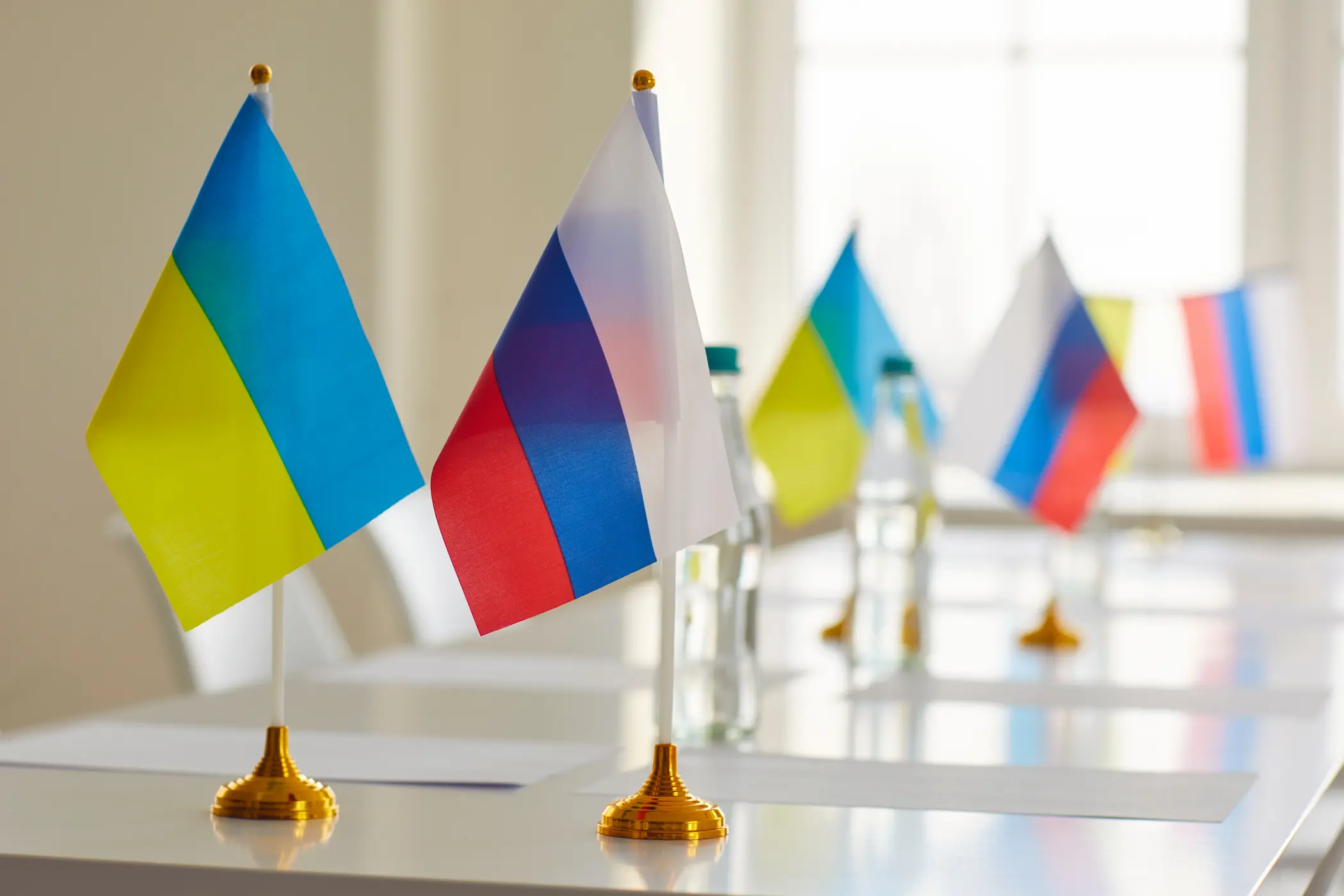
Trump Peace Play: Three Futures for Russia-Ukraine War
Amid Trump’s meetings with Russian & Ukrainian counterparts to reach a prolonged ceasefire, questions arise about the possibility of a successful peace plan occurring between Moscow & Kyiv with a U.S. mediation. Yet, with Putin’s demands from one side and Trump’s ambiguous promises to Zelensky from the other side, will the Ukraine war come to an end?