
Programmes
26 Aug 2026
Economic Outcast: The Limits of U.S. Secondary Sanctions Against a China-Insulated Iranian Economy
On 24 August 2026, the US Treasury announced an economic enforcement campaign under the name Operation Economic Outcast, designating close to 60 entities, individuals and vessels and issuing five unprecedented sectoral determinations under Executive Order 13902.1 Treasury Secretary Scott Bessent described the campaign as a comprehensive economic onslaught intended to sever every artery feeding the Iranian economy, while Iran's Minister of Economy, Ali Madanizadeh, dismissed it as an act of economic terrorism, insisting that his country has its own instruments and knows the rules of the game.
The significance of the campaign extends well beyond the number of designations. Washington is shifting its weight away from penalising Iranian entities and towards pursuing intermediaries in third countries: independent Chinese refineries, Gulf trading and exchange houses, and settlement channels operating outside the dollar. Yet the record since 2012 reveals a pattern that is close to invariable: sharp friction imposed from the American side, followed by structural Iranian adaptation, in which Iranian exports survive and the American stock of coercive power erodes.
This analysis therefore sets out to dissect the legal architecture of the campaign and identify what is genuinely new within it, then to test its six enforcement tracks against the structural obstacles Tehran has accumulated across four successive waves of sanctions, and finally to estimate the likely impact on the volume of Iranian exports, on the discount imposed on its crude and on the price path, while measuring the cost of compliance that financial and logistics hubs will have to absorb.
Programmes
29 Apr 2026
War, Pressure and Policy: Europe’s Gradual Turn on Israel
In recent years, European perceptions of Israel have undergone a noticeable shift, driven primarily by the war on Gaza following the events of 7 October 2023. What began as growing unease has gradually translated into a marked decline in public favourability across Europe, with many viewing Israel’s military response as disproportionately severe. This transformation in public sentiment, however, has not been immediately mirrored at the political level. European leaders have largely maintained a cautious and diplomatic posture, continuing to balance expressions of concern with longstanding commitments to “Israel’s right to self-defence”. That stance has begun to erode more recently. The regional escalation involving Iran has introduced direct economic and strategic pressures on Europe, prompting a more assertive, albeit still measured, response from policymakers. At the same time, political changes within Europe, including the emergence of leaders less firmly aligned with Israel, such as Hungary’s Prime Minister Péter Magyar, signal a gradual recalibration rather than a sudden rupture in policy.
This evolving landscape became particularly visible in late April 2026, when discussions emerged within the European Union around suspending the EU–Israel Association Agreement. Although the proposal did not advance, with key member states such as Germany and Italy blocking consensus, it nonetheless highlighted the extent to which previously unthinkable measures are now part of the policy debate. While the suspension of the agreement would carry significant economic consequences for Israel, its implementation remains constrained by the European Union’s (EU) internal political dynamics. Yet the inability to pursue this option does not imply a lack of leverage. The European Union retains a range of alternative instruments that can be deployed to exert pressure on Israel.

Programmes
13 Apr 2026
Blank Rounds: Can Trump Blockade the Strait of Hormuz?
President Donald Trump announced that the United States will impose a naval blockade on the Strait of Hormuz after weekend talks to end the Iran war collapsed without a settlement. The Islamabad negotiations, which were intended to turn a tenuous ceasefire into a durable peace and reopen Hormuz to safe navigation, broke down over unresolved disputes on nuclear enrichment, sanctions relief, and control of maritime transit. In response, Trump issued an executive order directing the US Navy to interdict any vessel attempting to transit the strait, with particular focus on neutral and commercial ships that have paid Iranian transit tolls, which the White House now characterises as an illegal extortion regime rather than a lawful fee regime.
Trump’s declaration instantly elevates the conflict from a regional shooting war to a global maritime and energy crisis centred on the world’s most critical oil chokepoint, a waterway just twenty‑one nautical miles across at its narrowest. By pledging to enforce a blockade without United Nations Security Council authorisation, the president has pushed the United States into a legally and operationally contested grey zone, framing the move as necessary to dismantle the Islamic Revolutionary Guard Corps’ grip over the strait and sever a key stream of cryptocurrency and foreign-exchange revenue to Tehran. The administration’s strategy now hinges on whether US naval power, layered secondary sanctions, and sustained diplomatic pressure can actually sustain a prolonged blockade in the face of Iranian asymmetric deterrence. The following analysis, therefore, centers on Trump’s blockade order itself: its operational viability, Iran’s capacity to erode or break it through asymmetric tactics, and the resulting shockwaves for global energy markets, commercial shipping patterns, and regional economic stability.
Programmes
3 Apr 2026
Kharg Island: The Point of No Return
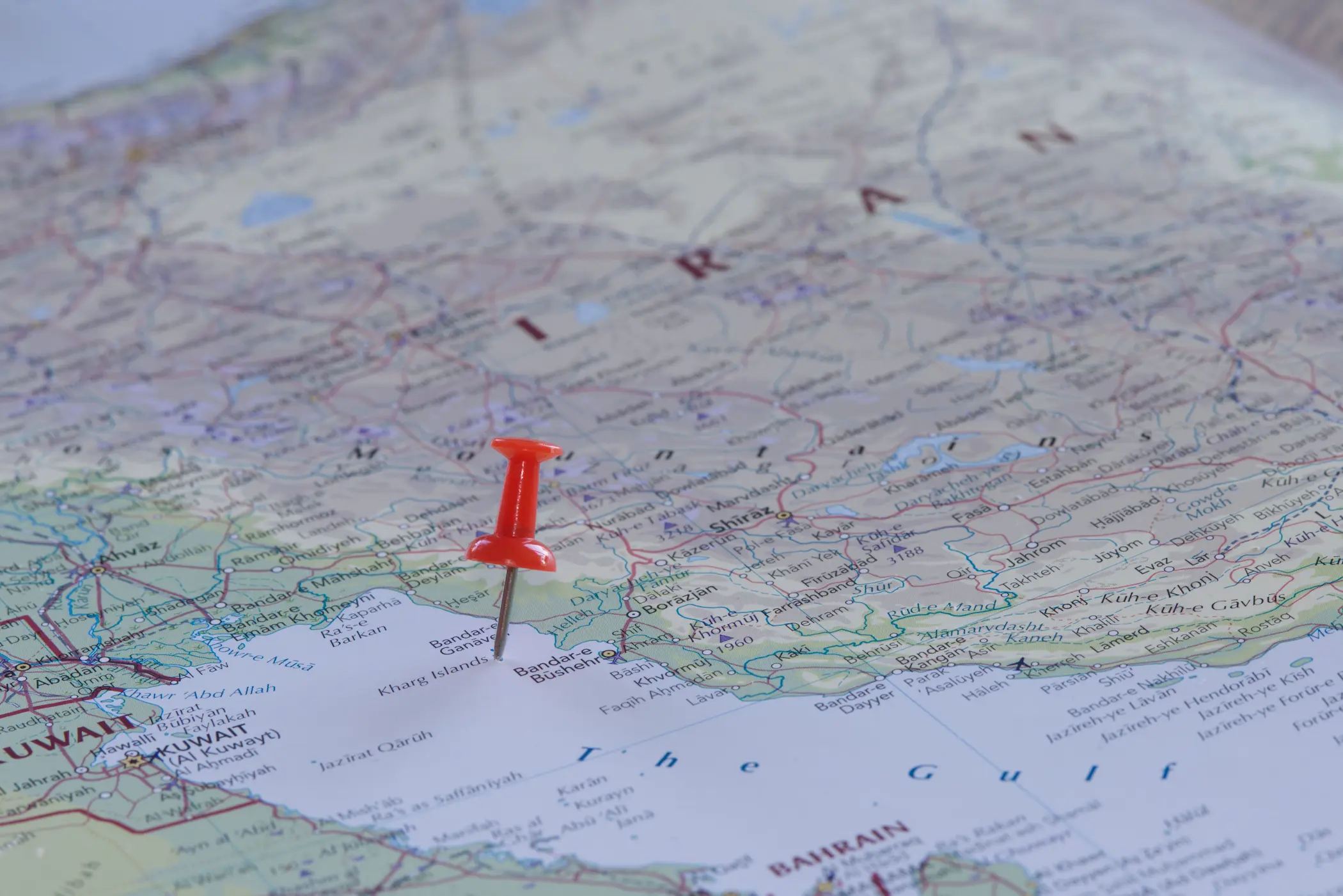
The economic architecture of the Islamic Republic of Iran is defined by a persistent paradox. While decades of international sanctions have systematically reduced its formal integration into global energy markets, the state remains structurally tethered to a remarkably narrow set of export channels. At the absolute centre of this system lies Kharg Island, a strategic node that handles the overwhelming majority of the nation’s crude oil exports. To date, Western policy has focused on regulatory friction, using sanctions to increase transaction costs and discount prices. However, a transition from regulatory friction to kinetic disruption, specifically a scenario where the U.S. or allied strikes disable Kharg Island, would represent a fundamental phase shift.
Such an event would not merely be a temporary supply disruption; it would constitute a systemic rupture in Iran’s primary revenue-generation mechanism. It necessitates the consideration of a critical counterfactual: what occurs when oil ceases to function as the core economic pillar of the state, not through gradual policy shifts, but through an abrupt, physical termination of export capacity? The resulting post-oil environment would trigger a reconfiguration of the Iranian state, moving it from a centralized rentier model to a decentralized, network-based economy of scarcity.
Programmes
24 Mar 2026
The Ripple Effect of the US-Israel-Iran War on the Russia–Ukraine War
The long-standing efforts to end the Russia-Ukraine War were disturbed by the sudden outbreak of the U.S.-Israel-Iran War. The strikes carried out by the United States and Israel against Iran, and their broader spill-overs across the Middle East, have hindered the already difficult peace negotiations between Moscow and Kyiv. This escalation raises concerns about the extent to which the U.S.-Israel-Iran War could have on the broader geopolitical dynamics. This war risks diverting global attention away from efforts to resolve the Russia-Ukraine War and, at the same time, raises concerns about the extent to which it could reshape power dynamics and influence the trajectory of this war.
Programmes
22 Mar 2026
From Partnership to Prudence: China’s Changing Investment Posture in Israel
Economic and geopolitical relations between China and Israel have undergone significant changes following the War on Gaza. Chinese regulatory authorities moved to classify certain areas within Israel under what is known as the Red Category, an official administrative designation that identifies these locations as high-risk investment zones. This classification imposes legal restrictions that prevent the injection of new financial investments into these areas.
As a result, a legal environment has emerged in which Chinese companies rely on security warning protocols and personnel safety considerations as a formal justification for controlling capital flows and suspending the implementation of certain financial obligations under previously signed contracts. This development necessitates a careful examination to understand how these risk assessment mechanisms operate and their tangible impact on the economic relationship between the two countries.
Programmes
18 Sep 2025
An Isolated Israel
Israeli Prime Minister Benjamin Netanyahu recently acknowledged that Israel is entering a phase of economic and political isolation internationally, largely due to its ongoing military actions in Gaza. He warned that this isolation may last for years and insisted that Israel must adapt by becoming more self-sufficient, especially in its weapons manufacturing capabilities. Netanyahu described this shift as moving toward an economy with "autarkic characteristics," a term he said he despises since he has long supported free-market policies. Nonetheless, given potential export bans and economic sanctions, he emphasized Israel's need to be both "Athens and super-Sparta," implying a combination of intellectual and military self-reliance to withstand these challenges.
His comments are a rare admission that Israel faces significant global backlash and diplomatic estrangement due to the nearly two-year war in Gaza. Several Western countries, such as Spain, have cancelled arms deals with Israel over the war, with a U.N. Independent International Commission finding that Israel is committing genocide, and a slew of other countries have officially recognized a Palestinian State.
Netanyahu's remarks mark a rare acknowledgment of the changing international environment around Israel. This mounting isolation not only underscores Israel’s diplomatic challenges but also highlights the growing vulnerabilities within its economy, as sanctions, boycotts, and the loss of arms contracts emerge as direct consequences of its genocide in Gaza.
Programmes
1 May 2025
Rajaee Port Explosions: Could it Disrupt Diplomatic Path Between Tehran and Washington?
The strategically significant Rajaee Port in Bandar Abbas, southern Iran, was rocked by a massive explosion during the third round of Iranian-US talks in Oman on Saturday, April 26 2025, marking a pivotal moment that warrants in-depth analysis. Located near the Strait of Hormuz, the port serves as a critical nexus for Iran's container traffic and plays a crucial role in the country’s foreign trade, especially amid the sanctions imposed on it. Initial reports point to two primary hypotheses regarding the cause of the incident: the first suggests an accidental explosion resulting from mishandling hundreds of tons of a vital chemical substance, likely used to fuel Iran’s ballistic missile programme, reminiscent of the 2020 Beirut explosion; the second, however, raises the possibility of deliberate sabotage, potentially orchestrated by Israel with the intent to disrupt the Iranian-American diplomatic track. The timing of the explosion, coinciding with intense diplomatic efforts, adds further weight to its potential ramifications.
Regardless of the final cause, an explosion of such magnitude exposes significant vulnerabilities in Iran's security and management systems, reverberating across the entire region. It casts a shadow over diplomatic efforts aimed at addressing nuclear tensions and other unresolved issues. This commentary explores the potential post-incident scenarios, the implications of each hypothesis

Programmes
10 Mar 2025
Sanctions and Self-Sufficiency: The Evolution of Iran’s Manufacturing Sector
For decades, Western countries, especially the United States (U.S.), used sanctions as a common tool to promote democracy and prevent certain nations from developing nuclear or chemical weapons. Iran, due to its efforts to develop nuclear weapons and other advanced technological weapons, has become a prime example, facing one of the strictest sanctions regimes in the world since the 1979 Iranian Revolution. These measures including the U.N. Security Council embargoes in 2007 and 2015, have had a major impact on Iran’s economy. However, alongside the economic hardship, sanctions have also spurred the growth of a domestic manufacturing sector, especially in defence and military industries, demonstrating the country’s capacity to adapt to hardship.

Programmes
2 Dec 2024
Remontada?! How Will Syrian Armed Factions Redefine the Regional Landscape
On Wednesday, Nov. 27, 2024, Syrian armed factions launched a coordinated offensive targeting regime-controlled sites and militia positions in the western countryside of Aleppo, northern Syria. This operation marks the most significant joint military action since 2016, involving key groups such as “Hay'at Tahrir Al-Sham” (formerly Jabhat Al-Nusra). In a video statement, the Joint Operations Room declared the initiation of the “Deterrence of Aggression” operation. The announcement emphasised that the offensive was necessitated by recent regime movements threatening civilian areas, framing the operation as a defensive imperative rather than a strategic choice. The statement underscored that this action was in direct retaliation for the Syrian regime's bombardment of north-western regions, signalling a potential escalation in the conflict dynamics of the region.

Programmes
10 Oct 2024
BRICS BRIDGE: Will Russia Reshape the Global Financial Order?
The world is currently experiencing rapid and significant geopolitical shifts, with rising global powers like the BRICS Group leading the charge to recalibrate the balance of influence within the Global Financial System. The recent expansion of the BRICS Group, now including 10 nations following the accession of Egypt, Saudi Arabia, the United Arab Emirates (UAE), Iran, and Ethiopia, underscores their growing influence. This bloc is unwavering in its determination to challenge the dominance of the U.S. dollar and to overhaul a global financial infrastructure that it sees as deeply flawed. The BRICS nations argue that the current system, with its structural flaws, serves as a tool for exerting political and economic pressure and contributes to the fragmentation of economies and regions by weaponizing trade and financial constraints.
The BRICS+ nations acknowledge that Dollar Dominance is underpinned by entrenched factors, most notably, the U.S. military power and global confidence in the U.S. legal and regulatory frameworks. Nevertheless, these nations are actively exploring alternatives to reduce their reliance on the dollar, aiming to bolster their financial sovereignty.
In pursuit of this goal, BRICS has ramped up efforts to reduce dependence on the dollar by employing innovative mechanisms. Chief among these is the proposal to issue a new, collective currency and establish a multilateral digital settlement and payment platform, dubbed as the “BRICS Bridge.” This platform is poised to foster greater trade integration among member states, particularly as some nations within the bloc, like Russia, face sanctions and exclusion from global systems such as the SWIFT System -The Society for Worldwide Interbank Financial Telecommunication-.
All eyes are now on the upcoming BRICS Summit, set to take place in October in Kazan. The summit is expected to showcase tangible steps toward implementing these initiatives, which could potentially redefine the structure of international trade and finance. The critical question remains: Will Russia and its BRICS allies break the dollar's stranglehold over the global financial order?
Programmes
6 Feb 2024
The Economic Impacts of Boycotts Against Israel and Supporting Companies
The documented history of employing a boycott as an economic weapon traces its origins to 432 B.C., Athens enacted the Megarian Decree, named after the city of Megara in ancient Greece. This decree comprised a series of economic sanctions, with a pivotal measure prohibiting Megarian goods from entering Athens. It extended to restricting Athenian ships from docking in Megara and, ultimately, barred Megarians from trading within the Athenian market.
In response, Megara and its allies in the Peloponnesian League took retaliatory economic actions, prominently featuring a boycott of Athenian goods. This reciprocal economic pressure adversely affected both entities, culminating in the onset of the Peloponnesian War. Lasting approximately 27 years, this conflict subsequently impeded the growth and continuity of Greek civilisation.
The following centuries witnessed the global utilisation of economic boycotts for various political purposes, primarily targeting the party subject to the sanctions, causing it to abandon a particular policy. Noteworthy instances include the Jews' first-century B.C. boycott of Roman goods, a protest against Roman occupation. In the 16th century, the Dutch Republic boycotted Spanish goods in opposition to Spanish rule. Additionally, during the 18th century, the U.S. colonies boycotted British goods as a protest against exorbitant taxes.
Contrary to common belief in the Arab world, the weaponisation of economic boycotts is not a recent phenomenon. Over the past two centuries, numerous academic studies have comprehensively examined and analysed its impact on both the boycotting and boycotted economies. These studies aim to gauge the effectiveness of economic boycotts in realising their intended goals.
The tactic of economic boycotts made its debut in the context of the Arab-Israeli conflict in 1922, when Palestinian Arab leaders initiated a boycott targeting Jewish-owned businesses in Palestine, aiming to inflict economic harm upon the Jewish population. These boycott attempts persisted sporadically throughout the 1930s and 1940s, with a notable instance occurring in 1936 when Palestinian Arab leaders advocated for a comprehensive boycott of all things associated with Jewish identity, even resorting to physical violence against Arabs who disregarded the boycott. Despite these efforts, the boycott proved unsuccessful, given the significant reliance of the Palestinian population on Jewish professionals such as lawyers, doctors, and hospitals.
Subsequently, the boycott assumed a regional dimension in December 1945 when the six states comprising the Arab League jointly issued the initial call for an economic boycott against the Jewish community in Palestine. This declaration went beyond mere encouragement and urged all Arab countries, regardless of their League membership status, to prohibit the trade of Jewish products.
In 1946, the situation evolved with the Arab League establishing the Permanent Boycott Committee, intending to heighten the implementation of the boycott. Despite these efforts, the boycott's lack of success became evident, as outlined in the first annual report of the Boycott Committee.
Following the committee's shortcomings, the League swiftly bolstered its structure, transforming it into the Central Boycott Office. Headquartered in Damascus, it established branch offices in every member state of the Arab League. The pivotal role of the county commissioner was instituted to lead the office, accompanied by appointed deputies serving as liaison officers accredited by each member state of the Arab League.
The Central Office in Damascus assumed the pivotal role of coordinating the boycott in tandem with its affiliated offices. It was responsible for presenting regular reports to the Council of the Arab League. Starting from 1951, semiannual meetings were scheduled to synchronise boycott policies and formulate blacklists of individuals and companies breaching the boycott. The punitive measures were executed locally, with each member state implementing decisions through legal and administrative executive procedures.
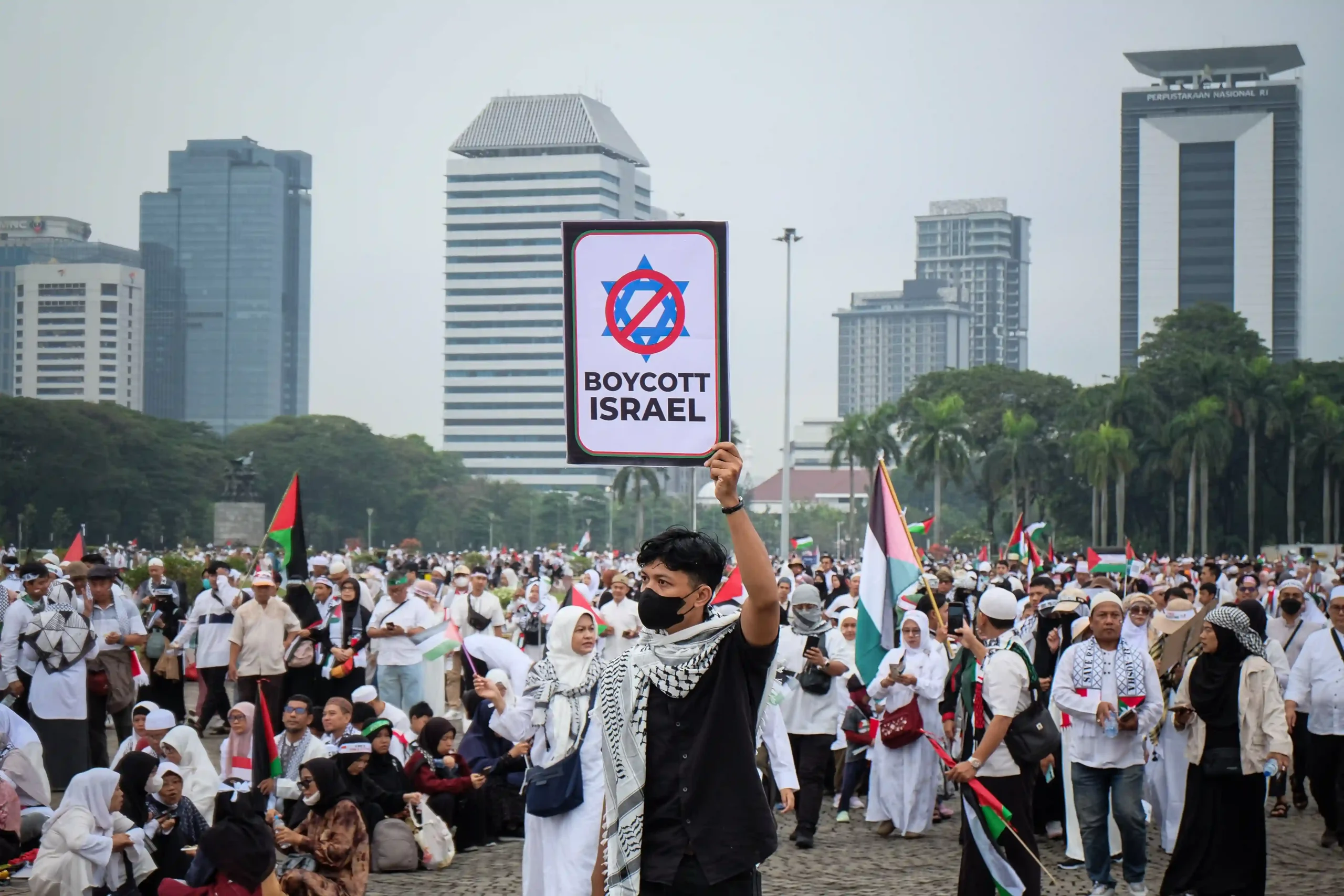
From 1951 to the present moment of composing this analysis, calls for boycotts have been recurrent with each political conflict between Palestinians and Israelis. They have been wielded as a means of resistance against Israeli occupation and its perceived unjust policies toward the Palestinian population. However, these calls have generally manifested in three distinct patterns, as explained below.