

Programmes
3 Mar 2026
Between Maduro and Khamenei: Has Artificial Intelligence Replaced Human Intelligence?
The first quarter of 2026 marked a strategic turning point in the deployment of hard power and the management of geopolitical interaction. For decades, computing technologies remained largely confined to operational support roles, such as processing intelligence data or guiding precision munitions. January and February, however, witnessed a structural shift as military planning moved away from human-dependent decision cycles toward managing autonomous algorithmic kill chains. This transformation was formally articulated in the “Artificial Intelligence Acceleration Strategy” issued by the United States Department of War (DoW) on Jan. 9 2026. The directive aims to entrench American military dominance by rapidly integrating AI across warfighting, intelligence, and enterprise operations, while transforming the defence apparatus into what officials describe as an “AI-first” military structure.
This doctrine rested on strict operational parameters prioritising overwhelming lethality, rapid execution, and objective-driven systems that place mission success above all other considerations, deliberately excluding social and political variables from algorithmic decision cycles to ensure decisive superiority in battlefield decision-making. This shift was reflected in two unprecedented operations: the capture of Venezuelan President Nicolás Maduro during Operation Absolute Resolve in January 2026, and the decapitation strike targeting Iran’s Supreme Leader Ayatollah Ali Khamenei during Operation Silent Holy City, conducted within Operation Epic Fury in February 2026.
These operations reflected the integration of large language models, dynamic data architectures, tactical assessment algorithms, and autonomous unmanned systems, fundamentally transforming the speed, precision, and geopolitical cost calculus of neutralising high-value targets. Together, they signal that AI has moved beyond a supporting analytical role to become a strategic architect of the battlespace and a driver of kinetic execution.
Programmes
16 Oct 2025
Algorithms of Genocide: From Silicon Valley to the Gaza Strip
The tools of twenty-first-century warfare are no longer confined to conventional weapons such as missiles, tanks, and aircraft. They have expanded to encompass cloud-computing platforms, artificial-intelligence systems, and data-processing capabilities developed and managed by major U.S.-based technology corporations, including Microsoft, Google, and Amazon. These companies have become central pillars in the conduct of modern digital warfare, with their decisions and policies exerting profound geopolitical influence and forming an integral component of contemporary global power dynamics.
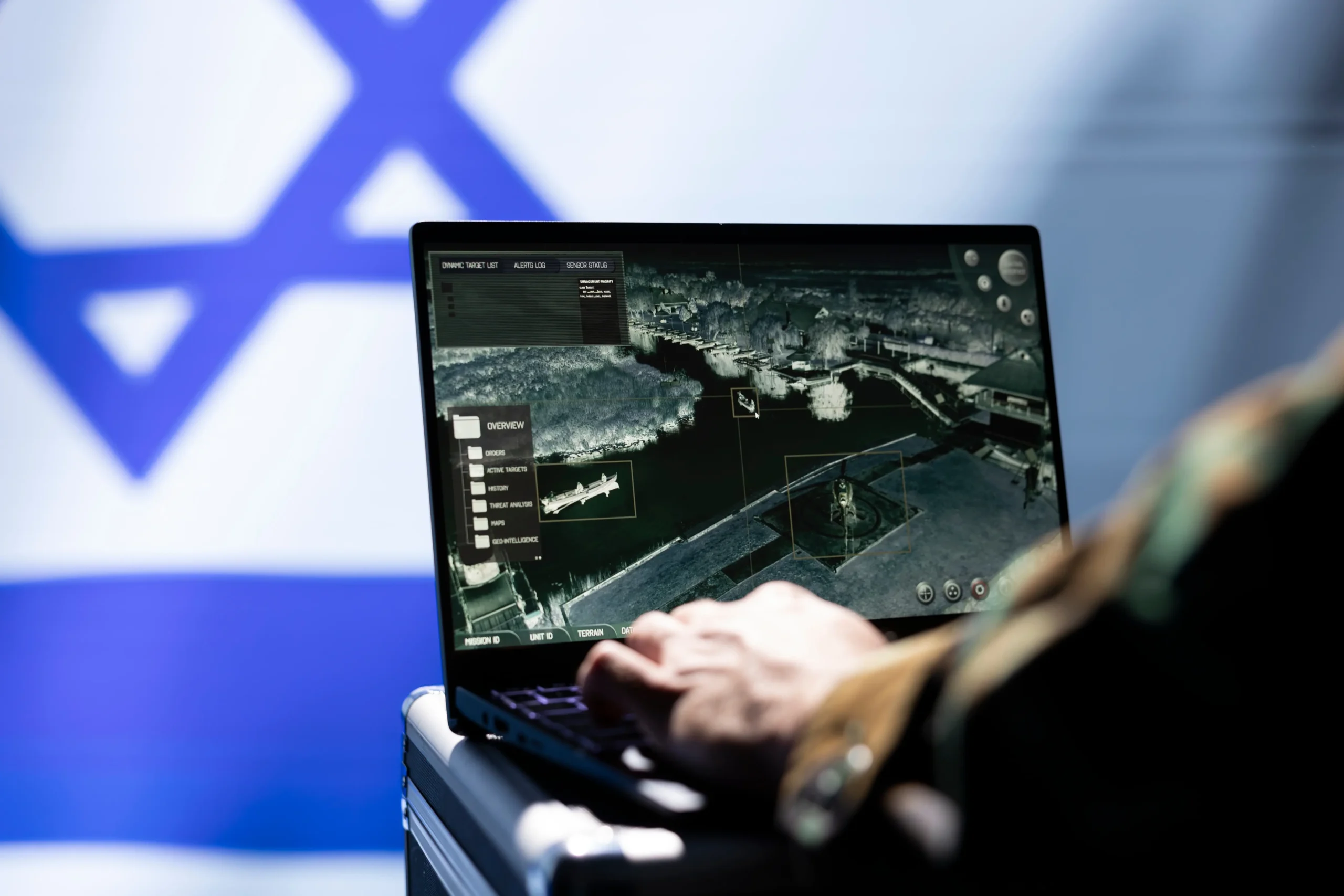
In this context, the relationship between commercial technology corporations and the Israeli military has undergone a profound transformation, moving beyond the traditional model of supplying hardware and software to establish digital infrastructure as a central instrument in the management of modern conflict, most notably during the war on Gaza. A new paradigm of integration between the military and the private sector has emerged, in which commercial digital systems have become an inseparable component of military capability, blurring the boundaries between market-driven services and state security architectures.
The management of the global narrative surrounding humanitarian catastrophes, including the confirmed famine and persistent reports of atrocities, has become inseparable from the content-governance policies imposed by major digital platforms controlled by technology conglomerates. These platforms frequently amplify official narratives while minimising or obscuring the magnitude of famine and conflict. At the same time, they enable advanced surveillance mechanisms that restrict or silence independent media operating within conflict zones.
The war in Gaza has underscored the dual and increasingly intricate role of major technology corporations, particularly Google (Alphabet Inc.) and Microsoft Corporation, in both modern warfare and global information control. These entities operate within a mutually reinforcing dynamic, providing specialised cloud-computing and artificial-intelligence infrastructure that enables unprecedented levels of lethal military operations and mass surveillance across Gaza and the occupied territories. Concurrently, they deploy advanced mechanisms of information control, encompassing internal content moderation, algorithmic bias, and data suppression, to recalibrate public narratives and shield corporate power from accountability.
This analysis, therefore, examines the role of technology corporations in shaping the dynamics and repercussions of the conflict in Gaza, exploring how they contribute to the engineering of the informational, political, and humanitarian landscape within the framework of contemporary warfare. In this process, these corporations are transformed from ostensibly neutral service providers into active participants within the conflict’s infrastructural ecosystem.