
Programmes
17 Jun 2026
European Anxiety Over Tech Sovereignty: What Should be Done?
Europe has spent the last few years watching its tech anxiety go from background hum to full orchestra. It's not hard to see why. In June 2026, France's intelligence services announced they were dropping Palantir, the American data analytics firm long embedded in European defence and policing work, in favour of a domestic provider, explicitly citing the need for "strategic autonomy." Germany's military reportedly will not touch Palantir at all, and the UK is now fielding parliamentary debates over a quarter-billion-pound contract with the company, partly because, as one legal analysis bluntly put it, even European data sitting in European data centres can still be pulled by U.S. authorities under American law, contracts or no contracts. It's the kind of detail that makes "data sovereignty" sound less like a policy buzzword and more like a genuine catch.
Then, just days before this was written, the U.S. government ordered Anthropic to cut off access to its most advanced AI model, Mythos, for anyone who wasn't a U.S. citizen, citing national security concerns. Anthropic's response was to switch the model off for everyone, Americans included, rather than build a citizenship checkpoint overnight. The episode lasted only days, but it landed exactly where Europe's anxieties already live: the frontier of AI doesn't just sit outside Europe's control, it sits inside one government's control, and that government can flip a switch.
None of this means Europe should panic, or try to build its own version of everything from scratch by Thursday. As the cost estimates make clear, chasing full autonomy across the entire AI stack would run into the trillions of euros, well past the point of being realistic. The more sensible response, is for Europe to get serious about which parts of the stack actually need to be sovereign, where partnership is a perfectly good substitute for ownership, and where its real strength, regulatory leadership, can be used deliberately rather than as a consolation prize. Sovereignty, in other words, isn't about owning everything. It's about knowing exactly what you can't afford to depend on.
Programmes
21 May 2026
Digital Sovereignty: A World Governed by Algorithms
By 2101, the concept of democracy and the architecture of governance will undergo a profound transformation that moves far beyond traditional mechanisms such as ballot boxes and political rhetoric. In their place will emerge a system built around transparent digital interfaces that display the outputs of exceptionally powerful algorithms entrusted with making consequential decisions on behalf of societies. The central dilemma in political philosophy will no longer concern who holds the right to vote. Instead, the debate will shift toward a far deeper and more consequential question: who will possess the authority to design the code that governs human destinies and shapes control over the world’s resources?
Meanwhile, Nada sat in a soaring glass chamber overlooking the heart of the city, where vast digital walls shimmered with data visualisations and undulating lines. The space was known as the Pulse of the People Hall, the neural hub through which algorithms monitored public sentiment in real time. The main display contained no reference to parties or candidates; instead, it presented dense layers of complex code and finely calibrated colour indicators that measured levels of fear, anger, satisfaction, and trust, using the same precision as that used to measure temperature and humidity.
Nada released a heated exhale and murmured to herself, “All of this happened because democracy eroded from within.” She had studied at university what historians came to describe as the Age of Political Chaos in the late twenty-first century, a period in which elections degenerated into open arenas of cyber warfare, driven by legions of automated bots and engulfed by unending torrents of fabricated news. During that era, borderless capital asserted dominance over every dimension of political life, purchasing electoral campaigns, opinion polls, and platforms for public debate. Confronted with successive climate, pandemic, and financial crises, elected governments stood paralysed, absorbed by internal rivalries far more than by the act of governing.
At that pivotal moment, fatigued governments and weary societies alike came to regard a single path as the only rational recourse: “Let the machine decide.” What first emerged was the Comprehensive Algorithmic Governance System, an advanced suite of frameworks designed to support decision-makers in interpreting data and reaching swifter, more objective judgements. These systems were introduced to the public as neutral entities: unconcerned with transient popularity, untroubled by ballot boxes, and untouched by private interests. Yet what began as an auxiliary tool soon transformed into the primary centre of authority and, ultimately, the sole arbiter of decision-making.
Programmes
20 May 2026
A Fractured Kingdom: Political Fragmentation and the Crisis of Trust in Post-Election Britain
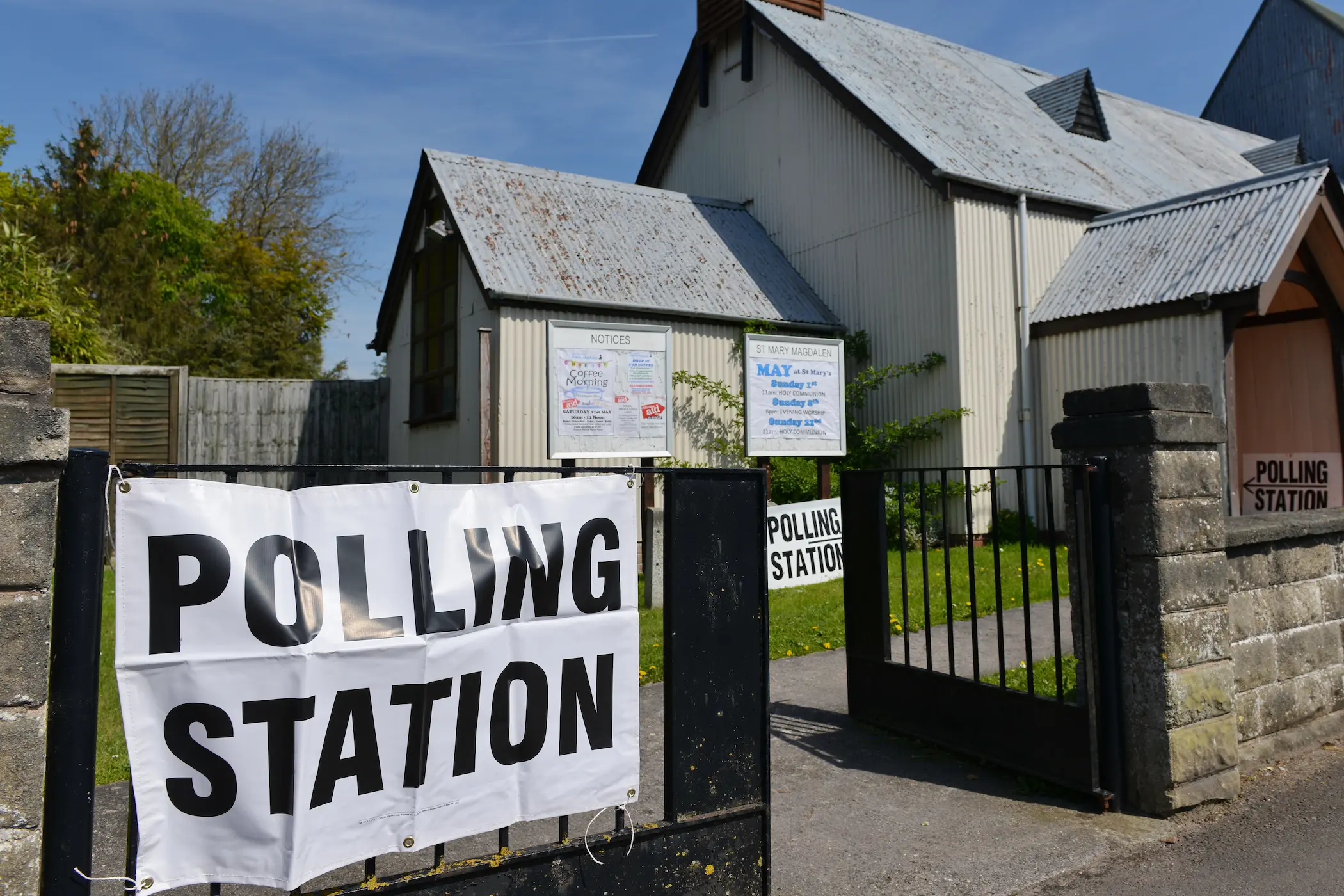
The results of the 2026 UK local elections while shocking to some, are overall not surprising. After all, it was projected the Labour Party was going to incur significant losses, while Reform UK was projected to win big, of which both projections were somewhat accurate. Moreover, despite a poor showing for the Conservative Party, they did manage to regain a few councils back from the Labour Party such as Westminster, while the Liberal Democrats and the Green Party managed to have positive results. The extent of the Labour Party losses extends beyond the England elections, as they managed to lose their majority in the Welsh parliamentary elections as well as lose seats in the Scottish parliamentary elections as well. These results are a sign that the UK political system is no longer just Labour vs. Conservative but now the political structure of the UK has been entirely realigned to reflect a fragmented system.
The election results already have several implications for the country. These implications include the confirmed fragmentation of the British political system and lack of trust and confidence in the current government. Naturally, these implications spell trouble for Prime Minister Sir Keir Starmer and the Labour Party.

Programmes
19 May 2026
The Collapse of Trust in the Digital State
For decades, the systems that governments, banks, universities, and public institutions built to verify who someone is rested on a single foundational assumption that personal information, documents, and physical characteristics were difficult to convincingly fake. A Social Security number combined with a date of birth and a driver's license was, for most practical purposes, enough to establish identity.
That assumption has now been broken. The US recorded its highest number of data breaches in 2025 since tracking began, identity theft reports to the Federal Trade Commission rose nearly 20% year over year, and global fraud losses now exceed $534 billion annually. Generative AI, the same technology powering productivity tools and creative applications across the economy, has become a force multiplier for those seeking to deceive digital systems at scale. The speed, sophistication, and accessibility of these tools mean that the problem is no longer confined to the margins of financial crime. It has moved to the centre of a broader question about whether the digital infrastructure modern states depend on to function is as reliable as they have assumed.
Programmes
15 May 2026
US-China Summit: Not Peace, Rivalry Management
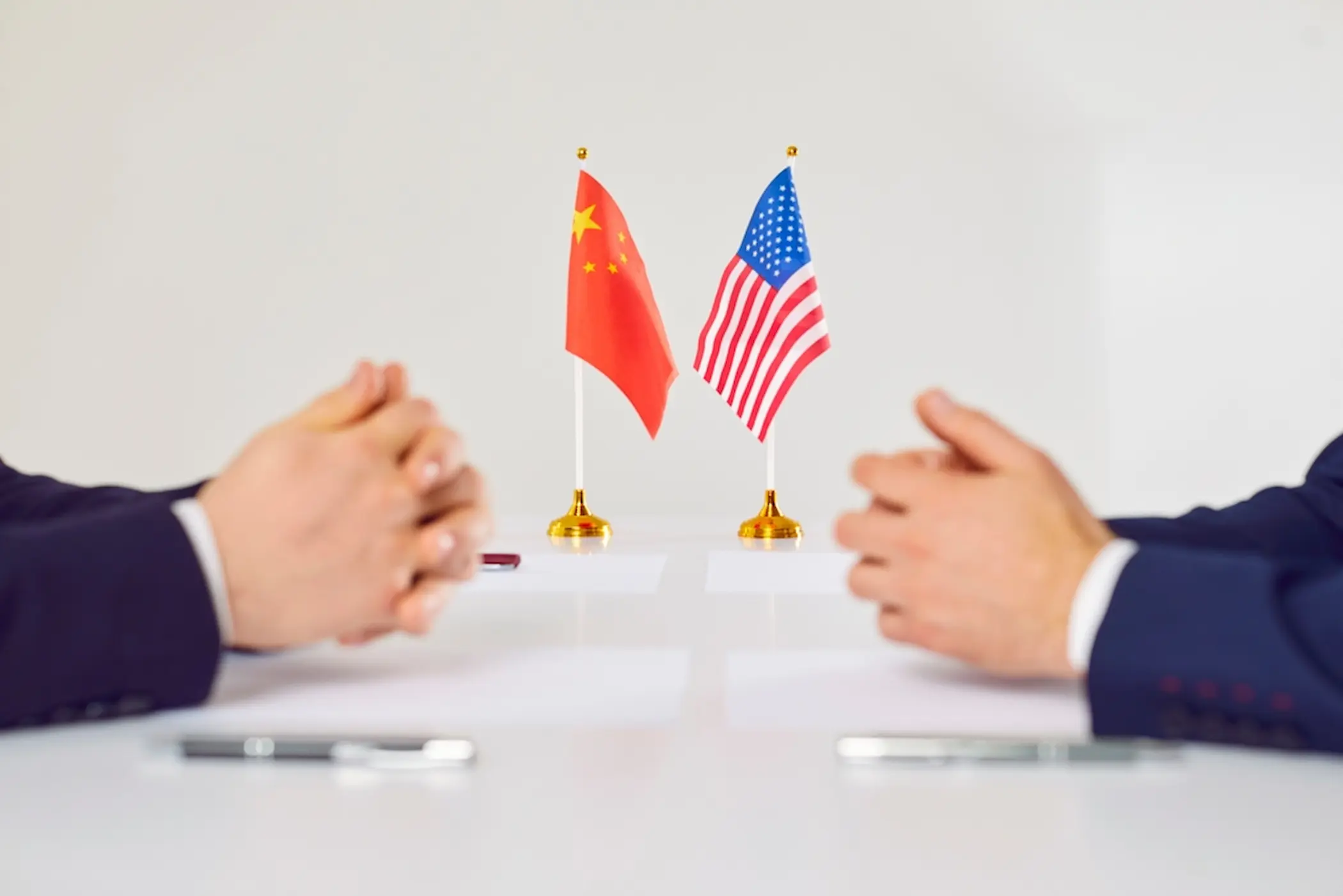
In the early hours of May 13, US President Donald Trump travelled to China to engage in high stakes talks with his Chinese counterpart Chinese President Xi Jinping. These talks are taking place in the context of heightened global instability stemming from conflicts such as the US-Israel-Iran War and the economics shocks stemming from this conflict. Within this context, both governments are set to engage in conversations aimed at stabilizing the US-China relationship and partaking in strategic dialogue regarding geopolitical and economic uncertainty. This summit can potentially shape the future of the US-China relationship as the outcome of these talks can shape the economic and security relationship between the two nations and their partners in the long run. Therefore, an exploration into this summit is needed and will focus on explaining the reason the summit is happening now, the mindset of the parties entering the summit, the topics on the agenda, and the potential outcomes of the summit.
Programmes
11 May 2026
Europe: NATO, U.S. Retrenchment, and the Cost of Strategic Autonomy
Discussion surrounding a potential United States (U.S.) withdrawal from NATO has remained one of the defining debates since the beginning of Donald Trump’s second presidency. In recent months, particularly following the war involving the U.S. and Israel against Iran, tensions within the alliance have intensified, with President Trump openly criticising several European NATO allies and questioning their value to the alliance. As a result, the central question is no longer limited to whether Washington could formally leave NATO. Increasingly, attention should shift toward a more pressing issue: could Europe manage its security independently without substantial American support? What would be the strategic, military, and economic cost of such a shift, and would European states be capable of rebuilding or reorganising their defence capabilities quickly enough to confront emerging threats?
Importantly, despite the significant legal, political, and institutional constraints facing any U.S. president seeking to withdraw from NATO entirely, Washington could still adopt alternative approaches that stop short of formal withdrawal while substantially reducing its role within the alliance. Such measures could include lowering financial contributions, scaling back troop deployments across Europe, or withdrawing critical weapons systems and strategic capabilities currently provided by the U.S. In such a scenario, how vulnerable would Europe become, and how prepared would it be to fill the resulting gaps?

Programmes
7 May 2026
How Wartime Purges Are Reshaping U.S. Military Doctrine?
No nation, no people, and no institution has been shielded from the turmoil unleashed by the US-Israel-Iran War. Yet perhaps the most surprising upheaval has unfolded not on the battlefield, but within the ranks of the world's most powerful military. Secretary of War Pete Hegseth has launched a sweeping purge of its highest ranks, ousting top officials in a manner more reminiscent of an authoritarian regime consolidating power than a democracy safeguarding its national security.
This restructuring raises unsettling questions about the road ahead. Is Hegseth reshaping the military to serve a political agenda rather than a strategic one? Is Hegseth attempting to protect his position? Is there significant internal resistance to the War? And perhaps most critically — who, ultimately, does this new military answer to?
Programmes
6 May 2026
The UK Local Elections: Final Nail in the Coffin for the Labour Party?
The 2024 General Election in the United Kingdom saw history being made, as the Labour Party under the direction of Sir Keir Starmer scored a landslide victory over the Conservative Party. Despite this landslide victory and the promise of significant change following years of Conservative Party turmoil, the Premiership of Starmer has not been smooth. Prime Minister Starmer’s term has been littered with major policy U-turns, political scandal, and an increase in support for populist movements. Naturally, this has contributed to a loss in confidence in Starmer’s government and leadership abilities, with many in the House of Commons and the British public questioning the government’s judgment, confidence, and competence.
To add insult to injury, the Labour Party lost the Gorton and Denton byelection (a seat held by the Labour Party for 100 years) and is still suffering from the Mandelson scandal, which further contributed to further loss of trust in the system. As the local elections are fast approaching and Starmer’s approval continues to plummet, the question remains: will a loss in these local elections be the final nail in the coffin for the Labour Party and Starmer?

Programmes
4 May 2026
The Consequences of Social Media and Memes as a Theatre of War
War is often fought on numerous battlefronts with state of warfare constantly evolving. In the case of the US-Israel-Iran War, drone and economic warfare are primarily tools of battle between the warring sides with the possibility extension to the seas following President Donald Trump’s proclamation of a naval blockade on the Strait of Hormuz. Although the primary theater of war in this conflict has been the skies with an impending theater about to open in the seas of the Gulf, there is another more unconventional theater that has been operating since the beginning of the war, the theater of social media. Since the beginning of the war both the US and Iran have used memes and social media platforms such as X and Instagram as propaganda tools to attack each other’s credibility and shift the war narrative in their favor by engaging wider audiences.
The purpose of this analysis is to explore the idea behind how social media and memes opened a new theater of war between the US and Iran since the start of hostilities in February 2026 and its consequences. This exploration is based on the idea the use of social media and memes transforms the individual from a spectator to active participant in the conflict, while also normalizing violence through humor. Moreover, by transforming social media into a theater of war, the belligerents transform the concept of war into an aesthetic, especially through the US military and White House’s use of social media and memes.

Programmes
29 Apr 2026
War, Pressure and Policy: Europe’s Gradual Turn on Israel
In recent years, European perceptions of Israel have undergone a noticeable shift, driven primarily by the war on Gaza following the events of 7 October 2023. What began as growing unease has gradually translated into a marked decline in public favourability across Europe, with many viewing Israel’s military response as disproportionately severe. This transformation in public sentiment, however, has not been immediately mirrored at the political level. European leaders have largely maintained a cautious and diplomatic posture, continuing to balance expressions of concern with longstanding commitments to “Israel’s right to self-defence”. That stance has begun to erode more recently. The regional escalation involving Iran has introduced direct economic and strategic pressures on Europe, prompting a more assertive, albeit still measured, response from policymakers. At the same time, political changes within Europe, including the emergence of leaders less firmly aligned with Israel, such as Hungary’s Prime Minister Péter Magyar, signal a gradual recalibration rather than a sudden rupture in policy.
This evolving landscape became particularly visible in late April 2026, when discussions emerged within the European Union around suspending the EU–Israel Association Agreement. Although the proposal did not advance, with key member states such as Germany and Italy blocking consensus, it nonetheless highlighted the extent to which previously unthinkable measures are now part of the policy debate. While the suspension of the agreement would carry significant economic consequences for Israel, its implementation remains constrained by the European Union’s (EU) internal political dynamics. Yet the inability to pursue this option does not imply a lack of leverage. The European Union retains a range of alternative instruments that can be deployed to exert pressure on Israel.
Programmes
28 Apr 2026
Execution for an Antenna: Starlink, Sovereignty, and Iran’s Internet Doctrine
When governments shut down the internet, the standard justification is security, and the standard assumption is that the measure is temporary. Iran has tested both of those assumptions to their breaking point. Its nationwide internet blackout is now the longest ever imposed on an entire population, and Iranian authorities have simultaneously passed legislation making possession of a satellite internet terminal a criminal offence punishable by execution. These two facts are not separate policies responding to separate pressures. They are expressions of a single, long-prepared doctrine of information sovereignty, one in which connectivity is not a public utility to be temporarily suspended but a political instrument to be permanently controlled.
What Iran has built, and what it is now operating at scale for the first time, raises a question that extends well beyond its borders: when a state decides that controlling information is worth more than the economic cost of losing it, and the international system has no answer, what happens next?
Programmes
23 Apr 2026
Challenging Dollar Supremacy: Is the UAE Rethinking the Dollar Order?
For more than five decades, the petrodollar system has served as one of the central structural pillars of American financial supremacy. Since its establishment in the 1970s, the system has anchored the United States’ monetary power by ensuring that Gulf oil exports remain overwhelmingly denominated in United States dollars. Under this arrangement, Gulf producing nations receive American security guarantees in exchange for recycling their oil revenues into US Treasury securities and dollar-denominated financial markets—a self-reinforcing cycle that has entrenched the dollar’s status as the world’s foremost reserve currency and systematically reduced American sovereign borrowing costs for decades.
The United Arab Emirates has, historically, been among the most faithful participants in this arrangement. Its national currency, the dirham, remains pegged to the USD, and its extensive sovereign wealth funds are invested predominantly in dollar-denominated assets. Nevertheless, a convergence of recent developments—an armed conflict in Iran, severe disruptions to Gulf oil exports, and an acute domestic dollar liquidity constraint—has placed the UAE at an unprecedented geopolitical and financial crossroads.