
Programmes
27 Nov 2025
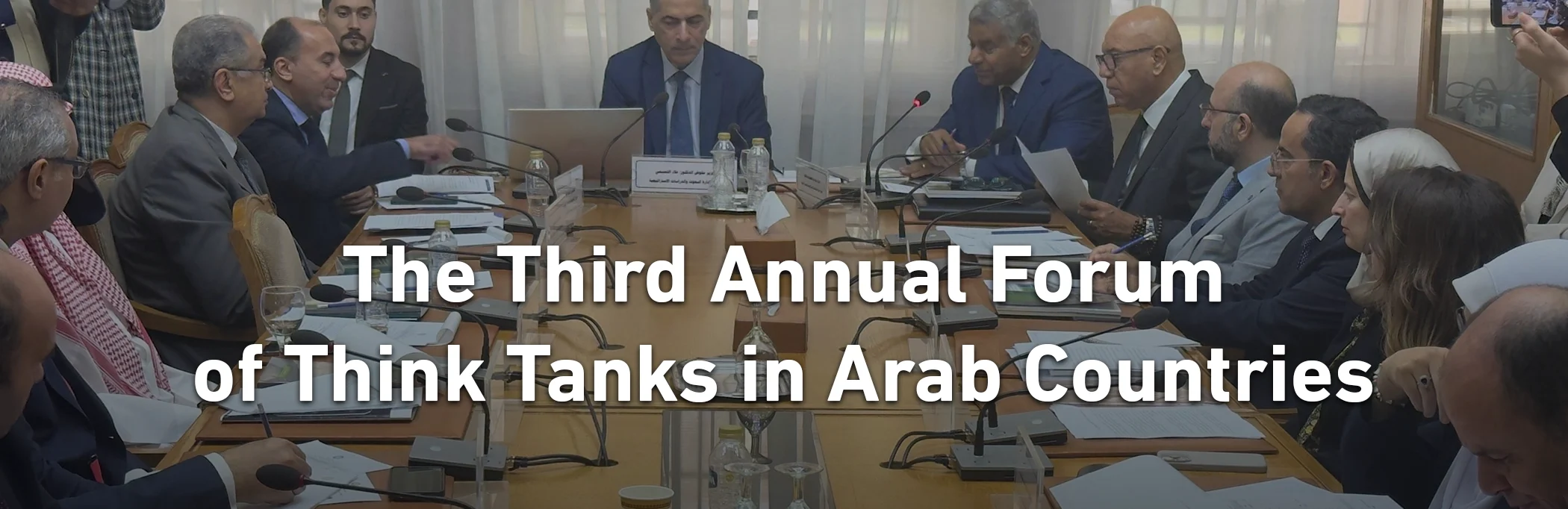
The Third Annual Forum of Think Tanks in Arab Countries
Al Habtoor Research Centre (AHRC) was invited to participate in the Third Annual Arab Think Tanks Forum under the theme: The Role of Think Tanks in Employing Artificial Intelligence (AI) Technologies to Enhance Informed Decision-Making, held on November 23 and 24, 2025, at the headquarters of the General Secretariat of the League of Arab States (LAS). AHRC was represented by its General Manager Dr. Azza Hashem and researchers Farah Aburaya and Rawan Khodeir. The Forum focused on think tanks' utilisation of AI technologies in research and analysis, exploring tools, techniques, and opportunities for the effective usage of AI tools by various think tanks. In addition to the challenges and risks associated with Arab think tanks' use of AI technologies.

Programmes
25 Feb 2025
Emergency Arab Summit: The End of Gaza’s Suffering?
The upcoming emergency Arab summit in Cairo on March 4, 2025, occurs amid widespread regional and global condemnation of U.S. President Donald Trump's proposal to "take over" the Gaza Strip, transform it into what he claims will be the "Riviera of the Middle East," and resettle Palestinians elsewhere. This plan, though predictably outlandish, catalyses a gathering fraught with both peril and potential as it introduced uncertainty into the delicate ceasefire negotiations between Israel and Hamas. There are growing concerns that it may derail discussions for the second phase of the truce, which seeks to end the 15-month-long war.
Cairo finds itself not merely hosting a summit, but rather presiding over a critical juncture, one that will test the very foundations of Arab solidarity and expose the vulnerabilities inherent in a region perpetually teetering on the brink. This summit is not simply about addressing the Palestinian issue; it is about confronting a blatant disregard for Palestinian rights and a cynical manoeuvre that threatens to unravel any semblance of regional stability.
The summit’s raison d'être is clear to construct a unified Arab front against this displacement agenda and, more broadly, to reaffirm a collective commitment to the Palestinian cause. However, the very notion of “Arab unity” is itself a historically fraught concept, often more aspirational than actual. Past summits have showcased deep divisions and diverging national interests, rendering collective action elusive. Cairo must navigate these fault lines, leveraging the palpable outrage over the displacement proposal to forge a genuine consensus. The challenge lies not only in articulating a unified stance but in ensuring its practical implementation, translating rhetorical solidarity into concrete actions. This summit will serve as a litmus test for the Arab League’s relevance and capacity to act as a cohesive force in the face of external pressures and internal fissures. The spectre of past failures looms large, demanding a demonstrable shift from pronouncements to tangible outcomes.