
Programmes
2 Jul 2025
Trump’s Control Over His Party Falters
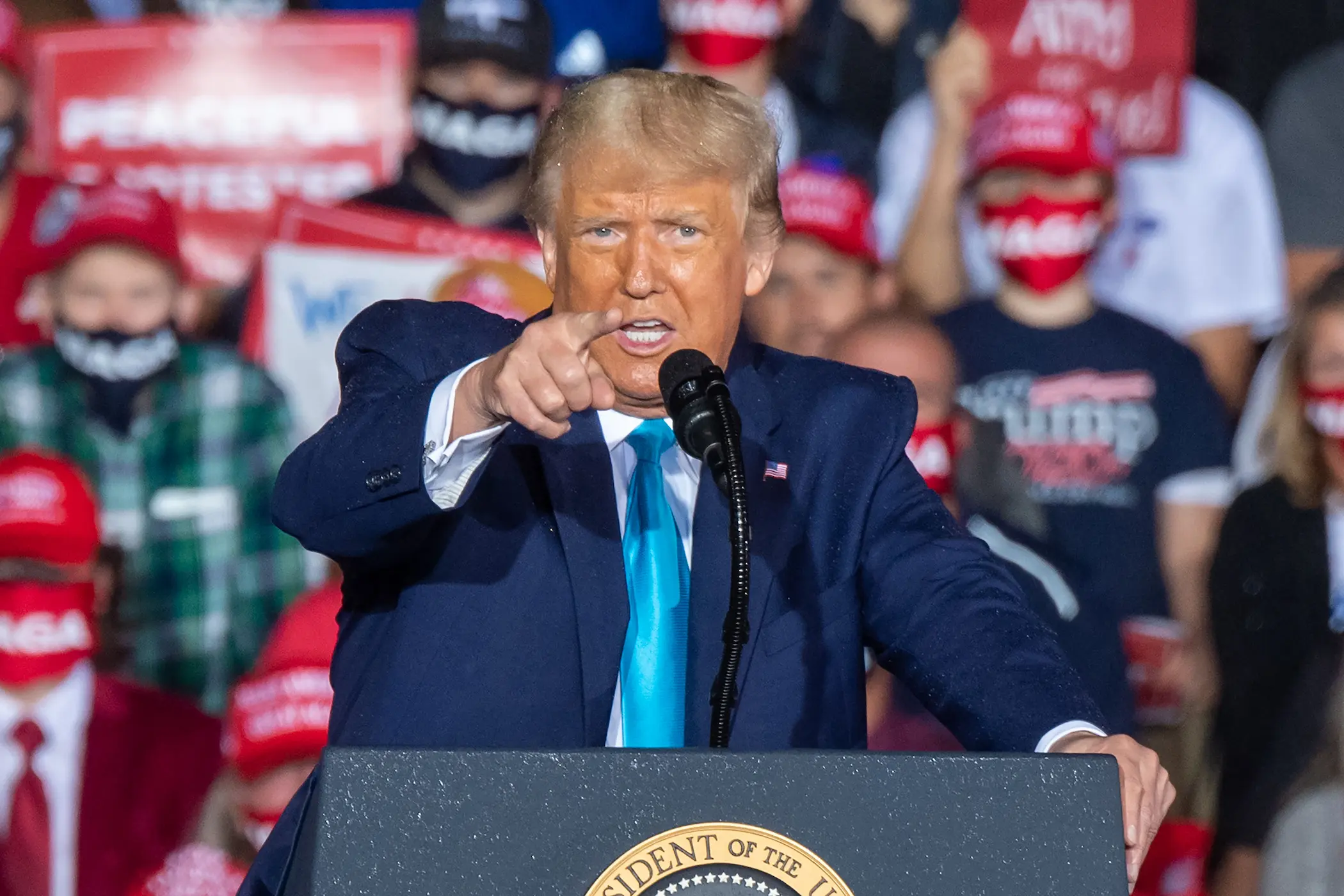
President Donald Trump’s iron grip over the Republican Party is faltering. Internal divisions over his sweeping new tax and spending bill are threatening to fracture party unity. The legislation, branded by Trump as the “Big Beautiful Bill,” is both a showcase of his populist ambitions and a flashpoint for ideological and regional rifts within the GOP that rarely come to light.

Programmes
10 Nov 2024
A New US President… A New Middle East!
On Sunday, Nov. 10, 2024, the Al Habtoor Research Centre hosted a pivotal panel discussion titled “A New U.S. President... A New Middle East”. The session delved into the anticipated effects of President Donald Trump’s return to office on the Middle East, a region undergoing significant transformation amid shifting global dynamics. Mr. Islam Ghoneim, CEO of the Al Habtoor Research Centre, opened the event, underscoring the critical need to examine the U.S. presidential election's repercussions on the Middle East, especially given the substantial shifts in international policies impacting the region. Dr. Azza Hashem, Research Director of the Al Habtoor Research Centre, introduced the esteemed speakers and outlined the themes of the panel discussion, which focused on the characteristics of U.S. policy in the Middle East and key perspectives on the future under Trump’s leadership.

Programmes
15 Jul 2024
The Attempted Assassination of Donald Trump
The assassination attempt on Former President Donald Trump is the closest a president or presidential candidate has come to being assassinated since the shooting of President Ronald Regan by John Hinckley Jr. in 1981. President Jospeh Biden was quick to condemn the attempt saying “There is no place in America for this kind of violence — for any violence. Ever. Period. No exception. We can’t allow this violence to be normalized.”
Despite his call for unity and a cooling of tempers, Biden's assertion that this particular violence has no place in the U.S. overlooks a significant historical context. Political violence has been central to the formation of the U.S., with guns being one of the many instruments used to shape the nation and its trajectory.
Every U.S. president that has been assassinated or targeted was through the use of a gun. Presidents Abraham Lincoln, James A. Garfield, William McKinley, and John F. Kennedy were all shot and killed. This violence was not restricted to presidents alone; civil rights leaders such as Medgar Evers, Malcolm X, Martin Luther King Jr., and Fred Hampton were all shot and killed in less than a decade.
The attempt on Trump’s life is a stark reminder of the polarization and political violence that has always been at the heart of the U.S., and which has increased in recent years, largely due to the politics of Trump himself. He now finds himself a victim of the very forces that he has been inflaming, and this attempt on his life will have significant implications for the upcoming presidential election and beyond.