

Programmes
25 Mar 2026
Manufacturing the Narrative: How Western Media Distorted What Really Happened in Dubai
Since late February 2026, the regional and international geopolitical landscape has entered a phase of accelerating military escalation following the outbreak of direct confrontation between the United States and Israel on one side and Iran on the other. That conflict has triggered successive waves of missile and drone attacks, generating recurrent spillover effects that have directly affected the airspace of Gulf states, particularly the United Arab Emirates.
Although the United Arab Emirates’ defence and institutional infrastructure, particularly in Dubai, demonstrated exceptional resilience and an immediate operational response to these threats through the activation of advanced air defence systems and the careful, precautionary management of brief airspace closures to safeguard air navigation and civilian safety, the real crisis did not lie solely in the direct military dimension. It also extended into a highly complex information war.
These developments coincided with the strict enforcement of domestic cybercrime laws, which restricted the circulation of unauthorised images and video footage in an effort to prevent panic and protect national security. Yet this also created an opening that the Western media machine exploited strategically and systematically to dominate the flow of information and construct a distorted account of events.
Against this backdrop of stark divergence between the coherent reality on the ground and the remote narrative constructed around it, international media outlets, particularly the British tabloid press, turned into vehicles for an extraordinary degree of dramatization. What were, in reality, limited regional spillovers were presented as evidence of an imminent and inevitable collapse of Dubai’s entire economic and social model.
By adopting provocative and polarising headlines that flatly declared Dubai “finished”, and casting the crisis as the tragic collapse of the safe tax haven dream, these outlets embraced a line of analysis wholly detached from realities on the ground. Verified evidence of business continuity and the strength of the UAE’s security architecture was sidelined in favour of a pre-packaged disaster narrative. This shift demands a deeper analytical and historical examination of the mechanisms and the economic and political incentives that can drive media institutions away from their role as objective conveyors of fact and turn them into instruments for shaping global public opinion.
Programmes
11 Nov 2025
Who Owns the Narrative? The BBC Crisis and the Global Dilemma of Truth and Fabrication
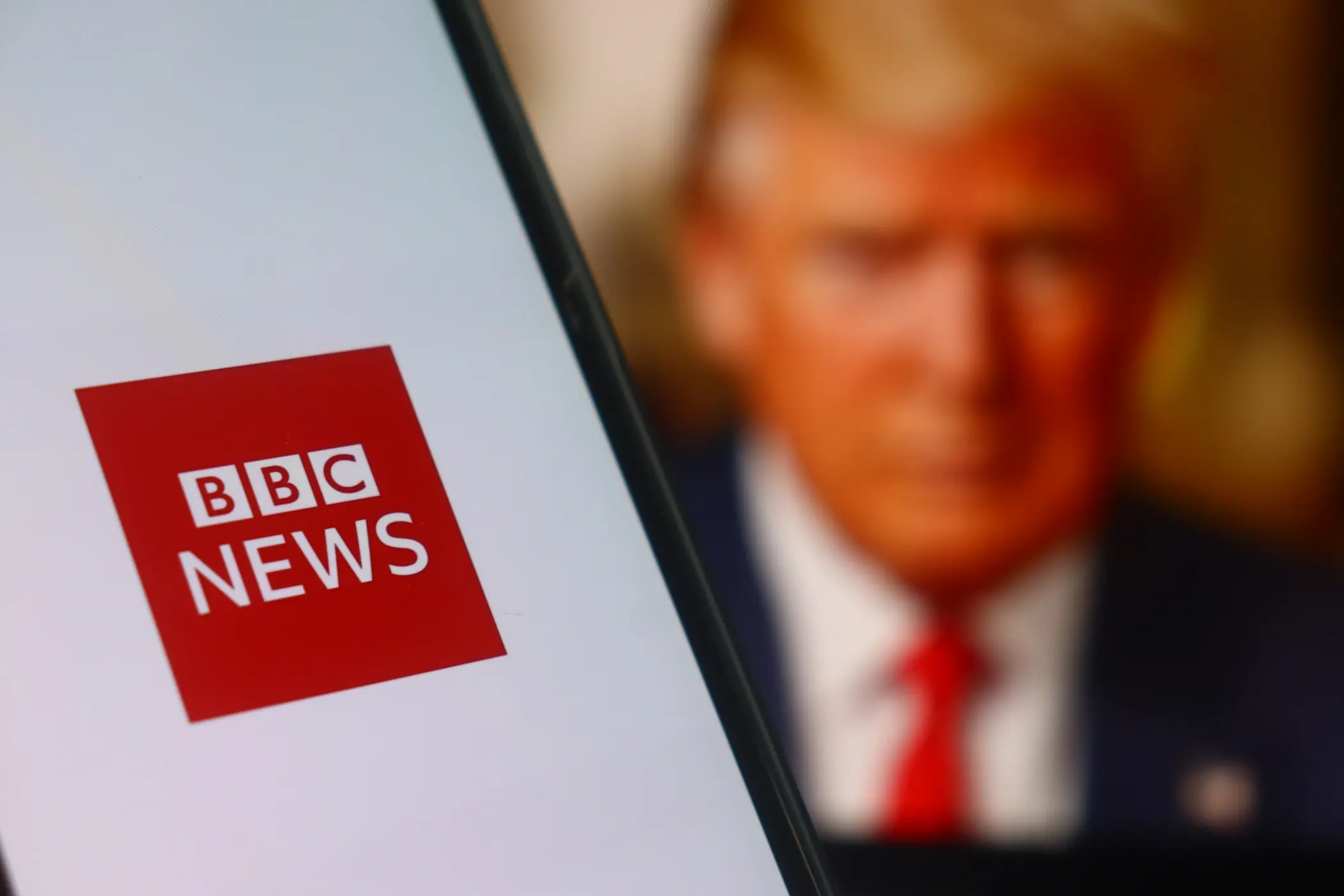
Almost overnight, the British Broadcasting Corporation (BBC), long regarded as one of the world’s most credible and enduring news institutions, found itself under heavy fire. Its reputation for impartiality has been shaken by a media scandal whose reverberations extend far beyond the organisation itself. The network now stands accused of the “deliberate distortion of a speech by then former U.S. President Donald Trump.” Even with the resignations of Director-General Tim Davie and Head of News Deborah Turness on Nov. 9 2025, the crisis is far from over. The controversy has erupted at an extraordinarily sensitive moment, as critical questions are being raised about the limits of media responsibility and the mechanisms by which credibility can still be assured.
Traditional news organisations, long considered the guardians of truth, now face fierce competition and unprecedented challenges from AI and the limitless evolution of digital platforms and media tools. Indeed, crises of credibility striking such established outlets as the BBC have a compounded effect precisely because they have long served as relatively safe havens for audiences seeking professionally curated and verified information, in stark contrast to the chaotic flood of unverified content circulating across social media.
This latest scandal and its implications will be explored in the following sections and present a striking illustration of the transformation underway in Western media. The press is no longer merely a monitor or transmitter of information; it has increasingly become an active participant in the battles of power and influence. Today, media institutions stand at a decisive crossroads: confronted by audiences who question everything they encounter and are fully aware that anything can be fabricated. In such a volatile environment, the key question is whether these institutions can ever regain public trust and respect. The erosion of journalistic ethics, perhaps a by-product of the overwhelming deluge of news and content on social networks, combined with technological developments that have far outpaced human oversight, has left the field teetering on the brink of losing control altogether.