
Programmes
14 Apr 2026
Can the United States Withdraw from NATO?
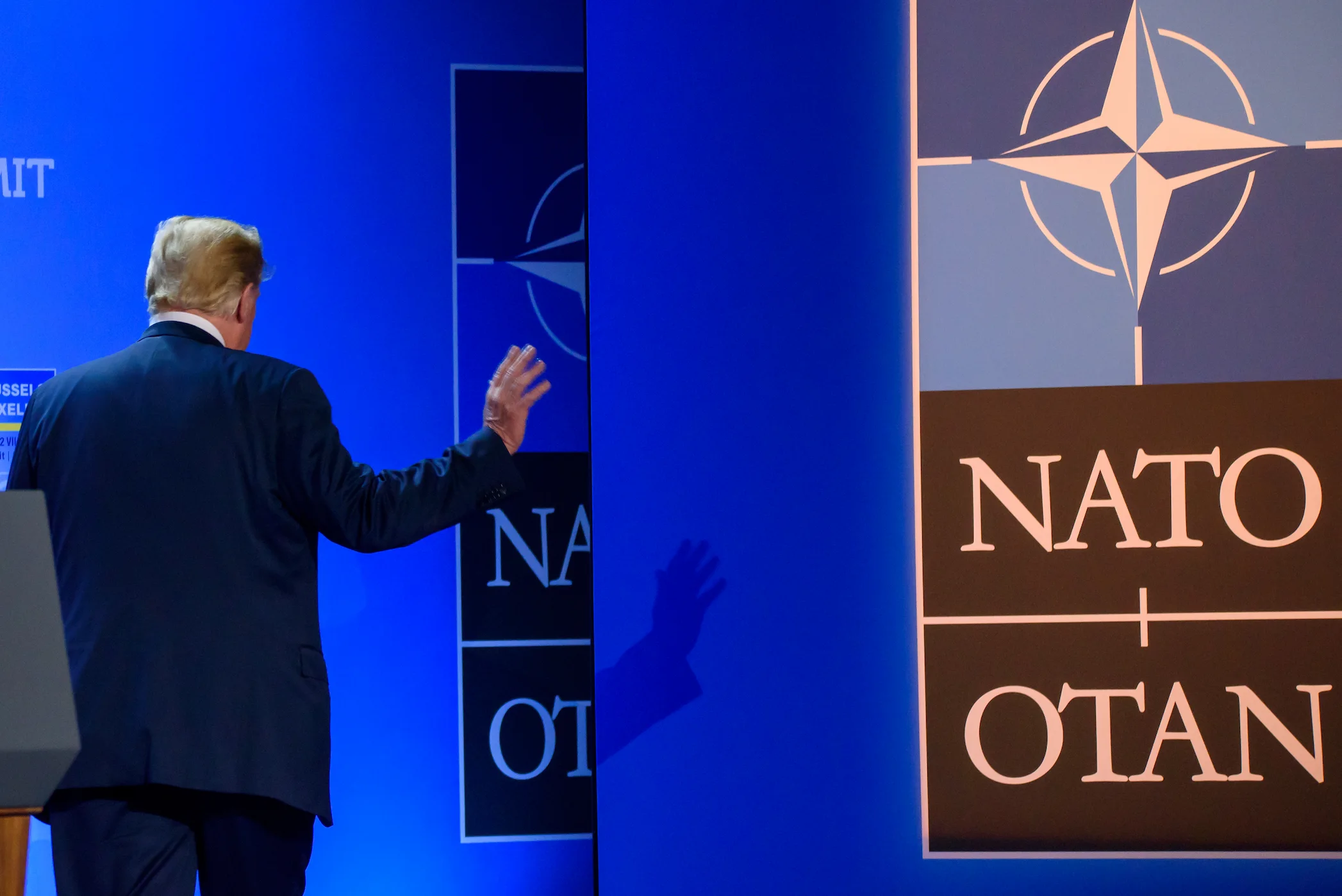
The geopolitical landscape has entered a critical and highly volatile inflection point, defined by deepening transatlantic divisions and an unprecedented destabilisation of the global security architecture. The outbreak of intense military confrontation in the Middle East has accelerated this fragmentation, as the United States initiated pre-emptive operations against Iran, prompting Tehran to retaliate by closing the Strait of Hormuz. Given the Strait’s pivotal role as a strategic artery for global energy supplies, the administration of President Donald Trump called on European members of the North Atlantic Treaty Organization (NATO) to deploy naval units and provide military support to secure the passage. European capitals, however, rejected the request in a unified stance.
This refusal triggered a marked escalation in diplomatic tensions with the US administration. The European position rested on the absence of prior consultation and on a strategic assessment that classified the conflict as a discretionary war, falling outside the Alliance’s geographic remit and exceeding its defined defensive mandate. In response, the United States administration intensified its rhetoric, openly threatening withdrawal from NATO, describing the Alliance as a "paper tiger", and casting doubt on its military and political effectiveness.
This confrontation has transformed the prospect of a retrenchment in US security commitments from a theoretical possibility into a scenario under active strategic evaluation. Consequently, transatlantic relations have shifted from a framework of fixed commitments to one increasingly governed by transactional, interest-driven engagement. Assessing the likelihood of a US withdrawal, therefore, necessitates a comprehensive review of the governing international frameworks, the domestic constitutional constraints limiting executive authority, the military ramifications of withdrawal, and the potential future trajectories of Europe’s defence architecture.