
Programmes
1 Oct 2026
From Energy Security to Food Security: The Implications of India’s Agricultural and Export Policies for Gulf States
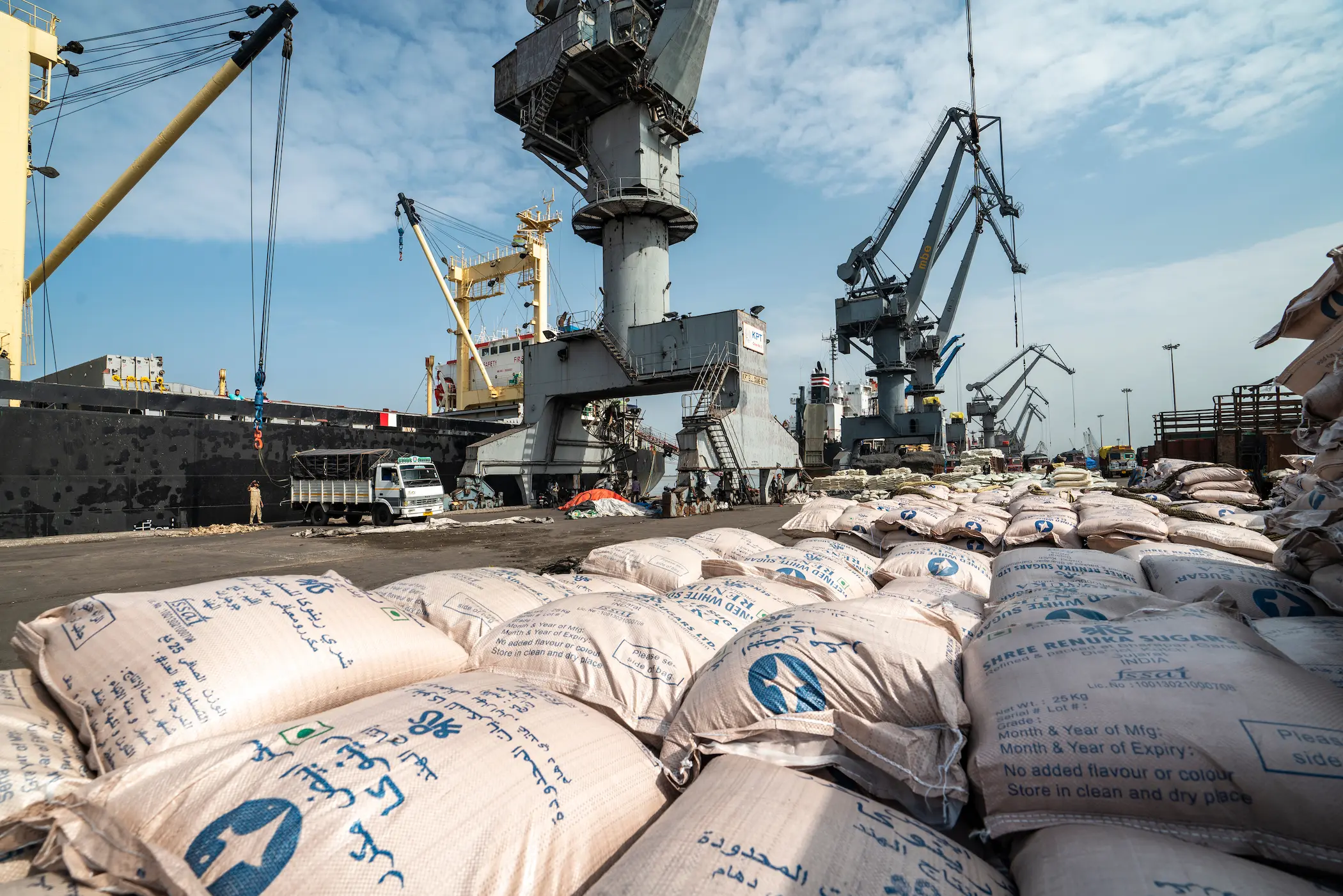
The global economic landscape is witnessing rapid transformations that impose structural challenges on food supply chains. India emerges as an influential actor due to its agricultural weight and its connection to Middle Eastern markets. Amidst this connection, India experienced a climate shock in late summer 2023 that tangibly affected rainfall. This coincided with a marked acceleration in implementing the national Ethanol Blended Petrol (EBP) programme for an E20 target, which depletes staple crops like maize, rice, and sugarcane to produce fuel instead of food. The climate variation and supply shocks resulting from the E20 programme formed a primary driver of price pressures, pushing the Reserve Bank of India (RBI) to maintain a tight monetary policy, and pushing the federal government to take protectionist measures that included a consecutive ban on the export of strategic commodities, noting that export restrictions began in 2022 and expanded in 2023. While the protectionist decisions and the central bank's decisions were not officially attributed to ethanol as a direct primary cause, its growing depletion of crops is considered a potential structural multiplier of inflationary pressures.
Against this backdrop, the Gulf Cooperation Council (GCC) states, which depend heavily on Indian agricultural imports to meet their consumption needs, find themselves vulnerable to the consequences of these disruptions. The repercussions are not limited to immediate supply disruption or rising import costs, but extend to include deep strategic challenges regarding the extent to which Gulf investments in the Indian agricultural sector can provide genuine protection against sovereign export ban decisions.
This analysis therefore aims to explore the dimensions of the Indian supply crisis and its impacts, moving through tracking the path of inflation and the export restrictions imposed by New Delhi, arriving at an assessment of the level of Gulf exposure, and analysing the limits of the effectiveness of foreign direct investments as a tool for strategic hedging against recurring food crises.

Publications
17 Sep 2025
Arab Airspace Blockade After Doha Attack
This paper provides a comprehensive assessment of the potential economic, political, and security outcomes should the Arab and Islamic worlds enact a coordinated airspace blockade against Israel. The specified catalyst for this action is the Israeli airstrike on Hamas leadership in Doha, Qatar, on September 9, 2025, an event that has already precipitated a significant realignment of regional diplomatic postures.
The central thesis of this analysis is that a coordinated airspace blockade would represent a strategic shock to Israel, not merely a logistical inconvenience. It would function as a form of asymmetric economic warfare, inflicting severe, multi-sector damage on Israel's globally integrated economy by targeting its core vulnerabilities in aviation, high-value trade, and tourism. The direct economic impact is estimated to be a contraction of 4.8% to 5.7% of Israel's Gross Domestic Product (GDP), a shock sufficient to trigger a deep recession.
Politically, the blockade would fundamentally re-order the regional geopolitical landscape, shattering the post-2020 status quo established by the Abraham Accords and rendering further normalization efforts untenable. It would accelerate a strategic pivot by Gulf Arab states away from a singular reliance on the United States as a security guarantor, fostering a new, region-driven security architecture. For the United States, such a development would present an acute diplomatic crisis, forcing a choice between its ironclad alliance with Israel and its vital strategic partnerships with Arab nations, thereby undermining a cornerstone of its Middle East policy.
From a security perspective, the blockade would act as a "gray zone" challenge, a highly coercive act that exists in the ambiguous space between peace and declared war. It would degrade the operational reach of the Israeli Air Force (IAF) and place the onus of military escalation squarely on Israel. A decision by Israel to forcibly challenge the blockade would create a high-probability pathway to a wider regional military conflict, potentially drawing in the Gulf states, Iran and its proxies, and the United States. The airspace blockade, therefore, represents a plausible and potent instrument of collective action that could irrevocably alter the strategic balance in the Middle East.

Programmes
26 Mar 2023
Rise of GCC Sovereign Wealth Funds: Magic Wand?
A sovereign wealth fund is a state-owned investment fund comprised of money generated by the government, often derived from a country's surplus reserves. Over the last decade, sovereign wealth funds (SWFs) have sharply grown; this is particularly the case of the Gulf Cooperation Council (GCC) SWFs who have invested worldwide with a special focus on developed countries, and whose accumulated assets have dramatically increased in the last ten years due to several factors. Therefore, it is necessary to study the characteristics of GCC SWFs, as well as to assess the factors behind their growing role and their future trends.