

The global economic landscape is witnessing rapid transformations that impose structural challenges on food supply chains. India emerges as an influential actor due to its agricultural weight and its connection to Middle Eastern markets. Amidst this connection, India experienced a climate shock in late summer 2023 that tangibly affected rainfall. This coincided with a marked acceleration in implementing the national Ethanol Blended Petrol (EBP) programme for an E20 target, which depletes staple crops like maize, rice, and sugarcane to produce fuel instead of food. The climate variation and supply shocks resulting from the E20 programme formed a primary driver of price pressures, pushing the Reserve Bank of India (RBI) to maintain a tight monetary policy, and pushing the federal government to take protectionist measures that included a consecutive ban on the export of strategic commodities, noting that export restrictions began in 2022 and expanded in 2023. While the protectionist decisions and the central bank's decisions were not officially attributed to ethanol as a direct primary cause, its growing depletion of crops is considered a potential structural multiplier of inflationary pressures.
Against this backdrop, the Gulf Cooperation Council (GCC) states, which depend heavily on Indian agricultural imports to meet their consumption needs, find themselves vulnerable to the consequences of these disruptions. The repercussions are not limited to immediate supply disruption or rising import costs, but extend to include deep strategic challenges regarding the extent to which Gulf investments in the Indian agricultural sector can provide genuine protection against sovereign export ban decisions.
This analysis therefore aims to explore the dimensions of the Indian supply crisis and its impacts, moving through tracking the path of inflation and the export restrictions imposed by New Delhi, arriving at an assessment of the level of Gulf exposure, and analysing the limits of the effectiveness of foreign direct investments as a tool for strategic hedging against recurring food crises.
First: The Indian Supply Crisis — Climate Shock and Ethanol Programme Challenges
During the 2023 monsoon season, India experienced a marked climate variation. While overall rainfall from June to September recorded roughly 820 mm, equivalent to 94.4 per cent of the long-period average (LPA), and 29 out of 36 meteorological subdivisions witnessed normal or excess rainfall (with Northwest India receiving 101 per cent of its usual average), the crisis concentrated in August 2023. That month witnessed severe drought, as recorded rainfall dropped to just 162.7 mm, registering a deficit of 36.2 per cent against the historical average. August 2023 thereby recorded the driest August since records began in 1901 (surpassing the previous record of 191.2 mm in 2005). Although a positive Indian Ocean Dipole manifested in late August, which may have mitigated El Niño effects, the shock was tangible, especially as it followed normal or strong rainy seasons (which recorded 109 per cent in 2020, 99 per cent as normal in 2021, and 106 per cent in 2022).
These exceptional conditions resulted in a clear variation in the yield of vital crops for the 2023/24 season; maize production fell from 38.085 million tonnes to 37.665 million tonnes (and the kharif harvest declined from 23.674 million tonnes to 22.245 million tonnes), and sugarcane also retreated by 7.6 per cent to reach 453.158 million tonnes, with the decline extending to pulses, which recorded 24.246 million tonnes. Conversely, rice production rose strikingly to 137.825 million tonnes and wheat to 113.292 million tonnes, jumping total foodgrain production to a record level of 332.298 million tonnes. Estimates for 2024/25 indicate an expected recovery to produce 43.409 million tonnes of maize, 150.184 million tonnes of rice, 117.945 million tonnes of wheat, and 454.611 million tonnes of sugarcane.
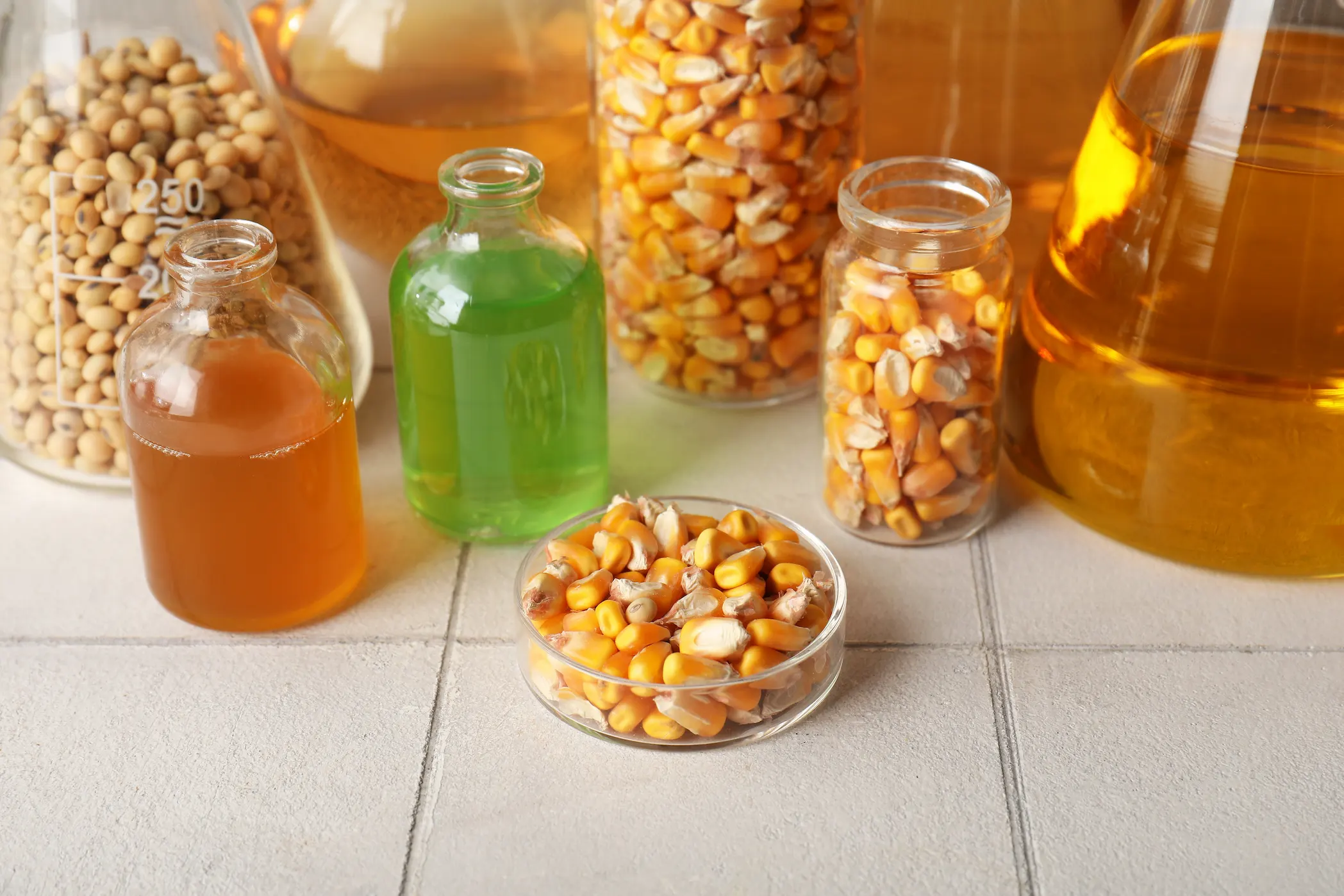
Running parallel to this landscape is the growing impact of the ambitious Ethanol Blended Petrol (EBP) programme. The government advanced its target timeline to reach a 20 per cent blending rate (E20) to become targeted in 2025/26 instead of 2030. This translated practically in the 2025/26 ethanol supply year by achieving a provisional average blending rate of 20.0 per cent (for the period November 2025–August 2026). This acceleration was built on 2021 estimates by NITI Aayog, which projected the need to supply 10.16 billion litres of ethanol for blending in 2025/26, alongside its projections to build a distillation capacity of 15 billion litres.

The programme’s structural impact appears in the massive quantities allocated to ethanol production at the expense of food. After blending quantities in 2021/22 stood at 4.336 billion litres, they rose in 2022/23 to reach 5.051 billion litres. In 2024/25, distilleries consumed about 12.575 million tonnes of maize (an indicative ratio equivalent to about 29 per cent of maize production for that year, given the difference between the ethanol supply year and the crop year) to produce 4.778 billion litres of maize ethanol. Also, 3.183 million tonnes of Food Corporation of India (FCI) rice were drawn against an actual allocation of 5.2 million tonnes. The momentum continued, as the rice drawn until June 2026 reached about 4.42 million tonnes out of an allocated 7.2 million tonnes, with the consumption of 6.79 million tonnes of maize, and the diversion of the equivalent of 2.8 million tonnes of sugar (reduced by government intervention from 4.3 million tonnes in 2022/23 to 2.4 million tonnes in 2023/24 to protect domestic supplies). The details reveal an implicit subsidy; in January 2025, the FCI rice price for distilleries was set at 2,250 rupees per quintal, while the FCI’s total economic cost (which includes procurement, storage and distribution expenses) reached about 4,042.15 rupees in 2024/25. The programme’s environmental cost stands out, as NITI Aayog 2021 estimates, built on their accounting assumptions, indicate a water intensity of about 4,480 litres of water for each litre of rice ethanol, 3,000 litres for sugar ethanol, and 2,570 litres for maize ethanol, reflecting the scale of potential structural pressures.
Second: From Inflation to Export Restrictions — The Indian Policymaker's Response
Climate shocks and supply imbalances reflected directly on domestic price levels. The Consumer Food Price Index (CFPI) inflation in India jumped to 11.51 per cent in July 2023, recording an upward trajectory compared to June, in which the headline Consumer Price Index (CPI) recorded 4.87 per cent and food inflation just 4.55 per cent. These pressures continued until early 2024, as the provisional headline CPI reached 5.09 per cent in February, and provisional food inflation remained high at 8.66 per cent.
These developments pushed the Reserve Bank of India (RBI) to keep the repo rate unchanged at 6.50 per cent, the hawkish level held since February 2023 and maintained throughout 2024. In the Monetary Policy Committee meeting of April 2024, the bank explicitly pointed to the risk of climate shocks to prices. In the June 2024 meeting, the committee voted to maintain the rate, warning of pressures spilling over to negatively affect core inflation (which recorded 3.2 per cent in April). Although the structural demand of the ethanol programme is considered a potential multiplier whose impact on the supply of grains and sugar can be measured, the central bank focused its official characterisation of the crisis on weather factors and the rising prices of specific agricultural crops like vegetables, pulses, and cereals. Later, the bank shifted its stance to a neutral path in October 2024, and the rate settled at 5.25 per cent by August 2026.
In a government response that began early to control supplies and curb inflation, the government employed foreign trade as a principal tool, as the Directorate General of Foreign Trade (DGFT) imposed a series of strict restrictive export measures.

The map of restrictions points to the Indian authorities adopting a phased approach, starting with comprehensive prohibition and ending with gradually lifting restrictions. Wheat was the first prohibited commodity in May 2022 and was not freed until August 2026. Broken rice followed in September 2022 (when the government officially stated that the prohibition was to ensure supplies for poultry and to meet the ethanol programme’s requirements), and remained prohibited until March 2025. Non-basmati white rice (exclusively under the HS code 10063090, excluding basmati rice) was subjected to a strict prohibition in July 2023, with government-to-government (G2G) exceptions, such as the approval to export 75,000 tonnes to the UAE in September 2023. The prohibition continued until its export was permitted with a minimum export price (MEP) in September 2024, and the limit was abolished in October 2024, making it free. A complete prohibition was imposed on onions in December 2023, then its export was permitted with a minimum price in May 2024, which was abolished in September 2024, making it free. As for sugar, it was placed under a temporary prohibition from May to September 2026 with exceptions that included government exports, US and European CXL/TRQ quotas, and advance authorisation shipments, returning to the “restricted” category from October 2026.
The challenges were not limited to domestic legislation but extended to logistical and security bottlenecks. DGFT reports in March 2026 recorded disruptions in the sea corridor through the Strait of Hormuz, which led to ship rerouting and a sharp rise in insurance costs. This development pushed the Indian administration to provide targeted support (RELIEF) to companies exporting to Gulf states to mitigate the severity of the shocks.
Third: Gulf Exposure and the Limits of Investment as a Hedging Tool
The continued Indian tendency to impose export restrictions constituted a potential threat to the Gulf Cooperation Council states, as India is a major agricultural export power, with exports of agricultural and allied commodities reaching 51.9 billion dollars in 2024/25. The Gulf states represent one of its most important markets; APEDA scheduled products data for 2023/24 show Saudi Arabia and the UAE leading with 1.949 billion dollars (7.8 per cent) and 1.858 billion dollars (7.4 per cent), respectively. Saudi Arabia accounted for 21.5 per cent of India’s basmati rice exports by value, while the UAE secured 5.7 per cent.
Despite this deep commercial standing, actual reliance levels vary from one Gulf state to another. They reach exceptional levels in milled rice and vary in refined sugar (where it recorded 59.6 per cent in Qatar alone, while ranging between 7.5 per cent and 27.5 per cent in the rest of the Gulf states), making Gulf food security exposed to Indian decisions.

The proportional distribution of imports according to UN Comtrade reveals a strategic concentration that deepens the state of Gulf exposure. Saudi Arabia relies on India to secure 75.6 per cent of its total milled rice imports (compared to only about 12 per cent from Pakistan, according to USDA FAS April 2026 estimates), compelling it to attempt rapid and radical adaptation to any Indian absence. The necessity of forced adaptation became prominent during the recent onion crisis, when the dramatic decline in India’s share of onion imports to Saudi Arabia from 7.9 per cent in 2023 to just 0.8 per cent in 2024 coincided with the enforcement of the Indian export prohibition. This reflects the Saudi market’s capacity for rapid substitution, but it confirms the fragility of supply chains reliant on a principal supplier.
Legally, Indian laws pose an obstacle to hedging through direct investment. RBI directives bar Non-Resident Indians from purchasing agricultural land, while allowing it to be transferred as an inheritance. For foreign companies, the 2020 FDI policy limits direct ownership (100 per cent) to limited activities like horticulture and animal husbandry, and completely prohibits it in cultivating crops like cereals and sugarcane.
Most strategically important, the prohibition decisions issued by the DGFT are imposed comprehensively on all export shipments based on the commodity’s HS code, without granting exceptions based on foreign ownership of the company or prior contractual agricultural agreements. This legislation means that agricultural investments in India do not provide effective immunity for shipments destined for the Gulf. Even high-level bilateral agreements do not eliminate this risk; the Comprehensive Economic Partnership Agreement (CEPA) signed between India and the UAE did not in any way prevent the enforcement of the rice export prohibition imposed in 2023. It proved practically that sending 75,000 tonnes to the UAE occurred through discretionary government-to-government (G2G) channels granted to other countries as well, like Malaysia and Mauritius, and not as a binding right under the treaty.
Therefore, the countries of the region find no practical, effective option other than striving to enhance their security by diversifying partners and building strategic reserves outside the Indian sphere. In Saudi Arabia, the General Food Security Authority (GFSA) exclusively undertakes the import of wheat intended for human consumption and subsidised by the government. It maintains the encouragement of a local production nearing 1.1 million tonnes (against a licensed ceiling of 1.5 million tonnes), alongside importing 3.258 million tonnes in 2025/26. Although the official wheat reserve target is four months, field estimates indicate it surpasses the six-month barrier, whereas there is no government rice reserve, as private importers are encouraged to maintain a stockpile sufficient for the upcoming six months. In parallel, the Saudi company SALIC is actively directing its investments towards countries like Australia, Brazil, Canada, and Ukraine. Similarly, Qatar’s Hassad Food manages 25 advanced grain silos in the Al Wukair area that provide a capacity of 125,000 tonnes for wheat and about 190,000 tonnes for fodder, and its declared external portfolio is concentrated in countries like Australia, Canada, Turkey, and Oman, and does not include India. In the UAE, Al Khaleej Sugar in Jebel Ali refines imported raw sugar with a production capacity exceeding 7,000 tonnes daily.
In sum, the critical intersection between the pace of severe climate fluctuations and India’s ambitions to produce biofuels has created a fragile reality in the trajectory of global agricultural supplies. This drives India to employ restrictive export policies as an indispensable domestic safety valve. Judging by current allocation rates, this analysis estimates that the continued structural demand of the ethanol programme at the targeted blending rate (20 per cent) will impose on India a consumption demand exceeding 7 million tonnes of maize and 5 million tonnes of FCI rice in the 2026/27 annual supply cycle. This is based on actual consumption that jumped to 6.79 million tonnes of maize and 4.42 million tonnes of rice in just the first eight months (November 2025–June 2026) against an annual allocation of 7.2 million tonnes for rice. This continuous withdrawal will keep domestic Indian prices highly sensitive to rising in the event of any slight shortfall.
Taken together, this analysis estimates that should India face a future climate shock equivalent to the August 2023 drought, any future export prohibition on grains like rice could extend for a period approaching 14 consecutive months (judging by the precedent of the non-basmati white rice prohibition from 20 July 2023 to 28 September 2024). This scenario would force Saudi Arabia, for instance (which relies on Indian rice for 75.6 per cent of its imports), to bear the burden of restructuring its sources to secure more than three-quarters of its needs throughout that period. This underlines the imperative for Gulf states to continue accelerating the buildup of reserves and to adhere to strict geographical diversification of agricultural investments away from India.
References
India Meteorological Department. “Southwest Monsoon 2023: End of Season Report.” Ministry of Earth Sciences, October 1, 2023. Accessed September 27, 2026. https://internal.imd.gov.in/press_release/20231001_pr_2555.pdf
India Meteorological Department. “Climate Summary for August 2023.” Ministry of Earth Sciences, September 2, 2023. Accessed September 27, 2026. https://internal.imd.gov.in/press_release/20230902_pr_2510.pdf
India Meteorological Department. “End of Season Report 2020.” Ministry of Earth Sciences, December 20, 2020. Accessed September 27, 2026. https://internal.imd.gov.in/press_release/20201220_pr_963.pdf
India Meteorological Department. “End of Season Report 2021.” Ministry of Earth Sciences, January 14, 2022. Accessed September 27, 2026. https://internal.imd.gov.in/press_release/20220114_pr_1436.pdf
India Meteorological Department. “End of Season Report 2022.” Ministry of Earth Sciences, October 1, 2022. Accessed September 27, 2026. https://internal.imd.gov.in/press_release/20221001_pr_1849.pdf
Ministry of Agriculture & Farmers Welfare. “Final Estimates of Production of Major Crops.” Government of India, November 2025. Accessed September 27, 2026. https://static.pib.gov.in/WriteReadData/specificdocs/documents/2025/nov/doc20251120700901.pdf
Press Information Bureau. “Third Advance Estimates of Production of Major Crops for 2025-26.” Ministry of Agriculture & Farmers Welfare, May 27, 2026. Accessed September 27, 2026. https://www.pib.gov.in/PressReleasePage.aspx?PRID=2265965®=3&lang=1
NITI Aayog. “Roadmap for Ethanol Blending in India 2020-25.” Government of India, June 2021. Accessed September 27, 2026. https://www.niti.gov.in/sites/default/files/2023-02/EthanolBlendingInIndia_compressed.pdf
Department of Food & Public Distribution. “Annual Report 2024–25.” Government of India, 2025. Accessed September 27, 2026. https://dfpd.gov.in/WriteReadData/AnnualRecordUploadDocuments/b9c640b8-5889-4ffd-a62d-5b56c5d4f029_Food%20AR%202024-25%20English%20small%20size.pdf
Rajya Sabha. “Unstarred Question 1898.” Parliament of India, March 9, 2026. Accessed September 27, 2026. https://sansad.in/getFile/annex/270/AU1898_HVBDeE.pdf?source=pqars
Petroleum Planning & Analysis Cell. “Snapshot of India’s Oil & Gas data.” Ministry of Petroleum and Natural Gas, August 2026. Accessed September 27, 2026. https://ppac.gov.in/download.php?file=rep_studies/1789735879_Final__Snapshot_of_Indias_Oil_Gas_data_Aug_2026_V3.pdf
Lok Sabha. “Unstarred Question 2961.” Parliament of India, December 17, 2025. Accessed September 27, 2026. https://sansad.in/getFile/loksabhaquestions/annex/186/AU2961_oGfHph.pdf?source=pqals
Lok Sabha. “Unstarred Question 1746.” Parliament of India, July 29, 2026. Accessed September 27, 2026. https://sansad.in/getFile/lsapps/loksabhaquestions/annex/188/AU1746_bqUWcO.pdf?source=lsapps
Lok Sabha. “Unstarred Question 1703.” Parliament of India, July 29, 2026. Accessed September 27, 2026. https://sansad.in/getFile/lsapps/loksabhaquestions/annex/188/AU1703_NK6oqZ.pdf?source=lsapps
Rajya Sabha. “Unstarred Question 2670.” Parliament of India, August 11, 2026. Accessed September 27, 2026. https://sansad.in/getFile/annex/271/AU2670_NoMpAW.pdf?source=pqars
Press Information Bureau. “OMSS (D) issue price for rice.” Ministry of Consumer Affairs, Food & Public Distribution, January 2025. Accessed September 27, 2026. https://www.pib.gov.in/PressReleasePage.aspx?PRID=2093933&lang=2&noshow=1®=48
Department of Food & Public Distribution. “Foodgrains Bulletin for December 2025.” Government of India, December 2025. Accessed September 27, 2026. https://dfpd.gov.in/WriteReadData/FoodBulletinUploadDocuments/8cc19261-0d0a-4ca7-b589-ab8708fb1b4d_Foodgrains%20Bulletin%20for%20December%2C%202025.pdf
Press Information Bureau. “CPI Release for July 2023.” Ministry of Statistics & Programme Implementation, August 2023. Accessed September 27, 2026. https://www.pib.gov.in/PressReleasePage.aspx?PRID=1948574&lang=2®=48
Press Information Bureau. “CPI Release for June 2023.” Ministry of Statistics & Programme Implementation, July 2023. Accessed September 27, 2026. https://www.pib.gov.in/PressReleasePage.aspx?PRID=1938980
Ministry of Statistics and Programme Implementation. “CPI Release for February 2024.” Government of India, March 12, 2024. Accessed September 27, 2026. https://www.mospi.gov.in/sites/default/files/press_release/CPI_PR_12Mar24.pdf
Reserve Bank of India. “Monetary Policy Statement.” February 8, 2023. Accessed September 27, 2026. https://rbi.org.in/scripts/BS_PressReleaseDisplay.aspx?prid=55178
Reserve Bank of India. “Monetary Policy Statement.” April 2024. Accessed September 27, 2026. https://rbi.org.in/Scripts/BS_ViewBulletin.aspx?Id=22515
Reserve Bank of India. “Monetary Policy Statement.” June 2024. Accessed September 27, 2026. https://rbi.org.in/scripts/BS_PressReleaseDisplay.aspx?prid=58050


Food or Fuel: The Implications of Biofuels for Global Food Security

Pulse: Who Controls the Region’s Food?

Hungary as a Bridge: How Could Budapest become a Food Security Partner for the UAE?
Food Weaponisation: Building Food Resilience in the Global South

An Unequal Cost: How Space Debris Deepens the Exclusion of Developing Nations from the Economies of the Future

Comments