
Programmes
25 Aug 2026
Diplomacy without Resolution: What Comes After the 60-Day Deadline?
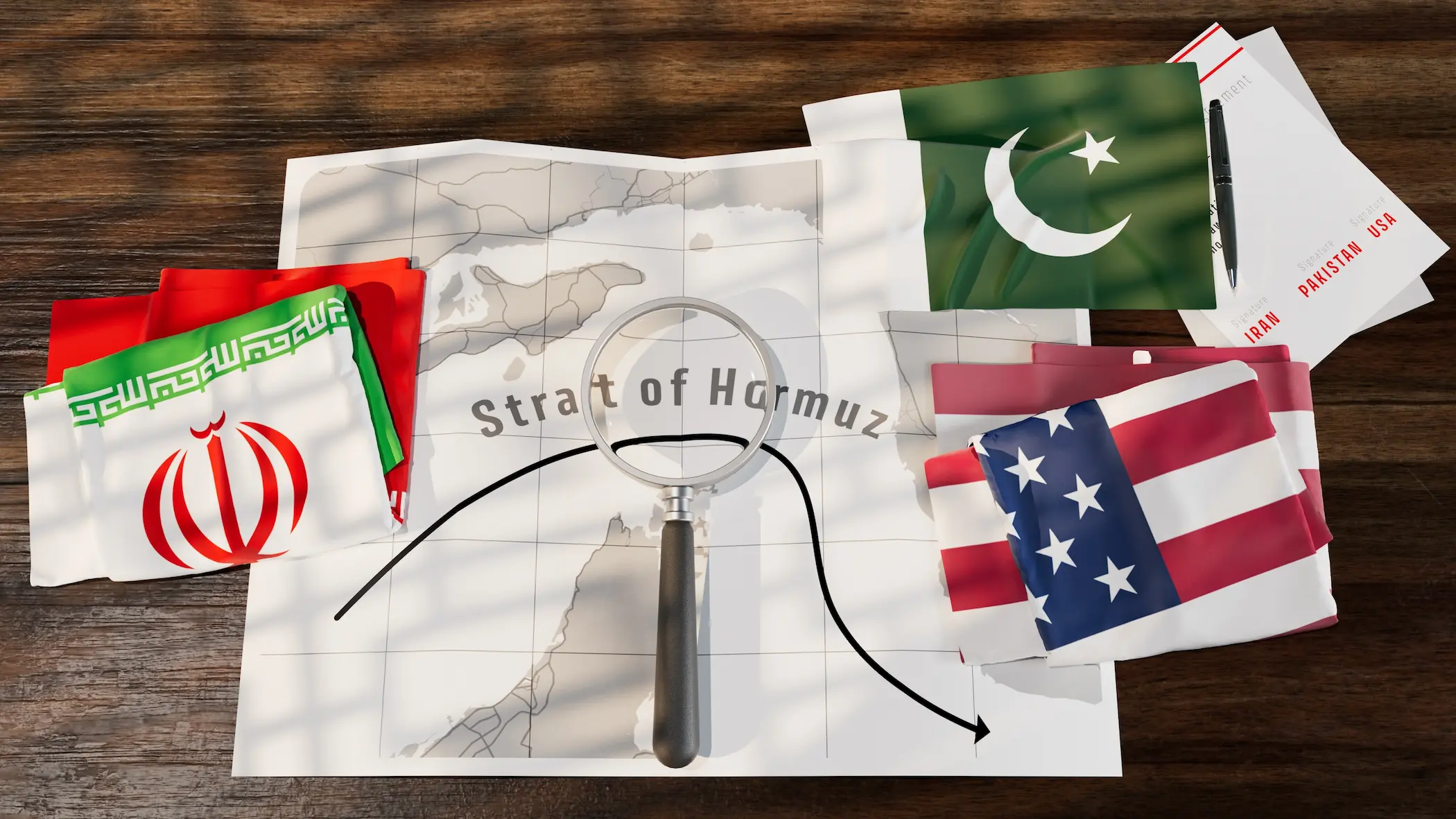
The expiry of the 60-day timeframe stipulated in the Memorandum of Understanding has left the Middle East facing an exceptionally complex geopolitical vacuum, following the failure to forge a strategic agreement that would either defuse tensions or secure the full reopening of the Strait of Hormuz. This does not necessarily signal a sudden or dramatic collapse in negotiations. Rather, it raises a fundamental strategic question about what comes next. The region appears to be entering a calculated tactical transition from conventional diplomacy to a bitter phase of brinkmanship and mutual attrition between Washington and Tehran. As a result, maritime security in one of the world’s most vital waterways, through which approximately 21 million barrels of oil pass each day, equivalent to 20% of global oil consumption, together with around 20% of global liquefied natural gas trade, is increasingly subject to volatile political calculations.
Understanding US conduct in this crisis requires a careful examination of two seemingly contradictory, yet ultimately complementary, perspectives. President Trump’s insistence that there is no pressing timetable for resolving the crisis can be understood as part of a broader doctrine of tactical manoeuvre. Washington is effectively weaponising time to exert systematic economic pressure, sustained by the continuing naval blockade of Iranian ports and an intensification of sanctions. The strategic objective is to drive the Iranian economy towards breaking point and compel Tehran to make substantive concessions, while sparing the US the costs and risks of an open military confrontation. A parallel and more probing assessment, however, suggests that this tactical calm conceals a classic dilemma that sharply constrains US options. Full-scale military escalation would carry prohibitive security and financial costs, potentially driving maritime insurance premiums and energy futures into double-digit surges and placing global supply chains at risk. Yet acquiescing to Tehran’s terms would effectively subordinate international navigation to Iranian will. The current stalemate therefore amounts to little more than an enforced freeze, reflecting institutional frustration at the absence of effective surgical solutions.
On the other side of the strategic equation, Tehran has been far from a passive recipient of pressure. Instead, it has devised a counter-strategy that seeks to redefine the rules of engagement and weaponise geography as a potent source of negotiating leverage. In a particularly consequential move, Iran has succeeded, at least temporarily, in shifting international attention away from the complexities of its nuclear ambitions and uranium enrichment programme, while exploiting maritime chokepoints as an instrument of immediate coercive pressure. Tehran has transformed control over the flow of global trade through the Strait of Hormuz into a decisive bargaining instrument, demonstrating its ability to disrupt global geoeconomic calculations. Iran’s brinkmanship is clearest in the far-reaching conditions it has set for reopening the strait. Rather than limiting its demands to lifting the blockade, Tehran has raised the stakes by calling for the withdrawal of US forces and payment of financial compensation, while insisting on exclusive security control over the waterway and threatening to impose sovereign transit fees. Such maximalist escalation does not necessarily indicate an expectation that all these gains can be secured immediately and in a single settlement. Instead, it is intended to engineer a new geopolitical reality that affords Iranian negotiators greater room for trade-offs and forces the US administration onto the defensive.
Publications
1 Jul 2026
Shadow Leverage Issue 1: Why the Strait of Hormuz Has Become the Decisive Negotiating Card
The Strait of Hormuz is no longer merely a disputed maritime passage, nor simply a recurring flashpoint between Iran and the United States. It has instead evolved into a central arena for testing the meaning of sovereignty in the region. While Washington continues to regard the strait as an international waterway governed by the principle of freedom of navigation, Iran’s Islamic Revolutionary Guard Corps treats it as a sovereign zone under its direct administration, subject to military rules imposed through effective ground control. Accordingly, the core of the crisis no longer centres on the question, "Is the strait open or closed?" Rather, the more consequential question has become: what is the future of the strait in light of the ongoing negotiations?
Recent developments, particularly following the Islamic Revolutionary Guard Corps’s threat to close the Strait of Hormuz in response to what it described as violations of the terms of the memorandum of understanding, especially about the Lebanese file just days after the memorandum was signed, reveal that the issue has not been resolved but has instead grown more complex. The memorandum treated the strait as a technical issue that could be managed through arrangements governing passage and transit to prevent friction. The Islamic Revolutionary Guard Corps, by contrast, approached it as a symbol of sovereignty, power, and the right to set the rules. This divergence rendered the understanding itself incapable of resolving the underlying dispute, because the disagreement between the two sides lies not in procedural details, but in who holds the authority to determine those procedures in the first place.
Although the United States and Iran agreed to reopen the Strait of Hormuz immediately after signing the preliminary agreement, this does not necessarily mean that maritime traffic will return to pre-war levels. Implementing this provision presents complex challenges related to the mechanism for reactivating the shipping corridor, the arrangements required to resume vessel traffic, and the restrictions that may persist during the sixty days allocated to negotiate the final agreement. These challenges are further compounded by the dispute over which party will assume responsibility for regulating and managing maritime traffic through the strait. Taken together, these obstacles suggest that reopening the strait may prove one of the most complex aspects of the agreement, particularly given the ongoing divergence between the American and Iranian visions for the future control of this strategic waterway.
The crisis surrounding the Strait of Hormuz, therefore, cannot be understood merely as a dispute over borders or the passage of ships; it is fundamentally a crisis of authority: the authority to set the rules, to impose exceptions, and to exercise the final say in determining whether this waterway remains open, closed, or conditionally accessible. For this reason, the question of the strait should no longer be viewed as a secondary file within the broader Iran–United States conflict. Rather, it should be recognised as one of the most consequential issues shaping and redefining the very concept of sovereignty, both within Iran itself and in the evolving structure of relations between regional and international powers.

Programmes
13 Apr 2026
Blank Rounds: Can Trump Blockade the Strait of Hormuz?
President Donald Trump announced that the United States will impose a naval blockade on the Strait of Hormuz after weekend talks to end the Iran war collapsed without a settlement. The Islamabad negotiations, which were intended to turn a tenuous ceasefire into a durable peace and reopen Hormuz to safe navigation, broke down over unresolved disputes on nuclear enrichment, sanctions relief, and control of maritime transit. In response, Trump issued an executive order directing the US Navy to interdict any vessel attempting to transit the strait, with particular focus on neutral and commercial ships that have paid Iranian transit tolls, which the White House now characterises as an illegal extortion regime rather than a lawful fee regime.
Trump’s declaration instantly elevates the conflict from a regional shooting war to a global maritime and energy crisis centred on the world’s most critical oil chokepoint, a waterway just twenty‑one nautical miles across at its narrowest. By pledging to enforce a blockade without United Nations Security Council authorisation, the president has pushed the United States into a legally and operationally contested grey zone, framing the move as necessary to dismantle the Islamic Revolutionary Guard Corps’ grip over the strait and sever a key stream of cryptocurrency and foreign-exchange revenue to Tehran. The administration’s strategy now hinges on whether US naval power, layered secondary sanctions, and sustained diplomatic pressure can actually sustain a prolonged blockade in the face of Iranian asymmetric deterrence. The following analysis, therefore, centers on Trump’s blockade order itself: its operational viability, Iran’s capacity to erode or break it through asymmetric tactics, and the resulting shockwaves for global energy markets, commercial shipping patterns, and regional economic stability.

Programmes
26 Sep 2025
The Global Economic Impacts of Starlink Outages: From Operational Fragility to Pathways of Resilience
In recent years, Low Earth Orbit (LEO) satellite constellations have emerged as a transformative layer within the global digital infrastructure, marking a departure from their original role as connectivity solutions for remote regions. These systems are now embedded within the operational cores of critical sectors such as civil aviation, maritime logistics, financial markets, and defence. The clearest manifestation of this structural shift is Starlink, operated by SpaceX, which by mid-2025 had exceeded 7 million users across more than 150 countries, with exponential growth rates in high-value, latency-sensitive industries.
This rapid technological and geographical expansion has positioned Starlink as a globally integrated utility—yet one that operates outside conventional regulatory regimes. It represents a structural concentration of control over global data flows in a single, privately held entity. The dual outages that occurred in July and September 2025 exposed deep systemic vulnerabilities within the Starlink network, including software architecture fragilities and environmental sensitivities to space weather events. These incidents prompted urgent questions about the stability of a critical infrastructure layer that now underpins sectors central to national sovereignty and global economic coordination.
This report interrogates the systemic risks embedded in the global economy’s growing dependence on LEO constellations through two interlinked analytical lenses. The first is a technical-political economy perspective, which examines the underlying architecture of the Starlink network and the typology of its failure modes—both endogenous and exogenous. The second is a forward-looking, scenario-based assessment that models the potential global economic consequences of a 24-hour Starlink outage in 2032. Through this dual approach, the analysis traces the contours of a new strategic dilemma: how to govern an emergent, transnational infrastructure whose failure could trigger multi-sectoral crises at planetary scale, yet whose design and control remain entirely privatized.