
Programmes
25 Aug 2026
Diplomacy without Resolution: What Comes After the 60-Day Deadline?
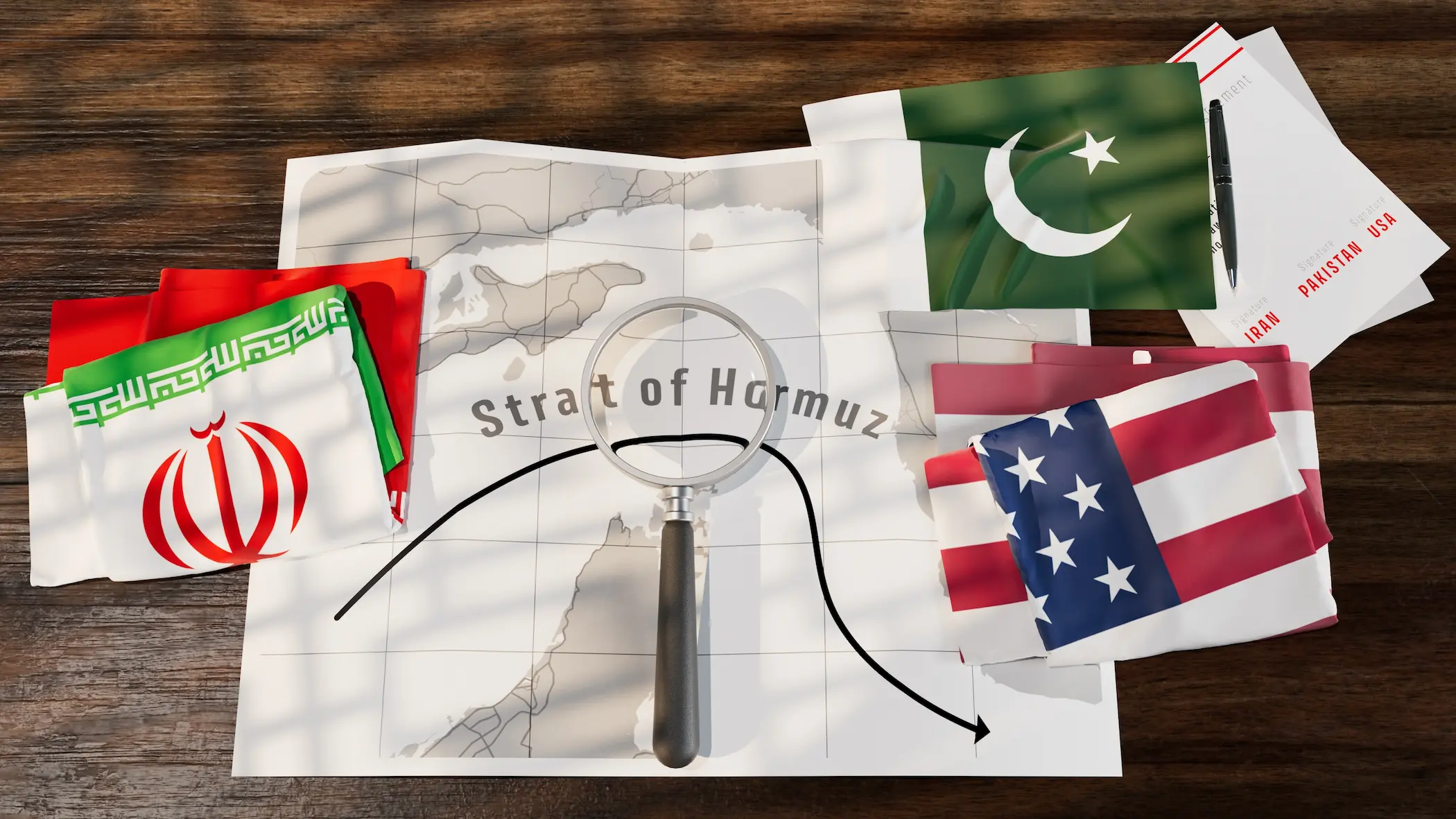
The expiry of the 60-day timeframe stipulated in the Memorandum of Understanding has left the Middle East facing an exceptionally complex geopolitical vacuum, following the failure to forge a strategic agreement that would either defuse tensions or secure the full reopening of the Strait of Hormuz. This does not necessarily signal a sudden or dramatic collapse in negotiations. Rather, it raises a fundamental strategic question about what comes next. The region appears to be entering a calculated tactical transition from conventional diplomacy to a bitter phase of brinkmanship and mutual attrition between Washington and Tehran. As a result, maritime security in one of the world’s most vital waterways, through which approximately 21 million barrels of oil pass each day, equivalent to 20% of global oil consumption, together with around 20% of global liquefied natural gas trade, is increasingly subject to volatile political calculations.
Understanding US conduct in this crisis requires a careful examination of two seemingly contradictory, yet ultimately complementary, perspectives. President Trump’s insistence that there is no pressing timetable for resolving the crisis can be understood as part of a broader doctrine of tactical manoeuvre. Washington is effectively weaponising time to exert systematic economic pressure, sustained by the continuing naval blockade of Iranian ports and an intensification of sanctions. The strategic objective is to drive the Iranian economy towards breaking point and compel Tehran to make substantive concessions, while sparing the US the costs and risks of an open military confrontation. A parallel and more probing assessment, however, suggests that this tactical calm conceals a classic dilemma that sharply constrains US options. Full-scale military escalation would carry prohibitive security and financial costs, potentially driving maritime insurance premiums and energy futures into double-digit surges and placing global supply chains at risk. Yet acquiescing to Tehran’s terms would effectively subordinate international navigation to Iranian will. The current stalemate therefore amounts to little more than an enforced freeze, reflecting institutional frustration at the absence of effective surgical solutions.
On the other side of the strategic equation, Tehran has been far from a passive recipient of pressure. Instead, it has devised a counter-strategy that seeks to redefine the rules of engagement and weaponise geography as a potent source of negotiating leverage. In a particularly consequential move, Iran has succeeded, at least temporarily, in shifting international attention away from the complexities of its nuclear ambitions and uranium enrichment programme, while exploiting maritime chokepoints as an instrument of immediate coercive pressure. Tehran has transformed control over the flow of global trade through the Strait of Hormuz into a decisive bargaining instrument, demonstrating its ability to disrupt global geoeconomic calculations. Iran’s brinkmanship is clearest in the far-reaching conditions it has set for reopening the strait. Rather than limiting its demands to lifting the blockade, Tehran has raised the stakes by calling for the withdrawal of US forces and payment of financial compensation, while insisting on exclusive security control over the waterway and threatening to impose sovereign transit fees. Such maximalist escalation does not necessarily indicate an expectation that all these gains can be secured immediately and in a single settlement. Instead, it is intended to engineer a new geopolitical reality that affords Iranian negotiators greater room for trade-offs and forces the US administration onto the defensive.

Programmes
7 Feb 2026
Transformations in the Uranium Enrichment Market and the Future of Global Energy
Since 2023, the uranium enrichment market has undergone its most profound structural transformation since the advent of the civilian nuclear era. After three decades characterised by persistent oversupply and the integration of Russian inventories with Western reactor fleets, the sector, valued at approximately $15.5 billion in 2025, now confronts a fundamentally altered geopolitical landscape. stems primarily from the fact that nearly 95% of global enrichment capacity is controlled by just four entities, placing Western supply chains under complex logistical and political pressures.
Central to this transformation is the evolution of what is known as the Separative Work Unit (SWU) from a readily available commodity into a strategic bottleneck capable of redrawing global energy maps. The market has shifted rapidly from a buyer-dominated structure to one characterised by seller leverage, amid an intensifying race to secure fuel for both conventional reactors and small modular reactors (SMRs), which require advanced uranium grades for which Western markets lack adequate commercial infrastructure.
Accordingly, this analysis explores the contours of the new enrichment landscape, examining the principal actors and evolving pricing dynamics, while projecting the profound implications of this transformation for global energy security.
Publications
9 Jul 2025
Iran’s Enrichment Dilemma: Between Nuclear Sovereignty and Global Proliferation Anxiety
Iran’s uranium enrichment dilemma constitutes the central axis of the ongoing nuclear dispute, where technical considerations intersect with imperatives of national sovereignty, and where international legal frameworks collide with the strategic logic of deterrence. From the perspective of the Islamic Republic, the possession of a full nuclear fuel cycle—including domestic enrichment—is not merely a technical aspiration but an inherent sovereign right enshrined in Article IV of the Nuclear Non-Proliferation Treaty (NPT). Yet, within Iran’s political consciousness, this “right” transcends legalistic interpretation; it has become a symbolic pillar of national autonomy and a manifestation of defiance against what is perceived as Western hegemony.
Conversely, the U.S. and its allies view the same enrichment capability as a direct gateway to weaponization. The centrifuge-based architecture of Iran’s program enables, with little more than a political decision, a rapid transition from low-enriched uranium to weapons-grade fissile material within a matter of weeks. These concerns escalated significantly following the International Atomic Energy Agency’s (IAEA) May 2025 report confirming that Iran had amassed over 400 kilograms of uranium enriched to 60%—an amount theoretically sufficient to produce three to five nuclear weapons, should the enrichment level be increased to 90%, without requiring any additional infrastructure.
Iran’s historical experience—from its exclusion from the Eurodif consortium in 1979 to the collapse of the Tehran Research Reactor fuel deal in 2009—has deeply entrenched the belief among Iran’s ruling elite that reliance on external fuel guarantees is neither secure nor sustainable. As such, any negotiated settlement that requires Tehran to abandon domestic enrichment is perceived as a fundamental affront to its sovereign dignity and strategic autonomy.
Thus, the essence of the conflict lies not in centrifuge counts or enrichment levels per se, but in the deeply embedded political architecture of mutual distrust. A sustainable resolution cannot be achieved without a broader security framework that redefines Iran’s position within both the regional and global order.
This study adopts a multi-layered approach to the enrichment dilemma, treating it not as a narrowly technical issue but as a strategic contest between sovereign entitlement and non-proliferation imperatives. It proceeds along four main analytical axes: the technical properties of enrichment, the political and strategic motivations driving Iran’s position, the security calculus of Western powers, and the viability of proposed diplomatic frameworks. The study ultimately affirms that any lasting agreement must emerge from a comprehensive reconfiguration of Iran’s relationship with the international system.