
Programmes
26 Aug 2026
Economic Outcast: The Limits of U.S. Secondary Sanctions Against a China-Insulated Iranian Economy
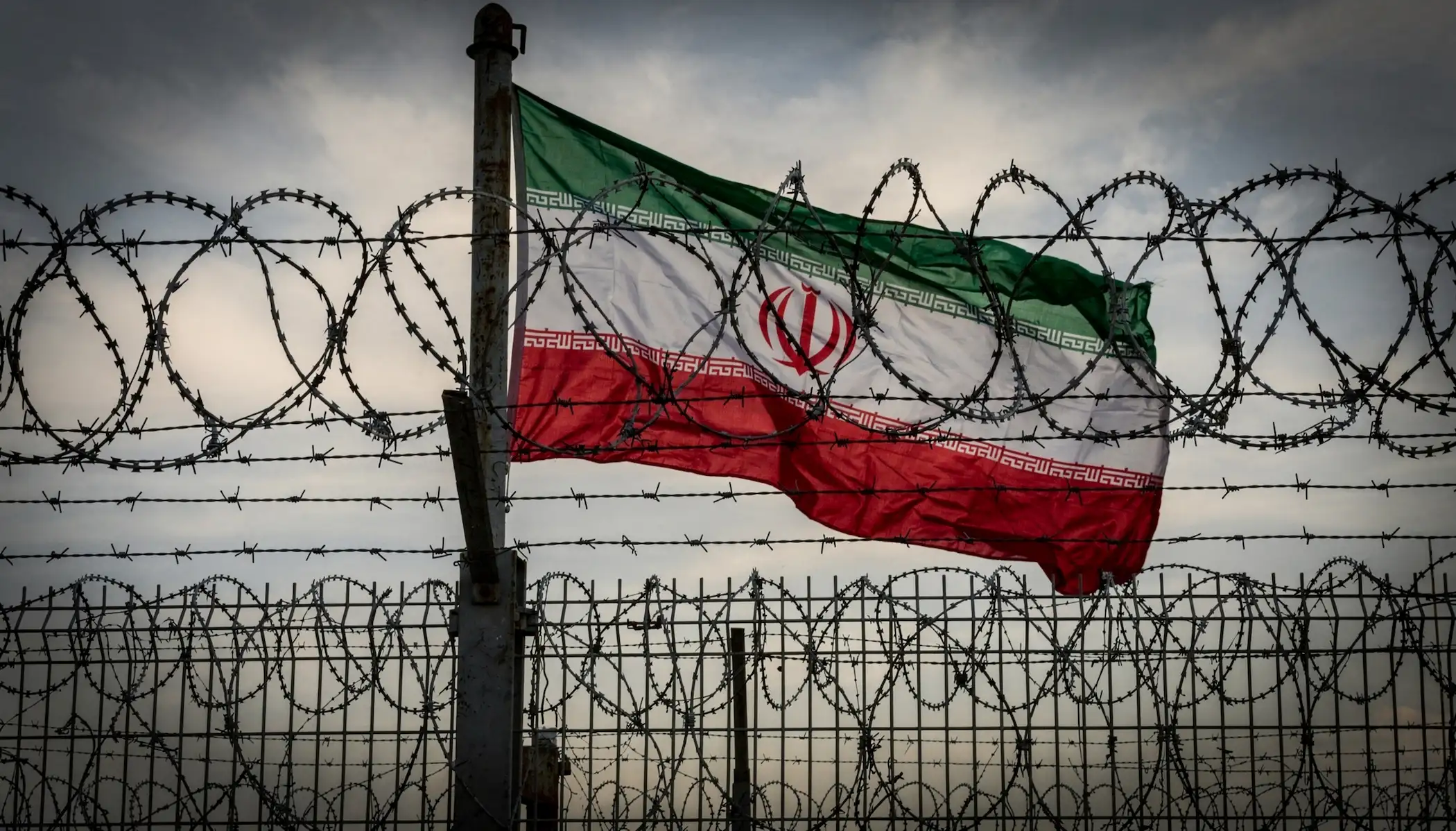
On 24 August 2026, the US Treasury announced an economic enforcement campaign under the name Operation Economic Outcast, designating close to 60 entities, individuals and vessels and issuing five unprecedented sectoral determinations under Executive Order 13902.1 Treasury Secretary Scott Bessent described the campaign as a comprehensive economic onslaught intended to sever every artery feeding the Iranian economy, while Iran's Minister of Economy, Ali Madanizadeh, dismissed it as an act of economic terrorism, insisting that his country has its own instruments and knows the rules of the game.
The significance of the campaign extends well beyond the number of designations. Washington is shifting its weight away from penalising Iranian entities and towards pursuing intermediaries in third countries: independent Chinese refineries, Gulf trading and exchange houses, and settlement channels operating outside the dollar. Yet the record since 2012 reveals a pattern that is close to invariable: sharp friction imposed from the American side, followed by structural Iranian adaptation, in which Iranian exports survive and the American stock of coercive power erodes.
This analysis therefore sets out to dissect the legal architecture of the campaign and identify what is genuinely new within it, then to test its six enforcement tracks against the structural obstacles Tehran has accumulated across four successive waves of sanctions, and finally to estimate the likely impact on the volume of Iranian exports, on the discount imposed on its crude and on the price path, while measuring the cost of compliance that financial and logistics hubs will have to absorb.

Publications
9 Jul 2025
Iran’s Enrichment Dilemma: Between Nuclear Sovereignty and Global Proliferation Anxiety
Iran’s uranium enrichment dilemma constitutes the central axis of the ongoing nuclear dispute, where technical considerations intersect with imperatives of national sovereignty, and where international legal frameworks collide with the strategic logic of deterrence. From the perspective of the Islamic Republic, the possession of a full nuclear fuel cycle—including domestic enrichment—is not merely a technical aspiration but an inherent sovereign right enshrined in Article IV of the Nuclear Non-Proliferation Treaty (NPT). Yet, within Iran’s political consciousness, this “right” transcends legalistic interpretation; it has become a symbolic pillar of national autonomy and a manifestation of defiance against what is perceived as Western hegemony.
Conversely, the U.S. and its allies view the same enrichment capability as a direct gateway to weaponization. The centrifuge-based architecture of Iran’s program enables, with little more than a political decision, a rapid transition from low-enriched uranium to weapons-grade fissile material within a matter of weeks. These concerns escalated significantly following the International Atomic Energy Agency’s (IAEA) May 2025 report confirming that Iran had amassed over 400 kilograms of uranium enriched to 60%—an amount theoretically sufficient to produce three to five nuclear weapons, should the enrichment level be increased to 90%, without requiring any additional infrastructure.
Iran’s historical experience—from its exclusion from the Eurodif consortium in 1979 to the collapse of the Tehran Research Reactor fuel deal in 2009—has deeply entrenched the belief among Iran’s ruling elite that reliance on external fuel guarantees is neither secure nor sustainable. As such, any negotiated settlement that requires Tehran to abandon domestic enrichment is perceived as a fundamental affront to its sovereign dignity and strategic autonomy.
Thus, the essence of the conflict lies not in centrifuge counts or enrichment levels per se, but in the deeply embedded political architecture of mutual distrust. A sustainable resolution cannot be achieved without a broader security framework that redefines Iran’s position within both the regional and global order.
This study adopts a multi-layered approach to the enrichment dilemma, treating it not as a narrowly technical issue but as a strategic contest between sovereign entitlement and non-proliferation imperatives. It proceeds along four main analytical axes: the technical properties of enrichment, the political and strategic motivations driving Iran’s position, the security calculus of Western powers, and the viability of proposed diplomatic frameworks. The study ultimately affirms that any lasting agreement must emerge from a comprehensive reconfiguration of Iran’s relationship with the international system.