
Publications
18 Jun 2026
The Mirage of Safe Geography: How Buffer Zones Have Become a Military Liability for Israel
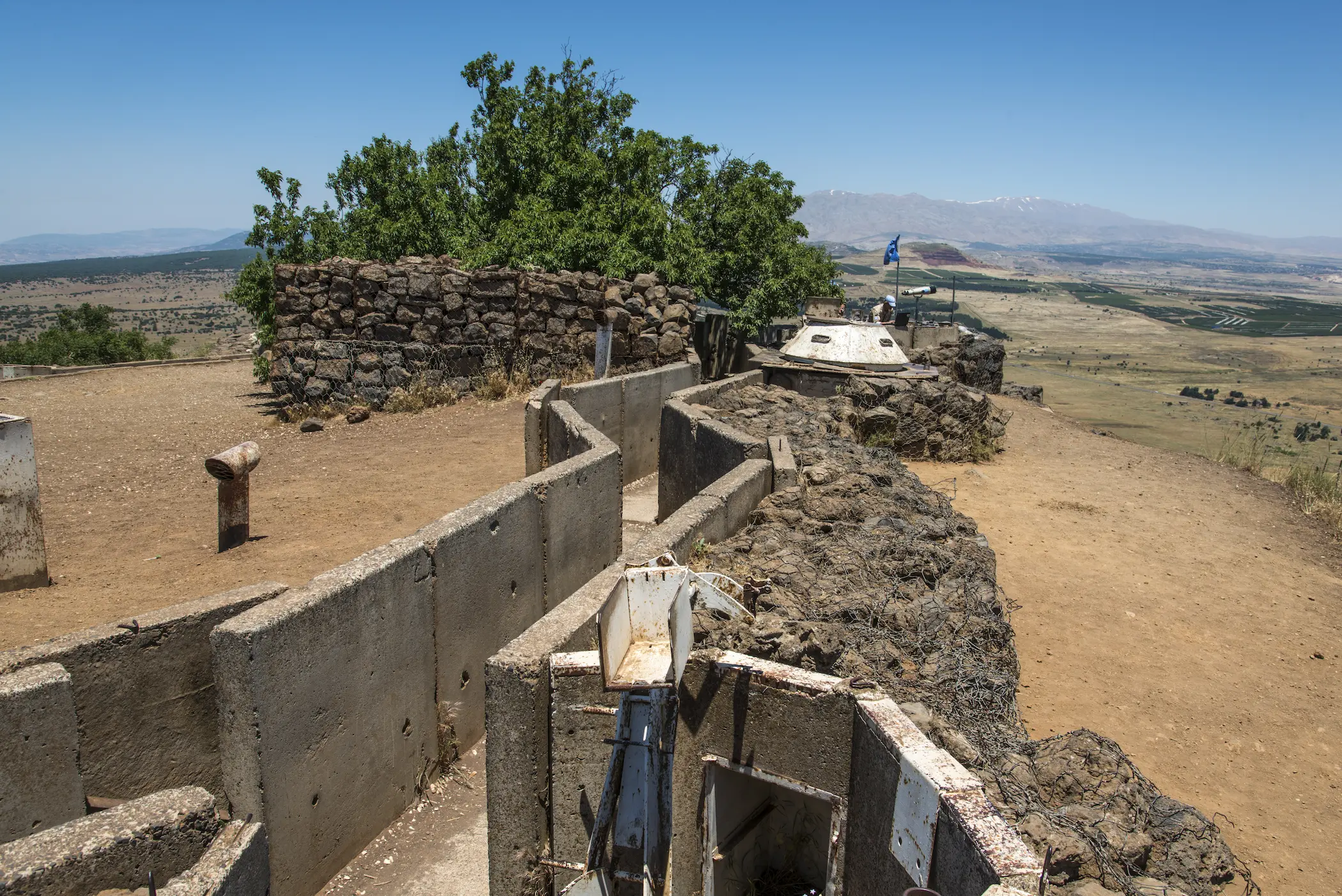
The Middle East has undergone profound shifts in its security and geopolitical landscape following the major events that began on 7 October 2023 and continued to unfold through 2026. At the heart of these shifts lies a fundamental transformation in Israeli military doctrine. For many years, Israel relied on rapid pre-emptive strikes and advanced technologies to sustain remote defence without requiring permanent control over new territory. However, the unprecedented breaches of its borders have fundamentally altered this strategy. Israel has now moved towards direct physical control over parts of Arab territory and has begun constructing a broad, contiguous belt of buffer zones extending from the Gaza Strip in the south and southern Lebanon in the north to the Syrian Golan Heights.
Historically, buffer zones were understood as demilitarised and relatively calm spaces designed to separate conflicting parties and prevent direct friction. Israel, however, has fundamentally redefined this concept, transforming such zones into instruments of absolute security control. Through this approach, it seeks to create fortified military spaces that provide strategic depth, eliminate cross-border threats and tunnels, and push the battlefield entirely away from its cities and population centres.
Despite the clarity of these objectives, this approach places Israeli military planners in a genuine dilemma. The permanent deployment of large infantry and armoured forces within hostile and volatile areas threatens to turn these belts—intended to serve as secure zones—into arenas of sustained and costly military attrition. Against this backdrop, this analysis raises a central and fundamental question: do these border strips constitute a genuine security buffer capable of ensuring Israel’s long-term survival and security, or have they already become a trap that steadily drains its capabilities day after day?

Publications
9 Jul 2025
Iran’s Enrichment Dilemma: Between Nuclear Sovereignty and Global Proliferation Anxiety
Iran’s uranium enrichment dilemma constitutes the central axis of the ongoing nuclear dispute, where technical considerations intersect with imperatives of national sovereignty, and where international legal frameworks collide with the strategic logic of deterrence. From the perspective of the Islamic Republic, the possession of a full nuclear fuel cycle—including domestic enrichment—is not merely a technical aspiration but an inherent sovereign right enshrined in Article IV of the Nuclear Non-Proliferation Treaty (NPT). Yet, within Iran’s political consciousness, this “right” transcends legalistic interpretation; it has become a symbolic pillar of national autonomy and a manifestation of defiance against what is perceived as Western hegemony.
Conversely, the U.S. and its allies view the same enrichment capability as a direct gateway to weaponization. The centrifuge-based architecture of Iran’s program enables, with little more than a political decision, a rapid transition from low-enriched uranium to weapons-grade fissile material within a matter of weeks. These concerns escalated significantly following the International Atomic Energy Agency’s (IAEA) May 2025 report confirming that Iran had amassed over 400 kilograms of uranium enriched to 60%—an amount theoretically sufficient to produce three to five nuclear weapons, should the enrichment level be increased to 90%, without requiring any additional infrastructure.
Iran’s historical experience—from its exclusion from the Eurodif consortium in 1979 to the collapse of the Tehran Research Reactor fuel deal in 2009—has deeply entrenched the belief among Iran’s ruling elite that reliance on external fuel guarantees is neither secure nor sustainable. As such, any negotiated settlement that requires Tehran to abandon domestic enrichment is perceived as a fundamental affront to its sovereign dignity and strategic autonomy.
Thus, the essence of the conflict lies not in centrifuge counts or enrichment levels per se, but in the deeply embedded political architecture of mutual distrust. A sustainable resolution cannot be achieved without a broader security framework that redefines Iran’s position within both the regional and global order.
This study adopts a multi-layered approach to the enrichment dilemma, treating it not as a narrowly technical issue but as a strategic contest between sovereign entitlement and non-proliferation imperatives. It proceeds along four main analytical axes: the technical properties of enrichment, the political and strategic motivations driving Iran’s position, the security calculus of Western powers, and the viability of proposed diplomatic frameworks. The study ultimately affirms that any lasting agreement must emerge from a comprehensive reconfiguration of Iran’s relationship with the international system.