
Programmes
4 Sep 2026
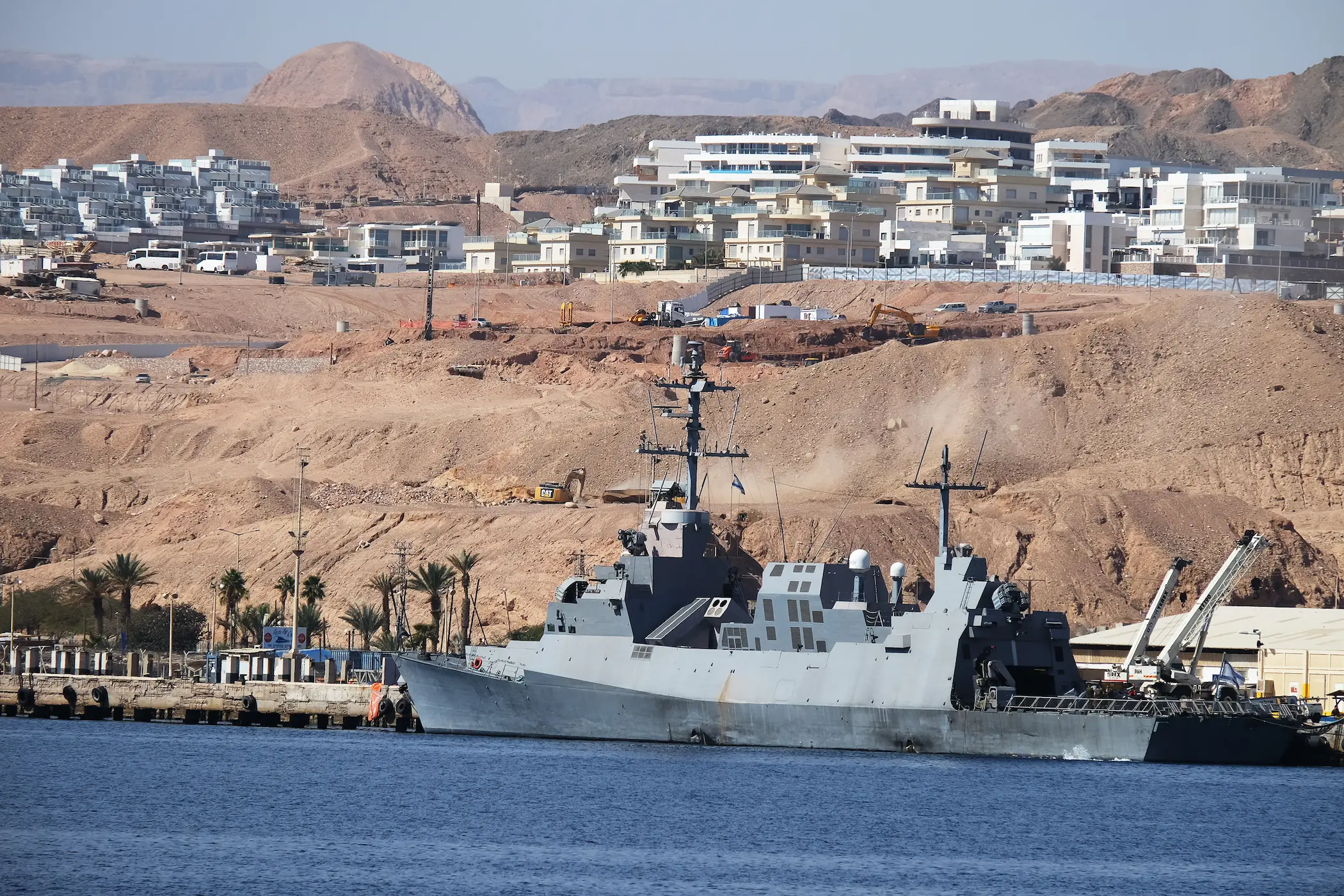
Geography Under Siege: How the Sea Became Israel’s Greatest Vulnerability
The geopolitical and security complexities of land borders in the Middle East have created a strategic reality in which Israel effectively functions as an "island economy", despite its physical connection to the continental landmass. This overland isolation has left the Israeli economy with little choice but to rely almost entirely on maritime routes to sustain its trade arteries, secure vital imports and maintain the flow of exports. The sea, therefore, is no longer merely an additional geopolitical and military domain, but has become the lung through which the Israeli economy breathes.
In this context, geography has shifted from a potential defensive shield to a structural vulnerability, with any disruption to freedom of navigation or coastal security posing an existential threat to capital flows and market stability.
This strategic vulnerability is further compounded by the country's demographic and economic geography. The coastal strip constitutes Israel's true centre of gravity, concentrating much of its population, financial centres, logistics infrastructure and principal ports.
This concentration leaves the coastline particularly exposed. Any security disruption in the maritime domain would affect not only shipping, but also the very fabric of everyday life and the core of commercial activity. Non-state armed actors have recognised this dynamic and identified the maritime domain as an opportunity to inflict economic paralysis at extremely low cost, circumventing the need to penetrate Israel's sophisticated air and land defence systems.
The concept of maritime infrastructure is no longer confined to ships and ports, but has expanded to encompass sovereign assets that constitute pillars of contemporary national security. Natural gas fields beneath the Eastern Mediterranean have become a cornerstone of energy independence, with any threat to production platforms or pipelines having immediate repercussions for industrial production costs and electricity grid stability.
In parallel, subsea telecommunications cables have emerged as a lifeline for the digital knowledge economy. The high-tech and financial services sectors depend entirely on these cables' integrity to ensure the global flow of data. Protecting these subsea assets has therefore moved beyond the technical realm to become a core element of the security doctrine aimed at protecting the economy from collapse in times of crisis.
This maritime exposure confronts the military establishment with a dual strategic dilemma: a widening protection gap between the immediate coastline and distant international sea lanes.
At the near-shore tactical level, the challenges associated with protecting coastal installations from unconventional threats, such as explosive-laden boats and drones, are intensifying. Countering these threats entails enormous financial costs, requiring the operation of expensive interception systems and warships against low-cost offensive capabilities available to adversaries.
At the more distant strategic level, the challenge lies in protecting the vital trade routes running through the Red Sea and the Bab el-Mandeb Strait. Any disruption there could choke off the Port of Eilat, disrupt supply chains from Asia, and drive up insurance and shipping costs, dealing a severe blow to investor confidence and the broader business environment.
Publications
10 Jul 2025
Futurescapes Issue 3 – Noah’s Ark Reimagined: Decoding Tomorrow’s Crises
In an era marked by rapid transformations and mounting threats, it is no longer sufficient to merely bear witness to disasters after they unfold. The imperative now is to cultivate anticipatory vision and to act decisively before the alarm is sounded. It is against this backdrop that the Al Habtoor Research Centre presents this edition of Futurescapes, titled Noah’s Ark, as both an early warning signal and a call for preparedness before time runs out.
The choice of the title Noah’s Ark is far from arbitrary. Just as the ark once symbolised salvation amid an all-encompassing flood, this publication aspires to serve as a vessel of knowledge—an intellectual ark—that carries within it an early awareness of looming risks and a strategic foresight capable of confronting them and adapting accordingly. This edition is a deliberate effort to transcend reactive responses and instead foster a proactive culture rooted in anticipatory planning and resilience-building.
This work forms part of a broader series of periodic reports issued by the Al Habtoor Research Centre, an independent Arab think tank committed to a forward-looking approach. The Centre places strategic emphasis on early warning mechanisms and the anticipation of major threats that may affect the Arab world—whether stemming from natural phenomena, political and technological developments, or the evolving dynamics of regional and global conflict.
In this issue, we undertake an unconventional intellectual journey, wherein we shed light on categories of threats that have not received sufficient attention from think tanks across the Arab world, despite the fact that they carry genuine existential risks. Our analysis does not confine itself to the commonly addressed domains of security and political threats; rather, it ventures further to explore issues that rarely find their way onto the Arab research agenda.
Among these are volcanic eruptions, asteroids, solar storms, and threats emerging from outer space—phenomena that could pose serious dangers to life on Earth in general, and to the Arab region in particular. We also examine nuclear risks, whether arising from warfare, radioactive leakage incidents, or potential scenarios involving cyberattacks on nuclear facilities.
Moreover, this issue addresses pandemics and global outbreaks—not solely from the perspective of disease transmission, but in terms of their structural impacts on economies and societies, as well as their linkages to transformations in the global order.
This publication does not claim to possess definitive answers; rather, it aspires to serve as a first step toward cultivating a collective awareness that is more attuned to risk and more capable of strategic preparedness. Knowledge, when acquired early, becomes a form of power. And foresight, when exercised with precision, becomes a tool for salvation.
We present this work at a critical juncture, with the hope that it will contribute to opening new windows for dialogue and planning and that it may serve as an entry point for broader Arab cooperation in the realms of risk monitoring and the development of effective early warning systems.
The information presented in this publication reflects the situation as of May 2025. Please note that developments may occur rapidly, which could render some of the details outdated or no longer current since that date.