
Programmes
4 Sep 2026
Geography Under Siege: How the Sea Became Israel’s Greatest Vulnerability
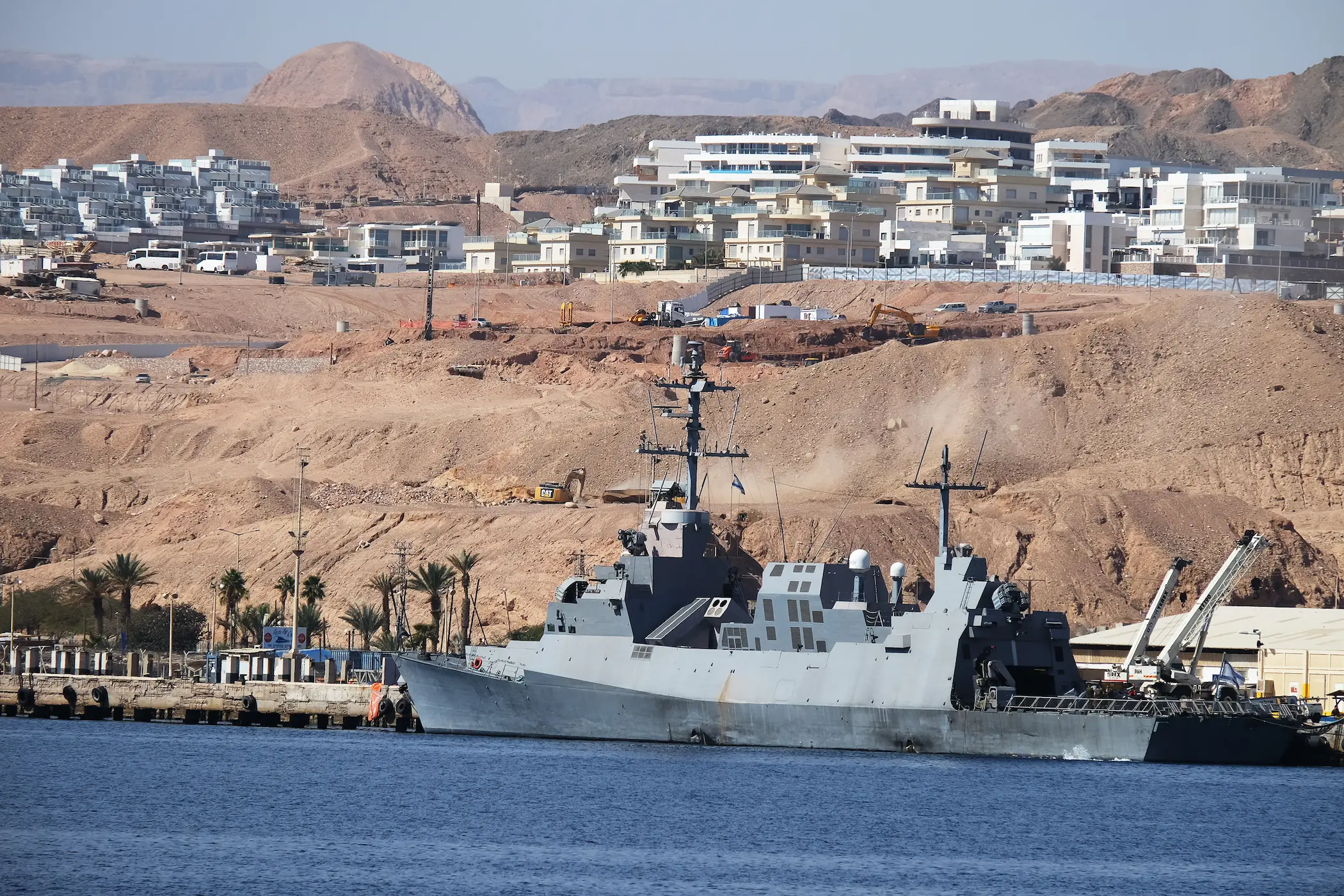
The geopolitical and security complexities of land borders in the Middle East have created a strategic reality in which Israel effectively functions as an "island economy", despite its physical connection to the continental landmass. This overland isolation has left the Israeli economy with little choice but to rely almost entirely on maritime routes to sustain its trade arteries, secure vital imports and maintain the flow of exports. The sea, therefore, is no longer merely an additional geopolitical and military domain, but has become the lung through which the Israeli economy breathes.
In this context, geography has shifted from a potential defensive shield to a structural vulnerability, with any disruption to freedom of navigation or coastal security posing an existential threat to capital flows and market stability.
This strategic vulnerability is further compounded by the country's demographic and economic geography. The coastal strip constitutes Israel's true centre of gravity, concentrating much of its population, financial centres, logistics infrastructure and principal ports.
This concentration leaves the coastline particularly exposed. Any security disruption in the maritime domain would affect not only shipping, but also the very fabric of everyday life and the core of commercial activity. Non-state armed actors have recognised this dynamic and identified the maritime domain as an opportunity to inflict economic paralysis at extremely low cost, circumventing the need to penetrate Israel's sophisticated air and land defence systems.
The concept of maritime infrastructure is no longer confined to ships and ports, but has expanded to encompass sovereign assets that constitute pillars of contemporary national security. Natural gas fields beneath the Eastern Mediterranean have become a cornerstone of energy independence, with any threat to production platforms or pipelines having immediate repercussions for industrial production costs and electricity grid stability.
In parallel, subsea telecommunications cables have emerged as a lifeline for the digital knowledge economy. The high-tech and financial services sectors depend entirely on these cables' integrity to ensure the global flow of data. Protecting these subsea assets has therefore moved beyond the technical realm to become a core element of the security doctrine aimed at protecting the economy from collapse in times of crisis.
This maritime exposure confronts the military establishment with a dual strategic dilemma: a widening protection gap between the immediate coastline and distant international sea lanes.
At the near-shore tactical level, the challenges associated with protecting coastal installations from unconventional threats, such as explosive-laden boats and drones, are intensifying. Countering these threats entails enormous financial costs, requiring the operation of expensive interception systems and warships against low-cost offensive capabilities available to adversaries.
At the more distant strategic level, the challenge lies in protecting the vital trade routes running through the Red Sea and the Bab el-Mandeb Strait. Any disruption there could choke off the Port of Eilat, disrupt supply chains from Asia, and drive up insurance and shipping costs, dealing a severe blow to investor confidence and the broader business environment.

Programmes
25 Jan 2025
From Displacement to Development: Syria’s Path to Reintegration
With millions of people displaced, massive destruction, and the destruction of entire businesses, the Syrian Civil War wreaked chaos on the country’s economy since it started in 2011, and whilesome countries have started to discuss deportation policies, many refugees started to return home in the hopes of rebuilding their country after the fall of the Assad regime. While the repatriation of refugees holds the promise of economic revitalisation, the multifaceted challenges of reintegration and rebuilding complicate the picture. Hence, a gradual reintegration policy under certain conditions, including international support especially from countries hosting the refugees is required to foster sustainable recovery.

Publications
18 Dec 2024
Mahabad: Oil, the Peshmerga, and the Collapse of the Kurdish Dream
The Kurdish dream of establishing an independent state was on the verge of realisation after centuries of demands in Jan. 1946. This came when “Qazi Mohammad,” the Iranian Kurdish leader, declared the establishment of the Mahabad Republic in the province of the same name, now part of the Islamic Republic of Iran. However, this dream quickly dissipated when the Soviet Union withdrew its financial support for the nascent state. The intensification of the economic blockade on the region further compounded the situation, preventing the entry of food supplies and reducing agricultural production. These pressures led to dramatic shifts in the loyalties of Kurdish tribal leaders who had initially allied with “Qazi” during the state's formation, hoping to secure a share of Soviet financial and food aid.
The food situation worsened over time, pushing some leaders of the Mahabad army to leave the capital, especially as Iranian forces were nearing its entrance, leaving the Kurdish leader and a small Kurdish group behind to face an unequal battle with the Iranian army. Therefore, to spare Kurdish blood, it was decided to surrender on December 15 of the same year, leading to the Iranian army's occupation of Mahabad and the declaration of the state's fall. In the end, “Qazi” was executed in March 1947, marking the end of the closest attempt to establish a Kurdish state.
About a quarter of a century later, the Iraqi Federal Supreme Court issued a series of rulings regarding Iraqi oil exported by the Kurdistan Region of Iraq. The latest ruling, issued in Feb. 2024, mandated the Kurdistan Regional Government’s Council of Ministers to hand over all oil and non-oil revenues to the central government in Baghdad. This could have a dual impact similar to that caused by the cessation of financial support and the Iranian blockade on the Mahabad army, but this time it affects the Peshmerga forces that represent the hope for preserving the “autonomy” of the Kurdistan Region of Iraq considered the second closest Kurdish attempt at establishing a national homeland for the Kurds.
Therefore, the First Part of this paper addresses the political situation of the Kurds, focusing on the status of the region in the Iraqi Constitution, the contentious issues between the region and the federal government, and the impact of these disputes on the continuity and existence of the Peshmerga. The Second Part reviews the economic situation, examining the effects of the series of judicial rulings on the conditions that undermine the autonomy of the regional government in selling oil and the repercussions of this on the Peshmerga as a Kurdish defence force that protects the “autonomy” of the region, forming the last line of defence against its collapse.