
Programmes
19 Mar 2026
Strait of Hormuz Closure: Strategic Implications for the Global Semiconductor Industry
Iran has blocked maritime navigation through the Strait of Hormuz since the first week of March, following the attacks it sustained during Operation Epic Fury. This disruption has hindered the movement of nearly 20 million barrels of crude oil per day. It has trapped shipments of liquefied natural gas, accounting for around 20% of global consumption, within the waters of the Arabian Gulf. As a result, international energy markets are experiencing sharp price volatility affecting Brent crude futures and European gas contracts.
At the same time, maritime shipping lines have been compelled to reroute their commercial fleets, forcing them to navigate around the historic Cape of Good Hope route at the southern tip of Africa. This enforced geographic diversion adds approximately 19 days to maritime transit times to and from Asia, generating weekly losses for global supply chains estimated at between $2 billion and $3 billion in additional operating and fuel costs.
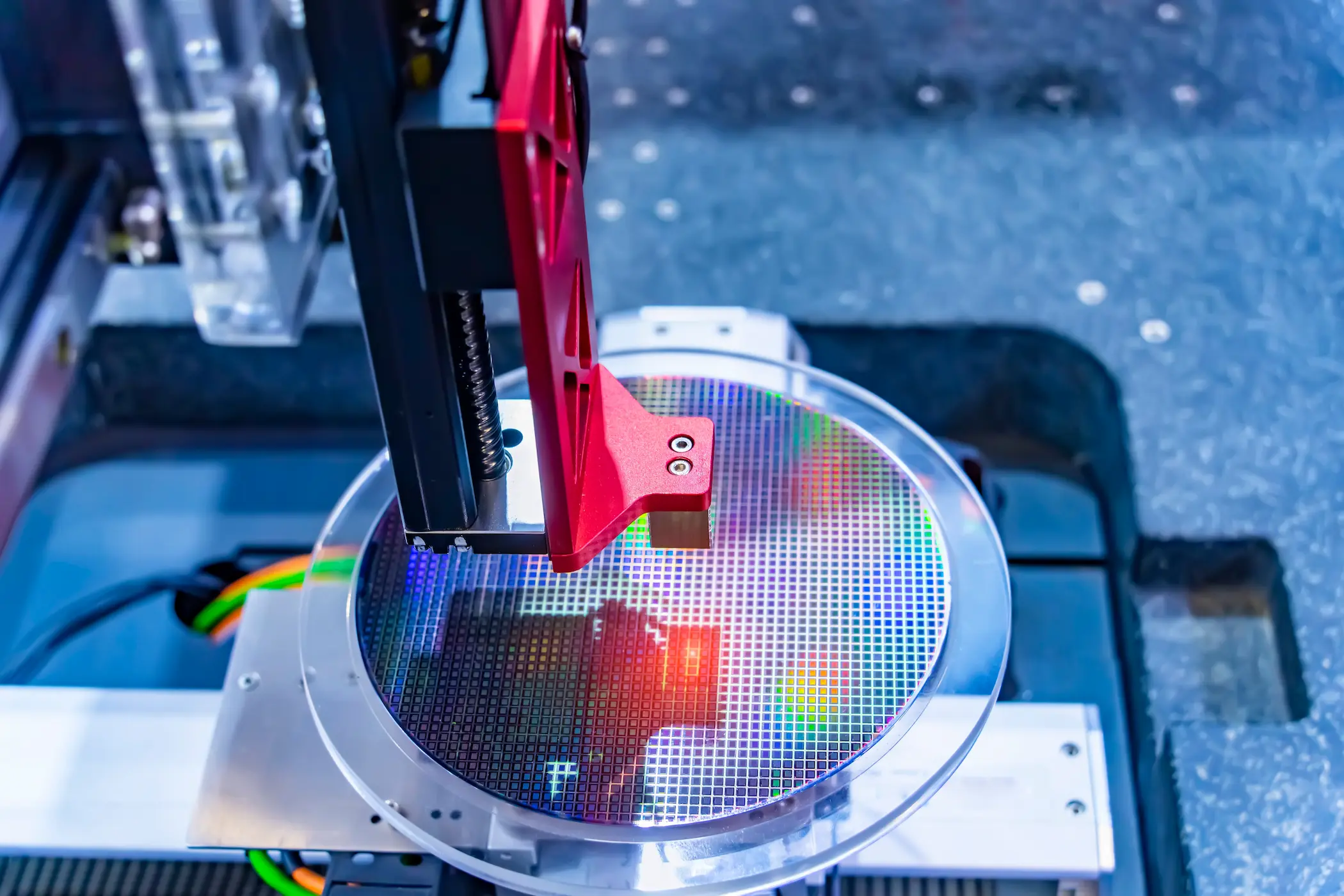
This operational disruption directly affects the technological infrastructure of East Asia, where advanced semiconductor fabrication facilities in Taiwan and South Korea require vast, continuous electricity supplies to operate lithography systems around the clock. These critical facilities, which account for approximately 68% of global semiconductor production, rely on imported liquefied natural gas to ensure the stability of their power networks and prevent disruptions.
In parallel, the precision manufacturing processes involved depend on highly specialised raw materials whose primary sources are concentrated in regions currently affected by the crisis. In particular, production lines require ultra-high-purity helium gas, extracted as a by-product from Gulf LNG liquefaction facilities, which represent roughly 35% of global supply, as well as bromine, which Korean factories import at a rate of 97.5% from the Dead Sea coast for chemical etching processes. Accordingly, technology firms are accelerating efforts to assess their exposure to the dual energy and critical chemical input shortages. At the same time, economic stakeholders monitor the crisis's trajectory with heightened caution to safeguard supply chain continuity.
Accordingly, this analysis examines the strategic and operational implications arising from the closure, focusing on three principal dimensions. First, it addresses the disruption of liquefied natural gas supplies and their direct impact on the security of power grids that sustain major Asian semiconductor manufacturing hubs. Second, it examines the sharp interruption in the supply of critical raw materials, particularly specialised gases and petrochemical inputs required for precision manufacturing processes. Finally, it explores the logistical repercussions of the forced rerouting of maritime shipping routes, as well as the strategic measures states are considering to mitigate future geopolitical risks.
Programmes
22 May 2025
What If: China Invades Taiwan?
China and Taiwan have had a complex relationship. Taiwan was once a part of China, following the Chinese Civil War in 1949, the government of the Republic of China retreated to Taiwan, while the People's Republic of China established itself on the mainland. For decades, Taiwan was recognized by many countries as the legitimate government of China, even holding China's seat at the United Nations until 1971, when it was replaced by the People's Republic of China. While China pledges to reunify Taiwan, even by force, the latter depends on the United States to deter any potential Chinese invasion.
Given the current geopolitical changes in the world, there is a possibility that China could invade Taiwan, exploiting the West’s emphasis on the Russia-Ukraine War.
Programmes
7 Mar 2023
Ramifications for the Global Economy in the Case of a China-Taiwan Conflict?
China believes that Taiwan is an inalienable part of China and that Taiwan is part of its territory and routinely threatens to invade it to prevent Taiwan's formal independence. On Saturday 18th of February 2023, China's top diplomat Wang Yi said, at the Munich International Security Conference: "Taiwan has never been an independent country, nor will it be an independent country in the future. This is the status quo of the Taiwan issue”. As greater and more aggressive Chinese military exercises outside Taiwan become the norm, there are rising concerns of a full-blown cross-strait crisis with severe military and far-reaching economic repercussions for the global and Chinese economy. A China-Taiwan conflict will have a worse effect than the Russia-Ukraine war given the economic and industrial power that the two countries possess.