
Publications
18 Jun 2026
The Mirage of Safe Geography: How Buffer Zones Have Become a Military Liability for Israel
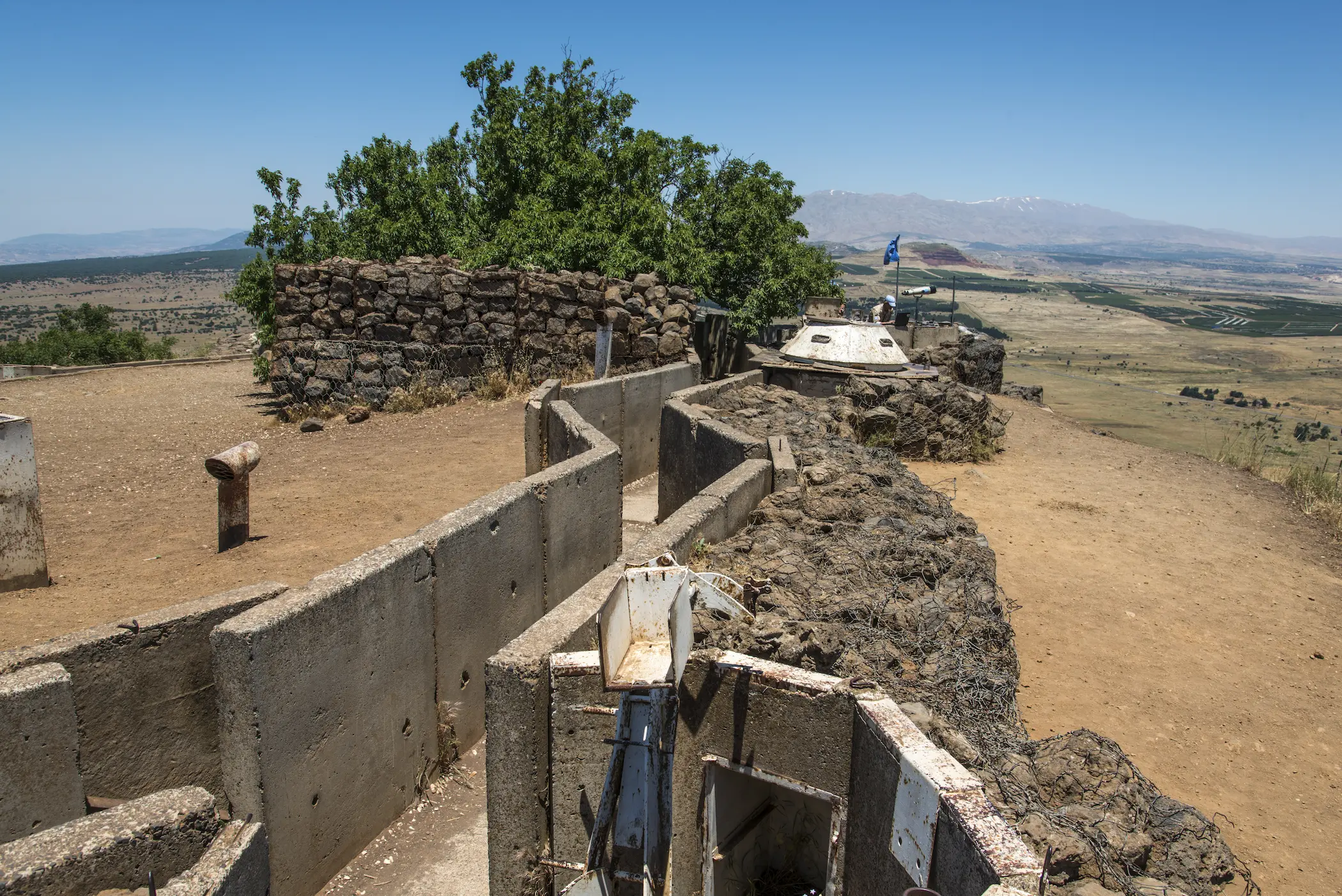
The Middle East has undergone profound shifts in its security and geopolitical landscape following the major events that began on 7 October 2023 and continued to unfold through 2026. At the heart of these shifts lies a fundamental transformation in Israeli military doctrine. For many years, Israel relied on rapid pre-emptive strikes and advanced technologies to sustain remote defence without requiring permanent control over new territory. However, the unprecedented breaches of its borders have fundamentally altered this strategy. Israel has now moved towards direct physical control over parts of Arab territory and has begun constructing a broad, contiguous belt of buffer zones extending from the Gaza Strip in the south and southern Lebanon in the north to the Syrian Golan Heights.
Historically, buffer zones were understood as demilitarised and relatively calm spaces designed to separate conflicting parties and prevent direct friction. Israel, however, has fundamentally redefined this concept, transforming such zones into instruments of absolute security control. Through this approach, it seeks to create fortified military spaces that provide strategic depth, eliminate cross-border threats and tunnels, and push the battlefield entirely away from its cities and population centres.
Despite the clarity of these objectives, this approach places Israeli military planners in a genuine dilemma. The permanent deployment of large infantry and armoured forces within hostile and volatile areas threatens to turn these belts—intended to serve as secure zones—into arenas of sustained and costly military attrition. Against this backdrop, this analysis raises a central and fundamental question: do these border strips constitute a genuine security buffer capable of ensuring Israel’s long-term survival and security, or have they already become a trap that steadily drains its capabilities day after day?

Programmes
22 May 2024
ASEAN’s Lessons: A Blueprint for Peace in the Middle East
This article was originally published on Ahram Online on May 21, 2024.
Southeast Asia's history, marred by prolonged conflicts since the 1950s, offers pertinent lessons for strife-torn regions seeking stability. The spectre of the Cold War transformed countries like Vietnam into battlegrounds for over two decades, pitting communist and capitalist ideologies in a gruelling contest. Laos, too, bore the scars of proxy warfare, enduring a protracted struggle between the communist Pathet Lao forces, backed by a sizable contingent of North Vietnamese troops of Laotian descent, and the royal government, in a conflict that spanned more than two decades.