

Publications
25 Nov 2025
De-dollariaztion: What It Means for the US Economy
The United States dollar (USD) prominence as the main global reserve currency can be attributed to the Bretton Woods Agreement of 1944, which created a new international monetary order and directly linked major world currencies to the USD, which was itself pegged to gold at $35 per ounce. The USD quickly emerged as the primary medium of exchange for most commodity trades and international financial transactions as a result of this agreement, which concentrated trust and liquidity around the currency. In 1971, the Nixon Shock occurred when the United States (U.S.) ended direct USD–gold convertibility, weakening the USD. However, the scope and depth of U.S. financial markets and the petrodollar system - which mandated that oil exports be invoiced and paid in USD- made it incontrovertible, giving the U.S. “the exorbitant privilege”, as economist Valéry Giscard d’Estaing described it, of having substantial control over global monetary policy while financing trade and budget deficits.
It’s crucial to weigh this against factors that continue to uphold the USD’s hegemony though. The unmatched stability liquidity and depth of U.S. financial markets continue to attract global investors worldwide, preserving the USD’s position as the favored reserve asset. Since international trade, finance, and investment infrastructures are still heavily USD-centric, it is also challenging for alternative currencies to quickly replace the USD due to the vast global network effect that has been developed over decades. Moreover, the USD’s status as a “safe-haven” asset persists, particularly during periods of global uncertainty, sustaining demand.
Yet, this hegemonic status is now challenged structurally in ways increasingly understood as de-dollarization- that is, the deliberate reduction of the share of the USD in global trade invoicing, reserve holdings, and payment systems. Debates on the durability of U.S. monetary leadership have been ongoing for decades, but a number of forces have turned de-dollarization from an abstract concept into a global trend since the Global Financial Crisis of 2008. That crisis exposed systemic vulnerabilities within USD-dependent financial networks, underscoring how U.S. monetary policy and financial shocks can transmit worldwide in destabilizing ways—especially across Emerging Markets and Developing Economies (EMDEs).
This postwar order is increasingly under structural pressure from geopolitical fragmentation, rising U.S. debt, sanctions overreach, and the emergence of alternative payment systems. These pressures could lead to two different scenarios for the U.S. economy in a post-dollar world: a sudden collapse due to financial instability and inflation, or a gradual decline with persistently higher borrowing costs and the steady erosion of fiscal and geopolitical leverage. The latter is more likely but still represents a structural shift that redefines the balance of global economic power.

Programmes
10 Feb 2025
Turkey and Iran: Commonalities and Contradictions
Following the Arab Spring, Turkey and Iran started expanding their influence in the region, utilising the state of instability. While both countries compete over expanding influence in Syria, Iraq, and Azerbaijan, they managed to maintain strong mutual relations. The analysis examines foreign policy tools employed by both countries to maximise their benefits along with analysing the commonalities and differentiation of interests between them in the Middle East.

Programmes
22 May 2024
ASEAN’s Lessons: A Blueprint for Peace in the Middle East
This article was originally published on Ahram Online on May 21, 2024.
Southeast Asia's history, marred by prolonged conflicts since the 1950s, offers pertinent lessons for strife-torn regions seeking stability. The spectre of the Cold War transformed countries like Vietnam into battlegrounds for over two decades, pitting communist and capitalist ideologies in a gruelling contest. Laos, too, bore the scars of proxy warfare, enduring a protracted struggle between the communist Pathet Lao forces, backed by a sizable contingent of North Vietnamese troops of Laotian descent, and the royal government, in a conflict that spanned more than two decades.

Programmes
17 Apr 2024
Twin Flames: Ethiopia, Somaliland and the New Horn of Africa
In January of 2024, landlocked Ethiopia officially considered the formal recognition of Somaliland, which declared independence from Somalia in 1991 and remains an unrecognised de facto state. This potential agreement, which would be in exchange for access to the Gulf of Aden through the port of Berbera, reignited tensions with neighbouring Somalia. Although the exact details of the agreement have not yet been fully disclosed, Somalia considers it to be an annexation of territory potentially. Still, its demands for an end to the agreement have seemingly been ignored by its neighbours.
Programmes
17 Apr 2024
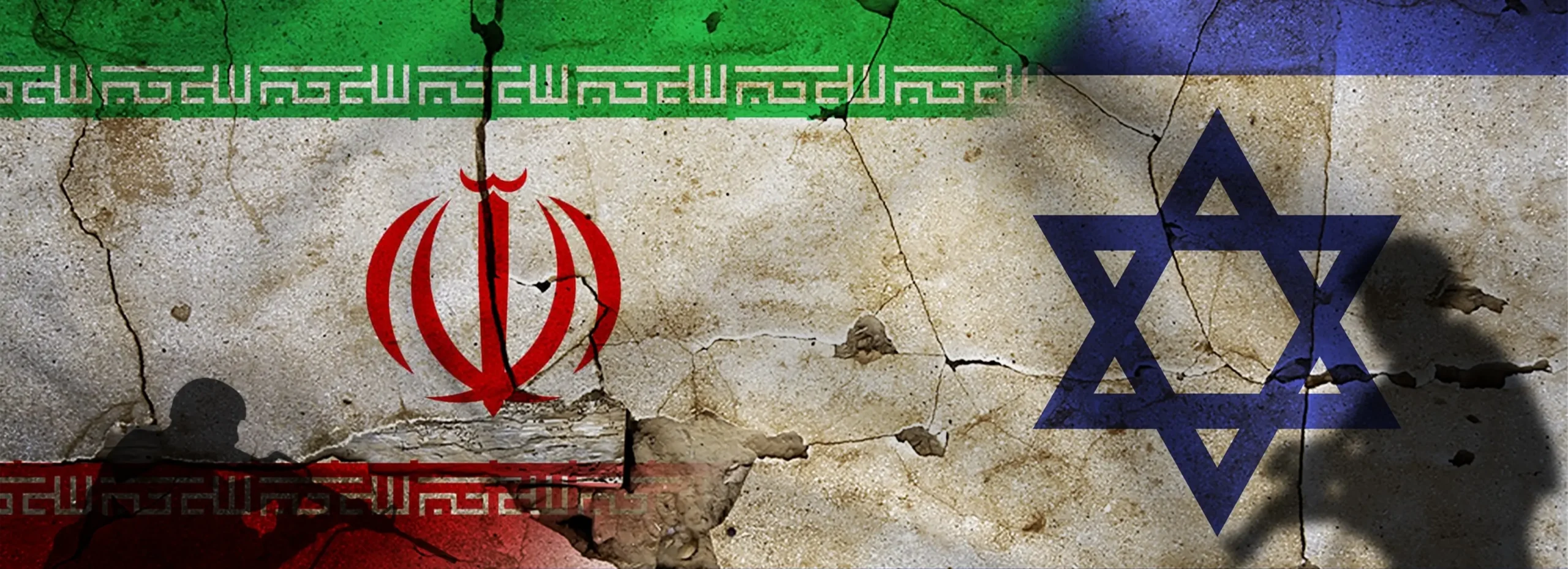
The Fallout of Escalating Iranian-Israeli Tensions
The Iranian Revolutionary Guard's Air Force made a historic move by launching a direct assault on Israel in an operation dubbed "The True Promise," marking the first instance of such an attack originating from Iranian territory. Late on Saturday, April 13, 2024, Israeli cities were subjected to a relentless barrage of drones and ballistic missiles, signalling a significant escalation in tensions between the two nations. This offensive action follows Iran's earlier pledge to retaliate against Israel for its targeting of the Iranian consulate in Damascus, an incident that resulted in the deaths of seven Revolutionary Guard members, including two high-ranking leaders, on April 1.
This calculated escalation underscores Iran's unwavering commitment to defending its sovereignty and national interests while bolstering regional security. The global spotlight now shifts to the scale, sophistication, and broader implications of Iran's strike against Israel.
The Iranian assault on Israeli soil marks a pivotal moment in the ongoing conflict between the two adversaries, thrusting their hostilities from the shadows into the open arena of direct confrontation.
Against this backdrop, the Israeli response hinges on several key factors. Firstly, the extent to which Iranian proxies, such as the Houthis and Hezbollah, may actively participate in the conflict will influence Israel's strategic calculus. Secondly, the response will be shaped by the presence or absence of casualties among Israeli forces, as well as the effectiveness of its defence systems, bolstered by support from the United States, in mitigating potential damage. Lastly, how Israel opts to retaliate will be of paramount importance in determining the trajectory of the conflict.
Consequently, this analysis aims to elucidate the attack's ramifications and its economic repercussions on the parties involved in the conflict.
Programmes
12 Feb 2024
Can the EU Endure Escalation in the Middle East?
The global economy has been struggling to recover since the impact of the COVID-19 pandemic, which has had significant repercussions worldwide. The European Union (EU) has been particularly affected by the Russia-Ukraine war due to its reliance on Russian energy. Following this conflict, the EU is gradually moving toward recovery, with an anticipated mild growth rate in 2024. However, the ongoing Middle East conflict and concerns about its potential escalation raise doubts about whether the EU can withstand the challenges posed by such an escalation.

Programmes
30 Nov 2023
The West Polarised: Impact of the War in Gaza
Ramifications of the Israeli-Hamas War have not been confined within Gaza or the Middle East’s borders. Polarisation over the Palestinian cause has reached a new character especially in the Western world where such a trend has never been as deep. Cracks within governments and societies can be traced to a volatility of values, exposure to social media, and demographic changes. With such an unprecedented divide over Western governments tolerating Israeli impunity in Gaza, the West is faced with a moral dilemma which might cost it it’s claimed “moral superiority”.